Oregon Rocky Mountain Elk Season Structure
Many hunters dream of pursuing elk in Oregon, but the complexities of season dates, unit boundaries, and tag types can feel like navigating a dense thicket without a compass. This guide will meticulously break down the Oregon Rocky Mountain elk season structure, providing a clear roadmap to understanding the various hunt opportunities, application processes, and crucial distinctions that every aspiring elk hunter needs to know.
Understanding Oregon's Elk Species and Their Range
Oregon is unique in that it's home to two distinct subspecies of elk: the coastal Roosevelt elk and the interior Rocky Mountain elk. For anyone planning an elk hunt, understanding this fundamental difference is the absolute first step. It dictates everything from where you hunt to the specific season dates and even the terrain you'll encounter.
The Great Divide: Highway 97
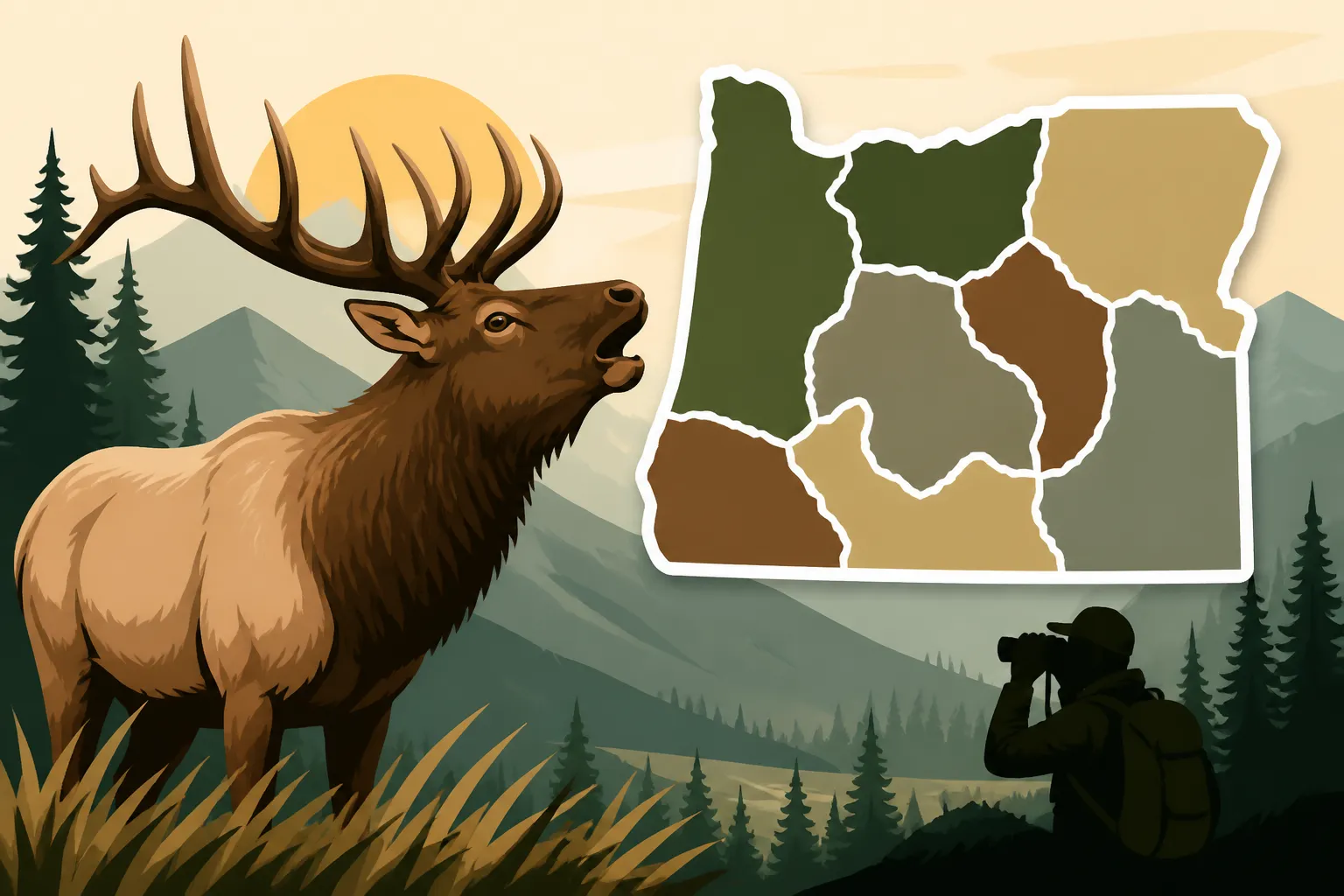
It's often said that Highway 97 acts as the informal dividing line between the two subspecies. West of Highway 97, stretching through the Coast Range and the western slopes of the Cascades, you'll primarily find Roosevelt elk. These magnificent animals thrive in the dense, wet timber of western Oregon. East of Highway 97, across the vast expanses of central and eastern Oregon, including the Blue Mountains, you'll find the Rocky Mountain elk. This geographical split isn't just a fun fact; it's a critical piece of information that directly impacts the regulations and season structures you'll be dealing with. While there can be some overlap, especially near the Cascade crest, the vast majority of your Rocky Mountain elk hunting will occur in the eastern part of the state.
Knowing where the two elk subspecies overlap is important, but for Rocky Mountain elk hunters, your focus will almost entirely be on the eastern units. These areas offer a completely different hunting experience than the coastal rainforests where Roosevelt elk thrive. The terrain, vegetation, and even the elk's behavior are distinctly different. This division is so significant that the Oregon Department of Fish and Wildlife (ODFW) manages the populations and their hunt structures almost entirely independently, reflecting the unique ecological needs and population dynamics of each subspecies. Understanding How Roosevelt and Rocky Mountain Elk Differ is essential for targeting your hunt effectively.
Rocky Mountain Elk Habitat and Behavior
Rocky Mountain elk in Oregon call diverse landscapes home, from the vast sagebrush flats and juniper stands of the high desert to the ponderosa pine forests and true wilderness areas of the Blue and Wallowa Mountains. Unlike their Roosevelt cousins who often stick to thick timber, Rocky Mountain elk are known for utilizing more open country, particularly at dawn and dusk. This means glassing vast areas becomes a much more viable and often necessary tactic, similar to Glassing Eastern Oregon Rimrock for Mule Deer. While mule deer and elk often inhabit different niches, the principles of spotting game in open country apply. During the heat of the day, they'll retreat into timbered pockets or north-facing slopes for cover and rest.
Their behavior also differs. Rocky Mountain elk, especially bulls, are renowned for their vocal nature during the rut, making bugling a highly effective hunting method. This contrasts with Roosevelt elk, which tend to be less vocal. Understanding these behavioral patterns is crucial for planning your approach, whether you're trying to locate a bugling bull in September or tracking a herd in late season snow. The vastness of Eastern Oregon's terrain often means covering significant ground, either on foot or with appropriate vehicle access, to find where the elk are concentrated. The specific Oregon Elk Herd Numbers by Region can also provide insight into population densities and potential hot spots.
General Season Rocky Mountain Elk Hunts
For many, the general season rifle hunt is the entry point into elk hunting in Oregon. It’s a classic experience, but it comes with its own set of challenges and considerations. Unlike controlled hunts, which require applying and drawing a tag, general season tags are available over-the-counter (OTC) in certain units, offering more accessibility but often higher hunting pressure.
Overview of General Rifle Seasons
Oregon offers a split general season for Rocky Mountain elk rifle hunters, typically occurring in late October and early November. These seasons are unit-specific, meaning you can't just buy a general tag and hunt anywhere. You need to declare the unit you plan to hunt when you purchase your tag. The season dates are usually quite short, often lasting only 5-7 days for each period, which means hunters need to be efficient and prepared. The primary draw of general seasons is the guaranteed tag; if you're willing to hunt one of the designated general units, you're in. This is a stark contrast to the often long and frustrating wait for a controlled hunt tag through the draw system.
While the general season provides an accessible hunting opportunity, it's important to understand the trade-offs. These hunts typically take place after the peak of the rut, so vocalizations from bulls are significantly reduced, shifting the hunting strategy from calling to more still-hunting or glassing. Weather can also be a major factor, with conditions ranging from mild autumn days to heavy snow and freezing temperatures, especially in the higher elevations of units like the Starkey or Wenaha. Being prepared for diverse weather is crucial, not just for comfort but for safety and success. In comparison, Oregon Roosevelt Elk Rifle Seasons in November occur in vastly different environmental conditions.
Unit Specifics and Tag Allocation
The general season Rocky Mountain elk units are primarily located in Eastern Oregon, encompassing areas like the Starkey, Wenaha, Sled Springs, and Minam units, among others. Each of these units has unique characteristics, terrain, and elk densities. For instance, the Wenaha and Sled Springs are often considered premier general season units, but they also experience significant hunting pressure. The ODFW website and annual hunting regulations pamphlet are your best friends for deciphering the specific unit boundaries and season dates. It's crucial to consult these resources meticulously, as rules and boundaries can shift, and overlooking a detail could lead to a violation. Using the Oregon Hunting Map Online is an excellent way to familiarize yourself with these units.
When you purchase your general season tag, you'll select your desired unit. This choice is binding, so make it wisely after thorough research. Some units might be predominantly public land, offering vast areas to roam, while others might have a mix of public and private timber land, requiring additional research into access permits, such as those for Weyerhaeuser or Hancock properties. Understanding the nuances of each unit, including typical elk patterns, access points, and potential crowding, is vital for success. Utilize online mapping tools and resources like GoHunt to analyze land ownership, historical harvest data, and topography before making your unit selection. This digital scouting can save you countless hours on the ground.
Challenges and Success Rates
General season elk hunts in Oregon, particularly for Rocky Mountain elk, can be notoriously challenging. The combination of high hunter pressure, wary elk, and short season windows often translates to lower success rates compared to controlled hunts. According to ODFW harvest reports, general season success rates for Rocky Mountain bulls typically hover in the low double digits, often below 10-15%. This isn't meant to discourage you, but rather to set realistic expectations. Success in these hunts often comes down to meticulous preparation, physical fitness, perseverance, and a bit of luck.
Hunters should be prepared for competition. Popular access points, roads, and trails can see considerable traffic, especially during the opening weekend. To mitigate this, many successful general season hunters focus on getting away from roads, delving deeper into public land, or scouting for areas that offer more difficult access. This often means being willing to commit to Packing Out an Elk in Oregon's Wilderness Units or pushing further than others are willing to go. While the thrill of drawing a controlled hunt is undeniable, a general season tag offers an immediate opportunity for those eager to hit the field without waiting years for points to accumulate.
Controlled Hunt Rocky Mountain Elk Opportunities
For many serious elk hunters, the pinnacle of Oregon elk hunting lies in the controlled hunt draw. These hunts offer often better unit quality, lower hunter densities, and potentially higher success rates, but they come with a significant catch: you have to draw a tag.
The Draw System and Preference Points
Oregon's controlled hunt draw system is based on a preference point system designed to reward loyalty. Each year you apply for a controlled hunt and are unsuccessful, you accrue a preference point. These points are then factored into the draw, giving you a statistical advantage in future applications. The more points you have, the better your odds of drawing a coveted tag. However, points only count for your first choice on an application. If you draw your first choice, your points are purged back to zero. If you draw a second or third choice tag, your points remain, and these choices are essentially drawn on a random basis. It's a system that can be both rewarding and frustrating, depending on your luck and point accumulation. You can read more about Oregon Preference Points and How They Work to truly grasp the nuances.
The application period for controlled hunts typically runs from March to May, with the deadline usually falling around May 15th. It's a critical window, and missing it means waiting another year. The draw results are usually released in June. Many hunters, especially those chasing high-demand Rocky Mountain elk tags, choose to apply for a point only in years they don't plan to hunt or when their points aren't high enough for their desired unit. This allows them to continue building points without risking drawing a tag they don't want. Understanding Oregon Controlled Hunt Application Deadline is paramount for any hunter in the state.
Popular Controlled Hunt Units
There are numerous controlled hunt units for Rocky Mountain elk spread across Eastern Oregon, each with its own characteristics and point requirements. Units like the Wenaha, Walla Walla, and parts of the Blue Mountains are often highly sought after, requiring a significant number of preference points to draw. These units are popular for good reason: they often boast healthy elk populations, good bull-to-cow ratios, and larger trophy potential. Less point-intensive units also exist, offering more immediate opportunities, though often with slightly lower elk densities or more challenging terrain.
Researching these units is paramount. Tools like those offered by GoHunt provide detailed draw odds, historical harvest data, and unit-specific information, allowing hunters to make informed decisions about where to apply. They can help you analyze how many points are needed for a top Oregon elk hunt and compare different units based on your point total and hunting goals. Consider not just the draw odds, but also public land access, general terrain (timber vs. open country), and what kind of hunting experience you're looking for. Some units might be prime for Calling Roosevelt Elk in Oregon Rainforest Timber, but remember, Rocky Mountain elk are a different beast, often requiring different tactics.
Maximizing Your Draw Odds
Maximizing your draw odds in Oregon's controlled hunt system involves a strategic approach. First, consistently applying for a point, even if you don't hunt every year, is key. Second, carefully research units and understand the point creep—where point requirements increase over time. Don't blindly apply for the same unit if the point requirements have outpaced your accumulation. Third, consider applying as a party. While party applications in Oregon average the points of all members, this can sometimes be beneficial if one member has significantly fewer points and you want to ensure you hunt together. This is all part of learning Oregon Controlled Hunt Draw Explained.
Finally, be flexible with your hunt choices. While everyone dreams of drawing a top-tier bull tag, looking at units with slightly lower point requirements for second or third choices, or even considering cow tags, can significantly increase your chances of hunting elk in Oregon. A cow tag, while not yielding a trophy, provides valuable meat and a fantastic hunting experience, allowing you to learn the unit and hone your skills without the pressure of a high-stakes bull tag. The ODFW regulations pamphlet provides crucial details on How to Apply for an Oregon Controlled Hunt and navigating the complex rules to give you the best chance.
Archery and Muzzleloader Seasons for Rocky Mountain Elk
Beyond the general and controlled rifle seasons, Oregon also offers dedicated seasons for archery and muzzleloader hunters, providing alternative opportunities to pursue Rocky Mountain elk. These seasons often precede or follow the rifle hunts and come with their own unique rules, challenges, and advantages.
Archery Season Considerations
Oregon's archery season for Rocky Mountain elk typically opens in late August and runs through September, overlapping with the peak of the rut. This is a huge draw for bowhunters, as it offers the thrilling chance to call in bugling bulls. The early season means generally warmer weather, which impacts how you need to handle your harvest. Field Dressing an Elk in Warm Early-Season Weather becomes a crucial skill to prevent spoilage. However, warm weather also means potential for fires and dryer conditions, making elk less predictable near water sources.
Archery hunting for Rocky Mountain elk is a physically demanding endeavor. You'll often be covering vast, rugged terrain, stalking through timber, and calling to bulls that can be incredibly cagey. Success often hinges on a deep understanding of elk behavior, superior stealth, and proficiency with your archery equipment. Choosing the right Archery Setup for Wet Oregon Timber might seem more relevant for Roosevelt elk, but even in Eastern Oregon, early season rain can be a factor, and durable, quiet gear is always a plus. Hunters must also be aware of the specific regulations for archery equipment, including minimum draw weights and broadhead requirements, which are detailed in the ODFW regulations.
Muzzleloader Hunt Dates and Rules
Muzzleloader seasons for Rocky Mountain elk in Oregon are exclusively controlled hunts, meaning you must draw a tag to participate. These hunts usually occur after the main archery and rifle seasons, often in late November or early December. This late timing presents unique challenges and opportunities. On one hand, you'll often encounter colder weather and potentially snow, which can make tracking easier but also demands more robust gear and physical endurance. On the other hand, hunting pressure is typically lower than the general rifle seasons, and the elk have had some time to settle down after the initial rush of hunters.
Muzzleloader hunting has its own set of equipment restrictions and challenges. Hunters must use traditional-style muzzleloaders, with specific rules regarding ignition type, bullet type (sabots versus conicals), and optics (typically open sights or low-power scopes). Muzzleloader Loads and Wet-Weather Ignition is a very real concern, especially if hunting in periods of rain or heavy snow. The added challenge of a single-shot, slower-loading firearm in potentially harsh conditions makes muzzleloader hunting a truly rewarding pursuit for those who embrace the primitive weapon experience. It requires meticulous preparation, practice, and a keen understanding of the weapon's capabilities and limitations.
Planning Your Rocky Mountain Elk Hunt in Oregon
Successfully planning a Rocky Mountain elk hunt in Oregon goes far beyond just knowing the season dates. It involves thorough research, strategic application, meticulous scouting, and physical preparation.
Navigating the ODFW Regulations
The Oregon Department of Fish and Wildlife (ODFW) annual Big Game Hunting Regulations pamphlet is your bible. It contains all the legal information, season dates, unit boundaries, tag allocation rules, and important deadlines. Don't just skim it; read it cover to cover, paying close attention to the sections pertaining to Eastern Oregon and Rocky Mountain elk. The regulations pamphlet will clarify everything from weapon restrictions and hunter orange requirements to specific rules for Oregon's 300-Foot Rule Beside an Open Road and mandatory harvest reporting. It’s also where you’ll find information on Oregon's 2026 Mule Deer Hunt Area Changes, which, while not directly related to elk, shows how the ODFW frequently updates boundaries and unit names, impacting how you should read the maps.
Beyond the printed pamphlet, the ODFW website is an invaluable resource. It offers digital maps, updates, and clarifications that might not be in the printed version. Regularly checking for emergency closures, fire restrictions, or in-season regulation changes is crucial, especially when planning a trip to remote areas. Many hunting violations occur not out of malicious intent, but simply from misunderstanding or failing to read the regulations thoroughly. Take the time to understand the rules; it's the foundation of any ethical and legal hunt.
Using Scouting Tools and Resources
In today's age, technology is a game-changer for scouting, especially for vast Eastern Oregon units. Digital mapping applications like onX Hunt, BaseMap, and CalTopo allow you to analyze terrain, identify public and private land boundaries, mark water sources, and plan access routes from the comfort of your home. You can leverage satellite imagery to find potential bedding areas, feeding zones, and travel corridors, often identifying spots that would be impossible to see from the road. E-Scouting Oregon Units With Satellite Imagery is a tactic that can save days of boots-on-the-ground scouting.
Beyond digital maps, resources like GoHunt Insider provide incredibly detailed draw odds, harvest statistics, and unit profiles that can help you strategize your controlled hunt applications. These tools aggregate historical data and offer predictive analytics, helping you understand the point creep and make informed decisions about where to spend your valuable preference points. Combine this digital scouting with real-world knowledge from ODFW unit biologists, local hunters, and even forum discussions to build a comprehensive picture of your chosen hunting area. The right Rifle Choice for Oregon Elk and Deer is also a crucial consideration based on your chosen unit's terrain.
Important Deadlines and Reporting
Oregon has strict deadlines for license and tag purchases, controlled hunt applications, and mandatory harvest reporting. Missing any of these can result in lost opportunities or penalties. The controlled hunt application deadline is typically around May 15th each year. Failure to report your harvest (or non-harvest) by the specified deadline will result in a $25 penalty the next time you purchase a license or tag, so ensure you understand Oregon Mandatory Harvest Reporting and the $25 Penalty.
| Season Type | Tag Type | Availability | Typical Dates (Rocky Mtn Elk) | Key Consideration | Average Success Rate (Approx.) |
|---|---|---|---|---|---|
| General Rifle (1st) | OTC Unit-Specific | Guaranteed Tag | Late Oct – Early Nov | High Hunter Pressure, Post-Rut Bulls | 5-10% |
| General Rifle (2nd) | OTC Unit-Specific | Guaranteed Tag | Early Nov | Colder Weather, Lower Pressure than 1st | 5-10% |
| Controlled Rifle | Draw Only | Preference Point Req. | Oct – Nov (Unit Specific) | Lower Hunter Density, Higher Quality Units, High Points | 15-30% |
| Archery | OTC (mostly) | Guaranteed Tag | Late Aug – Sep | Peak Rut Opportunity, Warm Weather, Physically Demanding | 10-15% |
| Muzzleloader | Draw Only | Preference Point Req. | Late Nov – Early Dec | Primitive Weapon, Cold Weather, Snow | 10-20% |
Always check the current year's ODFW regulations for exact dates and rules, as these can change.
Physical training is also crucial for any elk hunt in Oregon. The terrain, especially in Eastern Oregon's mountains, can be incredibly steep and demanding. Being able to cover miles of challenging country with a heavy pack is often the difference between success and failure. Consider a regimen that includes cardio, strength training, and hiking with your pack to prepare for Physical Training for an Oregon Elk Hunt.
Ultimately, hunting Rocky Mountain elk in Oregon is a journey that combines the thrill of the chase with a deep connection to the wild. By understanding the season structure, leveraging available resources, and committing to thorough preparation, you can significantly increase your odds of a successful and memorable hunt.
Disclaimer
The information provided in this article is for general guidance only and is subject to change. Hunting regulations, season dates, and unit boundaries are determined by the Oregon Department of Fish and Wildlife (ODFW) and can be updated annually or in-season. Always consult the most current official ODFW hunting regulations pamphlet and website before planning or engaging in any hunting activities. This article is not a substitute for official ODFW documentation or professional legal advice regarding hunting laws.