Oregon’s 2026 Mule Deer Hunt Area Changes
The hunting landscape in Oregon is always shifting, and few things are as frustrating as trying to plan your next mule deer hunt only to discover the unit boundaries you've known for years have been completely redrawn or renamed. This comprehensive guide is here to unravel the complexities of Oregon's 2026 mule deer hunt area changes, helping you understand the "why" and "how" behind these significant shifts so you can adapt your strategies and continue to pursue these magnificent animals effectively.
Understanding the Shift: Why Changes Were Necessary
For years, Oregon's big game hunting units remained relatively consistent, offering a predictable framework for hunters. However, mule deer populations across the state have been facing significant challenges, leading to difficult decisions by wildlife managers. The changes coming in 2026 aren't just about moving lines on a map; they're a direct response to these conservation concerns and a strategic effort to better manage and hopefully recover mule deer herds.
The Rationale Behind the Restructure
The Oregon Department of Fish and Wildlife (ODFW) has been grappling with declining mule deer numbers, particularly in Eastern Oregon, for quite some time. This decline isn't a simple issue; it's a complex web of factors including habitat loss and degradation, increased predation, disease, and the impacts of climate change on forage and water availability. The traditional hunting units, while familiar, often didn't align perfectly with the biological realities of mule deer herds, which move across landscapes regardless of arbitrary lines. To address these multifaceted problems, ODFW recognized the need for a more biologically relevant management approach.
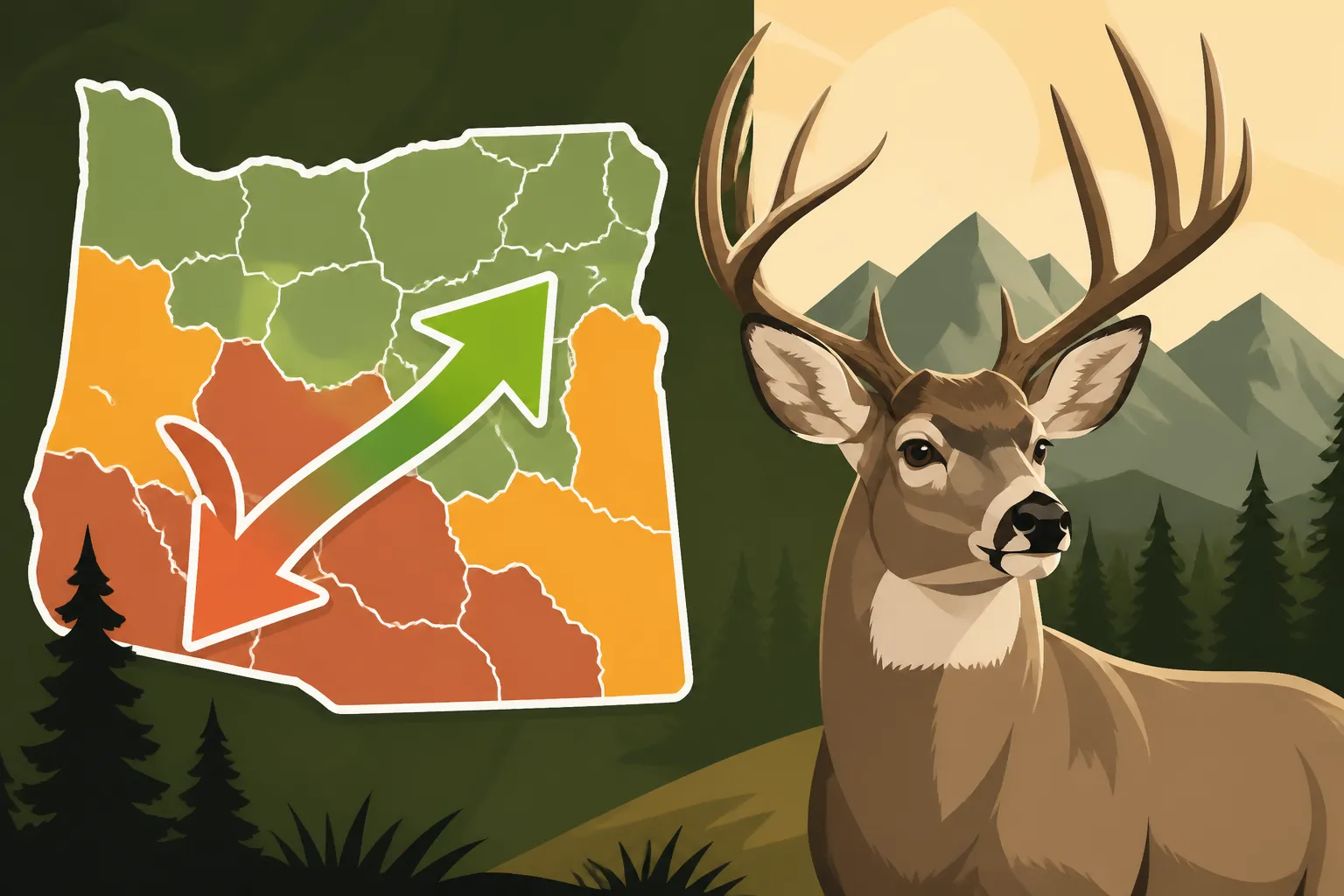
The primary goal of the 2026 restructure is to move towards managing mule deer at a "herd range" level. Instead of discrete, often smaller, hunting units that might fragment a single deer population, the new system aims to group areas that encompass the full annual range of a particular herd—from wintering grounds to summer fawning areas and migration corridors. This holistic view allows ODFW to implement management strategies that consider the entire lifecycle and seasonal movements of the deer, rather than just isolated segments. It's about looking at the bigger picture to foster recovery and sustainability. This shift also impacts how we understand Oregon Mule Deer and the Herd Range Decline.
From Traditional Units to New Herd Ranges
The concept of "herd ranges" is central to the 2026 changes. Imagine a specific group of mule deer that utilizes a large, interconnected landscape throughout the year. Under the old system, this single herd might have been split across several distinct hunting units. This made it challenging for ODFW to set appropriate tag numbers or habitat improvement projects, as actions in one unit might affect deer that spent part of the year in another. The new herd ranges attempt to consolidate these areas, creating larger, more natural management zones.
For hunters, this means some of your familiar units might now be absorbed into a larger herd range, potentially with new names or combined codes. The intent is not to confuse, but to better align human management with deer ecology. These new herd ranges are designed to reflect the actual areas where mule deer live, breed, and migrate, offering a more effective framework for monitoring populations, assessing habitat needs, and making informed decisions about tag allocations. While it requires a learning curve, the long-term benefit is a more robust and responsive management system that prioritizes the health of Oregon's mule deer herds.
Navigating the New Map: Old Units vs. New Hunt Areas
One of the biggest hurdles for seasoned hunters will be translating their knowledge of the old units into the new 2026 hunt area structure. It's not just a simple name change; many areas have been completely reconfigured. Understanding these key conversions and how to interpret the new codes will be essential for planning future hunts.
Key Conversions: What Happened to Your Favorite Units
Many popular Eastern Oregon mule deer units have undergone significant transformations. For example, some units that were once distinct, like the historically separate Warner North and Warner South units, have been combined into a single, larger Warner unit (or a similar designation within a broader herd range). This consolidation aims to manage the entire Warner Valley mule deer population as a cohesive unit. Similarly, areas like the Sled Springs and Sumpter units, well-known for their mule deer opportunities, have been integrated into larger herd range complexes in Northeast Oregon. You can find detailed breakdowns in resources like What Replaced the Sumpter Unit.
These changes mean that the "boundaries" you meticulously learned over the years are no longer valid. Hunters accustomed to specific draws or success rates in a particular unit will need to re-evaluate how these merged or redrawn areas impact their chances and hunting strategies. It's a bit like learning a new language, but with diligent study, you can master the new geography. The best approach is to start by identifying which new herd range encompasses the general areas you've always hunted.
How to Interpret the New Hunt Area Codes
The new system often utilizes alphanumeric codes that might look daunting at first glance. Instead of just a unit name, you might see codes like "NE-02" or "SE-05." These codes typically denote a specific region (e.g., NE for Northeast, SE for Southeast) followed by a number identifying a particular herd range within that region. For instance, the ODFW now refers to Oregon's 22 Mule Deer Herd Ranges, and these codes directly relate to those designations.
This move away from easily recognizable names like "Starkey" or "White River" to more technical codes reflects the shift towards biological management. To decipher these new codes, hunters will need to consult the updated ODFW hunting regulations, which will provide maps and descriptions linking the new codes to their geographic areas. Many mapping applications, like those offered by GoHunt, are quickly updating their platforms to reflect these new boundaries, making it easier to visualize where "NE-02" actually lies on the ground. Familiarizing yourself with these codes is paramount to applying correctly and understanding where your tag is valid. Getting a handle on Old Oregon Unit Names Versus New Hunt Codes will be crucial.
The Impact on Preference Points and Draw Odds
Perhaps one of the most significant concerns for many Oregon hunters revolves around preference points. Years, even decades, of accumulating points for a coveted unit can feel like a sunk cost when the underlying unit structure changes. The 2026 changes will undoubtedly shake up draw odds and how preference points are applied.
Point Creep and Its Implications in the New System
Preference points in Oregon are designed to give hunters a better chance at drawing tags for highly sought-after hunts. However, the consolidation of units into larger herd ranges can have a direct impact on point creep. When multiple smaller units, each with its own history of draw odds and point requirements, are merged, the combined pool of applicants and their accumulated points can drastically alter the landscape. A unit that might have historically required 10 points to draw could now, as part of a larger, more popular herd range, suddenly require 12 or more. This phenomenon, known as "point creep," means the number of points needed to draw a tag increases over time.
For hunters who have been banking points for a specific area, the changes mean a re-evaluation of their strategy. It’s possible that the new combined hunt area now has significantly higher point thresholds, or conversely, it might offer slightly better odds if it's less consolidated than anticipated. Hunters need to carefully study the new draw statistics, which ODFW will release, to understand the new point requirements for their desired hunt areas. This will be key for anyone thinking about How Many Points for a Top Oregon Elk Hunt, as the same principles apply to mule deer. It's not just about what you had for the old unit, but what the new, larger pool of applicants has for the new hunt area.
Party Applications and Point Averaging Under the New Rules
Party applications are a popular strategy for groups of hunters to apply together, often leveraging the points of the highest-point holder. Under the new hunt area structure, the rules for Oregon Party Application Point Averaging will remain largely the same, but the implications could be different. When applying as a party, the system typically averages the points of all applicants or uses the lowest point total, depending on the specific hunt and state regulations (in Oregon, the lowest point total is generally used for the group, but the "75/25 split" impacts point allocation). With new, potentially larger hunt areas, a party that previously had a good chance might find themselves suddenly facing tougher odds if the new boundaries encompass more highly sought-after grounds.
Conversely, some groups might find new opportunities. A party that was always just shy of drawing a specific unit might now find that the consolidated unit, while still competitive, offers a slightly different statistical chance. It's crucial for party members to openly discuss their individual point totals and collectively research the draw odds for the new hunt areas before applying. The impact of the 2026 changes means every group needs to revisit their collective strategy, rather than just assuming past performance will predict future results. This planning is especially critical before the Oregon Controlled Hunt Application Deadline.
Mule Deer Biology and Management in the New Areas
Beyond the administrative changes, the core reason for this restructuring lies in a deeper commitment to mule deer conservation. The new herd range approach allows for a more biologically informed management strategy, addressing the long-term health and sustainability of these iconic animals.
Mule Deer Population Trends and the 2024 Mule Deer Plan
Oregon's mule deer populations have been a topic of serious concern for ODFW and hunters alike. Factors such as habitat degradation from wildfires and development, increased predation pressure from cougars and a growing wolf population, and adverse weather patterns have contributed to significant declines in many areas. The 2024 Mule Deer Plan, which underpins these 2026 changes, is a comprehensive document outlining ODFW's strategy to address these challenges. It sets specific objectives for population growth, habitat improvement, and management actions designed to reverse the downward trend.
The shift to herd range management directly supports the goals of this plan. By focusing on an entire herd's annual cycle, ODFW can better monitor population dynamics, assess fawn recruitment rates, and identify critical bottlenecks in their survival. For example, if a specific herd range is experiencing poor fawn survival, managers can investigate factors across the entire range, from fawning grounds to wintering areas, rather than being confined to the artificial boundaries of an old hunting unit. Understanding Why Oregon Mule Deer Numbers Are Falling is key to appreciating these changes.
Habitat Considerations and Winter Range Protections
Habitat is arguably the most critical component for healthy mule deer populations. The new herd range designations are specifically designed to encompass crucial habitats, including wintering grounds, fawning areas, and migration corridors. In Eastern Oregon, where harsh winters can decimate herds, protecting and enhancing Mule Deer Winter Range in Eastern Oregon is paramount. These winter ranges provide essential forage and cover when snow depths make higher elevations inaccessible.
By managing at the herd range level, ODFW can implement more targeted habitat restoration projects. This might involve working with private landowners to improve forage on agricultural lands, or collaborating with federal agencies like the Bureau of Land Management (BLM) and the Forest Service on prescribed burns to enhance understory vegetation in crucial areas. The new structure also allows for better protection of migration corridors, ensuring deer can safely move between their seasonal habitats, which is vital for genetic diversity and population health. These changes acknowledge that mule deer don't respect human-drawn lines when they're searching for food or seeking shelter.
Practical Steps for Hunters: Adapting to the Changes
Change can be unsettling, but with the right tools and a proactive approach, hunters can not only adapt but thrive under the new Oregon mule deer hunt area structure. It’s about leveraging technology and good old-fashioned boots-on-the-ground effort.
E-Scouting and Map Familiarization
In today's digital age, e-scouting has become an indispensable tool for hunters. With the 2026 changes, it will be more crucial than ever to familiarize yourself with the new herd range boundaries from the comfort of your home. Platforms like GoHunt and onX Hunt are invaluable for this. They allow you to overlay ODFW's new hunt area maps with satellite imagery, public/private land ownership, and historical data. You can zoom in on specific areas, identify potential access points, pinpoint water sources, and mark prospective bedding or feeding areas—all before stepping foot in the field. This capability is directly supported by resources on E-Scouting Oregon Units With Satellite Imagery.
Start by locating your familiar hunting spots on the new maps and identifying which new herd range they fall within. Pay close attention to the new boundaries, noting where they intersect with roads, natural features, or land ownership lines. Many of these mapping apps will highlight Oregon's 300-Foot Rule Beside an Open Road and other regulations, which will be essential to review in the new context. Don't just glance at the maps; spend hours digitally exploring the terrain. This initial e-scouting will save you countless hours of potentially fruitless driving and hiking once the season approaches.
Scouting on the Ground: Learning New Boundaries and Access Points
While e-scouting is powerful, there's no substitute for boots-on-the-ground scouting. Once you've identified your target herd range and have a good digital understanding of its boundaries, it's time to hit the road and trails. Physically driving and walking the new boundaries will help solidify your understanding of the terrain. Look for the physical markers that define these new areas—roads, creeks, ridge lines, or property fences.
Pay particular attention to access points. Just because an area is part of a new herd range doesn't mean access hasn't changed. Some old roads might now be within a new wilderness designation, or private timberland might have shifted its access policies. Check for Reading Green Roads on an Oregon Travel Management Map or other local restrictions. You might discover new walk-in opportunities or realize that a favorite spot is now much harder to reach. Early season scouting, especially during spring and summer, allows you to observe mule deer patterns before the pressure of hunting season sets in. It also gives you time to identify potential camping spots, emergency exits, and reliable water sources within the new boundaries.
Specific Examples of Changed Hunt Areas
To truly grasp the impact of the 2026 changes, it helps to look at some concrete examples of how units have been reconfigured. These aren't just theoretical shifts; they represent tangible differences for hunters in specific regions of Oregon.
Eastern Oregon's Significant Reconfigurations
Eastern Oregon, with its vast sagebrush plains, juniper forests, and rimrock canyons, is prime mule deer country and has seen some of the most substantial changes. Areas once known by single unit names within the Blue Mountains, like Starkey, Ukiah, or Heppner, are now often part of larger "Blue Mountain" herd ranges or similar regional designations. For instance, what was historically the Starkey Unit, famous for its research efforts, is now folded into a broader context. Hunters who previously targeted specific corners of these units will now need to understand the larger context of the new herd range boundaries.
This means a hunt previously thought of as a "Starkey hunt" might now be a "NE-02 Blue Mountains" hunt, encompassing a much larger and potentially more diverse landscape. The challenge lies in understanding how this expanded area changes deer movement patterns, habitat types, and hunter density. GoHunt's detailed unit profiles, once updated with the new 2026 data, will be invaluable for delving into the specifics of these major Eastern Oregon reconfigurations. This will help hunters locate specific access points in units like Wallowa Unit Elk Access in Oregon and other similar large areas.
Addressing Smaller, Merged Units
It's not just the large, famous units that are changing. Many smaller, adjacent units have been consolidated or merged to create more coherent herd ranges. A prime example, as mentioned earlier, is the Warner North and South units in Southeast Oregon, which are now often combined into a single, unified Warner hunt area. This merging aims to treat the mule deer population of the entire Warner Valley as one interconnected group, simplifying management. The implications for hunters can be significant. If you previously hunted only Warner North, you now have a larger area to explore, but also potentially more competition from hunters who traditionally hunted Warner South.
Another example involves units in the high desert region, where smaller, less-pressured units might now be absorbed into larger complexes. This could lead to a redistribution of hunting pressure and necessitate new scouting efforts to find those secluded pockets that still hold quality bucks. These changes reflect a move away from fragmented management to a more cohesive approach, aiming to benefit the mule deer in the long run. Hunters should be prepared for Warner Unit Combined Into One Oregon Hunt to impact their choices.
| Old Unit Name (Pre-2026 Examples) | New Herd Range/Hunt Area (Post-2026 Examples) | Typical Region | Potential Impact on Hunters |
|---|
Future Outlook: The Long Game for Oregon Mule Deer
The transition to new hunting regions and the focused management efforts represent a hopeful, though challenging, shift for Oregon's mule deer. This strategic approach aims to reverse declines and foster more resilient populations for future generations.
ODFW's Vision for Mule Deer Conservation
ODFW's vision, as outlined in their various plans and resource allocations, is clearly focused on achieving sustainable mule deer populations that thrive within healthy ecosystems. This means more than just having enough deer for hunting; it encompasses robust fawn recruitment, genetic diversity, and habitats capable of supporting these animals through environmental changes. The herd range management is a cornerstone of this vision, allowing for specific strategies tailored to the needs of individual herds rather than a one-size-fits-all approach. Their long-term goals include increasing mule deer numbers to historical averages where possible, and maintaining populations at healthy levels throughout the state.
Crucially, this vision recognizes the complex interplay of factors affecting mule deer. It's not just about predator control or habitat work, but a combination of both, alongside careful regulation of hunting pressure. The hope is that by managing mule deer as distinct biological units, ODFW can more quickly identify and address specific challenges, adapting their tactics as new data emerges or environmental conditions shift. This dedication means a continued evolution of hunting rules, making it imperative for hunters to stay informed through outlets like ODFW's website and services such as GoHunt, which often provides summaries of these changes.
How Hunters Can Provide Feedback and Stay Informed
As hunters, we are critical stakeholders in mule deer conservation. Our observations from the field, ethical hunting practices, and active participation in the management process are invaluable. ODFW actively solicits public input on proposed rule changes and management plans. You can often find opportunities to comment during public meetings, online surveys, or by directly contacting your local ODFW biologist. These Oregon Commission Meetings on Hunting Rules are where many of these changes are officially discussed and approved, and your voice can make a difference.
Staying informed means regularly checking the ODFW website for updates, especially as the 2026 regulations approach. Pay attention to proposed rule changes, public comment periods, and the final regulation pamphlet. Subscribing to ODFW newsletters or following their social media channels can also provide timely alerts. Organizations like the Oregon Hunters Association also play a vital role in keeping hunters informed and advocating on their behalf. By engaging thoughtfully and proactively, hunters can contribute to the success of these new management strategies and help secure a brighter future for Oregon's mule deer.
Disclaimer
Please remember that hunting regulations, seasons, and unit boundaries can change frequently. While this guide provides comprehensive information based on current knowledge and ODFW announcements regarding 2026 changes, it is critical for all hunters to consult the official, most up-to-date Oregon Department of Fish and Wildlife (ODFW) hunting regulations pamphlet before planning or participating in any hunt. This guide is for informational purposes only and should not be considered a substitute for official ODFW publications or legal advice.