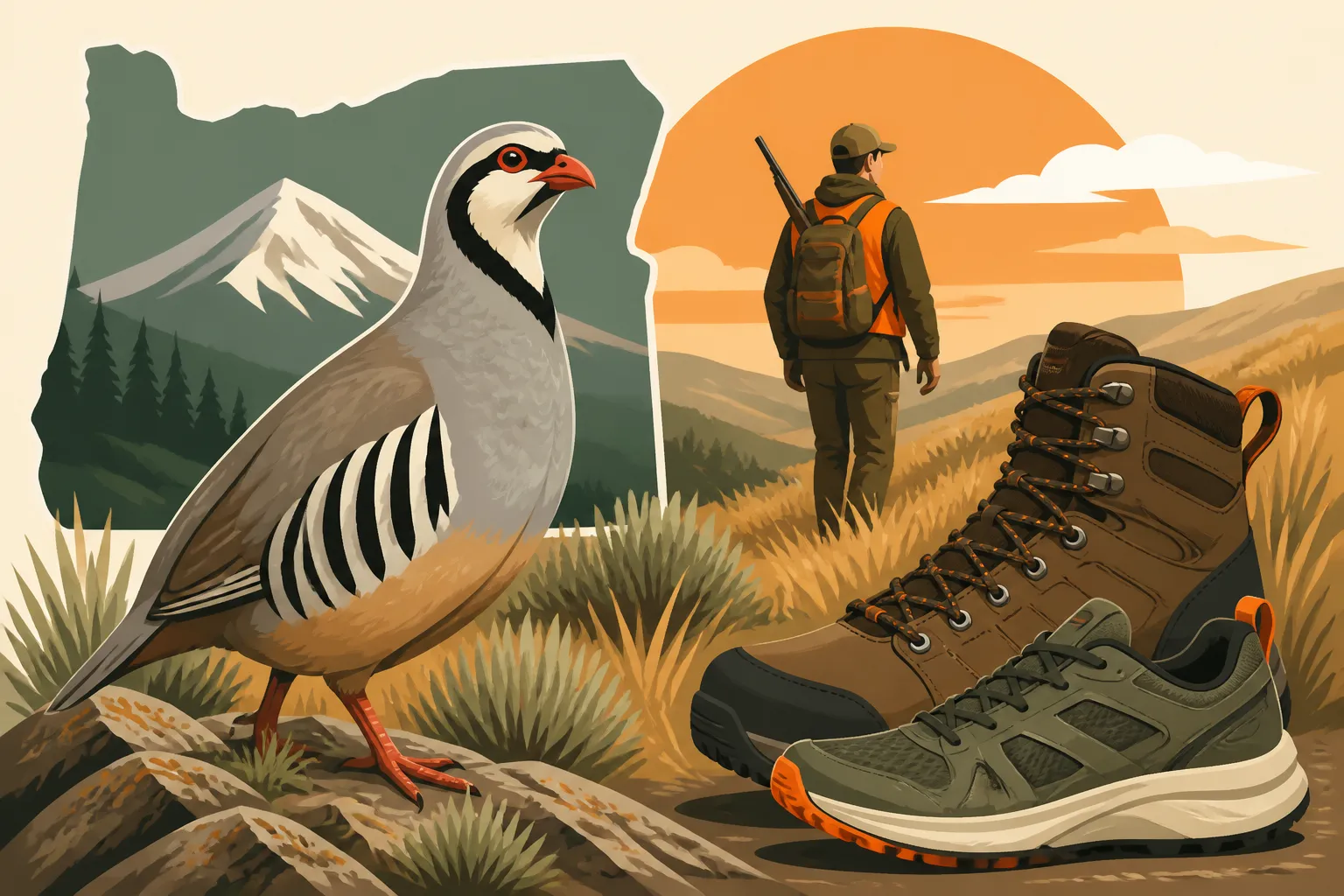
Chukar Country Footwear and Fitness
Chasing chukar in Oregon's high desert isn't just a hunt; it's a brutal, exhilarating test of will, grit, and endurance. Many hunters arrive underprepared, quickly finding their boots failing and their lungs burning, leading to missed opportunities and even dangerous situations in the steep, rocky terrain. This comprehensive guide will arm you with the knowledge to select the right footwear and develop the physical conditioning needed to conquer chukar country, transforming your frustration into triumph.
Understanding Chukar Habitat and Terrain
If you've ever spent a day chasing chukar across the steep, unforgiving hills of Eastern Oregon, you know it’s a special kind of masochism—the good kind, if you’re properly prepared. The sheer verticality and ruggedness of their preferred habitat is what makes chukar hunting both incredibly challenging and immensely rewarding. It's not just a walk in the park; it's a full-body workout that'll humble even the fittest among us.
The Rugged Reality of Oregon's High Desert
Oregon's chukar country primarily exists within its high desert and canyon lands, particularly areas like the Owyhee Breaks, John Day River drainage, and the steep draws leading into the Columbia River. This isn't your average forest floor; we're talking about expansive landscapes characterized by basalt rimrock, loose scree slopes, and dense sagebrush that grabs at your ankles with every step. The ground is a constant mix of sharp rocks, loose shale, and volcanic soil that offers little purchase. You'll often find yourself traversing slopes that feel closer to scaling a wall than walking a trail, with dramatic elevation changes that can drop hundreds or even thousands of feet in a short distance.
Imagine starting your hunt at the bottom of a canyon, glassing for birds on a distant hillside only to realize that "distant" means an hour-long, lung-burning ascent over treacherous ground. The sun beats down, amplifying the heat, and the sparse vegetation offers little shade. The terrain itself dictates your pace, forcing you into an energy-sapping zig-zag pattern, constantly testing your balance and the integrity of your footwear. It's a land where one wrong step can lead to a twisted ankle or worse, miles from any road. This unique challenge is precisely why your gear, especially your boots, and your physical condition are paramount. These birds thrive in an environment that actively works against the unprepared hunter.
Where Chukar Hide: Elevation and Aspect
Chukar are masters of their environment, preferring steep, rocky slopes, often with a southern exposure that provides warmth and quick drying after any precipitation. They cling to elevations generally between 1,500 and 7,000 feet, where the dry, broken terrain offers ample escape routes and good visibility. You'll often find them congregating near scarce water sources—small seeps, springs, or even old cattle troughs—especially during the drier parts of the season. Locating these critical water points can be a key strategy for success, but reaching them often means navigating the most unforgiving sections of the landscape.
When scouting for chukar, you'll be looking at south-facing slopes, benches, and rimrock ledges. These areas offer the birds a perfect blend of sun exposure for warmth, rocks for cover, and scattered cheatgrass or other seeds for forage. The catch? These are also the steepest, rockiest, and most physically demanding areas to access. A seasoned chukar hunter knows that if you're not struggling with the terrain, you're likely not where the birds are. It's in these places, often far from roads and trails, that your chosen footwear truly earns its keep, providing the grip and support needed to maintain footing on loose ground and sharp rock. Understanding their preferred hangouts is the first step, but being physically capable of reaching them is the actual gateway to success. For a broader look at the challenges of upland bird hunting, check out our guide on Chukar and Quail Country in Oregon.
Essential Footwear for Chukar Hunting
There's nothing quite like the heartbreak of a blown-out boot sole or a blister the size of a golf ball miles from the truck, especially when the chukar are busting out of every draw. For chukar hunting, your boots aren't just footwear; they are an extension of your body, your primary piece of safety equipment, and the foundation of your entire hunt. Skimping here is a recipe for misery, injury, and a quick end to your day.
Why Your Boots Are Your Most Critical Tool
The unrelenting nature of chukar terrain puts incredible stress on your feet, ankles, and knees. Every step is an adventure on unstable ground, and without proper support, comfort, and protection, you're not just inefficient – you're vulnerable. Think about it: a hunt often involves traversing steep, uneven ground for hours, covering significant vertical and horizontal distances. Your boots need to cushion impact, prevent twisting on loose rocks, and grip slippery surfaces. A lightweight hiking shoe might feel great on a groomed trail, but it won’t cut it when you’re side-hilling across a scree slope or descending a basalt cliff band.
The consequences of inadequate footwear are manifold. Blisters are just the beginning; they can quickly turn a hopeful day into an agonizing limp back to the vehicle. Far more serious are ankle sprains or breaks, which are a real risk when navigating loose rock fields or unexpectedly stepping into a hidden void in the sagebrush. Moreover, discomfort distracts you from the hunt itself. If you're constantly adjusting your socks, wincing with every step, or worrying about your footing, your focus isn't on reading the terrain, anticipating bird flushes, or safely handling your firearm. Good boots contribute directly to your confidence, safety, and ultimately, your success.
Key Features to Look For in Chukar Boots
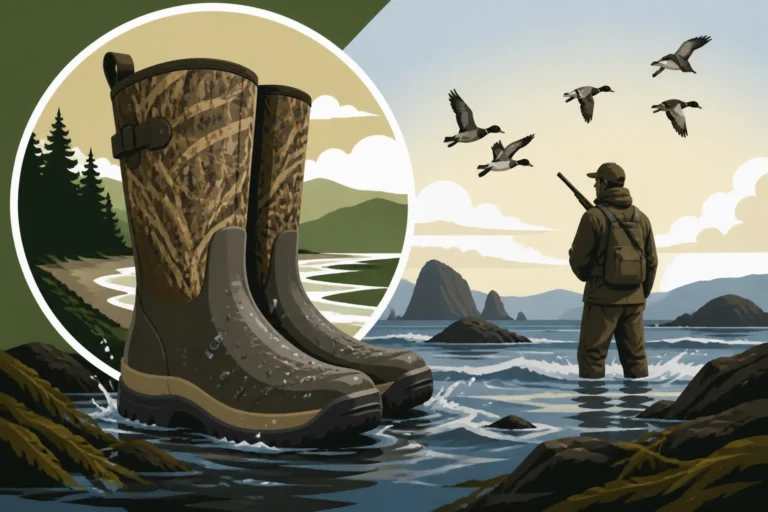
Choosing the right chukar boot means prioritizing durability, stability, and traction. You're looking for a boot that can withstand constant abuse from sharp rocks and abrasive scree, while providing the support needed for steep side-hilling and secure footing on loose ground.
- Stiff Sole and Ankle Support: This is non-negotiable. Look for boots with a stiff midsole that prevents your foot from flexing excessively over sharp objects and provides excellent torsional rigidity for stability on uneven terrain. High ankle support is crucial to protect against rolls and twists, especially when your feet are tired. Brands like Kenetrek, Schnee's, or Crispi are often favored by serious backcountry hunters for their robust construction and proven performance in rugged environments.
- Aggressive Outsole: A deep, aggressive tread pattern, often a Vibram sole, is essential for gripping loose rock, dirt, and sagebrush. The lugs should be spaced well enough to shed mud and debris, maintaining traction.
- Waterproofing and Breathability: While Eastern Oregon is dry, you might encounter dewy mornings, unexpected rain, or small water crossings. A waterproof membrane (like Gore-Tex or similar) is important, but equally crucial is breathability to prevent your feet from overheating and sweating excessively, which leads to blisters.
- Durability and Construction: Full-grain leather uppers combined with synthetic materials often strike a good balance between toughness and weight. Pay attention to the rand—a rubber or synthetic strip around the base of the boot—which provides extra protection against abrasion from rocks. A solid lacing system that holds your foot securely without pinching is also key. When you're researching gear, resources like GoHunt often provide detailed reviews and comparisons of various hunting boots, helping you sift through the options.
- Weight Consideration: While you want durable and supportive, you don't want unnecessarily heavy boots. Every ounce on your foot is like adding pounds to your pack over a long day. Aim for a balance that gives you the needed protection without exhausting you prematurely.
| Feature | Description | Importance for Chukar Hunting |
|---|---|---|
| Ankle Support | High-cut boot shaft with sturdy lacing. | Critical to prevent sprains and rolls on steep, uneven terrain. |
| Sole Stiffness | Rigid midsole that resists flexing. | Protects feet from sharp rocks, provides stability for side-hilling. |
| Outsole Traction | Aggressive, deep-lugged rubber (e.g., Vibram). | Essential for grip on loose scree, dirt, and rock. |
| Waterproofing | Breathable membrane (e.g., Gore-Tex). | Keeps feet dry from dew, light rain, and shallow crossings; prevents blisters. |
| Durability | Full-grain leather, robust rand, strong stitching. | Withstands constant abrasion from rocks, sagebrush, and heavy use. |
| Weight | Balanced between sturdy construction and minimizing fatigue. | Reduces energy expenditure over long, vertical distances. |
Breaking In and Maintaining Your Footwear
Buying the right boots is only half the battle; ensuring they perform when it counts requires proper breaking in and consistent maintenance. Never, ever head into chukar country with brand-new, un-worn boots. This is a recipe for debilitating blisters and misery. Start wearing your new boots months before the season opens. Take them on progressively longer hikes, including steep terrain if possible, to allow the materials to mold to your feet and identify any pressure points. Hiking with a pack, mimicking your hunting load, is also crucial.
Once broken in, maintain your boots diligently. After each hunt, clean off dirt and debris, especially from the lacing system and around the sole. Use a stiff brush and water if necessary. Allow them to air dry completely, away from direct heat sources which can damage materials. Regularly reapply waterproofing treatments, especially to leather boots, to keep them supple and prevent water absorption. Check laces for fraying and replace them if needed. Inspect the outsole for excessive wear or separation, and address any issues before they become catastrophic in the field. A well-maintained pair of quality boots can last for many seasons, but neglect will quickly send them to an early grave, along with your hunting aspirations. For specific advice on keeping your boots in top shape for harsh environments, consider looking at discussions on Boots for Steep Eastern Oregon Country.
Physical Fitness for the Chukar Hunter
If you're serious about chukar hunting, you need to acknowledge a fundamental truth: it's a physically demanding sport that will challenge your limits. This isn't just about walking a few miles; it’s about conquering gravity on unforgiving slopes, and your body needs to be a well-tuned machine to do it effectively and safely.
The "Chukar Workout" is Real
Many hunters underestimate the physical toll of chukar hunting. It's not a casual stroll. A typical day can involve thousands of feet of elevation gain and loss, often repeated several times, across loose, uneven ground that constantly forces your stabilizer muscles to work overtime. Imagine climbing a staircase for an hour, then immediately descending a different one, only both are covered in marbles and sharp rocks, and you're carrying a shotgun and a pack. That's closer to the reality.
This unique demand requires a blend of cardiovascular endurance to keep you going for hours, muscular strength to power up and down hills, and incredible core and ankle stability to maintain balance on treacherous footing. The "easy" parts of a chukar hunt often involve traversing long, sloping hillsides, which can be brutal on the ankles and knees if you’re not prepared. The birds themselves dictate the pace – once you get into them, the adrenaline rush can push you harder and faster than you might normally go, compounding fatigue. It's a relentless pursuit, and if your body isn't ready, you'll be sidelined quickly, either by exhaustion or injury. Many hunters, even those in good shape for other activities, find themselves humbled by the intensity of a dedicated chukar hunt.
Building Stamina and Leg Strength
To truly excel, or even just survive, a chukar hunt, you need a targeted training regimen that addresses the specific challenges of the terrain. Starting your physical training at least 3-4 months before the season is ideal.
- Cardiovascular Endurance: This is your engine. Focus on activities that mimic the sustained effort of a hunt. Hiking, especially with a weighted pack on varied terrain, is paramount. If you don't have access to hills, use a stair climber or treadmill at an incline. Trail running is also excellent for building aerobic capacity and improving agility. Aim for sessions of 60-90 minutes, 3-4 times a week, gradually increasing intensity and duration.
- Leg Strength and Power: Your legs are your primary movers. Incorporate exercises like squats, lunges (forward, reverse, and lateral), step-ups onto a box, and calf raises. These build the strength needed for climbing and the eccentric strength vital for controlled descents, which can be even harder on your quads and knees than climbing. Consider adding plyometric exercises like box jumps to build explosive power for quick movements.
- Core Strength and Stability: A strong core is your body's foundation, crucial for balance and preventing injury on uneven ground. Planks, side planks, Russian twists, and medicine ball exercises are excellent. Don't neglect ankle strengthening exercises with balance boards or resistance bands, as strong ankles are your first line of defense against rolls.
- Backpacking Simulation: If you plan on multi-day hunts or even long day trips with a heavier pack, train with your actual hunting pack weighted. This helps your body adapt to carrying gear while navigating difficult terrain. For a deeper dive into preparing your body for the rigors of hunting, you might find our article on Physical Training for an Oregon Elk Hunt helpful, as many principles translate directly.
Acclimatization and Recovery
Beyond structured workouts, successful chukar hunting also hinges on smart acclimatization and diligent recovery. If you're coming from a lower elevation, spend a day or two in the general area of your hunt before hitting the hills hard. Your body needs time to adjust to thinner air, even if it's only a few thousand feet difference. The effects of elevation on performance and recovery can be significant.
During the hunt itself, prioritize hydration. The dry, high desert environment combined with intense physical exertion can lead to rapid dehydration. Carry plenty of water and electrolyte mixes. On multi-day trips or even long day hunts, proper nutrition is key to sustaining energy. Pack nutrient-dense, easily digestible snacks like nuts, dried fruit, jerky, and energy bars. At the end of a strenuous day, don't skip stretching. Focus on your hamstrings, quads, calves, and hips. Proper stretching and foam rolling can significantly aid muscle recovery, reducing soreness and preparing you for another day on the mountainside. Taking care of your body during and after the hunt is just as important as the preparation beforehand.
Beyond Boots: Supportive Gear for Tough Terrain
While your boots and fitness are paramount, other pieces of gear can make an enormous difference in your comfort, safety, and effectiveness in chukar country. These items often go overlooked but contribute significantly to mitigating the brutal realities of the terrain.
The Unsung Heroes: Socks and Gaiters
You can have the best boots money can buy, but without the right socks, you're still asking for trouble. Socks are your first line of defense against blisters, and they play a critical role in moisture management.
- Merino Wool Socks: These are a chukar hunter's best friend. Merino wool naturally wicks moisture away from your skin, regulates temperature (keeping feet warm when cold, cool when hot), and resists odor. Crucially, it retains insulating properties even when wet. Look for cushioned hiking socks that provide extra padding in high-impact areas like the heel and ball of the foot. Brands like Darn Tough or Smartwool are popular for their durability and comfort.
- Sock Layering: Some hunters swear by a thin liner sock made of synthetic material or thin merino underneath a thicker wool sock. The idea is that any friction will occur between the two sock layers rather than between the sock and your skin, preventing blisters. Experiment to find what works best for your feet.
- Gaiters: These are often overlooked but incredibly valuable. Chukar country is filled with loose rocks, sharp cheatgrass, and prickly sagebrush. Gaiters, typically made of durable nylon or Cordura, fit over your boots and lower pant legs, creating a barrier that prevents debris, dirt, and seeds from getting into your boots. Not only does this save your feet from constant irritation, but it also protects your laces and the lower part of your pant legs from wear and tear. They are a small investment that pays huge dividends in comfort and boot longevity. GoHunt often features discussions and reviews on essential gear like gaiters, providing insights from experienced hunters.
Trekking Poles: Your Best Friends on Steep Slopes
If you haven't adopted trekking poles for chukar hunting, you are seriously missing out. These aren't just for backpacking; they are game-changers on steep, loose terrain.
- Improved Balance and Stability: Think of trekking poles as adding two extra points of contact with the ground. This significantly improves your balance, especially when traversing steep side-hills or scrambling over loose rock. It dramatically reduces the risk of falls, a critical safety factor when you're far from help.
- Reduced Joint Impact: Descending steep slopes is brutal on your knees and ankles. Trekking poles absorb a significant amount of the impact, distributing the load across your upper body and arms, saving your lower joints from excessive wear and tear. This means less soreness at the end of the day and a better chance of being able to hunt hard the next.
- Enhanced Uphill Propulsion: When climbing, you can use the poles to push off, providing an extra boost with each step, which helps conserve energy. They effectively turn a portion of your upper body strength into forward momentum.
- Testing the Terrain: Before stepping onto a questionable patch of ground, you can use your poles to probe for stability, hidden holes, or slippery spots. This proactive approach can prevent many an ankle twist or fall. Look for lightweight, adjustable poles, ideally carbon fiber or strong aluminum, with comfortable grips. For tough terrain often encountered in chasing game, a reliable set of poles is almost as essential as a good rifle, especially when considering Hunting a Recent Burn for Elk or other challenging environments.
Hydration and Nutrition on the Go
The high desert environment and strenuous activity demand constant attention to hydration and nutrition. You simply cannot perform at your best, or even safely, if you're dehydrated and running on empty.
- Hydration Systems: Forget carrying just one water bottle. You need a reliable hydration system. A water bladder in your pack (2-3 liters is a good starting point) with a hose that comes over your shoulder allows for continuous, easy sipping without stopping. This encourages regular hydration, which is far more effective than chugging water only when you feel thirsty. Supplement this with a smaller Nalgene or insulated bottle for electrolyte mixes.
- Electrolytes: Water alone isn't always enough, especially on hot, strenuous days. Electrolyte packets or tablets (like Liquid IV, Nuun, or similar brands) are crucial for replenishing salts and minerals lost through sweat, preventing cramps and fatigue.
- Quick-Energy Snacks: Pack an array of calorie-dense, easy-to-eat snacks that provide sustained energy. Examples include energy bars, trail mix, jerky, nuts, dried fruit, and even small packets of gels or chews for quick boosts. Avoid heavy, greasy foods that can sit in your stomach. The goal is consistent fuel, easily accessible without a major stop. Keep a few items in an easily reachable pocket for quick grabs. Adequate planning for food and water is just as vital as navigation, especially for multi-day excursions or remote trips, similar to planning for Backpack Camps in Oregon Wilderness.
Disclaimer
Please note: This article offers general information and recommendations. Hunting regulations, access policies, and environmental conditions in Oregon can change. Always consult the most current Oregon Department of Fish and Wildlife (ODFW) regulations and local land management agency rules before planning any hunt. Safety should always be your top priority. Ensure you have proper training, experience, and equipment for any hunting activity, and consider consulting with local experts or guides.