Leaving Gates and Fences as You Found Them
There's nothing quite as frustrating as showing up for an eagerly anticipated hunt, only to find access blocked or, worse, discover that a previous hunter's carelessness has jeopardized future opportunities. One of the most common, yet easily avoidable, pitfalls in Oregon hunting involves gates and fences. Leaving them improperly handled can ruin landowner relations, close critical access points, and tarnish the reputation of all hunters. This guide is here to walk you through the nuances of proper gate and fence etiquette, ensuring you uphold the unwritten rules of the backcountry.
The Golden Rule of Oregon Hunting Access
The phrase "leave it as you found it" isn't just a polite suggestion; it's a foundational principle that underpins access to countless hunting areas across Oregon. Whether you're navigating a remote Forest Service road or crossing a private ranch with permission, understanding and respecting the purpose of gates and fences is paramount. Failing to do so can lead to swift and often permanent loss of access for everyone.
Why Gates and Fences Matter So Much
Think about it from a landowner's perspective. Gates and fences aren't merely decorative features; they are essential tools for managing livestock, defining property lines, controlling vehicle traffic, and protecting sensitive areas. Many ranchers and farmers in Oregon rely on these barriers to keep their cattle, sheep, or horses contained, preventing them from wandering onto highways, into neighboring properties, or simply disappearing into vast tracts of timberland. Losing even one animal due to a gate left open can represent a significant financial hit and an immense amount of stress for a family.
Beyond livestock, fences mark boundaries. In a state like Oregon, where private timberland, ranching operations, and public lands often intertwine, these demarcations are crucial. They tell you where you are legally permitted to be and where you're not. Ignoring or damaging a fence is not just rude; it's often a form of trespass and can lead to legal consequences. The physical barrier also controls who comes and goes, providing a sense of privacy and security for those who live and work on the land. When hunters disregard these structures, it's a direct affront to their property rights and peace of mind, leading to resentment and, inevitably, land closures. We've all heard stories of valuable hunting ground being shut down because of a few bad apples, and it’s infuriating when a simple act of respect could have prevented it.
Understanding Different Gate Types and Their Purpose
Oregon's diverse landscape means you'll encounter a variety of gate types, each with its own quirks and proper handling. Understanding these can prevent awkward moments and ensure you always leave things just right.
You might come across classic wire gates, which are essentially stretched sections of barbed or woven wire that latch onto a post. These are incredibly common in ranching country and require a bit of technique to open and, more importantly, to close tightly. A poorly re-latched wire gate will sag, allowing small livestock to push through or, over time, causing the wires to weaken and break. Then there are sturdy wooden gates and robust pipe gates, often found on more established entrances or main access roads. These typically have simple pin, chain, or hook latches that are straightforward to operate but still require care to ensure they're secure. Some large, heavy gates may even have a counterweight system.
Beyond these, you'll see cattle guards. These are a welcome sight as they allow vehicles to pass without the need to open and close anything, while still preventing livestock from crossing. However, be mindful of their condition; rough cattle guards can be hard on vehicles, and a broken one can be a hazard. Finally, on industrial timberlands or in areas undergoing logging, you might encounter temporary cable or chain gates. These are usually less formal, often just a chain wrapped around a post or a cable secured with a padlock. They're designed for temporary access control, and it's imperative that if you find one closed and locked, you do not attempt to bypass it unless you have explicit permission and a key or combination. Always be on the lookout for signs posted on or near these gates, which might contain specific instructions from the landowner or managing agency. Recognizing these different types and their intended use is the first step toward responsible access.
Navigating Gates and Fences on Public and Private Land
Whether you're hunting vast national forest lands or a small, private parcel, gates and fences play a critical role in managing access and resources. The rules, while sometimes seeming similar, can have vastly different implications depending on the land ownership.
Public Land Gates and Closures
It might seem counterintuitive to find locked gates on public lands like the U.S. Forest Service or Bureau of Land Management (BLM), but these barriers are put in place for very important reasons. Often, they are integral to the function of Travel Management Areas (TMAs). In many parts of Oregon, particularly in Eastern Oregon and some areas of the Coast Range, vehicle access is restricted to certain designated roads during hunting season. Gates help enforce these rules, directing hunters to open routes while protecting vulnerable areas from vehicular disturbance. If you've ever found yourself scratching your head at a locked gate on a forest road, chances are it's part of a TMA plan. Understanding Reading a Travel Management Area Map Before You Drive is crucial for navigating these areas effectively.
Furthermore, many public land gates are used to implement seasonal closures, especially those designed to protect wintering wildlife. For instance, specific roads and areas might be closed off with gates from late fall through spring to provide undisturbed habitat for deer and elk during their most vulnerable times. Knowing about Oregon Roads Closed to Protect Wintering Deer is not just good practice, it's a legal requirement. These gates aren't meant to be an annoyance; they're a vital part of conservation efforts, ensuring game populations can thrive without undue pressure. Disrespecting these closures by breaking locks or finding ways around gates is not only illegal but deeply damaging to the resource. It can lead to stricter regulations and less access for everyone in the long run.
Respecting Private Land Access Points
Gaining access to private land in Oregon is a privilege that comes with significant responsibilities, and proper gate etiquette sits at the top of that list. Many hunters traverse private property simply to reach public land, especially in checkerboard areas where federal and private ownership intermingle. Other times, you might have specific permission to hunt a private parcel, perhaps through direct contact with a landowner, or through programs like Oregon's Access & Habitat Program or the Open Fields program.
When you're dealing with private land, the stakes are even higher. A landowner's trust is a fragile thing, easily broken by a misplaced gate latch. This is why clear communication is absolutely key when you're Asking a Landowner for Access. Don't just ask if you can hunt; ask about their specific rules for gates. Do they want all gates closed, even if you find them open? Are there specific latches or chains they prefer you use? Every rancher has their routine, and respecting it shows you're serious about being a responsible guest.
Many landowners have become jaded by past experiences where gates were left open, livestock wandered, or property was damaged. This leads to them simply closing off access entirely, often with "No Trespassing" signs becoming permanent fixtures. Programs like GoHunt offer invaluable resources for hunters looking to understand land ownership and access points. Using GoHunt's detailed mapping tools, you can identify property boundaries, see where public and private lands meet, and even locate potential access points before you ever set foot on the ground. This kind of preparation, reinforced by ethical behavior like proper gate management, goes a long way in maintaining and even expanding the limited private land access available to Oregon hunters.
Practical Steps for Proper Gate Etiquette
So, you've found a gate. What's the protocol? It’s more than just swinging it open and shut. There’s a deliberate process to ensure you’re leaving it exactly as you found it and upholding the good name of hunters everywhere.
Before You Enter or Exit
First things first: slow down. Don't approach a gate with your truck barreling toward it, ready to leap out and yank it open. Take a moment to assess the situation. Is the gate closed or open? What kind of latch does it have? Are there any signs posted on it or nearby? These signs might give you specific instructions, such as "Please Close Gate" or "Open Gate – No Need to Close." Always assume a closed gate should remain closed unless a sign explicitly states otherwise, and an open gate should remain open unless a sign directs you to close it. When in doubt, leave a closed gate closed and an open gate open.
Look around for any livestock that might be nearby. If you see cattle, sheep, or horses, you know this gate is vital for their containment. This extra awareness should reinforce the importance of your actions. Also, consider the terrain. Is it muddy? Steep? Make sure your vehicle is in a safe spot, not blocking the road, and that you can open and close the gate without putting yourself or others at risk. It’s also a good habit to ensure you haven't dropped any tools, trash, or anything else near the gate that could fall out or be left behind, disrespecting the area.
The "As You Found It" Principle in Action
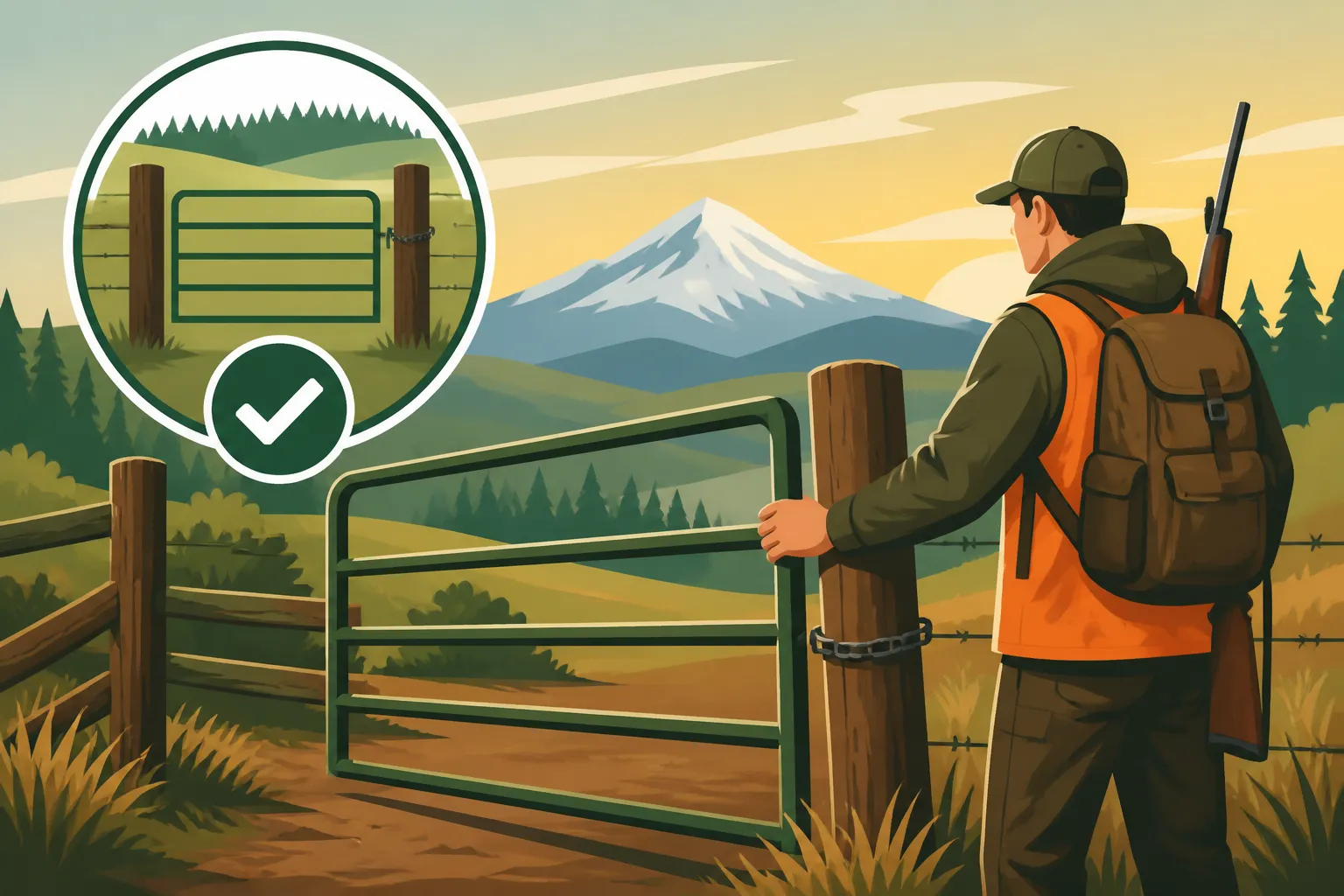
This is where the rubber meets the road. The "as you found it" principle means replicating the exact state of the gate once you've passed through. If you find a wire gate secured with a specific looping technique, take note, and re-secure it the exact same way. If it's tied off with a piece of twine, re-tie it precisely. It sounds trivial, but these small details are often specific to the landowner's preference and utility.
A cardinal rule: if a gate is closed, always close it behind you. Even if you don't see livestock, there might be a reason for it being closed – perhaps to prevent vehicle access, or to simply delineate a property line. Never assume you know better than the landowner or land manager. The risk of leaving it open is too high, leading to livestock escaping, unauthorized vehicle access, or simply showing a lack of respect. Similarly, if you find a gate open, and there's no sign telling you to close it, leave it open. The landowner might have it open for a specific reason, such as actively moving cattle, or it could be a permanent access point that is meant to remain unlatched. Interfering with their operational choice could cause them more problems than leaving it alone.
Here's a quick guide to common gate types and the "as you found it" rule:
| Gate Type | Common Purpose | "As You Found It" Action (General Rule) | Nuances / Important Notes |
|---|---|---|---|
| Wire Gate | Livestock containment, boundary | If closed, re-stretch and re-latch securely. If open, leave open. | Can be tricky to re-latch tightly; ensure wires are not left sagging. |
| Wooden Gate | Boundary, access control | If closed, re-latch the same way (pin, chain, hook). If open, leave open. | Often more robust; check for broken hinges or posts. |
| Metal/Pipe Gate | Vehicle control, security | If closed, re-latch. If locked, do not bypass. If open, leave open. | May require specific actions (e.g., re-chaining). Some are permanently open. |
| Cattle Guard | Livestock barrier | N/A (drive over) | Be aware of potential deep ruts or broken grates, drive slowly. |
| Cable/Chain Gate | Temporary closure, logging | If closed, re-fasten tightly. If open, leave open. | Often less secure, easily overlooked if not fastened properly. |
What if you find a gate that looks damaged, or one that was clearly meant to be closed but you found it wide open with livestock nearby? This is a moment for judgment. While the general rule is "as you found it," if you can clearly prevent a major problem (like cattle escaping), it's often best to secure the gate. However, if you do this, it's absolutely crucial to try and contact the landowner or the managing agency (e.g., ODFW, Forest Service, BLM) to report what you found and what action you took. This prevents misunderstandings and shows responsible stewardship. Remember, your actions are a reflection on all hunters.
The Long-Term Impact of Gate Mismanagement
The consequences of neglecting gate etiquette extend far beyond a single hunting trip. Every time a gate is left open, a lock is cut, or a fence is damaged, it erodes the trust between landowners and hunters. This collective responsibility means that one person's careless act can lead to the closure of an entire ranch or timber property to public hunting access. We've seen it happen countless times across Oregon. This is especially true for programs like Oregon's Access and Habitat Program Lands, which rely on the goodwill of private landowners to open their property for public recreation. When that goodwill is breached, these invaluable opportunities vanish.
Think about the bigger picture. When a landowner decides to shut down access, it's not just that specific piece of ground that's lost; it also fuels a broader narrative that paints all hunters as irresponsible. This negative perception makes it harder for ODFW and other conservation organizations to secure new access agreements or maintain existing ones. By consistently demonstrating respect for private property and diligent gate management, you're actively contributing to a positive image for the hunting community. Tools like GoHunt not only help you find hunting areas but also encourage ethical practices by providing detailed land ownership information, fostering a community of responsible outdoorsmen. Being a good steward isn't just about following rules; it's about actively building and maintaining relationships that preserve hunting traditions for future generations.
Tools and Technology for Responsible Access
In today's hunting world, modern technology is a powerful ally in ensuring responsible access. Gone are the days of relying solely on paper maps and word-of-mouth directions; now, sophisticated mapping applications and diligent research can prevent many common access issues.
Mapping Apps and Their Role
One of the most significant advancements for hunters has been the rise of detailed mapping applications. Platforms like GoHunt and OnX have revolutionized how we scout and navigate hunting areas. These apps overlay property ownership data onto topographic maps, allowing you to instantly distinguish between public and private land. This is incredibly valuable in Oregon, where public lands (like National Forests and BLM parcels) are often interspersed with private timber holdings and ranches. Before you even leave home, you can use these tools for E-Scouting Oregon Units With Satellite Imagery, identifying potential gates, access roads, and property boundaries.
Specifically, these mapping systems can show you the intricate boundaries of various landholders, including major industrial timber companies like Weyerhaeuser or Hancock. Many of these companies have their own complex permit systems and specific rules for public access, which can include particular gate protocols. Understanding Weyerhaeuser and Hancock Permit Systems or even knowing where to find Walk-In Only Gates on Industrial Timber is made infinitely easier with a good mapping app. By knowing exactly whose land you're on and what their access rules are, you can avoid accidental trespass and ensure you're following the correct gate procedures. This proactive approach saves headaches, prevents conflicts, and keeps doors open for fellow hunters.
Communication and Due Diligence
Even with the best mapping technology, there's no substitute for direct communication and thorough due diligence. If you have secured permission to hunt private land, always take the time to have a detailed conversation with the landowner about specific gate and fence expectations. Don't be shy about asking direct questions: "Are all gates to be closed, even if I find them open?" "Is there a specific way you prefer this wire gate to be latched?" "Are there any areas where I should avoid crossing fences, even if they're on your property?" These questions demonstrate respect and a genuine commitment to being a responsible guest.
Beyond private land, it's always wise to consult official sources for public land regulations. The Oregon Department of Fish and Wildlife (ODFW) annually publishes its Big Game Regulations pamphlet, which details important information on access, special rules for Travel Management Areas, and any winter range closures. Their website is also a treasure trove of current information. Modern apps often integrate much of this ODFW data, making it easier to consume, but a quick check of the official pamphlet is always a good backup. Moreover, being aware of regulations like Oregon's 300-Foot Rule Beside an Open Road ensures you're always in compliance, even when approaching a gate right off a public thoroughfare. Platforms like GoHunt not only visualize property boundaries but also often highlight important regulations and access advisories specific to Oregon, providing a comprehensive resource that helps hunters stay informed, compliant, and ultimately, responsible stewards of the land.
Disclaimer
The information provided in this guide is for general informational purposes only and is not intended as legal advice. Hunting regulations and land access policies in Oregon can change frequently. Always consult the most current Oregon Department of Fish and Wildlife (ODFW) regulations, specific land manager rules (e.g., US Forest Service, BLM, private timber companies), and, when applicable, direct landowners for the most accurate and up-to-date information before engaging in any hunting activities. Adherence to all local, state, and federal laws and regulations is the hunter's sole responsibility.