Asking About Physical Demands
It’s a common worry among hunters, especially as we get a little older or consider a new type of hunt: "Am I fit enough for this?" The fear of holding back a hunting party or, worse, putting yourself in a dangerous situation due to physical limitations, is incredibly real. This comprehensive guide will help you understand the types of physical demands common in Oregon's diverse hunting landscape and, crucially, what questions to ask your outfitter or guide to ensure you're signing up for an adventure that matches your capabilities, not just your dreams.
Why Understanding Physical Demands is Critical for Oregon Hunts
Oregon offers an incredible array of hunting experiences, from the dense, wet coastal rainforests chasing Roosevelt elk to the rugged, high desert rimrock of Eastern Oregon for mule deer. Each environment presents its own unique physical challenges, and assuming all hunts are created equal can lead to a really tough, or even miserable, experience. Nobody wants to be the person huffing and puffing two steps behind the guide, feeling like they’re letting everyone down.
When you're investing your time, money, and precious tag opportunity into a guided hunt, you want to make sure it's a good fit from every angle. Ignoring the physical aspect is like buying a pair of boots without trying them on—they might look good, but they'll cripple you when you hit the trail. It’s not about being an Olympic athlete; it's about being realistic and prepared for what the hunt will actually demand of your body. An honest conversation upfront can prevent a lot of heartache and ensure you enjoy the challenge rather than simply endure it.
Matching Expectations with Reality
Many of us envision ourselves effortlessly scaling mountains or still-hunting through thick timber for miles on end, but the reality of a multi-day backcountry hunt can be a rude awakening if you haven't prepared. The romantic notions of hunting often gloss over the sheer physical exertion involved. You might see photos of hunters with trophy animals, but you don't see the hours of climbing, the heavy pack, or the brutal weather conditions that often precede that moment.
When you talk with an outfitter, it's easy to want to paint yourself as tougher than you are, but this is one conversation where absolute honesty is your best friend. A good guide isn't looking for a Navy SEAL; they're looking for someone who understands what's expected and has made an honest effort to prepare. By understanding the real physical expectations, you can better prepare yourself physically and mentally. This alignment of expectations ensures a safer and more enjoyable experience for everyone involved, making the success of the hunt feel truly earned.
The Impact of Oregon's Diverse Terrain
Oregon's landscape is incredibly varied, and so are the physical demands it places on a hunter. A hunt for Roosevelt Elk in Western Oregon in the Coast Range timber is going to feel vastly different than a high-desert Oregon Mule Deer and the Herd Range Decline hunt in the Steens Mountain region. The terrain dictates everything from your footwear choice to the type of pack you’ll need, and most importantly, your energy expenditure.
In Western Oregon, you're often dealing with steep, slippery slopes covered in thick underbrush like salal and sword fern. It’s a constant battle against gravity, slick mud, and tangles of vegetation that try to trip you at every step. Combine that with frequent rain, and you're looking at a serious test of endurance and balance. Contrast this with Eastern Oregon, where you might be glassing vast sagebrush flats or scaling rocky rimrock, dealing with significant elevation changes, but often on drier, more open ground. The air is thinner at higher elevations, and long hikes under a relentless sun can be just as demanding, if not more so, than slogging through the wet timber. Understanding these regional differences is the first step in asking the right questions.
Breaking Down the Types of Physical Challenges
When you’re talking to an outfitter or guide, "physical demands" isn't a single concept. It's a collection of various challenges that, when combined, create the overall difficulty of a hunt. Breaking these down helps you ask specific questions and gives you a clearer picture of what you'll actually be doing day in and day out.
Elevation Gain and Loss
Oregon is a state of mountains, valleys, and deep canyons. Whether you're chasing elk in the Cascades or pursuing mule deer in the Blue Mountains, you're almost guaranteed to encounter significant elevation changes. This isn't just about how high you climb; it's about the cumulative effect of going up and down repeatedly throughout the day.
Think about hunting the rugged drainages of the Hells Canyon National Recreation Area, where you might drop thousands of feet into a canyon just to climb back out, possibly with a heavy pack. Or stalking Blacktail Deer Hunting in Oregon's Coastal Clearcuts, where clearcuts often mean steep, unstable terrain that can feel like climbing a ladder for hours. When talking to a guide, ask not just about the maximum elevation, but the typical daily elevation gain and loss. Is it a continuous uphill grind for hours, or is it rolling hills with short, steep bursts? The sustained effort of consistent elevation changes can wear down even fit individuals if they aren't prepared for it. It's also important to consider how that elevation affects your breathing and energy levels, especially if you're coming from a lower altitude.
Distance Covered Daily
The mileage you cover each day can vary wildly between hunt styles and target species. Some hunts might involve minimal walking, mostly glassing from a truck or an easily accessible overlook, while others are true backcountry expeditions where you might put in double-digit miles on foot.
A typical day Archery Elk Hunting Oregon's August and September Seasons in the thick timber of Western Oregon might only cover 3-5 miles, but every one of those miles is a hard-fought battle through brush and over blowdown, making it feel much further. In contrast, still-hunting vast sagebrush country for antelope or Glassing Eastern Oregon Rimrock for Mule Deer could mean covering 8-10 miles, but on relatively open ground. Always ask about the typical daily mileage. Is it mostly walking on established trails or roads, or is it off-trail bushwhacking through dense cover? If you're considering a multi-day backpack hunt, you also need to factor in carrying all your gear for those miles.
Pack Weight and Packing Out Potential
This is arguably the most demanding aspect of any successful big game hunt: getting the animal out. Even if the stalk and shot were easy, the real work begins when an animal is on the ground, especially with an animal as large as an Oregon elk. The question isn't just "can I hike?" but "can I hike with 50-80 pounds on my back?"
For elk, you’re looking at hundreds of pounds of meat, bone, and hide that needs to be moved, often in challenging terrain, potentially miles from the nearest road. Your guide might have pack animals, a UTV, or a crew of assistants, but you should always assume you'll be expected to contribute to the effort. Ask about the guide's specific packing-out strategy. Will you be expected to carry a quarter of an elk yourself? For how far? What about your own gear? If you're considering a more remote hunt or a spike camp setup, this becomes even more crucial. Some services offer Horse and Llama Packing Into Oregon Backcountry, which can significantly reduce the physical strain of packing, but even then, you'll still be hiking in and out with your day pack.
| Hunt Style | Typical Daily Distance | Elevation Change | Packing Out Expectation |
|---|---|---|---|
| Drive-and-Glass | 1-3 miles | Minimal (vehicle) | Minimal personal carry, guide assists with vehicle |
| Day Hunt (Walk-in) | 3-7 miles | Moderate | Carry day pack, assist guide with lighter loads |
| Spike Camp | 5-10 miles | Significant | Carry personal gear to camp, assist with meat quarters |
| Wilderness Pack-in | 8-15+ miles (total) | Extreme (steep/rugged) | Carry heavy pack to/from camp, full meat quarter load |
What to Ask Your Outfitter or Guide
Now that you understand the various components of physical demands, you can frame your questions to get clear, actionable answers from potential guides. Don’t be shy; your safety and enjoyment depend on it. This is your chance to really vet the experience.
Be Specific About Daily Activities
When you inquire about a hunt, don't just ask, "Is this a physically demanding hunt?" That's too vague and can be open to interpretation. What one guide considers "easy" might be a death march for another. Instead, ask for a detailed breakdown of a typical day.
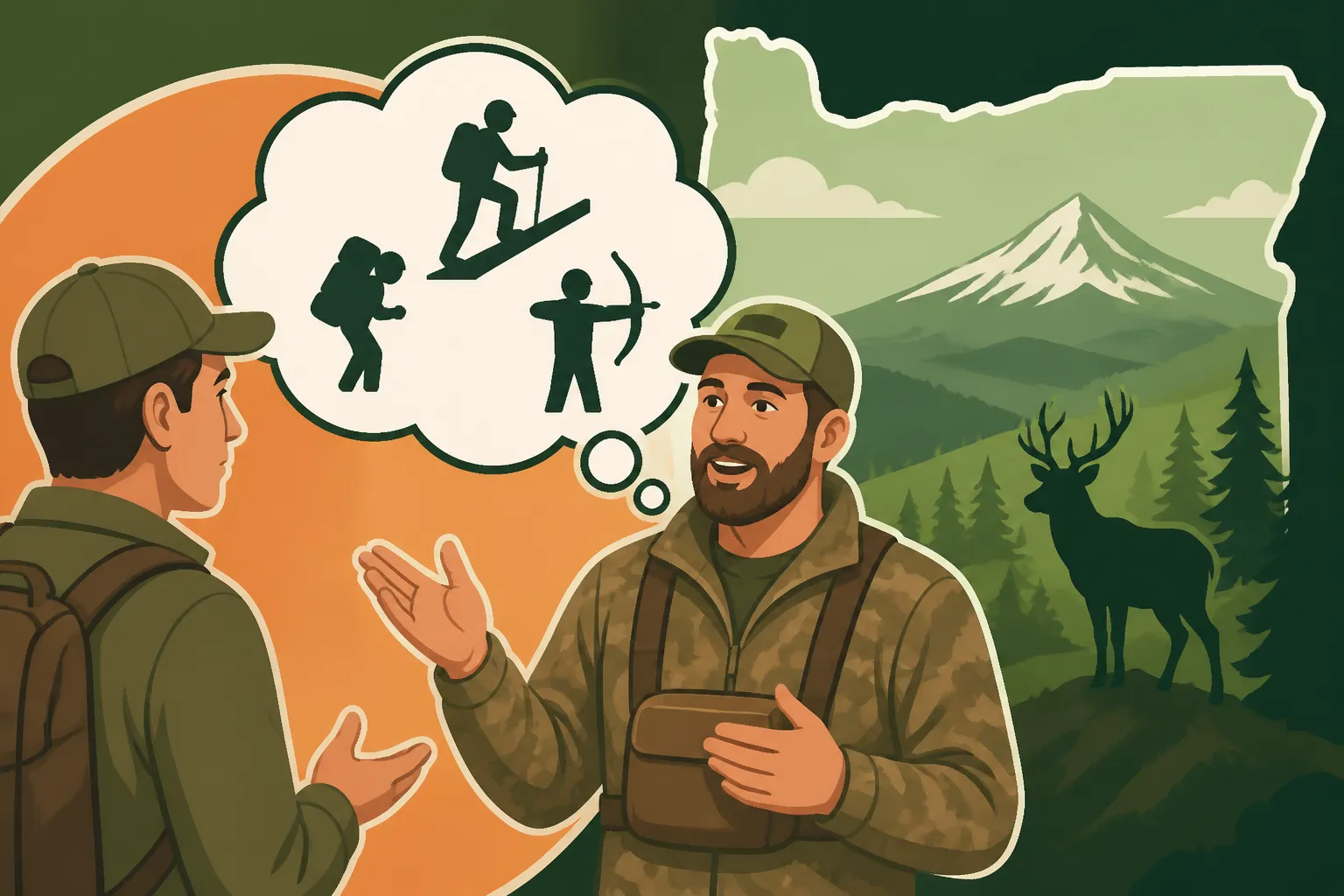
"Can you walk me through what an average day on this particular hunt looks like?" is a great starting point. Follow up with questions like:
- "How far do we typically walk from the vehicle each morning?"
- "What's the average daily mileage we cover on foot?"
- "What kind of terrain will we be primarily covering—ridge tops, canyon bottoms, dense timber, open sagebrush?"
- "How much elevation gain and loss should I expect on a typical day?"
- "What's the longest hike you've had a client do on this hunt?"
If the guide uses terms like "moderate" or "strenuous," ask them to quantify it. "What does 'strenuous' mean in terms of mileage and elevation for your clients?" This pushes them to give you concrete details you can relate to your own fitness level. Platforms like BookYourHunt often have detailed hunt descriptions, but always follow up directly with the outfitter to clarify.
Inquire About Their Pack-Out Strategy
This is where the rubber meets the road. Successful hunts often mean a lot of hard work after the animal is down. Clarify expectations around the packing process.
- "What is your plan for getting an animal out once it's on the ground?"
- "Do you use pack animals, ATVs, or is it entirely on foot?"
- "What is the maximum distance you've had to pack an animal out on this hunt?"
- "What is the average pack weight you expect clients to carry if we get an animal down?"
- "How many people are typically in the party to help with packing?"
Understanding their approach to Quartering and Packing an Elk Alone or with a team is crucial. If they expect you to carry a full elk quarter for several miles over rough terrain, you need to know that beforehand. Some outfitters will have dedicated packers, while others expect a full team effort from everyone in camp. Be clear about what you're capable of contributing and what support you'll have.
Discuss Contingency Plans and Support
Sometimes things don't go as planned. A hunter might get injured, or the weather could turn unexpectedly. A good outfitter will have contingency plans in place, and their readiness can speak volumes about their professionalism and concern for client safety.
- "What happens if a client experiences an injury or can't keep up due to physical limitations?"
- "What kind of emergency communication do you carry in the field?" (Satellite phone, inReach, etc.)
- "Do you carry a comprehensive first-aid kit, and are you certified in wilderness first aid?" (Many guides are required to have First Aid Certification Oregon Guides Must Hold.)
- "What options are there if I need to leave the hunt early for physical reasons?"
These questions not only give you peace of mind but also prompt the guide to think through scenarios they might not explicitly advertise. It's about understanding the safety net, which is just as important as knowing the physical demands of the hunt itself. If you use a tool like GoHunt for pre-hunt research, you might identify areas of particular ruggedness, allowing you to tailor these questions even more specifically to the unit you plan to hunt.
Preparing for the Demands of an Oregon Hunt
Once you have a clear picture of the physical challenges, it’s time to start preparing. This isn’t about becoming a marathon runner overnight, but about building functional strength and endurance that directly translates to hunting success and enjoyment.
Tailoring Your Training Regimen
Your physical preparation should mirror the demands you’ve identified for your specific hunt. If it’s a steep, timbered elk hunt, focus on Physical Training for an Oregon Elk Hunt that emphasizes incline hiking, stair climbing, and exercises that build core and leg strength. Think about weighted pack training—start light and gradually increase the weight in your backpack as you hike, mimicking carrying a load of gear or meat.
For high-desert hunts with long distances, prioritize cardiovascular endurance. Trail running, brisk walking, or cycling can build the stamina needed for miles of glassing and stalking. Don't forget flexibility and balance training, especially for navigating uneven terrain or climbing over obstacles. Incorporate exercises like lunges, squats, and step-ups. Consistency is key, so start your training well in advance of your hunt, ideally several months out.
Essential Gear for Comfort and Performance
The right gear won't make you physically fit, but it can certainly help you perform at your best and mitigate discomfort, especially in Oregon's often challenging conditions. Don't skimp on the critical items.
- Footwear: This is paramount. Invest in high-quality, broken-in hunting boots that are waterproof and offer excellent ankle support, especially for rough or wet terrain. For Boots for Wet Coastal Hunting, you’ll want something with aggressive traction and proven waterproofing.
- Layered Clothing: Oregon weather can change rapidly. Learn about proper layering to regulate your body temperature. Wicking base layers, insulating mid-layers, and a durable, waterproof outer shell are crucial. Rain Gear That Actually Stays Dry isn't a luxury in Oregon; it's a necessity.
- Pack: Choose a pack that fits well and can comfortably carry the weight you expect to manage, whether it’s just your day hunt essentials or a full camp setup. A good pack transfers weight to your hips, saving your shoulders and back. For longer trips or potential meat hauling, a sturdy internal or external frame pack is invaluable.
Mental Fortitude and Realistic Expectations
Beyond physical conditioning, mental preparedness is just as important. Hunting, especially for big game in challenging environments, requires grit, perseverance, and a positive attitude. There will be days when you're tired, cold, wet, or discouraged.
Prepare yourself mentally for these inevitable setbacks. Understand that not every day will be glamorous, and success often comes from pushing through discomfort. Visualize tough scenarios and how you'll react. Practice positive self-talk. Realistic expectations—knowing that success isn't guaranteed and that the journey itself is the reward—will help you maintain your resolve. Remember, a good guide will appreciate a client who is physically ready, but they will love a client who brings a positive and determined attitude to the field, regardless of how tough the hunting gets. Your mental strength can often bridge small gaps in physical conditioning.
Disclaimer
This article is for general informational purposes only and does not constitute professional advice. Laws, prices and regulations vary by location and change over time. Consult a qualified professional for guidance on your specific situation.