Asking About Shot Distances
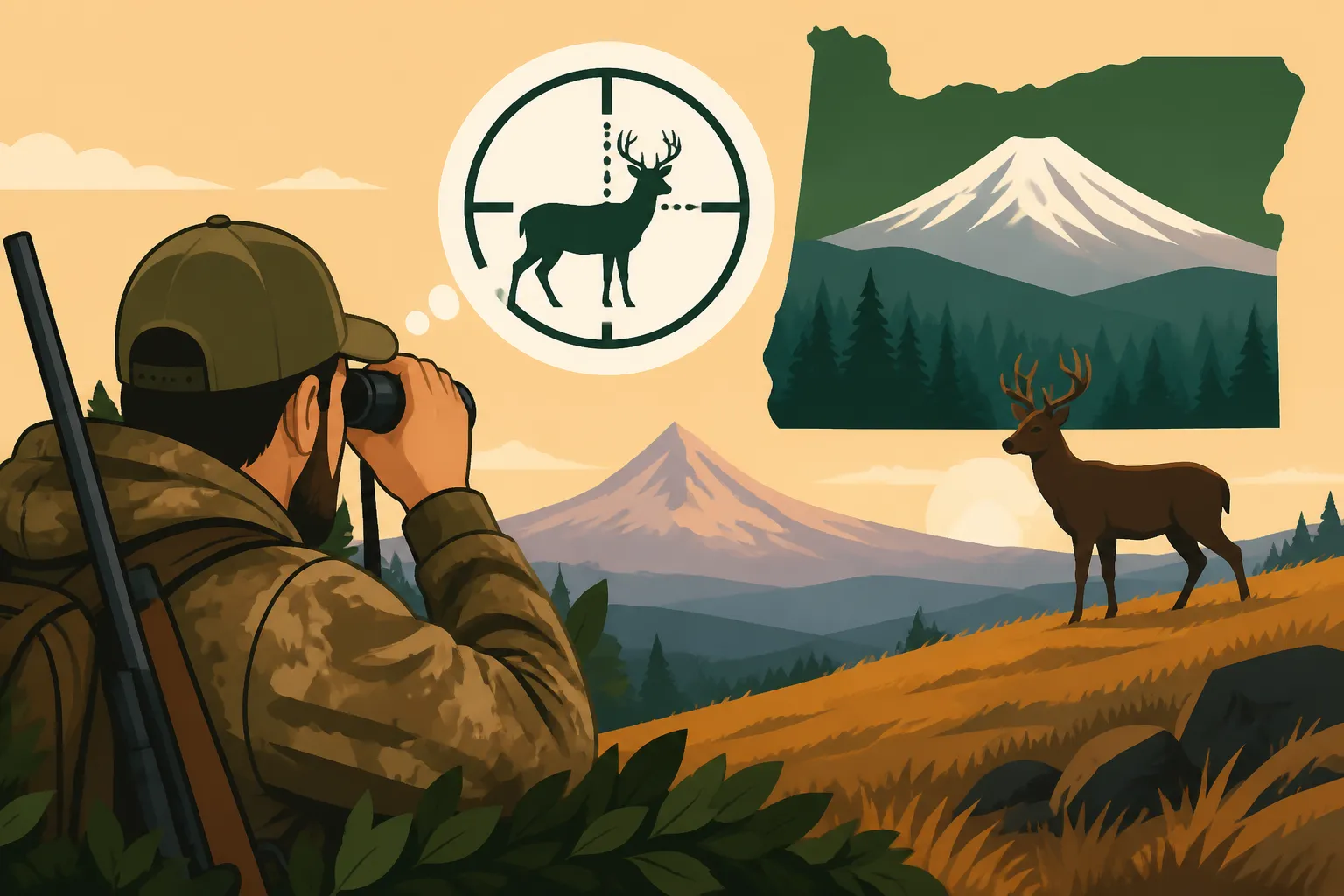
One of the biggest anxieties many hunters face, especially when booking a guided trip in unfamiliar Oregon terrain, is the question of shot distance. You've invested time, money, and emotional energy into this hunt, and the last thing you want is to be caught off guard, facing a shot you're not comfortable taking. This guide will walk you through why understanding expected shot distances is so vital, how to honestly assess your own capabilities, and most importantly, what specific questions to ask your outfitter to ensure you're fully prepared and confident when that moment of truth arrives.
Why Shot Distance is Crucial for a Successful Guided Hunt
Let's be real, hitting a target at the range is one thing; making a clean, ethical shot on a wary animal in the wild is another entirely. The distance of that shot plays a monumental role in your success and, more importantly, in the ethical outcome of your hunt. Nobody wants to wound an animal, and being truly prepared for the shot distances you'll encounter is paramount.
Ethical Considerations and Clean Kills
As responsible hunters, our primary goal is a swift, humane kill. This means putting an arrow or bullet exactly where it needs to go, targeting vital organs for a quick dispatch. When you're pushing the limits of your comfortable range, whether it's 50 yards or 500, the chances of a less-than-perfect shot increase dramatically. Factors like wind, animal movement, adrenaline, and even minor shooter error are magnified with distance. A guided hunt often presents "the shot" you've been dreaming of, but if that shot is beyond your ethical capability, it's a moral dilemma no one wants. Asking about expected distances helps you train specifically for those scenarios, ensuring you're ready to execute a clean kill.
Hunter Confidence and Performance Under Pressure
Imagine this: you've hiked for miles, climbed a ridge, and your guide just whispered, "Big bull, 400 yards, broadside!" Your heart is pounding, adrenaline is surging, and you suddenly question if you can make that shot, even though you practice at that distance. Why? Because the pressure is immense. Knowing the typical shot distances you might face allows you to not only physically practice but also mentally rehearse. When you've repeatedly simulated these exact scenarios – accounting for breathing, natural shooting positions, and quick decision-making – you build invaluable confidence. This confidence is what helps you manage the buck fever and perform when it truly matters. It's about turning a moment of panic into a moment of calm, focused execution.
Impact on Gear Choices
The anticipated shot distances directly influence your gear choices. If you're heading to eastern Oregon for Rocky Mountain elk, where shots can easily stretch across open sagebrush flats, your optics and rifle setup will be vastly different than a hunt for Roosevelt elk in the dense, wet timber of the Coast Range, where 50-yard shots are common. Understanding the likely range helps you decide on the right scope magnification, reticle, bullet weight, and even your rangefinder's capabilities. For archery hunters, knowing if you'll be primarily still-hunting for close-range opportunities or setting up over water holes for slightly longer shots impacts your bow setup, broadhead choice, and peep sight selection. Don't show up with a tack-driving open-country rifle only to find yourself in thick timber needing quick, close shots, or vice-versa. Proper gear for the expected conditions and distances is key. You might want to consider articles like Rifle Calibers That Suit Oregon Elk or Archery Setup for Wet Oregon Timber to help you think through these decisions.
Understanding Your Personal Effective Range
Before you even talk to an outfitter, you need to have a brutally honest conversation with yourself about your own capabilities. This isn't about bragging rights; it's about being responsible and setting yourself up for success. Your "effective range" isn't what you can hit on a perfect day from a bench rest with no wind. It's what you can consistently hit under simulated hunting conditions.
The Reality of Practice vs. Field Conditions
We all love hitting bullseyes at the range. But let's be honest, how often are you shooting from awkward kneeling positions, after a strenuous hike, with cold hands, or quickly bracing against a tree? The flat, controlled environment of the shooting range is a far cry from the steep, uneven terrain of Oregon's mountains or the dense undergrowth of its forests. Practicing Steep-Angle Shots is crucial if you plan to hunt in the Cascades or Blue Mountains. Your personal effective range needs to be determined by practicing in conditions that mimic hunting as closely as possible. If you can only consistently group shots at 300 yards from a bench, your ethical hunting range might be closer to 200 or 250 yards when the pressure is on.
Knowing Your Weapon and Your Limitations
Every rifle, bow, or muzzleloader has its own characteristics, and every hunter has their own limitations. Spend extensive time with your chosen weapon. Understand its ballistic curve, its recoil, how it feels in different shooting positions. For bowhunters, this means shooting from your knees, standing, and from angles that simulate steep terrain. For rifle hunters, practice with the exact ammunition you'll be using for the hunt. Don't assume. Test. If you're running a muzzleloader, especially in the typically wet Oregon conditions, understanding Muzzleloader Loads and Wet-Weather Ignition is paramount. What kind of groups can you hold at various distances when you're slightly out of breath? How quickly can you acquire your target and make a safe, ethical shot? These are the real questions.
The Impact of Physical Fitness and Adrenaline
Hunting in Oregon, particularly for elk or mule deer in the more remote units, can be incredibly demanding physically. You might be hiking thousands of vertical feet, navigating blowdowns, or still-hunting through dense brush for hours. Fatigue will impact your stability, your breathing, and ultimately, your shot placement. This is where Physical Training for an Oregon Elk Hunt really pays off. On top of that, the sudden surge of adrenaline when you spot an animal can make you shaky, speed up your heart rate, and narrow your focus. Your effective range shrinks under these conditions. Acknowledging this physiological reality is not a weakness; it's a strength that allows you to be better prepared. Practice breathing exercises and develop mental strategies to calm yourself in high-pressure situations.
What to Ask Your Outfitter About Shot Distances
This is where open communication with your outfitter becomes non-negotiable. Don't be shy about these questions; a good outfitter will appreciate your diligence and commitment to an ethical hunt. They want you to succeed, too! When you're researching outfitters, whether through platforms like BookYourHunt or detailed scouting information from sources like GoHunt, keep these questions in mind.
Average and Maximum Expected Shot Distances
Start with the basics. Ask your outfitter: "What is the average shot distance your clients typically take on this hunt?" Follow that up with: "What is the maximum distance you would realistically expect a client to take a shot, given the terrain and animal behavior?"
The average gives you a baseline for your primary practice. The maximum tells you the outer limit you might encounter. If they say the average is 200 yards, but the maximum could be 450, you know you need to be proficient out to 450 yards (or be comfortable with the possibility of passing on a shot). This difference is critical for managing expectations and preparing adequately. Don't assume because it's a "timber hunt" that all shots will be chip shots. Sometimes, an animal will pop out in an unexpected clearcut or across a canyon.
Terrain and Its Influence on Shots
Oregon is incredibly diverse, from the high desert sagebrush flats to the dense Coast Range timber to the steep, rocky Wallowas. Each terrain type presents unique shooting challenges. Ask: "What kind of terrain will we primarily be hunting in? How does that typically influence shot distances and shot angles?"
An outfitter guiding in eastern Oregon's Malheur National Forest might tell you that cross-canyon shots of 300+ yards are common for mule deer, requiring precise rangefinding and wind doping. Conversely, a guide in the Siuslaw National Forest hunting Roosevelt elk might emphasize quick, close-range shots in thick cover, often at less than 100 yards. This information dictates not only your practice but also your choice of optics. Optics for Dark Timber Versus Open Sage are vastly different. Knowing this allows you to prepare for scenarios such as steep uphills or downhill shots, where gravity plays a role in bullet drop, or shots through narrow lanes in dense timber.
Guide's Philosophy on Shot Selection
Every guide has a philosophy when it comes to shooting. Some might be aggressive, encouraging longer shots if they believe in the hunter's ability. Others are more conservative, prioritizing closer, higher-percentage shots. Ask: "What is your philosophy regarding shot selection? At what point do you recommend clients pass on a shot, even if an animal is in range?"
A good guide will respect your ethical boundaries and help you make the best decision, not push you into something you're uncomfortable with. Their answer will tell you a lot about their approach and how well it aligns with your own values. It's also a great way to gauge their experience and commitment to ethical hunting practices.
Table: Key Questions to Ask About Shot Distances
Here's a handy table summarizing the crucial questions to ask your outfitter:
| Question Category | Specific Questions to Ask | Why It Matters |
|---|---|---|
| Typical Distances | What is the average shot distance for this hunt? | Sets your primary practice focus. |
| What is the maximum likely shot distance we might encounter? | Prepares you for worst-case scenarios and defines your outer limits. | |
| Terrain Impact | What type of terrain will we primarily be hunting? | Influences shooting positions, visibility, and shot complexity. |
| How does the terrain affect typical shot angles (steep/flat)? | Essential for ballistic compensation and knowing your true horizontal distance. | |
| Guide's Approach | What is your philosophy on shot selection? | Reveals their risk tolerance and ethical stance. |
| Do you prefer closer, higher-percentage shots, or are longer shots acceptable? | Helps align your expectations with their guiding style. | |
| Hunter Preparation | What distance should I be consistently proficient at for this hunt? | Gives you a clear goal for your practice sessions. |
| Are there specific shot scenarios (e.g., quartering away, steep angle) I should practice? | Tailors your training to common situations in that hunt area. | |
| Logistics | What kind of shot support will be available (e.g., bipod, shooting sticks)? | Lets you know if you need to bring your own or if the guide provides options. |
| How quickly might I need to take a shot? | Highlights the importance of quick target acquisition and natural shooting positions. |
When booking through services like BookYourHunt or doing research on GoHunt, remember that this information might not always be explicitly listed in a profile. It's up to you to engage directly with the outfitter to get these critical details. Don't be afraid to follow up on initial inquiries. This pre-hunt communication builds trust and ensures both parties are on the same page. Remember to also ask Questions to Ask an Oregon Outfitter more broadly, beyond just shot distances.
Preparing for Various Shot Scenarios
Once you have a clear understanding from your outfitter about the expected shot distances and terrain, your preparation can become highly targeted. This isn't just about hitting the range; it's about simulating the hunt.
Dedicated Range Time and Scenario Practice
Your range time should no longer be just about punching paper. It needs to be about scenario-based training. Practice shooting from kneeling, sitting, and standing positions. Use natural rests like trees or rocks if safe and permitted at your range, or invest in quality shooting sticks or a bipod. If your outfitter mentioned steep angles, dedicate time to Practicing Steep-Angle Shots. Set up targets at various distances, not just fixed increments, and practice quickly estimating range with your Rangefinders in Steep Country and acquiring the target.
If you're an archery hunter, simulate calling sequences or spot-and-stalk scenarios where you might have only seconds to draw and shoot. Practice judging distances without a rangefinder as a backup skill, especially in dense cover where laser beams can be obstructed. For any weapon, repetition builds muscle memory and confidence. The more you practice under varied and challenging conditions, the less likely you are to be thrown off by the unexpected during the actual hunt.
Simulating Hunting Conditions
True preparation goes beyond the firing line. Go on hikes with your loaded pack, then stop and take practice shots (dry firing or with an air rifle if appropriate) to simulate shooting while fatigued. Practice in the clothes and boots you plan to hunt in, especially if they are bulky or restrict movement. If you're hunting in the notorious wet weather of western Oregon, practice handling your rifle or bow with wet hands, or drawing an arrow with gloves on.
Cold weather can stiffen fingers and make fine motor skills more difficult. If you expect cold mornings, practice with your gear in similar temperatures. The more you expose yourself to simulated discomfort and pressure, the more resilient and adaptable you'll be when it counts. Think of it as mental and physical conditioning for the moment of truth.
Mental Preparation and Ethical Boundaries
Beyond physical practice, mental preparation is incredibly powerful. Visualize the moment: spotting the animal, ranging it, taking a deep breath, settling your crosshairs, and executing a perfect Shot Placement on a Bull at Close Range. Rehearse what you'll do if the shot isn't perfect, or if you need to pass. Having a clear ethical line in your mind – a maximum distance you will not exceed, regardless of the guide's encouragement or the trophy quality – is essential.
It's okay to pass on a shot. In fact, it's often the most ethical and responsible decision. A good outfitter will respect that. Your goal is not just to kill an animal, but to do so cleanly and honorably. Being upfront with your outfitter about your personal effective range and sticking to it will make for a more successful hunt in every sense of the word. Reviewing articles like Reading Outfitter Success Rates can also give you context on what types of shots might be part of an outfitter's typical hunting strategy, helping you form more targeted questions about their methods and expectations.
Disclaimer
This article is for general informational purposes only and does not constitute professional advice. Laws, prices and regulations vary by location and change over time. Consult a qualified professional for guidance on your specific situation.