Three Sisters Wilderness Hunting Access
The Three Sisters Wilderness in Oregon presents a truly daunting challenge for hunters, with its rugged terrain, vast expanses, and strict regulations that can feel overwhelming even to seasoned outdoorsmen. Many hunters dream of pursuing game in such pristine backcountry but struggle with where to even begin planning, fearing missteps with permits or underestimating the sheer physical demands. This guide is here to demystify hunting access in the Three Sisters, offering practical advice and crucial information to help you plan a successful and ethical wilderness hunt.
Understanding the Three Sisters Wilderness Landscape and Regulations
The Three Sisters Wilderness is a magnificent, sprawling expanse in central Oregon, covering over 280,000 acres. It’s a place of stark contrasts, from snow-capped peaks and ancient glaciers to dense old-growth forests and high-alpine meadows. For hunters, this translates to incredibly diverse, yet equally demanding, terrain. This isn't your average timber company land with logging roads every mile; this is true wilderness, meaning no motorized vehicles, no mountain bikes, and no mechanical transport of game beyond what you can carry. The very definition of a wilderness area dictates a primitive experience, which is both its allure and its challenge.
Navigating Wilderness Area Rules
One of the first things you need to wrap your head around when contemplating a hunt in the Three Sisters is the specific set of rules that govern all designated wilderness areas. These aren't just suggestions; they are federal regulations designed to preserve the wild character of the land. Foremost among these is the prohibition of motorized and mechanized equipment. This means no ATVs, no e-bikes, no chainsaws, and critically for hunters, no game carts or motorized devices to help pack out an animal. Every ounce of meat, every piece of your gear, has to be moved by human power or approved stock animals. This single rule dramatically impacts how you plan your hunt and what kind of physical conditioning you'll need. It also means you need to be intimately familiar with Oregon Wilderness Rules That Ban Motorized Carts.
Beyond equipment, there are often regulations concerning group size and length of stay, intended to minimize human impact. While these might not affect a solo hunter, if you plan to go in with a few buddies, you'll need to know the specific limits to avoid an unintentional violation. Understanding these regulations is paramount to a lawful hunt, and ignorance is rarely an excuse when dealing with federal land managers. The general expectation is that you are self-sufficient and leave no trace of your presence, ensuring the wilderness remains wild for future generations.
Permit Requirements for Entry
Accessing the Three Sisters Wilderness, particularly during certain times of the year, requires permits. For day use and overnight stays in the Central Cascades Wilderness areas (which include the Three Sisters), a permit system is in place from roughly May through late September or October, depending on snowmelt and snowfall. This is prime hunting season for early archery elk and deer, so pay close attention. These permits are typically obtained online in advance and often have quotas, especially for popular trailheads. If you plan an archery hunt in August or early September, you absolutely must secure your entry permit well in advance.
These permits are not hunting tags themselves, but rather entry permits to control visitor numbers and protect sensitive resources. Missing this step could derail your entire hunt before you even set foot on the trail. Always check the specific Forest Service website for the most current information regarding permit requirements, quotas, and application windows. Keep in mind that some areas or dates are incredibly popular, and permits can vanish quickly, so early planning is non-negotiable for a wilderness trip.
Planning Your Backcountry Hunt: Permits, Scouting, and Logistics
A successful hunt in the Three Sisters Wilderness isn't just about finding game; it's about meticulous planning that covers everything from physical fitness to detailed navigation. This is where the old adage "fail to prepare, prepare to fail" truly applies. The sheer scale and remoteness of the Three Sisters demand respect and a level of preparation far beyond what's needed for a road-accessed hunt.
E-Scouting and Understanding the Terrain
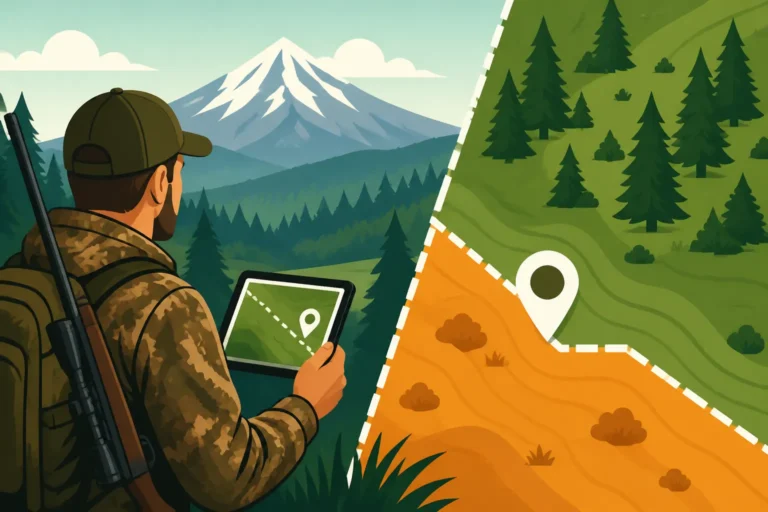
Before you even think about putting boots on the ground, you need to dedicate significant time to e-scouting. Tools like onX Hunt and GoHunt are indispensable for this. These platforms allow you to dissect the landscape from your computer, identifying potential bedding areas, water sources, travel corridors, and escape routes. Look for features like north-facing slopes with dense timber for thermal cover, saddles or benches along ridges, and areas where different vegetation types meet. Pay close attention to elevation changes and potential natural barriers like sheer cliffs or dense blowdown, as these will impact your travel time and options. Knowing E-Scouting Oregon Units With Satellite Imagery is a critical skill for this environment.
When you're dealing with wilderness, identifying your entry and exit points is just as important as finding the game itself. Mark various trailheads and potential routes, considering snow levels if hunting in shoulder seasons. The Three Sisters has many trailheads, but some are much longer and more strenuous than others. Some lead into the heart of the wilderness quickly, while others involve miles of hiking through less productive terrain. Understanding the unit boundaries and how they intersect with the wilderness boundary is also crucial; you need to know Reading an Oregon Hunt Area Boundary like the back of your hand.
Physical Conditioning and Gear Selection
Hunting the Three Sisters is not for the faint of heart or the out-of-shape. You will be covering miles of steep, uneven terrain, often at high altitudes, and potentially packing out hundreds of pounds of meat over multiple trips. Physical training for an Oregon elk hunt, especially in wilderness areas, should begin months in advance. Focus on cardiovascular endurance, leg strength, and core stability. Mimic hunting conditions by hiking with a loaded pack, ascending and descending steep hills. Don't underestimate the impact of elevation on your body if you're coming from sea level.
Your gear selection needs to be robust, reliable, and lightweight. Every ounce counts when you're carrying everything on your back. High-quality rain gear, multiple layers for varying temperatures, sturdy boots, and a reliable pack frame are non-negotiable. Think about self-sufficiency: how will you purify water? What are your emergency shelter options? A solid first-aid kit is critical for remote hunts. You'll need to consider First Aid Kit Items for a Remote Hunt to be prepared for any eventuality. Remember, there's no popping back to the truck if you forget something or if a piece of gear fails deep in the wilderness.
Essential Gear and Navigation for the Three Sisters
Once you've done your homework and gotten yourself in shape, the right gear and navigation tools become your lifeline in the vastness of the Three Sisters Wilderness. This isn't a place for shortcuts or hoping for the best; you need to be equipped to handle whatever the mountains throw at you.
Reliable Navigation Systems
While paper maps and a compass are absolute essentials and should always be carried as a backup, modern GPS devices and smartphone apps like onX Hunt provide an incredible advantage in the wilderness. These tools, especially when combined with pre-downloaded offline maps, allow you to pinpoint your exact location, track your movement, and navigate complex terrain with far greater accuracy than ever before. Mark your camp, water sources, game sightings, and potential hazards. Knowing your precise location relative to wilderness boundaries, private land inholdings, or any special closure areas is critical. GoHunt's mapping features can also be incredibly useful for deeper dive research into unit specifics and public land boundaries.
Battery management is paramount for electronic devices. Carry multiple portable power banks to recharge your phone or GPS unit. In extreme cold, batteries drain faster, so keep devices warm and spare batteries charged. Don't rely solely on one device; a true wilderness hunter has redundancy in their navigation system, meaning at least two independent methods to know where they are.
Packing for a Multi-Day Wilderness Hunt
Planning your pack list for a multi-day wilderness hunt is an art form. You're balancing necessity with weight. Beyond your weapon and ammunition, think about food (lightweight, calorie-dense), water filtration, shelter (tent, tarp, bivy), sleeping system, cooking system, and emergency supplies. Consider the unpredictability of Oregon's weather; a clear, sunny morning can turn into a raging thunderstorm or an early snowstorm in the high Cascades. Your rain gear needs to be top-notch, and you need insulation layers even in summer.
A high-quality internal or external frame pack is crucial, not just for carrying your initial gear, but for the immense load you might carry out. If you're fortunate enough to harvest an elk, you'll be quartering it in the field, possibly using the Gutless Method on a Bull Elk, and making multiple trips. This is where a robust, comfortable pack frame truly earns its keep. For backpack camps in Oregon wilderness, you'll want to choose a pack large enough for a few days' worth of supplies, yet comfortable enough for hard miles.
| Trailhead Name | Wilderness Access Point | Elevation (approx.) | Typical Usage | Notes |
|---|---|---|---|---|
| McKenzie Pass | West Side | 5,300 ft | Access to Dee Wright Observatory, PCT | Road can close with early snow; offers dramatic views |
| Tamolitch Falls | West Side | 2,900 ft | Lower elevation, Blue Pool, river access | Popular for hikers; limited direct wilderness access |
| Pole Creek | East Side | 5,400 ft | Access to Sisters peaks, Camp Lake, PCT | Common access for climbing and extended trips |
| Green Lakes | East Side | 6,000 ft | Popular destination, access to South Sister | Heavy hiker traffic; requires permit for overnight |
| Devils Lake | East Side | 5,500 ft | Access to South Sister, Elk Lake area, PCT | Busy trailhead; good access to southern sections |
| Three Creek Lake | East Side | 6,500 ft | High elevation, access to Tam McArthur Rim | Higher elevation hunting; road access can be rugged |
Ethical Hunting and Conservation in the Wilderness
Hunting in a wilderness area carries an even greater responsibility than hunting on more accessible lands. You are a visitor in a truly wild place, and your actions have a profound impact on the environment and the experience of others. Embracing a strong conservation ethic and adhering to "Leave No Trace" principles is not just good practice; it's essential for the future of wilderness hunting.
Leave No Trace Principles
The seven principles of Leave No Trace are your guiding stars in the Three Sisters. This means planning ahead and preparing thoroughly, traveling and camping on durable surfaces, disposing of waste properly (pack it in, pack it out, including all trash, spent casings, and even food scraps), leaving what you find, minimizing campfire impacts, respecting wildlife, and being considerate of other visitors. When you're field dressing an animal, make sure to scatter the entrails away from trails and water sources, allowing them to decompose naturally without attracting scavengers to high-traffic areas.
Carrying out all your trash, including every wrapper, bottle, and even apple core, is a given. Minimizing your impact on vegetation and soil by staying on established trails where possible, or spreading out when off-trail, helps preserve the fragile ecosystem. Remember, the goal is for no one to know you were there after you've left.
Respecting Wildlife and Seasons
The Three Sisters Wilderness is home to a variety of game, including Roosevelt Elk in Western Oregon and Oregon Mule Deer and the Herd Range Decline. Understanding their behavior, especially in a wilderness context where they may be less habituated to human presence, is crucial. Hunt ethically, respecting fair chase principles. This means knowing your effective range, practicing your shooting, and ensuring a quick, clean kill. Always be aware of your surroundings and any other hunters or wilderness users.
Ensure you have the correct tags for the specific unit and season you are hunting. Oregon has very clear regulations, and even a minor mistake can lead to serious consequences. Double-check your tag requirements and season dates. Wilderness hunting often means hunting deeper in the woods, where animals might be less pressured, but it also means encountering wildlife like Oregon Black Bears in the Coast Range and Cascades or Cougars in Oregon After the Hound Ban, so knowing how to react to such encounters is important for safety and respect. The rewards of hunting in the Three Sisters Wilderness are immense – the solitude, the challenge, the profound connection to nature – but they are only truly earned through thorough preparation, ethical conduct, and a deep respect for this magnificent wild place.
Disclaimer
This article is for general informational purposes only and does not constitute professional advice. Laws, prices and regulations vary by location and change over time. Consult a qualified professional for guidance on your specific situation.