Oregon High Desert Hunting Country
Stepping into Oregon's high desert hunting country can feel like stepping onto another planet if you're used to the dense coastal timber or the agricultural valleys. The sheer scale, the dry air, the vast open spaces – it's a completely different beast that can leave many hunters feeling overwhelmed and unsure where to begin. This comprehensive guide is designed to demystify the high desert, offering seasoned insights and practical strategies to help you navigate its unique challenges and unlock its incredible hunting opportunities.
Understanding the Oregon High Desert Landscape
The high desert of Eastern Oregon is a region of stark beauty and dramatic contrasts, far removed from the verdant, rain-soaked landscapes of the western part of the state. It’s an expansive realm dominated by sagebrush steppe, juniper woodlands, rimrock canyons, and isolated mountain ranges. This unique environment presents its own set of challenges and rewards for the dedicated hunter. The vastness alone can be daunting, often making familiar hunting tactics feel inadequate.
Topography and Climate Challenges
Unlike the dense forests where cover is abundant, the high desert exposes everything. The topography ranges from rolling sagebrush flats that stretch for miles, offering incredible visibility but little concealment, to steep, broken rimrock canyons and isolated volcanic buttes. This creates a hunting environment where elevation changes can be abrupt and unforgiving, and water sources are few and far between. Temperatures can swing wildly, with scorching hot days followed by freezing nights, even in early fall. Wind is almost a constant companion, whipping across the open plains and making long-range shooting, or even just hearing game, a persistent challenge. Hunters often underestimate the physical toll these conditions can take, especially when hauling gear or packing out an animal across miles of uneven terrain under a relentless sun.
Vegetation Zones and Habitat Types
The vegetation in the high desert is directly tied to elevation, moisture, and soil type, creating distinct habitat zones that dictate where different game species thrive. At lower elevations, vast expanses of big sagebrush dominate, often interspersed with bitterbrush and rabbitbrush. This is prime habitat for pronghorn and mule deer, offering both forage and some limited cover. As you gain elevation, juniper trees become more prevalent, forming scattered woodlands and dense stands on slopes and rimrock edges. These juniper zones provide critical thermal and security cover for mule deer, especially during winter months, and often hold resident elk herds. Higher still, in the isolated mountain ranges like the Steens or Hart Mountain, you might find pockets of mountain mahogany, quaking aspen, and even small stands of ponderosa pine, which offer richer forage and more diverse cover for elk and mule deer. Understanding these transitions is key to predicting where animals will be at different times of the year and under varying weather conditions.
Key Game Species of the High Desert
Oregon's high desert is a magnet for several iconic Western big game species, each demanding unique hunting approaches. While the landscape itself defines much of the experience, understanding the habits and preferred habitats of these animals is paramount to success. It's not just about finding them; it's about knowing why they are there and what they are doing.
Mule Deer: The Desert King
The mule deer is arguably the most iconic big game animal of Oregon's high desert. These magnificent creatures are perfectly adapted to the arid environment, but their populations have faced challenges in recent years. Oregon Mule Deer and the Herd Range Decline is a reality many hunters are keenly aware of, making every tag drawn a precious commodity. You'll find mule deer scattered throughout the sagebrush flats, juniper canyons, and rimrock country. During the early archery seasons, they might be higher up in the isolated mountains or seeking shade in dense juniper pockets. As rifle seasons progress into cooler weather, they often move to lower elevations, following food sources and seeking the thermal cover of rimrock edges and south-facing slopes. Hunting mule deer in this country heavily relies on optics and patience, as their brown and grey coats blend seamlessly with the sage and rock. You'll spend hours glassing vast landscapes, searching for an antler tip, an ear twitch, or a patch of hide that looks out of place.
Pronghorn: The Ghost of the Plains
Faster than any other North American land animal, the pronghorn is a true testament to the open high desert. Oregon Pronghorn on the High Desert are a challenging and highly sought-after species, with tags often requiring many preference points in the draw. They thrive in the vast, open sagebrush flats, where their incredible eyesight and speed are their primary defenses. You'll rarely find pronghorn in timber or rough, broken country; they prefer the wide-open spaces where they can see danger coming from miles away. Spotting and stalking pronghorn requires extreme patience, a deep understanding of terrain, and often long crawls to get within range. Their behavior is unique – they are incredibly curious, but also incredibly wary. High-quality optics are not just recommended for pronghorn hunting; they are absolutely essential for locating animals at immense distances in this wide-open country. The heat of early fall seasons, when pronghorn hunts often take place, adds another layer of challenge to an already demanding pursuit.
Rocky Mountain Elk in High Desert Units
While many associate elk with dense timber and high mountain meadows, populations of Rocky Mountain Elk in Eastern Oregon thrive in some of the high desert units. These aren't the coastal rainforest bulls; they adapt to the more open, drier environment by utilizing juniper stringers, rimrock formations, and isolated pockets of ponderosa pine for cover and shade. They often feed in sagebrush flats or agricultural fields at dawn and dusk, retreating to the safety of broken country or dense juniper during the day. Hunting high desert elk can be a truly unique experience, combining elements of mule deer hunting (long-range glassing) with traditional elk tactics (calling, tracking). Their movements are often tied to water sources, especially during drier years. Understanding their use of limited cover and water, and adapting your strategy from dense forest tactics, is critical for success in these drier units.
Upland Birds and Predators
The high desert also offers fantastic opportunities for upland bird hunters and predator callers. Chukar, for instance, are perhaps the quintessential high desert game bird. These hardy birds inhabit the steep, rocky canyons and rimrock edges that are often too rugged for big game hunters. Chukar and Quail Country in Oregon can be incredibly physically demanding, but the reward of a covey flush is exhilarating. California quail and mountain quail also inhabit various high desert habitats, often near riparian areas or in brushy draws. Beyond birds, the high desert is prime country for predator hunting. Coyotes are abundant, drawn by the same prey base as the big game animals. Their presence provides an additional hunting opportunity, and calling them in can be a thrilling experience that also helps manage predator populations. These secondary hunts can be a great way to explore new country or fill time during slower big game periods.
Premier High Desert Hunting Units and Areas
Oregon’s high desert encompasses a vast geographic area, including numerous Wildlife Management Units (WMUs) that offer diverse hunting experiences. While specific unit names and boundaries can change over time, the general characteristics of these regions remain consistent. Understanding which units align with your hunting goals and preferred species is the first step in planning a successful high desert adventure.
Eastern Oregon's Iconic Units
Many of Oregon's most sought-after big game hunts are located within its eastern high desert units. Areas like the Steens Mountain, Hart Mountain, and portions of the Silvies, Malheur River, and Warner units are renowned for their mule deer and pronghorn opportunities. The Steens Mountain, for example, is a massive fault-block mountain rising dramatically from the Alvord Desert, offering diverse habitats from sagebrush steppe to alpine-like environments. These areas require significant draw points for quality tags, but the trophy potential can be exceptional. These units often feature expansive public lands managed by the Bureau of Land Management (BLM) and the Forest Service, providing ample room for exploration and solitude. However, the sheer size means extensive scouting and thorough trip planning are non-negotiable. Using tools like E-Scouting Oregon Units With Satellite Imagery becomes absolutely crucial when you're trying to wrap your head around such immense areas.
Remote and Roadless Opportunities
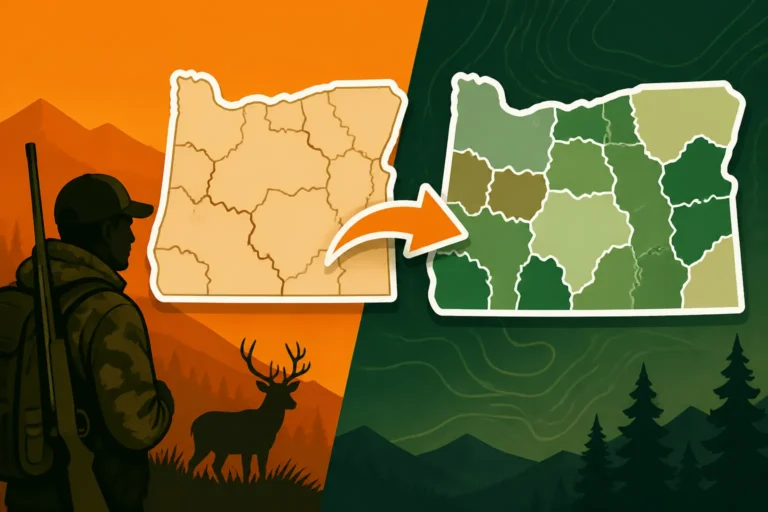
For those seeking a truly immersive backcountry experience, some high desert regions offer remote, roadless hunting opportunities. The Owyhee Canyonlands in southeastern Oregon, for instance, is a vast, rugged wilderness of deep canyons and volcanic plateaus. While access can be challenging, often requiring high-clearance 4×4 vehicles and significant hiking, it offers unparalleled solitude and a chance to hunt truly wild animals far from the crowds. This is the kind of country where a pack frame isn't just an option; it's a necessity. Similarly, portions of the John Day River country combine high desert features with dramatic river breaks, providing excellent habitat for mule deer and elk, though access can be fragmented by private land along the river. Exploring these remote corners often means consulting detailed maps and being prepared for self-sufficiency. For serious DIY hunters, understanding how to read and interpret Oregon's Wildlife Management Units and New Hunt Areas maps is fundamental.
Unit Selection and Research
Choosing the right unit is a deeply personal decision based on your hunting style, physical capabilities, and draw odds strategy. For many, applying for limited entry controlled hunts in the high desert is a multi-year commitment, building up Oregon Preference Points and How They Work. Tools like GoHunt can provide detailed draw odds, harvest statistics, and unit descriptions, allowing you to make informed decisions about where to apply. It’s not just about looking at a map; it's about diving deep into the data: buck-to-doe ratios, public land percentages, success rates, and historical weather patterns. Don't be afraid to call the local ODFW (Oregon Department of Fish and Wildlife) office; biologists and game wardens often have invaluable, localized knowledge about herd movements and access conditions that can't be found on a map or forum. Their insights can be the difference between a frustrating hunt and a fulfilling one.
Essential Strategies for High Desert Hunting
Hunting in Oregon's high desert demands a distinct set of skills and strategies that differ significantly from those used in timbered country. The wide-open spaces, limited cover, and arid conditions force hunters to adapt their approach, emphasizing patience, keen observation, and strategic movement.
The Art of Glassing
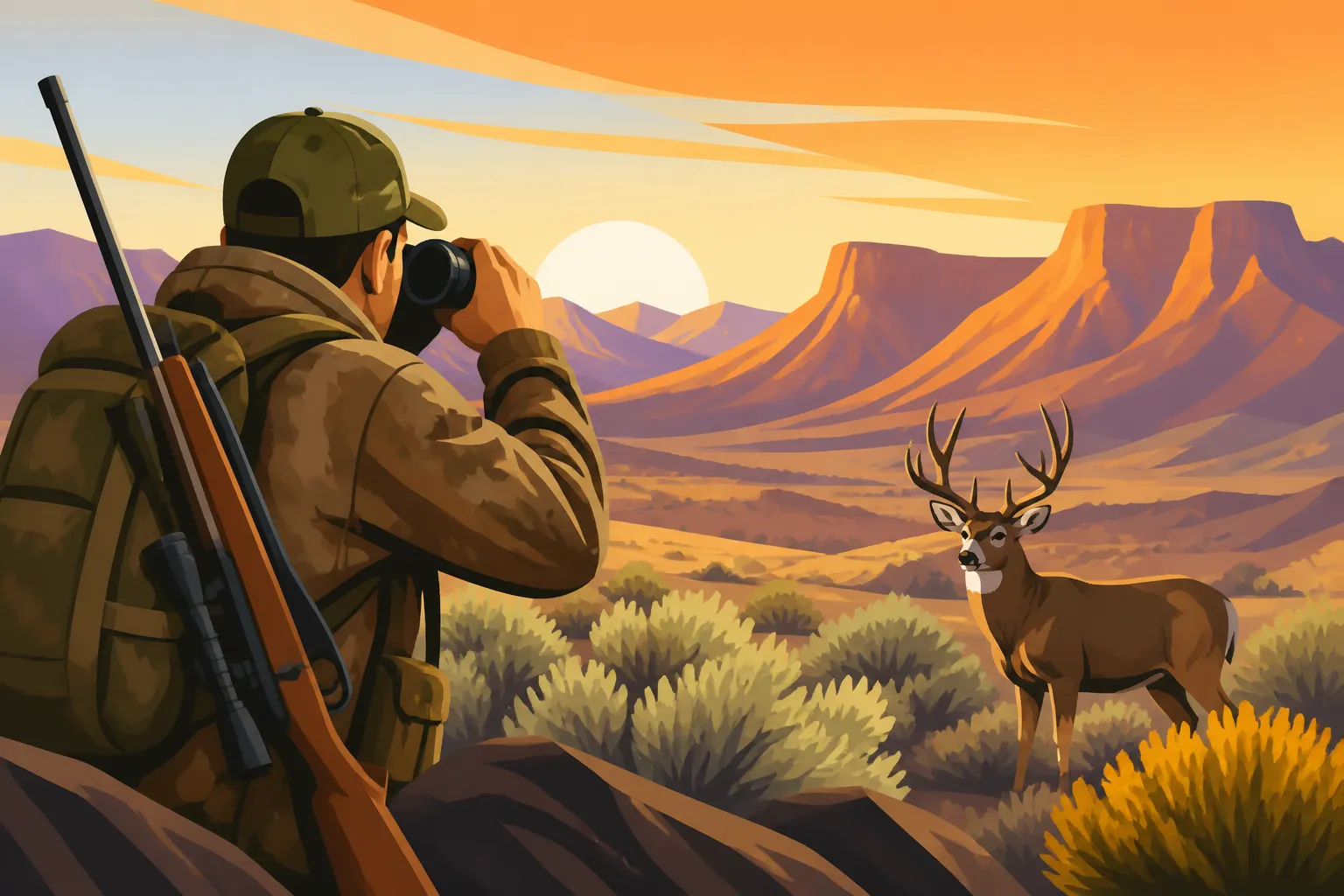
In the high desert, your binoculars and spotting scope are your most important hunting tools – more so than your rifle or bow in many situations. Glassing Eastern Oregon Rimrock for Mule Deer and other species is paramount. You simply cannot effectively hunt the vastness of the high desert by walking around hoping to stumble upon game. Instead, you position yourself on a high point with an expansive view, often before first light, and meticulously pick apart the landscape. This isn't a quick scan; it's a slow, deliberate grid search with your optics, looking for any anomaly: a horizontal line in a vertical world, a patch of contrasting color, the flicker of an ear, or the glint of an antler. Patience is critical here. Many hunters spend hours glassing a single basin, returning to it repeatedly throughout the day as animals move or become visible. Thermal spotting scopes are becoming increasingly popular for locating animals at dawn and dusk when temperatures change, or even during the day to pick up heat signatures in shaded areas.
Locating Water Sources and Travel Corridors
In an arid environment, water is life, and game animals are almost always tied to it. Identifying Water Sources That Hold Deer in Dry Country is a crucial part of high desert scouting and hunting strategy. This might include natural springs, guzzlers (man-made water developments), stock tanks, or even ephemeral pools after a rain. Animals will often create discernible trails leading to and from these water points, making them natural travel corridors. During dry years, these water sources can concentrate animals, making them prime hunting locations, particularly early in the season when temperatures are high. Beyond water, identifying natural funnels, pinch points, and benches within the vast landscape is key. Rimrock edges, saddles between hills, and draws that offer some cover can all serve as travel corridors or bedding areas for mule deer and elk moving between feeding grounds and security cover.
E-Scouting and On-the-Ground Verification
The sheer scale of the high desert makes effective pre-hunt planning invaluable. This is where modern e-scouting tools truly shine. Platforms like onX Hunt allow you to pore over satellite imagery, topo maps, and land ownership layers from the comfort of your home. You can identify potential glassing knobs, water sources, natural travel routes, and bedding areas. Marking these points digitally saves immense time and effort in the field. Before your hunt, take some time to E-Scouting Oregon Units With Satellite Imagery, looking for variations in vegetation, changes in terrain that might offer cover, and access points. However, e-scouting is only half the battle. "Boots on the ground" verification is still essential. What looks like a perfect bedding bench on a map might be too exposed in reality, or a promising water source might be dry. Use your scouting trips to confirm your digital findings, understand prevailing winds in specific drainages, and identify actual game trails. This combination of digital and physical scouting creates a robust hunting plan.
Accessing High Desert Public Lands
Oregon's high desert is largely defined by its vast expanses of public land, primarily managed by the Bureau of Land Management (BLM) and the U.S. Forest Service. This provides incredible access opportunities for hunters, but understanding the nuances of these lands, including rules, road systems, and potential private land interjections, is crucial for a smooth and legal hunt.
BLM and National Forest Access
The majority of huntable ground in the high desert falls under BLM jurisdiction, characterized by wide-open sagebrush country, juniper stands, and broken rimrock. National Forests, such as the Malheur, Ochoco, or Fremont-Winema, typically cover higher elevation areas, often with more timbered country and deeper canyons. Public Land Hunting in Oregon: Forest, BLM and State means you have a right to access these lands, but knowing where boundaries lie is paramount. While BLM lands often have a more open-range feel with numerous two-track roads, National Forests tend to have more developed, but still often primitive, road systems. It's common to find a checkerboard pattern of public and private land ownership, especially in historical railroad grant areas. This means you might be hunting public land that is completely surrounded by private parcels, making legal access a challenge. Using a robust mapping app like onX Hunt is essential for identifying these property lines and ensuring you don't inadvertently trespass, which can quickly ruin a hunt and lead to serious legal trouble.
Road Systems and Travel Management Areas
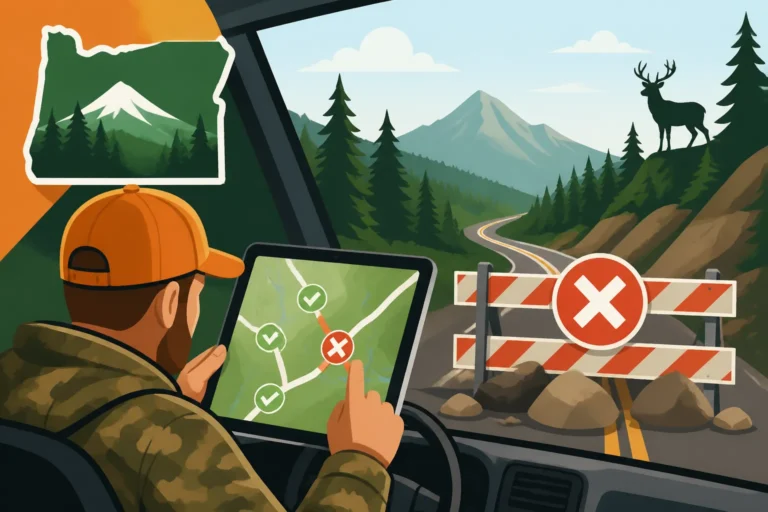
High desert public lands are crisscrossed by a network of roads, ranging from well-maintained gravel to barely discernible two-tracks. Many areas are designated as Travel Management Areas (TMAs), which implement specific rules regarding motorized vehicle use. These regulations are in place to protect sensitive habitats, prevent erosion, and enhance the hunting experience by limiting vehicular disturbance in certain areas. You might find roads that are open only to ATVs, or others that are completely closed to all motorized traffic, requiring foot or horseback access. It's absolutely critical to consult current TMA maps before heading out. These are often available as GeoPDFs that can be downloaded to your phone and used with mapping apps, even without cell service. Ignoring these regulations can result in fines and habitat damage. Understanding Where Motorized Travel Is Banned in a TMA is not just about legality; it's about being a responsible land user and ensuring a quality experience for all.
State Lands and Unique Access Programs
Beyond federal lands, Oregon also has State Forests and Wildlife Areas that may offer hunting opportunities in or near the high desert. These lands often have specific regulations or permit requirements that differ from federal lands, so always check with the Oregon Department of Fish and Wildlife (ODFW) website for current rules. Additionally, Oregon's Access and Habitat Program works with private landowners to open up traditionally inaccessible private land to public hunting. These "Welcome to Hunt" or "By-Permission" areas can be a fantastic resource, particularly for general season tags or for finding new country away from more pressured public areas. Always respect the rules of these programs and the landowners who participate, as their willingness to provide access is a privilege, not a right. These opportunities often need to be researched well in advance of the season, and some may require online registration or specific sign-in procedures before you step foot on the property.
Navigating Regulations and Seasons in the High Desert
Hunting in Oregon's high desert, like anywhere else in the state, requires a deep understanding of its complex regulatory framework. From drawing tags to reporting your harvest, every step has specific rules that must be followed. Failing to do so can lead to hefty fines, loss of hunting privileges, and a generally unpleasant experience.
The Oregon Controlled Hunt Draw
Most of the premier big game opportunities in the high desert – especially for mule deer and pronghorn – are allocated through the Oregon Controlled Hunt Draw Explained. This system uses a combination of preference points and a random draw to distribute limited tags. Hunters must apply by a specific deadline, typically mid-May, indicating their first, second, and third choices. The more preference points you accumulate, the better your chances of drawing a tag in highly coveted units. Many hunters dedicate years to building points for a chance at a trophy high desert buck or pronghorn. It's a system that can be frustrating, especially when Oregon Preference Points and How They Work means you watch your points accumulate for years without drawing, but it's the gateway to these limited-entry hunts. Understanding the unit codes, the type of tag (e.g., archery, rifle, muzzleloader), and the specific season dates for each hunt choice is critical. Double-checking your application before submission is a small step that can save immense heartache.
General Season and Over-the-Counter Opportunities
While controlled hunts dominate the high desert for premium tags, there are some general season and over-the-counter (OTC) opportunities, particularly for elk and some deer hunts, or secondary species like bear and cougar. Rocky Mountain elk general season tags allow hunters to pursue elk in designated eastern Oregon units during specific rifle or archery seasons. These hunts often involve higher hunter density and can be more challenging, but they provide a consistent annual opportunity. For deer, general season opportunities are more common in western Oregon, but some eastern units may have limited general season tags or specialized hunts. Predator tags for coyotes and sometimes bobcats are often OTC, providing year-round opportunities to hone your skills in the high desert. Always consult the current Oregon Big Game Regulations pamphlet, released annually, as season dates, bag limits, and specific unit rules can change. This pamphlet is your bible for legal hunting in Oregon.
Mandatory Harvest Reporting and Compliance
Oregon has a mandatory harvest reporting system for most big game tags. Even if you don't harvest an animal, you are required to report on your tag. Failure to report can result in penalties, often a $25 fee, applied to your license account, which can then prevent you from purchasing future licenses or applying for controlled hunts until it's paid. This is a critical administrative step that many hunters forget, especially after an unsuccessful hunt or a long drive home. Pay close attention to the reporting deadlines, which vary depending on when your hunt ends. The ODFW uses this harvest data to manage wildlife populations, so accurate reporting is vital for the future of hunting in Oregon. It’s a simple task that takes only a few minutes online, but neglecting it can have real consequences for your ability to hunt in subsequent seasons.
| Species | Primary High Desert Habitat | Key Hunting Strategy | Best Time of Day | Draw Difficulty (General) |
|---|---|---|---|---|
| Mule Deer | Sagebrush flats, juniper canyons, rimrock | Extensive glassing, spot & stalk | Early morning, late evening | High (Controlled hunts) |
| Pronghorn | Open sagebrush plains, rolling hills | Long-range glassing, low crawl stalk | Mid-morning, late afternoon | Very High (Controlled hunts) |
| Rocky Mountain Elk | Juniper stringers, rimrock, isolated timber pockets | Glassing, calling, tracking in cover | Early morning, evening | Moderate (Some general season) |
| Chukar | Steep, rocky canyons, rimrock talus slopes | Spot & stalk, demanding foot hunting | Mid-day after sun warms | OTC |
Gear and Preparations for High Desert Conditions
The unique environment of Oregon's high desert demands a specific gear list and careful preparation. Unlike hunting in temperate forests, where rain and dense cover are primary concerns, the high desert tests your endurance against vast distances, extreme temperatures, and scarcity of resources. Being well-equipped isn't just about comfort; it's about safety and success.
Optics: Your Eyes on the Horizon
As previously mentioned, high-quality optics are not a luxury in the high desert; they are a fundamental necessity. A good pair of 10x or 12x binoculars with a wide field of view and excellent light-gathering capabilities will be your primary scouting tool, helping you scan vast landscapes for subtle signs of game. Mounting them on a tripod is highly recommended for stability, especially during long glassing sessions, preventing eye strain and allowing you to discern minute details. A powerful spotting scope, ideally 20-60x or 25-75x, is also crucial for evaluating animals at extreme distances, allowing you to judge antler size, sex, and determine if a stalk is worthwhile without risking spooking the animal by approaching too closely. Rangefinders are also indispensable for accurately determining distances in a landscape where traditional reference points are often absent. When you're looking across miles of sagebrush, judging 400 yards versus 600 yards can be incredibly difficult without a reliable rangefinder. Optics for Dark Timber Versus Open Sage is a completely different game; in the open, high-magnification and clarity rule.
Clothing and Footwear for Extreme Weather
High desert weather is notoriously unpredictable and can swing wildly, often within the same day. You need a layering system that can handle freezing mornings, scorching midday sun, and sudden afternoon thunderstorms or wind. Start with a good moisture-wicking base layer. Add an insulating layer like fleece or a puffy jacket for warmth, and top it with a durable, wind-resistant, and ideally water-resistant outer shell. While downpour rain might be less common than in the Coast Range, a sudden cloudburst can leave you dangerously cold if you're not prepared. Wide-brimmed hats and sunglasses are essential for sun protection. For footwear, durable, ankle-supporting boots with stiff soles are crucial for traversing rough, rocky, and uneven terrain. Look for boots that are well broken in to avoid blisters, as you'll be covering many miles. Keeping your feet comfortable and protected is paramount for enduring long days of hiking and stalking.
Water, Navigation, and Vehicle Preparedness
Perhaps the most critical preparation for the high desert is water. You must carry significantly more water than you think you'll need, both in your vehicle and on your person. Dehydration is a serious risk, especially during early season hunts when temperatures can soar. Consider carrying a water filter or purification tablets as a backup. Navigation is equally vital; while paper maps and a compass are always recommended as a failsafe, a GPS unit or a smartphone with a reliable mapping app like onX Hunt is indispensable. Download offline maps for your entire hunt area, as cell service is almost non-existent in much of the high desert. For your vehicle, ensure it's in top mechanical condition, especially tires, spare tire, and fluid levels. Carry extra fuel, tools, a shovel, chains, and a comprehensive first-aid kit. Getting stranded miles from anywhere with no cell service can quickly turn a challenging hunt into a life-threatening situation. Always let someone know your itinerary and expected return time. Leaving a Trip Plan With Someone at Home is a non-negotiable safety measure in this remote country.
Conservation and Responsible Hunting in the High Desert
Hunting in Oregon's high desert isn't just about pursuing game; it's about participating in the stewardship of a unique and often fragile ecosystem. Responsible hunting practices and a strong conservation ethic are essential to preserving this landscape and its wildlife for future generations.
Minimizing Environmental Impact
The high desert, with its sparse vegetation and often delicate soils, is particularly susceptible to human impact. Practicing "Leave No Trace" principles is more important here than almost anywhere else. Stick to established roads and trails when driving or hiking, especially during wet conditions when off-roading can cause severe, long-lasting damage to the fragile biological soil crusts. Pack out everything you pack in, and perhaps even a little more, picking up any litter you find. When field dressing an animal, scatter gut piles away from roads, trails, and water sources to allow for natural decomposition and to avoid attracting scavengers to easily accessible areas. Be mindful of campfires, especially during dry seasons when fire danger is extreme. Always check current fire restrictions for the specific area you'll be hunting. A single spark can devastate thousands of acres of critical wildlife habitat. Hunting Camp Fire Restrictions in Dry Years are common and must be strictly adhered to.
Ethical Hunting Practices
Ethical hunting goes beyond legal compliance; it's about showing respect for the animals you pursue and the land they inhabit. In the vastness of the high desert, long-range shots are often presented, but it's crucial to know your effective shooting range and stick to it. Taking a risky shot that results in a wounded animal is unethical and a disservice to the resource. Practice shooting from various field positions, especially those you might encounter in the high desert, such as steep angles or across canyons. Be prepared for Shot Placement on a Quartering Bull or buck, even at distance. After a shot, always follow up thoroughly and diligently, even if you're convinced of a clean miss. Animals can travel surprising distances, and blood trailing in sparse desert vegetation can be challenging. If you do harvest an animal, ensure quick and humane dispatch, and prioritize getting the meat cooled down as rapidly as possible, particularly in warm early-season temperatures. This often means breaking down the animal into quarters quickly and getting them into game bags to allow for airflow.
Contributing to Conservation Efforts
Hunters are often the most passionate conservationists, and the high desert offers many ways to contribute. Financial contributions through your license and tag purchases directly fund ODFW's wildlife management programs, habitat restoration, and enforcement efforts. Beyond that, consider volunteering for habitat improvement projects, such as fence removal that helps pronghorn migration, or guzzler maintenance that provides water for game. Becoming an informed advocate for sound wildlife management and responsible land use is also crucial. Support organizations that work to protect and enhance public lands and wildlife habitat in Oregon's high desert. By being a responsible hunter and an active participant in conservation, you help ensure that the unique opportunities and wild beauty of Oregon's high desert hunting country will endure for generations to come.
Disclaimer
This article is for general informational purposes only and does not constitute professional advice. Laws, prices and regulations vary by location and change over time. Consult a qualified professional for guidance on your specific situation.