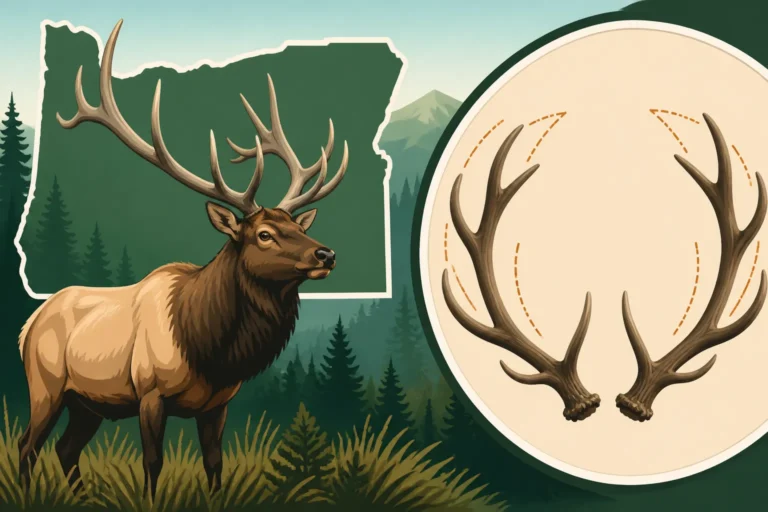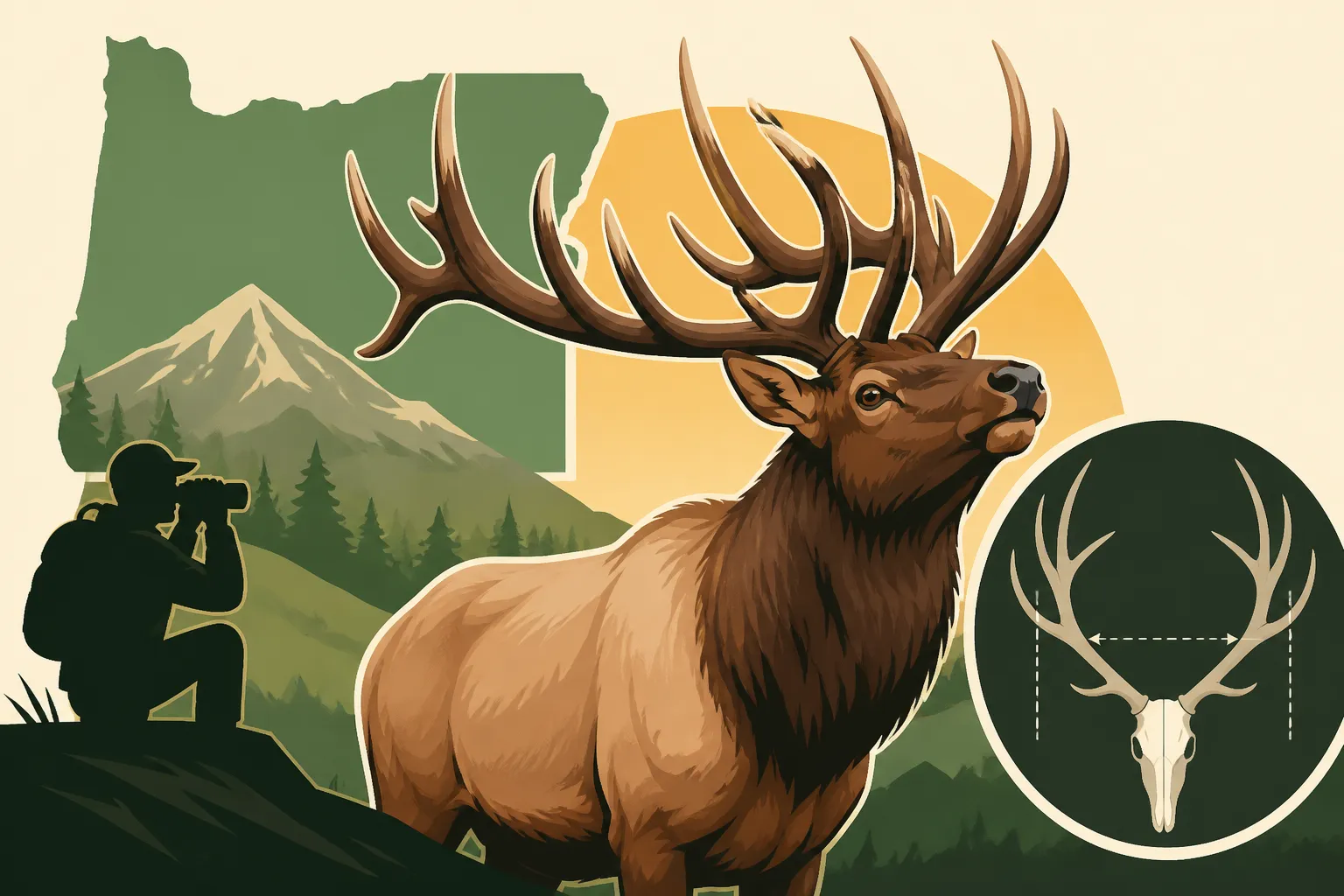
Boone and Crockett Minimums for Roosevelt Elk
Hunting a Roosevelt elk in Oregon is a true test of grit and determination, often pushing you deep into some of the most challenging terrain the Pacific Northwest has to offer. For many, harvesting one of these magnificent animals is the culmination of years of effort, but the conversation often quickly turns to antler size and, specifically, how it measures up to formal records. This guide will dive deep into the Boone and Crockett Club's scoring system, focusing specifically on the minimums for Roosevelt elk, so you can understand what truly defines a record-book bull and why these incredible animals present unique challenges for trophy measurement.
Understanding the Boone and Crockett Club's Ethos
Before we even begin talking about inches and points, it's crucial to understand what the Boone and Crockett Club is all about. It's not just a tally of big antlers; it's an organization deeply rooted in the conservation of North American big game and the promotion of ethical, fair-chase hunting. Their record-keeping system serves a dual purpose: to document successful conservation efforts and to provide a measure of the health of big game populations and their habitats.
Conservation Through Record-Keeping
The Boone and Crockett Club was founded by Theodore Roosevelt himself, way back in 1887, with a core mission to promote wildlife conservation. The idea was simple yet profound: by keeping records of North America's largest game animals, they could track population health and habitat quality over time. A healthy number of mature, large-antlered animals generally indicates a thriving ecosystem. It's not about bragging rights first and foremost, though that certainly became a byproduct; it's about using data to inform conservation strategies and advocate for responsible land management.
For the hunter, submitting an animal to the Boone and Crockett Club isn't just about personal recognition. It's contributing to a long-standing database that helps paint a picture of wildlife trends. When you look at the sheer numbers of entries over decades, you can see patterns emerge – which species are doing well, which might be struggling, and where conservation efforts are paying off. This scientific approach to record-keeping is a cornerstone of their legacy, driving meaningful wildlife management decisions.
The Principle of Fair Chase
A fundamental tenet of the Boone and Crockett Club is the concept of "fair chase." This isn't just a suggestion; it's a strict ethical code that dictates how an animal must be pursued and harvested to qualify for entry into their records. Fair chase implies that the hunter should not have an unfair advantage over the animal, meaning no electronic calls, no baiting, no hunting from vehicles, and no spotlighting, among other rules. The animal must have a reasonable chance to escape.
This principle resonates deeply with many hunters who value the challenge and respect the game. It ensures that any animal submitted to the record book was taken through skill, persistence, and adherence to ethical standards, rather than technological superiority or unsportsmanlike conduct. For an Oregon elk hunter, this means long days on foot, navigating dense timber, and truly earning that opportunity, whether you're trying Archery Elk Hunting Oregon's August and September Seasons or braving the elements during Oregon Elk Hunting Tactics for the November Rifle Seasons. It's about the journey and the respect shown to the animal, not just the final measurement.
Roosevelt Elk: The Unique Challenge in Oregon's Backcountry
Oregon is home to two subspecies of elk: the Rocky Mountain elk in the eastern part of the state and the magnificent Roosevelt elk predominantly found in the wetter, denser western regions. While both are impressive, the Roosevelt elk presents a distinct set of characteristics and hunting challenges that directly impact how their antlers develop and, subsequently, how they score under the Boone and Crockett system.
Habitat and Antler Characteristics
Roosevelt elk, often called "Roosies," are creatures of the deep, dark timber and coastal rainforests. Think thick stands of Douglas fir, hemlock, and spruce, often tangled with salal, huckleberry, and sword fern. This dense environment, combined with abundant rainfall and lush vegetation, contributes to their immense body size, often larger than their Rocky Mountain cousins. Their antlers, however, tend to grow differently.
Instead of the long, wide-spreading racks common to Rocky Mountain elk that often clear brush, Roosevelt antlers typically emphasize mass and length over spread. They're often heavier, with more circumference measurements, and their points can be shorter and thicker, designed to push through dense brush rather than extend out widely. This dense habitat also makes judging antlers incredibly difficult in the field, as you often only get fleeting glimpses of a bull crashing through the trees. Hunting them in this cover is a unique experience, demanding skills like Calling Roosevelt Elk in Oregon Rainforest Timber and meticulous attention to detail.
Distinguishing Roosevelt Elk for Scoring Purposes
The distinction between Roosevelt and Rocky Mountain elk is critical for Boone and Crockett scoring, as they have different minimums and are categorized separately. Generally, the dividing line in Oregon is Highway 97, with Roosevelt elk found to the west and Rocky Mountain elk to the east. However, there are some overlap areas, and knowing the specific characteristics helps.
| Feature | Roosevelt Elk | Rocky Mountain Elk | Scoring Implication |
|---|---|---|---|
| Primary Habitat | Wet, dense coastal forests, rainforests, Cascades | Drier, open forests, sagebrush, mountains | Roosevelts often have less spread due to dense habitat, impacting typical scores. |
| Body Size | Larger, heavier (can exceed 1,000 lbs) | Smaller, more agile (up to 700-800 lbs) | Not directly scored, but indicative of subspecies and habitat. |
| Antler Shape | Tend to be thicker, heavier, often shorter points | Longer, wider main beams, often more slender points | Roosies excel in mass measurements; Rockies often have better spread and point length. |
| Antler Color | Often darker, richer brown | Lighter, creamier brown | Aesthetic, not scored, but can vary with diet/habitat. |
| Bugle | Deeper, more guttural, less screechy | Higher pitched, more iconic "screech" bugle | Not scored, but helps identify subspecies in the field. |
When you're out in the Roosevelt Elk in Western Oregon country, understanding these differences is key. You're looking for that characteristic mass and deep main beams on a Roosevelt, knowing that a wide-spreading rack is a rarer sight in their world. The dense cover means you often have to rely on subtle cues and quick decisions, especially during the archery season when you might only have a few seconds to evaluate a bull before he slips back into the shadows.
Breaking Down the Boone and Crockett Score Sheet for Roosevelt Elk
Alright, let's get into the nitty-gritty: the actual numbers. The Boone and Crockett Club has very specific minimum scores for both typical and non-typical Roosevelt elk, designed to recognize truly exceptional animals that represent the best of the species. These are the benchmarks that define a "record-book bull."
Typical Roosevelt Elk Minimums
A "typical" antler configuration means the antlers are largely symmetrical, without excessive abnormal points or unusual growth. When you look at a typical rack, it should have a classic, balanced appearance. The score is largely derived from the length of the main beams, the length of each point, and the circumference measurements taken at various places along the main beam, all while striving for symmetry between the two sides. Deductions are made for any lack of symmetry.
For a Roosevelt elk to make the Boone and Crockett Awards book (meaning it's recognized in a specific awards period, usually every three years), it needs a minimum score of 290 points. To make the All-Time record book, which means it ranks among the greatest Roosevelt elk ever recorded, the minimum jumps to 310 points. These are incredibly challenging scores to achieve, reflecting the rarity of a perfectly symmetrical, massive-antlered Roosevelt bull. Many hunters will pursue these animals for a lifetime and never encounter one that approaches these numbers.
Nontypical Roosevelt Elk Minimums
"Nontypical" antlers are those that feature significant abnormal points, unusual growth patterns, or substantial asymmetry. Instead of being penalized for these unique characteristics, nontypical scoring actually adds the length of these abnormal points to the overall score, after the typical frame has been measured. This allows for recognition of those unique bulls with impressive, if unconventional, headgear.
The minimum for a nontypical Roosevelt elk to make the Awards book is 320 points. For the All-Time record book, the minimum is 330 points. While these numbers appear higher than the typical minimums, remember that they include the accumulated length of all those unique, abnormal points. Sometimes, a bull with a slightly smaller typical frame can still make the nontypical book if it has enough impressive abnormal growth, which is often seen in older bulls.
Key Measurements and Deductions
The scoring process is meticulous, involving several key measurements:
- Length of Main Beams: Measured along the outside curve from the burr to the tip of the main beam.
- Length of Points: Each measurable point is individually measured from its base on the main beam to its tip. The Boone and Crockett system requires a point to be at least one inch long to be considered, and it must be longer than it is wide at one inch up from the main beam.
- Circumferences: Four circumference measurements are taken at specific points between the points along each main beam. These contribute significantly to the overall mass score, which is a hallmark of Roosevelt Bull Body Size and Antler Shape.
- Greatest Spread: The widest distance between the main beams, used for aesthetic appeal but not directly added to the score in the same way as other measurements.
- Inside Spread: The greatest distance between the inner edges of the main beams. This measurement is added to the total score.
Deductions primarily come from differences in symmetry between corresponding typical points and circumference measurements on each antler. If one side has a point that the other side lacks, or if measurements don't match up closely, those differences are subtracted from the gross score to arrive at the net score. Abnormal points are typically not deducted from the typical frame; rather, their length is added to the nontypical score.
While you can do a rough estimate in the field, or even score a shed antler, getting an official Boone and Crockett score requires a trained, certified measurer. They ensure consistency and accuracy across all entries, making sure that every animal is judged by the same rigorous standards. If you're serious about seeing how your trophy stacks up, you can often find resources on sites like GoHunt that provide information on local measurers or even tools to help you understand the scoring system better for your hunt planning.
Beyond the Score: The True Value of an Oregon Roosevelt Elk
While the Boone and Crockett Club provides an excellent framework for recognizing truly exceptional antler growth and fostering conservation, it's important to remember that a successful hunt for an Oregon Roosevelt elk encompasses far more than just a number on a score sheet. The experience, the challenge, and the sustenance provided are often the most valuable takeaways.
The Intrinsic Value of the Hunt
For many of us, hunting is about the pursuit itself, the time spent in the wild, and the lessons learned along the way. Whether you're crawling through thick salal in the Coast Range or navigating steep canyons in the Cascades, a Roosevelt elk hunt demands physical and mental fortitude. It’s the rain, the mud, the miles logged, and the moments of profound connection with nature. Successfully harvesting a bull after enduring these conditions is a reward in itself, regardless of antler size. The memory of the sunrise breaking over the ancient timber, the smell of damp earth, or the sudden, heart-stopping crash of a bull in the distance often far outlasts the memory of an exact score.
The camaraderie shared with hunting partners, the stories told around a crackling fire, and the sheer accomplishment of bringing an animal home are truly priceless. An Oregon Roosevelt elk represents a formidable challenge, and simply having the opportunity to pursue such an animal in its natural, wild habitat is a privilege. Every hunter defines success differently, and for many, it's measured in sweat, effort, and experiences, not just inches.
Meat for the Table and Ethical Considerations
One of the most profound aspects of hunting is the wild game meat it provides for your family. A mature Roosevelt bull can yield a significant amount of high-quality, organic protein. The process of Field Dressing an Elk in Warm Early-Season Weather and then Quartering and Packing an Elk Alone is physically demanding but incredibly rewarding, knowing that you're directly providing healthy food. For many, this sustenance is the primary motivation, and a full freezer is the ultimate trophy.
Beyond the meat, there's the deep satisfaction of knowing you participated in a natural cycle. Ethical hunting contributes to wildlife management and ensures healthy populations. The act of taking an animal's life is a solemn one, filled with respect and gratitude. This respect extends to utilizing every part of the animal possible, from the meat to the hide and, of course, the antlers, whether they score high or not. It's a connection to our primal heritage and a commitment to responsible stewardship of the land and its creatures. Elk Meat Yield From a Roosevelt Bull can be substantial, feeding a family for months.
Local Recognition and Personal Goals
While the Boone and Crockett Club sets national and international standards, many states and local organizations also maintain their own record books, often with slightly different minimums or categories that celebrate regional success. Oregon's own Oregon Big Game Records Program might be another avenue to explore if you've harvested a significant animal. These local programs can offer a great way to recognize local hunters and their achievements, fostering a sense of community pride in conservation efforts.
Ultimately, setting personal goals for your hunt is key. Perhaps you're aiming for your first bull, or a bull with a certain number of points, or simply to spend a certain number of days deep in the wilderness. The Boone and Crockett minimums serve as an inspiring benchmark, showcasing the genetic potential and habitat quality of Oregon's Roosevelt elk. But whether your bull makes the book or not, the experience of hunting these magnificent animals in Oregon's rugged landscapes is a trophy in itself, a memory etched far deeper than any score.
Disclaimer
This article is for general informational purposes only and does not constitute professional advice. Laws, prices and regulations vary by location and change over time. Consult a qualified professional for guidance on your specific situation.