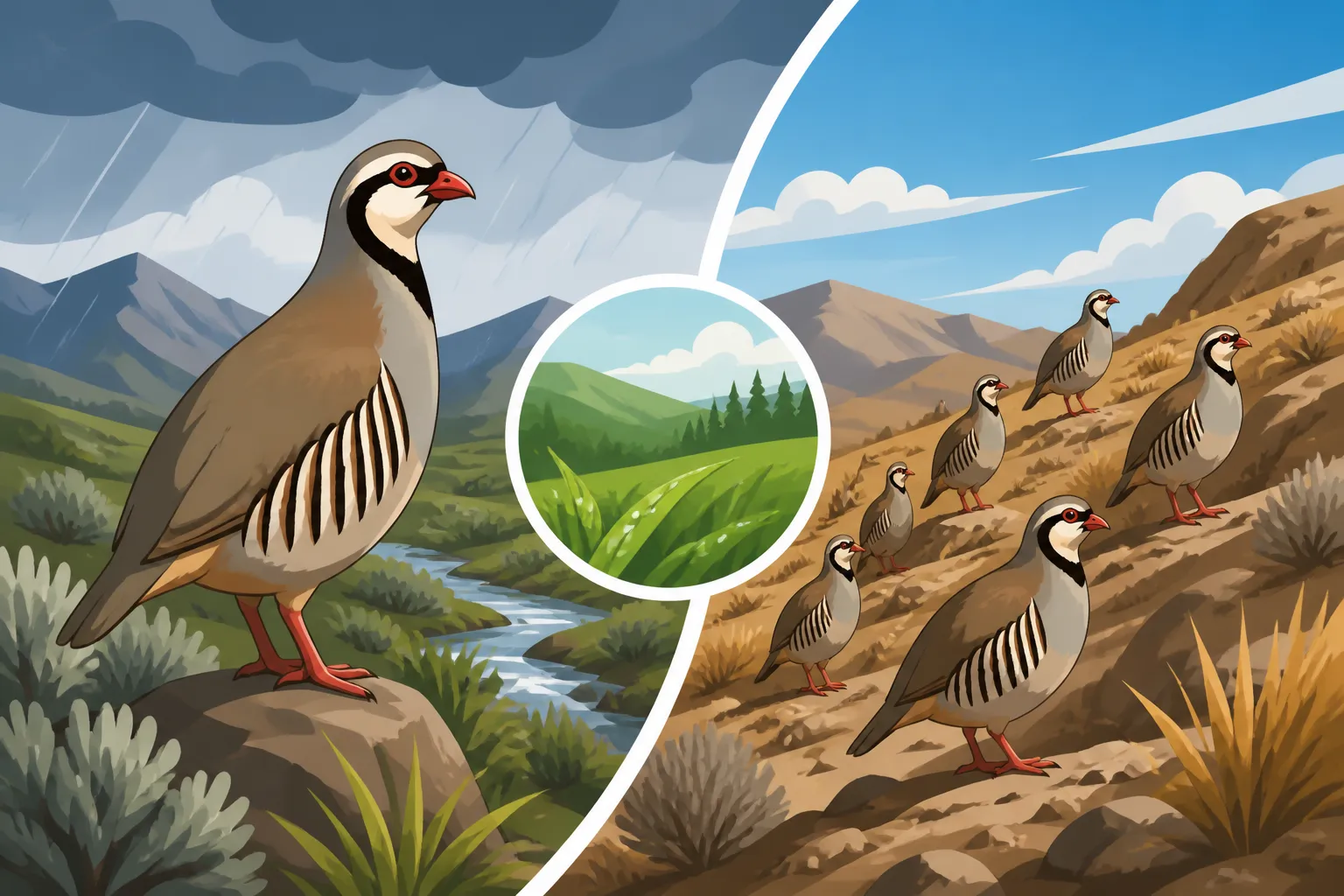
Chukar Numbers After a Wet Spring
For any of us who spend our autumns scrambling up those brutal, rocky hillsides in Eastern Oregon, waiting for the explosive flush of a chukar covey, there's always one question that lingers in the back of our minds: what kind of spring did we have? You see, the weather during nesting and brooding season can make or break the chukar hunting for the entire year, and a wet spring can be a real double-edged sword. This guide is going to dig deep into how spring moisture impacts chukar numbers, helping you understand what to look for when you're dreaming of those big coveys.
Understanding Chukar Habitat and Spring's Impact
Chukar are tough birds, built for some of the most unforgiving landscapes Oregon has to offer. But even these resilient game birds have vulnerabilities, especially during the critical nesting and brood-rearing periods in spring. Understanding their preferred environment and how spring weather interacts with it is the first step to predicting how good the fall season might be.
The Ideal Chukar Environment in Oregon
When you picture prime chukar country in Oregon, think steep, rocky, canyon lands often carved out by ancient rivers or volcanic activity. We're talking about vast expanses of the high desert, rimrock ledges, and slopes covered in a mosaic of cheatgrass, sagebrush, and sparse juniper. These birds thrive where others wouldn't dare to walk, let alone run. They need that broken topography for escape cover from predators like coyotes and raptors, those loose rocks for dusting baths, and the sparse vegetation for food and nesting concealment. Key areas include the breaks of the John Day, Deschutes, Owyhee, and Snake Rivers. Water sources, even small seeps or dew-covered grasses, are absolutely critical, especially in the dry summer months. It's a harsh world, but it's where they belong.
How Precipitation Influences Habitat Quality
Spring precipitation is a huge factor in the quality of this already challenging habitat. A good dose of moisture at the right time can green up the cheatgrass and other forbs, providing not just food but also crucial concealment for nesting hens and vulnerable chicks. It helps ensure that temporary water sources, like potholes or small springs, hold water longer into the dry season, which is vital for adult birds and growing broods. Think of it as a natural boost – more rain often means more lush vegetation, which in turn supports a healthier insect population. These insects, believe it or not, are absolutely essential for young chukar.
The Delicate Balance of Spring Weather
However, there's a delicate balance. It's not just about how much rain, but when it falls and what temperatures accompany it. A spring that starts with gentle, consistent rains at the right time can be fantastic. But an unseasonably cold, wet spring, especially during the peak hatch, can be catastrophic. Chukar chicks are tiny, fragile things, highly susceptible to hypothermia if they get wet and cold. Imagine a sudden cold snap with heavy, prolonged rain when thousands of newly hatched chicks are just a few days old – it can decimate a year's production almost overnight. Conversely, a spring that's too dry can lead to poor vegetation growth, fewer insects, and rapidly diminishing water sources, putting stress on the birds from the get-go.
The Link Between Wet Springs and Chukar Productivity
So, what exactly happens during a wet spring, and why does it matter so much for chukar numbers? It's all about the timing and intensity of that moisture, and how it translates into resources for survival and reproduction.
Benefits of a Moderately Wet Spring for Chukar
When Oregon experiences a moderately wet spring – not too cold, not too intense, but consistent moisture – it can set the stage for a banner chukar year. First, the vegetation explodes. Cheatgrass, a chukar staple, thrives, providing abundant seeds later in the season, and more importantly, dense cover for nests and hiding chicks from aerial predators. This green-up also means more insects. Grubs, spiders, grasshoppers, and other invertebrates are the primary food source for rapidly growing chukar chicks. They are essentially protein factories, crucial for the chicks' development, feather growth, and immune systems. Without this protein boost, chicks struggle to survive. A good spring also replenishes those vital water sources, reducing stress on adult birds and ensuring broods can access hydration as they mature. You might see a lot more birds near springs and seeps when you're out E-Scouting Oregon Units With Satellite Imagery later in the summer.
The Dangers of an Excessively Wet or Cold Spring
Here's where the double-edged sword comes in. While some moisture is good, too much, especially when it's accompanied by cold temperatures, can be devastating. Imagine a late spring storm, with torrential rains and near-freezing temperatures, hitting right when most hens are incubating or, worse, when the first chicks are hatching. Nests can be flooded, eggs can chill, and newly hatched chicks, covered in down but no insulating feathers, can succumb to hypothermia incredibly fast. They get soaked, can't regulate their body temperature, and simply don't make it. This is particularly true if the hen is forced off the nest by heavy rain or if she can't keep all the chicks dry and warm under her. A bad, cold, wet spring can lead to a near-total nesting failure in some areas, leaving you scratching your head come fall, wondering where all the birds went.
The Role of Insects in Chukar Chick Survival
I can't stress enough how critical insects are for chukar chick survival. These tiny birds, much like young turkeys or pheasants, require a diet rich in protein in their first few weeks of life to grow quickly and develop strong feathers. Without readily available insects, their growth can be stunted, making them more vulnerable to predators, disease, and the elements. A dry spring means fewer insects, which directly impacts chick survival rates. Think of it this way: a chukar hen lays a clutch of 10-15 eggs. If only a few of those chicks can find enough insects to make it past the first critical weeks, your overall population for the year will be way down, no matter how many eggs hatched initially. When you're thinking about a future hunt in Chukar Country Footwear and Fitness, remembering these early life stages helps you understand population dynamics.
Here's a quick look at how spring moisture affects chukar:
| Spring Moisture Level | Impact on Vegetation Growth | Impact on Insect Production | Impact on Chick Survival | Overall Chukar Outlook |
|---|---|---|---|---|
| Too Dry | Poor/Sparse | Low | Very Low (starvation/dehydration) | Poor |
| Moderately Wet | Lush/Abundant | High | High (ample food/cover) | Excellent |
| Excessively Wet/Cold | Lush (but can be flattened) | Moderate (if not too cold) | Very Low (hypothermia/drowning) | Poor |
Reading the Signs for Upcoming Chukar Seasons
As hunters, we're always trying to play detective, looking for clues that might tell us what the season ahead will hold. For chukar, paying attention to spring conditions and doing a little summer scouting can give you a significant advantage.
Monitoring Precipitation and Temperature Data
One of the most accessible ways to gauge potential chukar numbers is by keeping an eye on weather patterns in the specific regions you plan to hunt. You don't need to be a meteorologist, but checking historical precipitation charts for Eastern Oregon from April through June can offer big clues. Look for long periods of cold, heavy rain during those months. If you see that, it's a red flag. Conversely, a pattern of consistent, moderate spring showers followed by warmer, sunny days is a green light. Websites and apps dedicated to hunting research, like GoHunt, often compile and analyze this type of data, providing insights into regional conditions and how they might affect bird populations. It's a fantastic tool for getting a broad overview before you even think about putting boots on the ground. When reviewing these, consider the specific chukar habitats, such as the steep canyonlands near the John Day River, rather than broad regional averages.
Observing Brood Production During Summer Scouting
The most reliable indicator of chukar numbers for the upcoming season is direct observation during late summer scouting. This is your chance to see if those spring rains translated into thriving young birds. Head out to your potential hunting areas in late July or August, preferably in the early morning or late evening when birds are most active. Look for adult hens with broods of chicks.
- Size of Chicks: Are the chicks nearly full-grown, or are they still small and fuzzy? Smaller chicks indicate a late hatch or slow development, which could mean they are more vulnerable.
- Number of Chicks: Is the hen accompanied by a large brood (8-10+ chicks) or just a few? Large, healthy broods suggest a successful hatch and good survival rates.
- Location: Are they concentrated around water sources, or more spread out, indicating good habitat conditions generally?
This kind of firsthand reconnaissance is invaluable. Even if you're primarily focused on big game, spending a couple of mornings glassing chukar habitat will give you a real-world assessment. You might be surprised at how many Oregon Pronghorn on the High Desert you see while scouting for upland birds!
Local Reports and ODFW Outlooks
Don't underestimate the power of local knowledge. Chatting with local biologists, game wardens, ranch hands, or even other seasoned hunters who live in your target chukar areas can provide incredibly accurate, real-time insights. These folks are on the ground year-round and see the birds almost daily. They'll know if the spring was particularly harsh or bountiful. Additionally, keep an eye on the Oregon Department of Fish and Wildlife (ODFW) website as the season approaches. While they may not provide precise chukar forecasts for every single canyon, they often release general upland bird outlooks that can give you a good idea of regional trends. These reports sometimes mention specific factors, like spring weather, that impacted various species. Getting familiar with resources like the Reading an Oregon Big Game Statistics Report can also help you understand broader wildlife trends, which sometimes indirectly affect smaller game.
Beyond Spring Rains: Other Factors Affecting Chukar Populations
While a wet spring is undoubtedly a major player in the chukar numbers game, it's certainly not the only factor. A myriad of other environmental conditions and pressures constantly influence these populations. Understanding these broader influences helps create a more complete picture of chukar health and productivity in Oregon.
Winter Severity and its Carry-Over Effects
The winter preceding the spring nesting season plays a crucial role. A long, exceptionally cold winter with heavy snowfall can put immense stress on adult chukar. Deep snow can bury critical food sources like seeds and cheatgrass, forcing birds to expend more energy to find sustenance. Birds that enter spring in a weakened condition due to a harsh winter are less likely to have successful nesting attempts. Hens might lay fewer eggs, or their body condition might not be robust enough to endure incubation and brood-rearing. So, even if spring brings perfect weather, a brutal winter can already have set the population back. This is especially true in the higher elevation chukar country of Eastern Oregon.
Habitat Degradation and Loss
Long-term trends in habitat health are always at play. Invasive species, particularly cheatgrass, can be both a blessing and a curse. While chukar love cheatgrass seeds, a monoculture of old, dense cheatgrass can actually reduce the diversity of other forbs and insects they rely on. Large-scale wildfires can temporarily improve chukar habitat by burning off dense, old growth and promoting new forage, but they can also destroy cover and food sources if too intense or widespread. Development, even in remote areas, and changes in land use can chip away at contiguous chukar habitat. Maintaining healthy, diverse rangelands is paramount for sustained chukar populations. Looking at the big picture of Eastern Oregon Hunting Units and Access often means considering these landscape-level changes.
Predation and Disease Pressures
Predators are a constant factor in the lives of chukar. Coyotes, bobcats, various raptors, and even snakes all prey on chukar, their eggs, and their young. While a healthy chukar population can generally absorb a certain level of predation, if other factors like poor habitat or low chick survival are already impacting numbers, predation can become a more significant concern. You might focus on Predator Calling for Coyotes in Eastern Oregon not just for sport, but also as a way to potentially benefit local game bird populations. Disease outbreaks, though often localized, can also affect chukar numbers. Similar to bighorn sheep and pneumonia concerns, a communicable disease could devastate a covey or even a local population, particularly if birds are stressed due to other environmental factors. Fortunately, widespread disease outbreaks in chukar are not as commonly reported as with other species, but it's always a possibility in wild populations.
Disclaimer
This article is for general informational purposes only and does not constitute professional advice. Laws, prices and regulations vary by location and change over time. Consult a qualified professional for guidance on your specific situation.