Wolf Impact on Elk Behaviour
The return of wolves to Oregon's landscape has been a hot topic around campfires and in online forums, often sparking strong opinions and even stronger anxieties among big game hunters. Many of us remember a time when wolves were absent, and now we're seeing undeniable shifts in how elk move, feed, and react in their presence. This guide is here to cut through the noise, exploring the observable impacts wolves have had on elk behavior, how these majestic animals are adapting, and what you, as an Oregon hunter, can realistically expect and adapt to in the field.
Understanding the Return of Wolves to Oregon
For generations, the idea of wolves roaming Oregon's forests and high deserts was a thing of the past, a part of history rather than current reality. Yet, in the last couple of decades, that reality has shifted dramatically. Understanding how these apex predators have re-established themselves is crucial for appreciating their influence on our beloved elk herds.
A Brief History of Wolf Presence in Oregon
Wolves were systematically eradicated from Oregon by the mid-1900s, largely due to conflicts with livestock and a prevailing attitude that they were detrimental to game populations. For many decades, Oregon's landscape was essentially wolf-free. However, as wolf populations expanded in neighboring states like Idaho, natural recolonization began. Dispersing wolves from these established packs started to make their way into northeast Oregon in the late 1990s and early 2000s.
It wasn't a sudden explosion, but a gradual return, one breeding pair establishing a territory, then another, slowly spreading into new areas. The first confirmed breeding pack in modern Oregon history, the Imnaha Pack, was identified in 2008. Since then, we've seen wolf packs establish themselves across much of Eastern Oregon, particularly in the vast, remote stretches of the Wallowa, Blue, and Strawberry Mountains, and even pushing into parts of the Cascades. This return has been met with a mix of celebration by conservationists and significant concern from ranchers and many hunters who worry about the impact on deer and elk populations. It's a deeply emotional issue for many, touching on traditions, livelihoods, and the very fabric of our wild places.
Oregon's Wolf Management Plan
Given the complex dynamics of wolf recovery, the Oregon Department of Fish and Wildlife (ODFW) developed a comprehensive Wolf Management Plan. This plan guides how wolves are managed in the state, evolving as the population grows and spreads. It typically operates in different phases, starting with a strong focus on conservation when wolf numbers are low, and transitioning to more active management strategies as populations become established.
The ODFW's goal is to balance wolf conservation with minimizing conflicts with livestock and managing big game populations. This involves monitoring wolf packs, investigating depredations on livestock, and occasionally authorizing lethal control actions when certain criteria are met. The plan is a living document, frequently reviewed and debated, often reflecting the ongoing tension between various stakeholders. For hunters, it means understanding that wolf presence is a permanent fixture in many units, and ODFW is constantly trying to understand the ripple effects, including on Elk Calf Survival and Predation in Oregon. These ongoing discussions and research shape the future of hunting and wildlife management in Oregon.
Direct Impacts on Elk Behavior
When wolves move into an area, it's not just another predator entering the ecosystem; it's an apex predator whose presence reverberates through the entire food chain, especially impacting how elk behave. These changes are observable and require hunters to adjust their strategies.
Increased Vigilance and Wariness
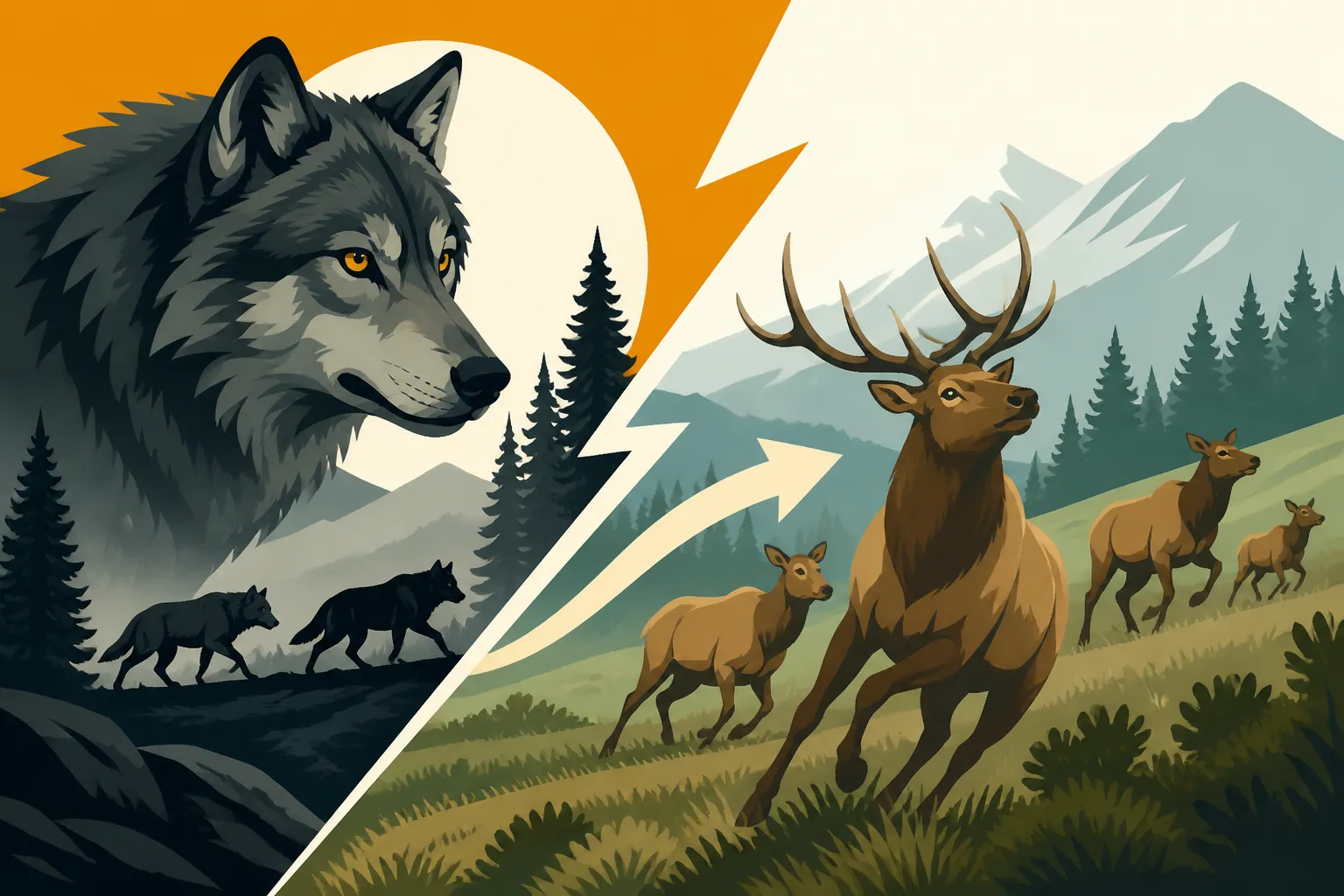
Imagine living with a constant threat – not just the occasional hunter, but a creature built for the chase, always looking for an opportunity. That's the reality for elk in wolf country. The most noticeable change in elk behavior is a dramatic increase in vigilance and wariness. Elk become far more alert, their senses heightened, and their tolerance for any perceived threat, including human presence, significantly reduced.
In the field, this means elk that once might have stood for a moment, curious about a slight noise, now bolt at the slightest disturbance. They hold tighter cover, often choosing the densest timber, the steepest slopes, or the most broken terrain where they have a greater advantage for evasion. Their natural instinct to survive means they'll move more quickly, often disappearing into thickets with hardly a sound, making them much harder to approach. This increased wariness forces hunters to be exceptionally quiet, pay meticulous attention to wind, and move with far greater stealth. The days of casual walks through the woods in some areas might be long gone; now, every step is a calculated move to avoid detection by an animal that is perpetually on edge.
Changes in Movement Patterns and Habitat Use
The pressure of wolf predation also causes significant shifts in how and where elk move and utilize habitat. Instead of simply following seasonal food sources or traditional migration corridors, elk now factor predator avoidance into their daily and seasonal movements. They might abandon historically productive feeding grounds if those areas offer poor escape cover. You might find elk pushing into areas with much denser timber, navigating steep canyons, or even moving closer to human activity and roads, as wolves often avoid these areas.
This can mean elk utilizing habitat that, from a hunter's perspective, seems less than ideal for forage, but offers better security. Herd sizes can also change; while some studies suggest wolves break up large herds, others indicate elk might band together in larger groups for safety in numbers when moving through more open or vulnerable terrain. These shifts can make scouting more challenging, as traditional elk haunts might now be empty. Hunters need to adapt by looking for elk in places they might not have historically considered. Factors like Elk Behavior After a Wildfire can also influence these habitat shifts, creating complex patterns that require careful observation and adaptation. GoHunt tools can be incredibly useful here, allowing hunters to e-scout and analyze terrain features like timber density, elevation changes, and proximity to roads to anticipate where elk might seek refuge.
Indirect Effects on Elk Dynamics for Hunters
The reintroduction of wolves doesn't just change how elk act; it forces hunters to rethink fundamental strategies, from how we call to where we focus our scouting efforts. These indirect effects demand a higher level of skill, patience, and adaptability.
Altered Calling Strategies
For many years, bull elk calling, especially bugling, has been a cornerstone of elk hunting in Oregon. But in areas with established wolf packs, that familiar bugle might now carry a different meaning for an elk. An aggressive, lone bugle, which once might have drawn a bull in for a territorial challenge, could now be perceived as a beacon for a pack of wolves. Elk, particularly mature bulls, become warier of answering or approaching an unknown call, associating it with potential danger.
This doesn't mean calling is dead, but it does mean strategies need to evolve. Instead of aggressive bugling, more subtle cow calls, mews, and chirps might become more effective, mimicking the sounds of a lost or contented cow rather than an attention-grabbing bull. Hunters might need to use softer, less frequent calls, or use calling to gauge interest from a distance rather than to draw an animal right into their lap. Setting up a caller and shooter effectively, as discussed in Setting Up a Caller and Shooter on a Bull, becomes even more critical, ensuring the "caller" is not drawing attention directly to the "shooter." Understanding when bulls go quiet in late archery season, or why Roosevelt bulls bugle less than Rocky Mountain bulls might also need to be reconsidered through the lens of predator pressure.
Scouting and Hunting Strategy Adjustments
The old adage "hunt where the elk are" remains true, but finding where the elk are takes on a whole new dimension in wolf country. Traditional scouting methods still have their place, but they need to be amplified and adapted. Hunters must become detectives, looking for subtle signs of elk movement and avoiding areas with heavy wolf sign. This might involve focusing more on fresh tracks, droppings, and rubs rather than simply historical hot spots.
Given that elk are more likely to seek dense cover and steeper terrain, hunters might need to prepare for more physically demanding hunts. This means being ready to hike into thicker, nastier country that might have been overlooked in the past. It also reinforces the paramount importance of scent control and quiet movement. Any advantage you can get to remain undetected, whether it's through careful clothing choices or meticulous planning of your approach, is crucial.
This is where modern tools can be a game-changer. Platforms like GoHunt, with their detailed mapping layers, can help you identify potential escape routes, dense timber blocks, and hidden benches that elk might be utilizing to avoid wolves. Utilizing these tools for E-Scouting Oregon Units With Satellite Imagery can save valuable time and effort, helping you pinpoint likely areas before you ever step foot in the woods. Similarly, integrating traditional boots-on-the-ground scouting with advanced mapping can give you an edge, allowing you to focus your efforts in the most promising new hideouts. Public Land Scouting in Oregon Before the Draw Results is more important than ever to identify these shifting patterns.
Broader Ecosystem Considerations
Beyond the immediate changes in elk behavior, the re-establishment of wolves impacts the broader ecosystem, creating a complex web of interactions that are still being studied and understood. It forces us to look at the bigger picture of wildlife management.
Predator-Prey Balance
The return of wolves fundamentally alters the predator-prey balance within Oregon's ecosystems. Wolves are natural predators of elk, and their presence can lead to healthier, more resilient elk herds over time. How? Wolves primarily target the young, old, sick, or weak individuals in a herd. This selective predation, while sometimes difficult for hunters to witness, can strengthen the overall genetic fitness of the elk population by removing less robust animals. It can also prevent overgrazing in certain areas, allowing vegetation to recover.
However, this isn't a simple equation. The impact of wolves on elk populations can vary significantly depending on the region, the density of both elk and wolves, and other environmental factors like habitat quality, winter severity, and the presence of other predators such as cougars and bears. While some argue that wolves are decimating elk numbers, others point to the long-term ecological benefits. The discussion around Predator-Prey Balance in Oregon Units is complex, with ongoing research attempting to quantify these intricate relationships.
Coexistence Challenges for Hunters and Wildlife Managers
There's no denying the frustration many hunters feel when they perceive wolf populations as directly competing with them for elk. The sentiment that "wolves are eating all the elk" is common and understandable, especially in areas where elk numbers might appear to be declining or their behavior makes them harder to hunt. Wildlife managers, including those at ODFW, face the immense challenge of managing these populations while addressing the concerns of all stakeholders.
This often involves intricate modeling and monitoring of both wolf and elk populations, as detailed in How ODFW Counts Big Game and Reading an an Oregon Big Game Statistics Report. Tag allocations and hunting regulations may indeed be adjusted in response to perceived wolf impacts, though these decisions are often based on a multitude of factors, not just wolf presence. For hunters, it means accepting that the landscape is changing and adapting our expectations and methods. Staying informed about ODFW's data and management strategies, possibly through resources found on platforms like GoHunt, is essential. While the challenges are real, embracing a mindset of adaptation and seeking out new strategies will be key to continued success in Oregon's evolving hunting landscape.
| Aspect of Elk Behavior | Before Significant Wolf Presence | With Significant Wolf Presence |
|---|---|---|
| Overall Wariness | Moderately cautious, less reactive to minor disturbances. | Highly vigilant, extremely sensitive to noise, movement, and scent. |
| Reaction to Hunters | May tolerate observation, occasionally curious; might stand before bolting. | Typically bolts at first detection; holds tighter cover, moves quickly. |
| Habitat Use | Primarily driven by forage and traditional seasonal ranges. | Strongly influenced by security cover, steep terrain, and predator avoidance. |
| Herd Size | Can be found in large herds, especially in open areas; smaller groups common. | May form larger herds for safety in numbers, or break into smaller, more secure units. |
| Vocalizations | More responsive to calling, especially during the rut. | Warier of calling; may associate bugles with danger, prefer subtle calls. |
| Movement | More predictable patterns, often following established trails. | Less predictable, more circuitous routes; willing to travel through difficult terrain. |
| Activity Times | May feed in open areas during daylight hours more frequently. | More likely to be nocturnal or crepuscular (dawn/dusk) in open areas. |
Disclaimer
This article is for general informational purposes only and does not constitute professional advice. Laws, prices and regulations vary by location and change over time. Consult a qualified professional for guidance on your specific situation.