Why Domestic Sheep Threaten Bighorns
It’s a heart-wrenching reality: the majestic bighorn sheep that grace Oregon’s rugged landscapes face a silent, insidious threat, often from animals we cherish as part of our ranching heritage—domestic sheep. Many hunters, conservationists, and even ranchers struggle to understand how two seemingly similar species can coexist in a landscape without causing devastating impacts. This guide will meticulously break down the critical reasons why domestic sheep pose such a grave danger to wild bighorn populations, exploring the biological mechanisms, historical context, and the ongoing conservation challenges in Oregon.
Understanding the Bighorn's Vulnerability
When you look at a wild bighorn, whether it's a California bighorn clinging to a basalt cliff in the high desert or a Rocky Mountain bighorn navigating the Wallowas, you see an animal perfectly adapted to its harsh, wild environment. What you don't immediately see is a hidden vulnerability that makes them incredibly susceptible to diseases carried by their domestic cousins.
The Bighorn's Immune System and Disease Susceptibility
Imagine living your entire life in a pristine, isolated bubble, rarely encountering common sniffles or bugs because your environment is so clean. That's essentially the evolutionary history of wild bighorn sheep. For millennia, these animals lived in high-elevation, often remote and arid environments, largely isolated from other ungulates, especially those that would eventually be domesticated. This long period of isolation meant their immune systems never developed robust defenses against certain pathogens that are commonplace and often harmless in domestic livestock.
When bighorns encounter pathogens like Mycoplasma ovipneumoniae, often referred to simply as M. ovi, it's like their immune system is seeing it for the very first time. There's no genetic memory, no pre-existing antibodies to mount an effective defense. What might cause a mild cough in a domestic sheep can trigger severe, often fatal, pneumonia in a bighorn. This lack of immunity is a biological time bomb, ticking away until contact occurs. Even if an adult bighorn survives the initial infection, it can become a chronic carrier, shedding the bacteria and infecting other members of its herd, especially the most vulnerable lambs, leading to devastating die-offs.
Historical Context of Bighorn Decline in Oregon
Oregon's bighorn sheep populations were once far more widespread than they are today. Historical accounts and archaeological evidence paint a picture of bighorns roaming across much of Eastern Oregon's canyonlands and even into parts of the Cascades. However, the arrival of European settlers in the 19th century brought a confluence of factors that rapidly decimated these herds. Unregulated hunting certainly played a role, but it was habitat encroachment and, critically, the introduction of domestic livestock that delivered the most crippling blow.
As settlers moved their domestic sheep and cattle into traditional bighorn ranges, two things happened simultaneously. First, direct competition for forage increased, pushing bighorns into marginal habitats. Second, and far more devastating, disease transmission became rampant. Herds of domestic sheep, carrying pathogens to which they had immunity or were only mildly affected, acted as biological weapons against the naive bighorn populations. Entire bighorn herds were wiped out by pneumonia and other diseases, leading to their near extirpation from Oregon by the early 20th century. Efforts to reintroduce bighorns, such as the California Bighorn Reintroduction in Oregon programs, began in the mid-20th century and have been a monumental task, often starting with small, fragile herds. These reintroduction efforts highlight the ongoing importance of preventing further disease events, as decades of work can be undone in a single season. You can learn more about the specifics of where these efforts took place by consulting resources like GoHunt, which often compile data on herd ranges and population trends.
The Silent Threat: Pathogen Transmission
The core of the problem lies in the transmission of specific pathogens, primarily bacteria, from domestic sheep to wild bighorns. This isn't about aggression or direct conflict; it's an invisible exchange that has catastrophic consequences.
Mycoplasma ovipneumoniae (M. ovi) and Its Devastating Impact
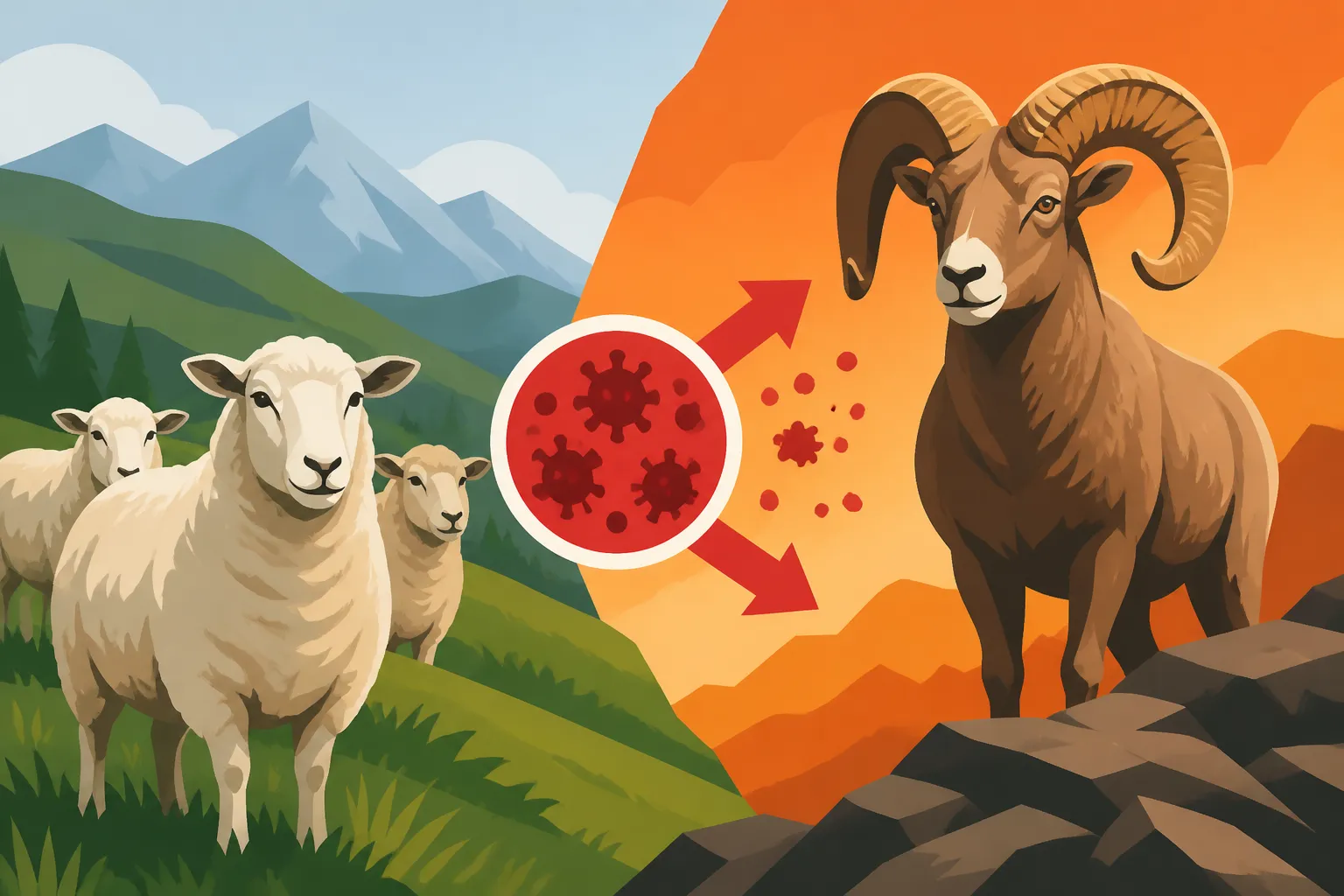
Let's talk more about Mycoplasma ovipneumoniae, or M. ovi. This bacterium is the primary culprit behind the devastating pneumonia outbreaks that plague bighorn sheep herds. What makes M. ovi so insidious is its ability to live harmlessly, or nearly harmlessly, within domestic sheep and goats. These domestic animals can carry the bacteria in their respiratory tracts without showing significant symptoms. They are, in essence, silent carriers—walking reservoirs of disease.
When a bighorn sheep comes into contact with even one domestic sheep carrying M. ovi, the transmission can be swift and deadly. The bighorn's immune system, unprepared for this particular pathogen, reacts violently. The infection leads to severe, often hemorrhagic, pneumonia, making it incredibly difficult for the bighorns to breathe. While some adult bighorns may survive the initial acute phase, they often become chronic carriers, much like the domestic sheep, but with a crucial difference: they will continue to shed the bacteria within their own herd. This means that year after year, during lambing season, the new generation of bighorn lambs, whose immune systems are even less developed, will be exposed. This often results in mass lamb die-offs, preventing herd growth and, in severe cases, leading to the collapse of an entire population. This phenomenon is tragically well-documented in outbreaks like the Bighorn Pneumonia Die-Offs in Oregon that have set back conservation efforts time and again.
How Contact Occurs: Grazing Overlap and Stray Animals
So, how do these seemingly separate worlds collide? The answer often lies in shared landscapes and the natural curiosity of animals. Domestic sheep are grazed on vast tracts of private and public land, some of which directly borders or even overlaps with designated bighorn habitat. In Eastern Oregon, where resources like water and forage can be scarce, bighorns and domestic sheep might be drawn to the same springs or green patches.
The most common scenarios for contact include:
- Shared Grazing Allotments: Even if allotments are technically separated, a domestic flock might drift into an area frequented by bighorns, or bighorns, especially rams exploring new territory, might wander into an active domestic sheep pasture.
- Stray Domestic Sheep or Goats: It only takes one. A single domestic sheep that escapes its pasture or herd can roam for miles and, if it encounters bighorns, can introduce the pathogen. The problem is that such stray animals are incredibly difficult to track down and remove from vast, rugged landscapes.
- Water Sources: In arid environments, water is a magnet. Both species may come to the same waterhole or stream to drink, providing an easy opportunity for airborne or contact transmission of bacteria.
- Fencing Challenges: While fences can create physical barriers, bighorns are incredibly agile and can often navigate fences that would contain other animals. Moreover, fencing vast, remote areas to completely separate the two species is often economically unfeasible and environmentally impactful.
The critical takeaway is that even a brief, seemingly innocent encounter can have catastrophic, long-term consequences for a bighorn herd.
Management Strategies and Conservation Efforts
Protecting Oregon's bighorn sheep requires a multi-faceted approach, balancing the needs of wildlife with agricultural practices. It's a complex dance that involves land management, scientific research, and constant vigilance.
Spatial Separation and Buffer Zones
The most effective, though often challenging, strategy to prevent disease transmission is spatial separation—keeping domestic sheep and bighorns physically apart. This involves establishing buffer zones: areas of land where domestic sheep grazing is restricted or prohibited around known bighorn habitats. The idea is to create enough distance that accidental contact is minimized.
However, implementing effective buffer zones is fraught with difficulties. Oregon's landscape is a patchwork of public and private lands, with diverse land uses. Historically, domestic sheep grazing allotments were established long before intensive bighorn recovery efforts began. Re-evaluating and adjusting these allotments can lead to significant economic impacts for ranchers, creating tension between conservation goals and agricultural livelihoods. Decisions regarding grazing are often made through public processes, and it's essential for hunters and conservationists to engage in these discussions. The goal is to create viable, contiguous bighorn habitat free from the threat of disease. Understanding herd distribution, perhaps by referencing resources like GoHunt, can inform where these buffer zones are most critically needed. These efforts are crucial to prevent further instances like Pneumonia in Oregon Bighorn Herds which have severely impacted herd health.
Genetic Integrity and Herd Health Monitoring
Beyond physical separation, maintaining the overall health and genetic diversity of bighorn herds is paramount. A healthy herd with diverse genetics is generally more resilient to environmental stressors, although it doesn't solve the M. ovi vulnerability directly. Conservation agencies, like ODFW, diligently monitor bighorn populations for signs of disease, conducting surveillance flights, collecting samples from harvested animals, and responding to reports of sick or dead sheep.
When new bighorns are transplanted to establish or augment herds in areas like the Rocky Mountain Bighorn in the Wallowas, they undergo rigorous health screenings to ensure they aren't inadvertently carrying pathogens to a new, vulnerable population. This proactive approach aims to catch outbreaks early and prevent the spread of disease between herds. Understanding Bighorn Ram Horn Growth Rings can also provide insights into a ram's health and age, which are indirect indicators of herd vitality. Furthermore, genetic studies help ensure that transplanted animals are genetically compatible and contribute to the long-term viability of the herd. These scientific efforts are critical for the sustained recovery of Oregon's bighorns.
| Feature | Domestic Sheep (Ovis aries) | Wild Bighorn Sheep (Ovis canadensis) | Implications for Disease Transmission |
|---|---|---|---|
| Immune Response | Often asymptomatic carriers of M. ovi | Highly susceptible to M. ovi; high mortality | Domestic sheep act as reservoirs, bighorns have no natural defense. |
| Social Behavior | Typically managed in large, dense flocks | Smaller, often more dispersed herds; rams roam | Large domestic flocks increase pathogen load; bighorns are easily exposed. |
| Habitat Preference | Pastures, rangelands, often lower elevation | Steep, rugged, high-elevation terrain; canyonlands | Overlap in grazing areas (especially water/forage) increases contact risk. |
| Foraging Habits | Less selective, can tolerate diverse forage | More selective, prefers native grasses and forbs | Competition for preferred forage can push bighorns closer to domestic ranges. |
| Movement Patterns | Relatively controlled by shepherds/fences | Extensive, exploratory, especially mature rams | Wild bighorn movement can lead them into domestic sheep areas. |
| Genetic History | Long history of domestication, diverse breeds | Long history of wild isolation, specific subspecies | Different evolutionary paths lead to vastly different disease resistance. |
The Hunter's Role in Bighorn Conservation
For those lucky enough to chase bighorns in Oregon, or even just encounter them in the wild, there's a profound responsibility to contribute to their conservation. Hunters are often the eyes and ears on the ground in remote areas, and their actions can make a real difference.
Understanding Regulations and Reporting Sightings
Hunting bighorn sheep in Oregon is a privilege reserved for very few, given the limited number of tags available. The Oregon Bighorn Sheep Tag Numbers are incredibly low, and drawing one is a once-in-a-lifetime opportunity for residents, reflecting the species' sensitive status. Because of this, every hunter who applies for or is fortunate enough to draw one of these coveted tags becomes an instant steward of the species. It's crucial to understand the specific regulations for your hunt unit, not just for legal compliance but for herd health.
Beyond the hunt itself, general season deer and elk hunters also play a vital role. If you are out in the high desert or the Wallowas for your Glassing Eastern Oregon Rimrock for Mule Deer hunt and you spot domestic sheep grazing too close to bighorn habitat, or worse, if you see a bighorn that appears sick or injured, it's incredibly important to report it to the Oregon Department of Fish and Wildlife (ODFW) immediately. Note the location (GPS coordinates are best), date, and any details about the animals' condition or behavior. This information helps ODFW monitor herd health and respond to potential disease threats quickly. Never assume someone else will report it; your observation could be critical in preventing an outbreak.
Advocating for Bighorn-Friendly Land Use
Conservation of bighorn sheep isn't just about what happens in the field; it's also about what happens in policy and land management decisions. Hunters, as active participants in wildlife management, have a powerful voice. Becoming involved means more than just buying a license; it means staying informed about proposed land use changes, grazing allotment renewals, and bighorn management plans.
Many conservation organizations are actively working on bighorn protection, focusing on habitat enhancement, water development, and advocating for spatial separation between wild and domestic sheep. Supporting these groups or even directly participating in public comment periods for federal or state land management agencies can make a difference. These are the forums where decisions are made that directly impact the long-term viability of bighorn herds. Whether it's advocating for responsible grazing practices, funding for bighorn research, or promoting policies that prioritize bighorn health, your engagement as a hunter is a powerful force for ensuring that these magnificent animals continue to thrive in Oregon for generations to come.
Disclaimer
This article is for general informational purposes only and does not constitute professional advice. Laws, prices and regulations vary by location and change over time. Consult a qualified professional for guidance on your specific situation.