Oregon Mountain Goat Draw Odds
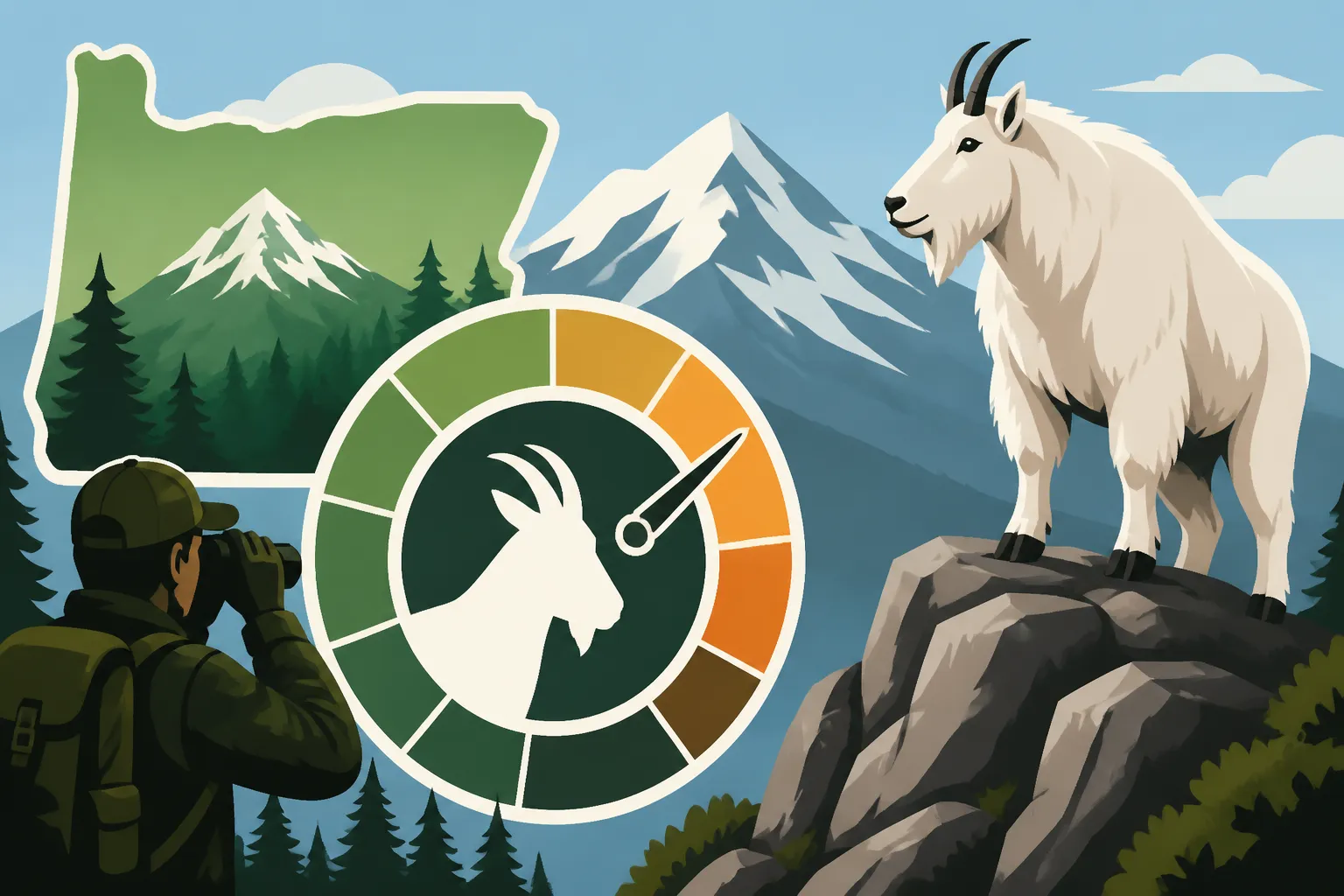
Dreaming of an Oregon mountain goat tag feels like chasing a ghost for many of us, a truly rare opportunity that often slips through our fingers year after year. The draw odds are notoriously long, making it one of the most coveted and difficult tags to acquire in the state. This guide will walk you through the realities of applying, understanding the slim chances, and what you can do to maximize your shot at this once-in-a-lifetime hunt.
Understanding the Oregon Mountain Goat Hunt
Getting a mountain goat tag in Oregon isn't just about hunting; it's about drawing a golden ticket. These hunts are exceptionally limited, designed to manage tiny, precious herds in some of the state's most rugged and breathtaking landscapes. If you've ever imagined yourself scaling a high peak, glassing for a shaggy white form against a backdrop of blue sky and granite, this is the hunt that makes those dreams a reality.
The Rarity and Allure of Mountain Goats in Oregon
Let's be honest, hunting mountain goats in Oregon is a privilege extended to very few. Unlike elk or deer, where thousands of tags are issued, mountain goat tags are often in the single digits, sometimes as low as one or two statewide for specific units. This scarcity is precisely what makes them so alluring. It's a hunt that demands respect for the animal, the terrain, and the opportunity itself. Drawing one of these tags means you're among the luckiest hunters in the state, given the chance to pursue an iconic species in some of Oregon's most remote and challenging wilderness. This rarity ensures the herd remains healthy and the experience truly wild, but it also means the odds are stacked against you from the start.
Oregon Mountain Goat Herd Locations
Oregon's mountain goat populations are concentrated in very specific, high-alpine environments. The majority of the state's huntable goats are found in the Wallowa Mountains in Northeast Oregon, particularly within and surrounding the Eagle Cap Wilderness Area. There are also smaller, reintroduced populations in the central Cascades, though these are typically not open to hunting, or if they are, it's under extremely limited circumstances. Knowing these core areas, which are usually designated as specific hunt units in the ODFW regulations, is critical for any applicant. Researching these units, understanding their terrain, and the specific regulations for each is a crucial first step, even before you ever consider applying. You can learn more about specific populations and their ranges in our detailed article on Oregon Mountain Goat Herd Locations.
Once-in-a-Lifetime Rules for Oregon Goat Hunting
Just like bighorn sheep, Oregon mountain goat tags fall under a "once-in-a-lifetime" rule. This isn't just a catchy phrase; it's a hard-and-fast regulation. If you are fortunate enough to draw and harvest a mountain goat in Oregon, you will not be eligible to draw another mountain goat tag in the state ever again. This rule underscores the extreme conservation efforts around these animals and ensures that more hunters get a chance at this unique experience over time. It also means that when you apply, you're not just applying for a hunt, but the hunt of a lifetime. This one-time opportunity adds another layer of significance and pressure, making your research and planning even more vital if you are successful in the draw. For more information on these exclusive opportunities, refer to our guide on Once-in-a-Lifetime Tags in Oregon: Sheep and Goat.
Decoding the Draw Odds for Mountain Goats
The term "draw odds" for mountain goats in Oregon can be a bit daunting, and frankly, a bit heartbreaking, given how low they typically are. But understanding how these odds are calculated and what factors influence them is crucial for any serious applicant. This isn't a point-based system like many other controlled hunts in Oregon, which changes the dynamic considerably.
How Oregon Mountain Goat Draw Odds Are Calculated
Unlike many other controlled hunts in Oregon that use a preference point system for deer or elk, mountain goat tags are typically allocated through a true random lottery. This means that every eligible applicant has an equal chance each year, regardless of how many times they've applied in the past. There are no preference points to build up for goat tags. The odds are simply a ratio of the number of available tags to the total number of eligible applicants. For example, if there are 2 tags available in a unit and 1,000 people apply, your odds are 2 in 1,000, or 0.2%. This stark reality is why persistence, not points, is the name of the game for Oregon goat hunters. You can find a deeper dive into how the broader controlled hunt system works in our article, Oregon Controlled Hunt Draw Explained, but always remember the specific differences for goat.
Historical Odds and What They Tell Us
Looking at historical draw odds for Oregon mountain goats can be both discouraging and informative. It rarely reveals a unit where odds are "good," but it can show trends in applicant numbers and how many tags ODFW has historically issued. For instance, some units might consistently offer one or two tags, while others might go years without any. Using resources like ODFW's annual draw reports or platforms like GoHunt can provide a snapshot of past application numbers versus tags issued. This data helps you understand which units consistently have the most applicants and which might, by some minuscule margin, offer slightly "better" chances simply due to fewer overall applications.
For example, here's a snapshot of typical Oregon Mountain Goat draw statistics from recent years. Keep in mind these numbers fluctuate annually based on ODFW surveys and management objectives.
| Year | Unit Name (Example) | Tags Offered | Total Applicants | Draw Odds (Approx.) |
|---|---|---|---|---|
| 2023 | Eagle Cap A | 2 | 1,250 | 0.16% |
| 2023 | Eagle Cap B | 1 | 800 | 0.125% |
| 2022 | Eagle Cap A | 2 | 1,300 | 0.15% |
| 2022 | Eagle Cap B | 1 | 850 | 0.11% |
| 2021 | Eagle Cap A | 2 | 1,200 | 0.17% |
| 2021 | Eagle Cap B | 1 | 750 | 0.13% |
As you can see, the odds are consistently less than one-quarter of a percent. This table highlights just how few tags are available and how many people are applying for them. The numbers can be a tough pill to swallow, but they are the reality of this exclusive hunt.
Factors Influencing Annual Draw Chances
Beyond the raw numbers, several factors can subtly influence annual draw chances, though none will dramatically increase your probability. First, ODFW biologists conduct annual surveys to assess herd health, population numbers, and buck-to-doe ratios for goats, just like they do for deer. These surveys directly inform how many tags, if any, are issued for the upcoming season. Habitat conditions, severe winter mortality, or even localized disease outbreaks could lead to fewer tags, or none at all, in a particular year.
Second, the number of applicants can fluctuate. While it's generally high, a slight dip in applications for a less popular unit might marginally, almost imperceptibly, bump your chances. Third, regulatory changes, though rare for goat tags, could affect unit boundaries or eligibility. Finally, remember that for mountain goats, the draw is entirely random; there's no system to reward past applicants. This contrasts sharply with systems like that for bighorn sheep in Oregon, which also lacks a traditional point system, as detailed in Why Oregon Sheep Has No Point System. This pure lottery approach means every year is a fresh start for every applicant, which can be both frustrating for long-time hopefuls and exciting for new applicants.
Strategies to Improve Your Odds (and Your Experience)
While you can't magically conjure more tags or points for mountain goats in Oregon, there are definitive strategies to ensure your application is sound, and to generally improve your hunting experience, even if you don't draw this particular tag. It's about playing the long game and being prepared.
Understanding the Application Process
First and foremost, you absolutely must understand the Oregon Controlled Hunt application process. It's not overly complicated, but missing a step or misunderstanding a rule can cost you the chance, regardless of how good your luck might have been. You'll need an Oregon hunting license, and then you'll apply specifically for the mountain goat tag through ODFW's online system or at a license vendor. The critical date to remember is the Oregon's May 15 Application Deadline. Missing this deadline means no chance for the current year, plain and simple.
When applying, you'll typically select your first, second, and third choices for various controlled hunts, but for mountain goats, you'll usually select a specific mountain goat hunt choice. The application fee is nominal but mandatory. Double-check all unit codes and make sure you're applying for the correct hunt. Resources like GoHunt can be incredibly helpful here, as they often provide tools and reminders to streamline the application process and help you sort through hunt choices, ensuring you don't make a costly error. Remember that while mountain goats don't use preference points, you still apply through the same portal as other point-based hunts. Our article How to Apply for an Oregon Controlled Hunt offers a general overview that's helpful for navigation.
Party Applications and Their Impact
Oregon does allow party applications for controlled hunts, and this can be a strategic consideration for mountain goats. When applying as a party, all members' applications are pooled, and if the party's application is drawn, all members receive a tag. The crucial point here is that the odds remain the same as if you were applying individually per party. If there are 2 tags available and 1,000 individual applications, the odds are 0.2%. If a party of two applies, they are counted as one application in the draw, but if that one application is chosen, two tags are consumed. This is particularly important for very limited tags like mountain goats.
For highly rare tags, party applications don't increase your personal chance of drawing a tag, but they do ensure that if anyone in your party draws, everyone gets to hunt together. This can be fantastic for the shared experience of a truly epic hunt. However, if only one tag is offered in a unit, a party application for more than one person will generally be rejected because it attempts to draw more tags than available. Always check the specific regulations for party size limits per hunt choice. It's a trade-off: you're either going for an individual chance at a tag, or a shared experience with others if the party draw is successful.
The Power of Persistence: Applying Annually
Given that mountain goat tags are a true lottery in Oregon, with no preference points to accrue, the single most effective "strategy" to improve your odds over time is pure, unadulterated persistence. Every year, ensure you apply before the Oregon's May 15 Application Deadline. It costs a small application fee, but that's your entry into the annual drawing. The more years you apply, the more chances you've thrown into the hat. While each individual year's odds remain incredibly low, consistent application ensures you don't miss that one lucky year when your name finally gets pulled.
It's easy to get discouraged after years of "unsuccessful" notifications, but remember, every new application is a fresh chance. Think of it as investing in a dream. Even if you aren't drawn for the goat tag, consider applying for other controlled hunts as well, like for a quality elk or mule deer hunt, to keep your hunting spirits high. While you're waiting, use that time to hone your skills – physical fitness for rugged terrain, advanced glassing techniques, and e-scouting practices. You might not have control over the draw, but you have full control over how prepared you are when that magical email arrives.
What Happens After You Draw (or Don't)
The emotional roller coaster of applying for a mountain goat tag is intense. The surge of adrenaline if you draw, or the familiar pang of disappointment if you don't, are both significant parts of the process. Being prepared for either outcome is key to maintaining a healthy perspective and making the most of your hunting journey.
Preparing for a Once-in-a-Lifetime Hunt
If you're one of the incredibly fortunate few to draw an Oregon mountain goat tag, the real work (and excitement!) begins. This isn't a casual hunt. Mountain goats live in some of the steepest, most remote, and physically demanding terrain Oregon has to offer. Your preparation needs to be meticulous:
- Physical Fitness: Start training immediately. Focus on cardio, strength, and especially leg and core strength for climbing and descending steep, rocky slopes. Think about what's required for Physical Training for an Oregon Elk Hunt, and then elevate it a notch. You'll be carrying heavy packs at high altitudes.
- Gear: Invest in lightweight, durable, and reliable gear. High-quality optics for Glassing Rimrock at First Light are non-negotiable. Sturdy mountain boots, layered clothing for variable weather, and a robust pack frame are essential. Don't forget a comprehensive First Aid Kit Items for a Remote Hunt for any backcountry adventure.
- E-Scouting & On-the-Ground Scouting: Even before the draw, many applicants will begin preliminary E-Scouting Oregon Units With Satellite Imagery. Once you draw, this becomes critical. Identify potential access points, glassing knobs, water sources, and escape routes. If possible, make at least one scouting trip to familiarize yourself with the terrain.
- Logistics: Plan for Backpack Camps in Oregon Wilderness if your unit requires it. Understand the rules for your specific area, including any restrictions on motorized travel, as highlighted in Oregon Wilderness Rules That Ban Motorized Carts. Consider hiring a packer for meat retrieval if you're hunting particularly deep country.
This hunt will challenge you in ways few others can, but the rewards are unparalleled. You'll want to leverage all available resources, including platforms like GoHunt, which can help you dive deep into unit specifics, historical harvest data, and even topo maps for planning your approach.
Dealing with the Inevitable "Unsuccessful" Notification
For the vast majority of applicants, the draw results will bring the familiar "unsuccessful" notification. It stings, especially after years of applying, but it's important to remember that this is the reality of hunting such a rare animal. Don't let it dampen your overall hunting enthusiasm.
Instead of dwelling on the disappointment, channel that energy into planning other hunts. Oregon offers a wealth of opportunities, from general season deer and elk tags to various controlled hunts for other species where your odds might be better or where preference points can eventually get you there. Perhaps explore waterfowl or upland bird hunting as a way to extend your time afield. Use this as an opportunity to research new areas, try different hunting methods, or focus on honing skills for your next pursuit. The thrill of the chase isn't just about drawing the rarest tags; it's about the entire journey of being a hunter.
Planning for Next Year
Even with an unsuccessful draw, the process of planning for "next year" can begin almost immediately. Take a moment to reflect on your application choices. Did you apply for the most popular unit with the longest odds, or did you consider a unit with slightly fewer applicants, even if the tags were still minimal? While there are no preference points for goat tags, staying informed about herd numbers and potential tag allocations for upcoming seasons is a good practice. ODFW typically releases proposed regulations and tag numbers in the spring.
Keep an eye on hunting forums and official ODFW announcements. If there are any shifts in herd health or habitat improvements, it might slightly change the landscape of future opportunities. Most importantly, maintain your commitment to applying. As we discussed, persistence is the closest thing to a strategy you have for drawing an Oregon mountain goat tag. Keep your dream alive, stay engaged with the hunting community, and when the application window opens again, be ready to throw your name back in the hat.
Disclaimer
Please note: Hunting regulations and draw odds are subject to change annually. Always consult the most current Oregon Department of Fish and Wildlife (ODFW) regulations and proclamations before applying or heading into the field. This article provides general information and should not be considered legal advice.