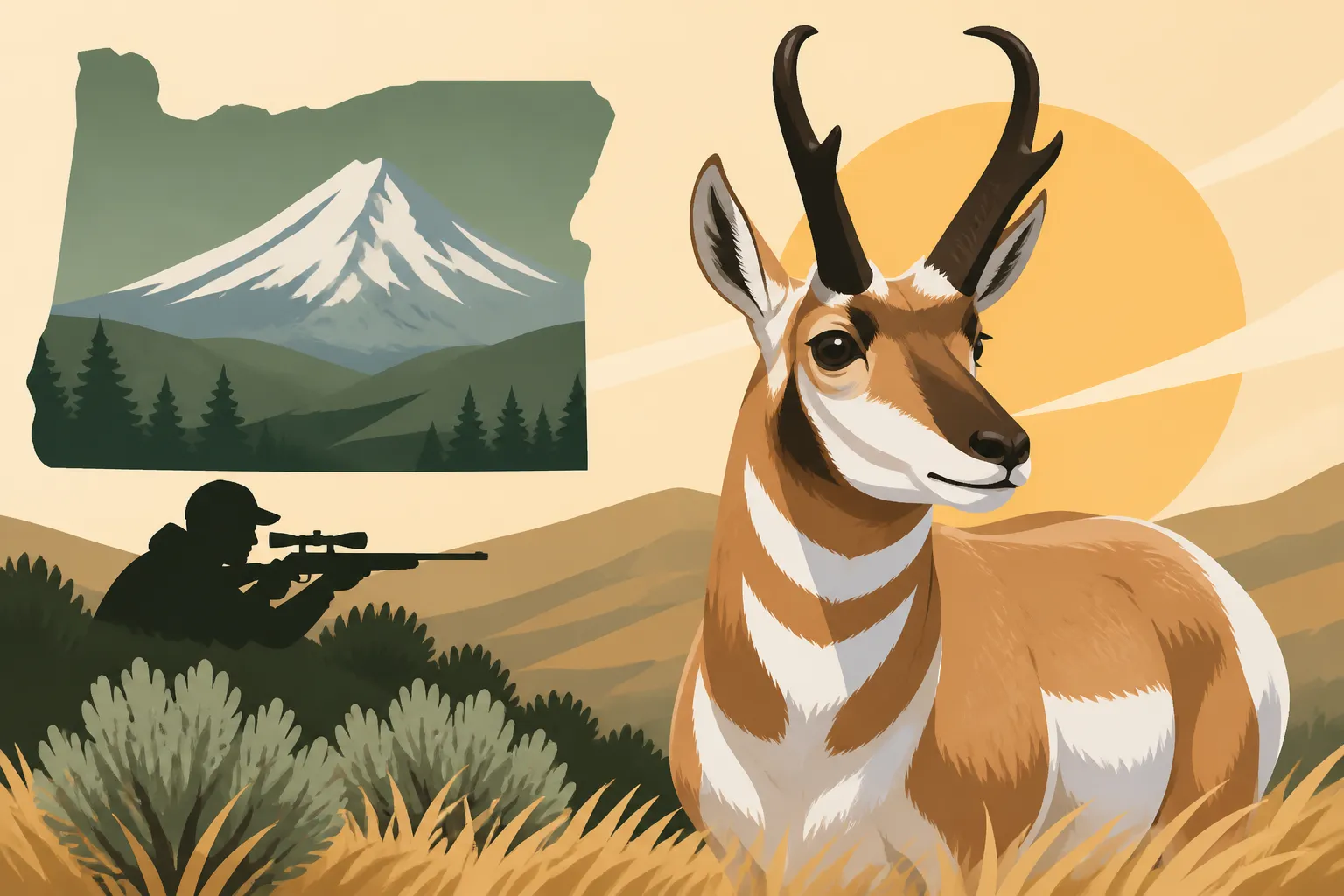
Oregon Pronghorn Controlled Hunts
Hunting pronghorn in Oregon offers an exhilarating challenge, but navigating the controlled hunt application process can feel like a puzzle with missing pieces. Many of us dream of chasing these speedsters across the high desert, only to be met with confusing unit codes, shifting draw odds, and the constant worry of wasting our precious preference points. This comprehensive guide is here to demystify Oregon's pronghorn controlled hunts, helping you understand the system, improve your application strategy, and prepare for a successful and memorable hunt for these incredible animals.
Understanding Oregon's Pronghorn Hunting Landscape
Oregon's high desert is home to a robust population of pronghorn, often mistakenly called "antelope" but actually a unique North American species. Their incredible speed, keen eyesight, and preference for wide-open spaces make them a captivating quarry. Unlike other big game species in the state, pronghorn hunting is exclusively managed through controlled hunts, meaning you must apply and be drawn for a tag. This system ensures sustainable populations and manages hunter pressure, but it also means strategic planning is paramount.
The Unique Allure of Oregon Pronghorn
There's something truly special about hunting pronghorn. They embody the spirit of the high desert: fast, elusive, and perfectly adapted to their stark, beautiful environment. For many, drawing an Oregon pronghorn tag is a bucket-list achievement, offering a chance to experience a different kind of hunt than chasing elk in the timber or blacktails in the coastal fog. The wide-open country demands different skills—primarily extreme patience with optics and the ability to make quick, informed decisions on stalks that can often be miles long. The physical challenge isn't necessarily about vertical climbs but covering vast distances over rolling terrain, often under a hot sun and unforgiving wind. It's a game of chess played across miles, not feet, and it's incredibly rewarding when you finally get into position on a wary buck.
Habitat and Behavior of Oregon Pronghorn
Oregon's pronghorn primarily inhabit the state's southeastern high desert regions, characterized by sagebrush flats, juniper woodlands, and rimrock country. These expansive, arid landscapes provide the ideal environment for their incredible vision, allowing them to spot predators and hunters from miles away. They thrive in areas with low, sparse vegetation, which helps them detect movement and gives them clear lanes to escape. Understanding their preferred habitat is crucial; you won't find them hiding in dense timber like deer or elk. Instead, they'll be out in the open, often near water sources, especially during the hotter early seasons. Their diet consists mainly of sagebrush, forbs, and grasses, which influences where they spend their time feeding. Pronghorn are also highly migratory, though their movements within specific hunt units are often tied to water and forage availability. Knowing where these resources are within your chosen unit is key to locating animals. To learn more about their distribution, check out our guide on Oregon Pronghorn Range and Numbers.
Navigating the Controlled Hunt Draw System
Applying for an Oregon pronghorn tag can feel like a high-stakes lottery, and in many ways, it is. The controlled hunt system is designed to allocate limited tags fairly, but success often hinges on understanding how preference points work and playing the odds. For most hunters, this means a multi-year strategy, building points until the numbers align.
Applying for a Pronghorn Tag
The process for applying for an Oregon pronghorn controlled hunt is similar to other big game species, but with unique considerations. First, you'll need a valid Oregon hunting license. Then, you'll select your hunt choices through the Oregon Department of Fish and Wildlife (ODFW) online licensing system. The application period typically runs from late winter to mid-May, with the draw results usually announced in June. It's crucial to understand that you can list multiple choices (first, second, third, etc.), but your preference points only apply to your first choice. If you don't draw your first choice, your application goes into a random draw for your subsequent choices, and you don't use your points. This system can be frustrating, especially when you feel like you're "wasting" an application fee without a guaranteed tag. Many experienced hunters will opt to apply for a point-only if their desired unit requires too many points, rather than apply for a long-shot first choice and risk not building a point. For a detailed breakdown of the application process, see our comprehensive guide on How to Apply for an Oregon Controlled Hunt.
Understanding Draw Odds and Preference Points
Preference points are the backbone of Oregon's controlled hunt system for species like pronghorn. Each year you apply for a controlled hunt and do not draw your first choice, you accrue a preference point. These points accumulate over time and give you a statistical advantage in future draws for your first choice. The more points you have, the better your odds of drawing a highly sought-after tag. However, once you draw your first choice for any controlled hunt (not just pronghorn), your accumulated preference points for that species are purged back to zero. This "use it or lose it" system means you have to decide when you have enough points to realistically draw your desired unit, rather than continually building them indefinitely.
Analyzing draw odds is where strategic planning comes in. ODFW publishes past draw statistics, showing how many points were required to draw certain units, and the success rates for different point levels. This data is invaluable. Tools like GoHunt provide detailed draw odds analysis, helping hunters understand their chances based on their current point totals. For instance, if a unit consistently draws out at 10 points, and you have 8, you might consider applying for a point-only this year, knowing you'll likely have enough next year. Conversely, if you're close to the average points for a good unit, it might be time to put in for it. It's a calculated risk, balancing the desire to hunt now with the goal of securing a quality tag later. Our article on Oregon Preference Points and How They Work delves deeper into this system, and you can also find specific data on Oregon Pronghorn Application Odds.
Here's a simplified look at how draw odds might appear for typical Oregon pronghorn units:
| Unit Name (Example) | Avg. Resident Points to Draw (Last 3 Yrs) | Avg. Non-Resident Points to Draw (Last 3 Yrs) | Approx. Tags Available | Typical Season Dates (Late Aug/Early Sept) |
|---|---|---|---|---|
| Beatys Butte | 15-20 | 25+ | 30-40 | Aug 25 – Sept 5 |
| Whitehorse | 10-15 | 20+ | 50-60 | Aug 20 – Aug 30 |
| Malheur River | 5-10 | 15-20 | 70-80 | Sept 1 – Sept 10 |
| Warner Valley | 8-12 | 18-22 | 40-50 | Aug 28 – Sept 7 |
| Wagontire | 4-8 | 12-18 | 90-100 | Sept 5 – Sept 15 |
Note: These are illustrative numbers based on general trends and do not represent current or exact draw odds or tag allocations for specific units. Always consult the official ODFW Big Game Regulations and draw reports for the most up-to-date and accurate information.
Key Factors for Pronghorn Success in Oregon
Once you've beaten the draw odds and secured that coveted pronghorn tag, the real work begins. Success in the high desert often boils down to a blend of meticulous scouting, strategic glassing, and the ability to execute a well-planned stalk in incredibly open terrain.
Mastering the Art of Glassing
In pronghorn country, your binoculars and spotting scope are arguably more important than your rifle. Pronghorn have exceptional eyesight, and the vast, open landscapes they inhabit mean they can spot movement from miles away. Effective glassing isn't just about looking; it's about systematically dissecting the landscape, moving slowly, and identifying subtle movements or shapes that betray the presence of an animal. Start high, using elevation to your advantage, and methodically scan every ridge, draw, and flat. Look for the tell-tale white patches of a pronghorn's rump or belly, or the distinct shape of their horns against the horizon.
Many hunters make the mistake of just driving around looking out the window. That's a surefire way to spook animals or miss them entirely. Instead, find a good vantage point, set up your tripod-mounted spotting scope and binoculars, and commit to spending at least an hour, often more, in one spot. Focus on shadows, transitions in terrain, and areas near water or prime forage. Pay attention to subtle details. A flicker of an ear, a patch of white, or even the glint of sunlight off an antler can give away their position. This technique is similar to Glassing Sage and Juniper for Eastern Oregon Mule Deer, though pronghorn are even more attuned to distant movement. Be patient; pronghorn often bed down for hours in seemingly exposed areas, blending remarkably well with the sagebrush.
Leveraging Technology for Scouting
In today's hunting world, technology is an invaluable asset for pronghorn hunters. E-scouting platforms like OnX Hunt, HuntStand, or the tools offered by GoHunt, allow you to study your unit in incredible detail long before you ever set foot on the ground. You can identify potential glassing points, water sources, natural travel corridors, and even areas with good forage based on satellite imagery and topographical maps. Look for changes in vegetation, subtle draws, or isolated knolls that might offer cover for a stalk.
When e-scouting, pay close attention to land ownership. Oregon has a mix of BLM, Forest Service, and private lands in pronghorn country. Knowing boundaries in advance can save you headaches and ensure you're hunting legally. Mark waypoints for potential access points, glassing locations, and any features that look promising for pronghorn activity. Once on the ground, these digital maps on your phone or GPS device become your real-time navigation tools, helping you orient yourself and execute stalks efficiently. This approach to pre-hunt analysis is critical for maximizing your limited time in the field and is covered in depth in our article on E-Scouting Oregon Units With Satellite Imagery. Remember to download offline maps, as cell service is often non-existent in the remote areas where pronghorn roam.
Strategic Stalking and Shot Placement
The real test of a pronghorn hunter often comes down to the stalk. Getting within range of these incredibly sharp-eyed animals in open country is one of hunting's great challenges. It demands patience, meticulous planning, and often, a bit of luck with the terrain and wind.
Executing a Successful Stalk
Once you've spotted a pronghorn buck you want to pursue, the stalk becomes a mental and physical chess match. First, assess the wind direction, the available cover, and the animal's behavior. Pronghorn have an incredible sense of smell, so staying downwind is non-negotiable. Use every subtle fold in the terrain, every patch of sagebrush, and every low ridge to your advantage. Crawling can be a necessary evil, covering hundreds of yards on your belly to stay out of sight. Remember that pronghorn are often accustomed to vehicles but will instantly spook at a walking human silhouette.
The biggest mistake hunters make is moving too quickly or exposing themselves at the wrong moment. Take your time. Plan your route, always keeping cover between you and the animal. If the terrain doesn't offer enough cover for a direct approach, sometimes a long, circuitous route that puts you miles away from your starting point but directly into position is the only option. Be prepared for long shots, as getting closer than 200-300 yards can be exceptionally difficult. Practice shooting from various field positions—prone, kneeling, and off a backpack—because you rarely get a perfect bench rest opportunity in the field. After all that effort, getting into range is only half the battle; making a clean, ethical shot is the ultimate goal.
Critical Shot Placement for Pronghorn
Pronghorn are not large animals, and their body structure is often misunderstood, leading to poor shot placement. While they appear leggy and deep-chested, their vital organs (heart and lungs) are actually set quite far forward and low in the chest cavity, relative to what you might expect from a deer or elk. A common mistake is to aim too far back, hitting the paunch or gut.
For a broadside shot, aim about one-third of the way up the body, directly behind the front leg. This will place your bullet squarely in the lung-heart area. If the animal is quartering away, aim to penetrate the vitals by envisioning the bullet exiting on the opposite shoulder. Avoid head or neck shots, especially at longer ranges, as the margin for error is simply too small for an ethical kill. When the moment of truth arrives, focus on making a calm, precise shot. Have a solid rest, control your breathing, and squeeze the trigger smoothly. Knowing your rifle and your own capabilities at various distances is paramount. While our guide on Shot Placement on a Bull at Close Range focuses on elk, the principles of ethical shot placement and understanding anatomy are universally critical for any big game species.
Regulations and Ethical Considerations
Hunting in Oregon comes with specific rules and regulations, and pronghorn hunting is no exception. Understanding these, alongside practicing ethical hunting, is key to a successful and responsible experience.
Staying Within the Law
Before you head into the field, meticulously review the most current ODFW Big Game Regulations. These pamphlets are your bible for the season, detailing hunt unit boundaries, legal weapons, tag requirements, and reporting deadlines. For pronghorn, specific Oregon Pronghorn Season Dates will be outlined for each controlled hunt unit. Pay close attention to unit boundaries; in the vast, open country, it can be easy to inadvertently cross into an adjacent unit or private land. Having a reliable GPS or mapping app with unit boundaries clearly marked is crucial.
Oregon's general hunting regulations apply, such as the minimum distance from occupied dwellings or roads for discharging a firearm. Always know the rules for transporting your firearm, whether loaded or unloaded, and securely cased. Remember that motorized vehicle use is often restricted in certain areas or during specific times within pronghorn units, so always check Travel Management Area (TMA) maps if applicable. Finally, be aware of the mandatory harvest reporting requirement. If you are successful, you must report your harvest to ODFW by the specified deadline, or you risk a penalty fee. The ODFW website is the best place to find the latest regulations, and they also post Where Oregon Posts In-Season Changes that might occur due to fire or other emergencies.
Responsible Hunting Practices
Beyond the letter of the law, ethical hunting practices are paramount. This includes a commitment to fair chase, ensuring a quick and humane kill, and respecting the land and other users. Pronghorn are typically hunted in high desert areas, which often see a lot of recreational use. Be mindful of hikers, campers, and other hunters. Maintain a respectful distance, and avoid any actions that could disturb their experience or create unsafe conditions.
When you harvest an animal, make every effort to recover it quickly and efficiently. In hot early-season conditions, this means immediate field dressing to cool the meat. Having a plan for packing out your animal is essential; even small pronghorn can be heavy, and the terrain can be challenging. Pack out all your trash, including spent shell casings, and leave the area cleaner than you found it. Respecting private land is also critical; always know where you are and seek permission before venturing onto private property. By adhering to these principles, you not only ensure your own positive experience but also contribute to the positive image of hunters and the conservation of Oregon's wildlife.
Essential Gear for Pronghorn Hunting
Hunting pronghorn in Oregon's high desert requires a specific set of gear to maximize your chances of success and ensure your comfort and safety in this often-remote environment. The right equipment can make all the difference in a hunt where success often hinges on spotting an animal miles away or making a long, accurate shot.
Optics Are Your Best Friend
As mentioned earlier, good optics are non-negotiable for pronghorn hunting. Forget about saving money here; invest in the best binoculars and spotting scope you can afford. A pair of 10x or 12x binoculars on a tripod is ideal for wide-area scanning and quick target acquisition. For detailed glassing and judging animals at extreme distances, a high-quality spotting scope (20-60x or similar magnification) on a sturdy tripod is indispensable. This setup will save you countless miles of walking and allow you to evaluate bucks for their trophy potential before committing to a grueling stalk. The clarity and light-gathering capabilities of top-tier optics, like those from Swarovski, Zeiss, or Vortex, truly shine in the vast, bright landscapes of the high desert. While the article on Optics for Dark Timber Versus Open Sage focuses on other species, the principles of selecting optics for open country are perfectly applicable here, emphasizing light transmission and magnification. Don't forget a rangefinder, especially if you plan on shooting at longer distances, as judging range in flat, featureless terrain can be incredibly deceptive. Our piece on Rangefinders in Steep Country offers insights on why accurate rangefinding is so important.
Weapon and Ammunition Choices
For pronghorn, a flat-shooting rifle chambered in a cartridge known for its accuracy at extended ranges is highly recommended. Cartridges like the .25-06 Remington, 6.5 Creedmoor, .270 Winchester, or .300 Win Mag are popular choices, as they deliver sufficient energy and have a relatively flat trajectory over 300-400 yards. Paired with high-quality, boat-tail ammunition designed for accuracy and reliable expansion, you'll be well-equipped.
A lightweight rifle is a bonus, as you'll likely be doing a lot of walking and crawling. Ensure your rifle is zeroed precisely for the distances you anticipate shooting, and practice shooting from prone or kneeling positions, as these are the most common field positions you'll encounter. Archery hunting for pronghorn is an even greater challenge, requiring specialized gear like a fast, accurate bow, broadheads designed for penetration, and exceptional stalking skills to get within much closer range, typically under 60 yards. Whatever your weapon choice, familiarity and proficiency with it are paramount.
Other Essential Gear
Beyond your optics and weapon, several other items are critical for a successful and safe Oregon pronghorn hunt:
- Clothing: Lightweight, breathable layers in drab colors or camouflage are best. The high desert can experience significant temperature swings, from chilly mornings to hot afternoons. Sun protection, including a wide-brimmed hat, sunglasses, and sunscreen, is vital.
- Footwear: Comfortable, broken-in hiking boots that provide ankle support are a must. You'll be covering many miles over uneven terrain.
- Backpack: A day pack large enough to carry water, snacks, extra layers, a first-aid kit, and your field dressing tools is essential.
- Water: Carry plenty of water. The high desert is notoriously dry, and dehydration can quickly become a serious issue. Consider a hydration bladder in your pack.
- Navigation: A reliable GPS device or a smartphone with a downloaded mapping app (like OnX Hunt) is critical for navigation and knowing property boundaries. A physical map and compass are good backups.
- Field Dressing Kit: Sharp knives, game bags, gloves, and a small saw or bone cutters are crucial for efficient field dressing and cooling of your animal.
- Emergency Supplies: A basic first-aid kit, headlamp, fire starter, and emergency shelter (even a space blanket) can be life-savers in remote areas.
- Spotting Pillow/Rest: A small, inflatable pillow or bean bag can provide a stable rest for your rifle when shooting prone or from a pack.
Preparing physically for your hunt is also important. While it might not involve the vertical ascents of an elk hunt, covering vast distances in the heat demands stamina. Our guide on Physical Training for an Oregon Elk Hunt can provide transferable tips for building endurance. Also, understand local camping regulations like those discussed in Camping Limits on Oregon National Forest if you plan to stay out in the field.
Disclaimer
Please remember that hunting regulations, season dates, and unit boundaries can change. Always consult the official Oregon Department of Fish and Wildlife (ODFW) regulations pamphlet for the current year before planning and executing any hunt. This guide is for informational purposes only and should not replace official ODFW resources.