Archery Setup for Wet Oregon Timber
Hunting in Oregon's notoriously wet timber presents a unique set of challenges for archers. The constant moisture, dense undergrowth, and often chilly temperatures can wreak havoc on your gear, dampen your spirits, and ultimately impact your shot when it matters most. This guide will walk you through setting up your archery equipment and preparing yourself to thrive, not just survive, in the soggy, rain-soaked forests that define so much of Oregon's prime hunting ground.
Protecting Your Bow and Accessories from the Elements
There’s nothing quite like pulling your bow out of its case only to find your string is fuzzy, your sight pins are fogged, or your rest is jammed with mud. These are common frustrations when hunting in the damp, unforgiving conditions of Oregon’s timber, especially during those early archery seasons where morning dew or persistent drizzles are the norm. Getting your bow ready for the wet starts long before you ever step foot in the woods.
Weatherproofing Your Bow
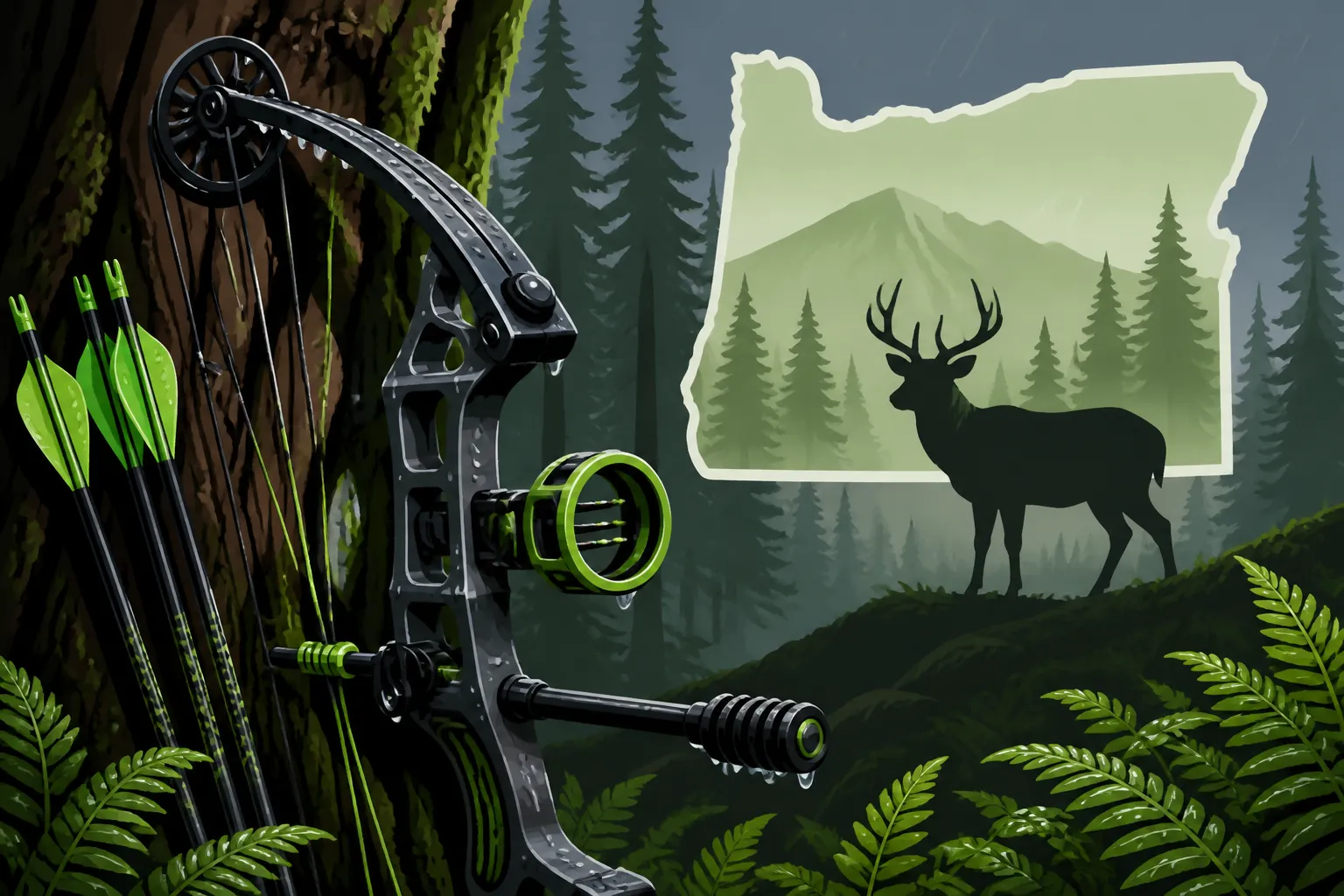
When you're trudging through sword ferns and salal, often in a constant drizzle or outright downpour, your bow is taking a beating. Standard bow finishes might look great on the showroom floor, but they can quickly degrade or even allow moisture to penetrate if not properly cared for. Look for bows with durable, often hydro-dipped or anodized finishes that are designed to resist scratches and moisture. These finishes act as the first line of defense, preventing water from reaching the raw materials underneath.
Beyond the riser and limbs, your bowstrings and cables are incredibly vulnerable. They are, after all, made of fibers that can absorb moisture, leading to stretching, fuzzing, and inconsistent performance. Regular waxing with a high-quality string wax is paramount. This isn't just about keeping the string looking nice; it creates a protective barrier that repels water, maintaining string integrity and shot consistency. Consider synthetic string materials like BCY-X or 452X, known for their stability in various temperatures and moisture levels. Some archers even go a step further, treating their strings with a water-repellent coating specifically designed for archery gear. Don't forget to keep your cams clean and free of debris, as mud and grit can quickly cause wear and tear in pivot points, especially when wet. For extended trips, especially if you're venturing into remote areas for a multi-day hunt, a good waterproof soft or hard case like those from Plano or SKB can be a lifesaver, keeping your bow snug and dry during transport and in camp.
Safeguarding Your Sights, Rest, and Stabilizer
Your accessories are often the most delicate parts of your archery setup, and they're usually the first to suffer from moisture exposure. Sights, in particular, are notorious for fogging up, or in the case of battery-powered models, malfunctioning due to dampness. Opt for sights with sealed components and durable housings. Many modern high-end sights from brands like Spot Hogg or HHA offer robust construction that handles moisture better than their cheaper counterparts. If you're using a fiber optic sight, consider a model with encapsulated fibers to prevent breakage and water intrusion. For electronic sights, always carry spare batteries and consider using a small, clear cover or even a piece of electrical tape to protect any exposed battery compartments or adjusters during heavy rain.
Your arrow rest, especially drop-away models, can easily get jammed with mud, pine needles, or wet leaves, leading to inconsistent arrow flight. Look for rests with minimal moving parts or those designed with open channels that shed debris effectively. Brands like QAD or Ripcord offer models that are generally robust. After a day in the timber, always inspect your rest, clearing any build-up. A quick blast of compressed air (once back at camp) can do wonders. Stabilizers are generally less susceptible to water damage, but heavy, wet conditions can make them sag or shift if not properly tightened. Ensure all components are securely fastened, and consider a shorter, more compact stabilizer if you're frequently brushing through thick undergrowth, as a long stabilizer can catch on branches and affect your shot or even knock your bow out of tune. Remember, a broken or jammed accessory in the field can mean the end of your hunt, so investing in durable, weather-resistant components is crucial. For ideas on optimizing your draw weight for these conditions, check out our article on Bow Draw Weight for Elk.
Optimizing Arrows and Broadheads for Wet Conditions
The journey of an arrow from your bowstring to the vitals of an elk or deer is already a complex one. Add rain, wet foliage, and the inherent density of an animal's hide and muscle, and you've got even more variables to consider. Your arrow and broadhead setup needs to be absolutely dialed in to deliver maximum penetration and reliability in wet Oregon timber.
Arrow Selection and Fletching
When hunting in dense, wet timber, penetration is king. A slightly heavier arrow can often be an advantage here, as it carries more kinetic energy through brush and wet hide. Carbon arrows are generally preferred over aluminum for their durability, lighter weight, and resistance to bending, which is critical when they might encounter incidental brush contact or impact wet ground. However, not all carbon arrows are created equal. Look for arrows with a good spine consistency and a robust weave that won't delaminate with prolonged moisture exposure. A common choice for many Oregon elk hunters is a carbon shaft in the 300-350 spine range, building a total arrow weight often north of 450 grains. This setup provides excellent momentum.
Fletching is another critical component often overlooked for wet conditions. Small, low-profile vanes can suffer from water adhesion, causing erratic flight in rain or when passing through wet brush. Larger, higher-profile vanes, especially those with a strong helical or offset twist, tend to stabilize the arrow more effectively, powering through moisture and resisting deflection. Vanes made of durable materials like those from AAE or Blazer are popular choices. A 3-vane setup is standard, but some archers opt for 4-vane configurations for even greater stability, especially if they are shooting fixed-blade broadheads. When you're dealing with thick Oregon understory, every bit of arrow stability helps ensure your broadhead hits true. If you're heading out during Archery Elk Hunting Oregon's August and September Seasons, preparing your arrows for wet conditions is a must.
Broadhead Performance in Rain and Through Brush
This is where the fixed-blade versus mechanical broadhead debate often comes to a head for timber hunters. In wet, dense timber, a fixed-blade broadhead often shines due to its inherent reliability. There are no moving parts to clog with mud or debris, and no blades that might fail to deploy properly after impacting a wet hide or a twig. Fixed blades, particularly those with a strong ferrule and razor-sharp, non-vented blades, are designed for maximum penetration. Brands like Iron Will, QAD Exodus, or G5 Montec are popular choices for their robust construction and ability to punch through bone and tissue without fail. The consistent flight of a good fixed-blade broadhead, especially when paired with well-fletched, heavier arrows, provides confidence in challenging shooting conditions.
Mechanical broadheads, while offering larger cutting diameters and field-point accuracy for some, can introduce potential points of failure in wet or brushy environments. Blades can sometimes deploy prematurely if they nick a branch, or they might not fully open if bogged down with wet hair and hide, leading to reduced penetration. If you prefer mechanicals, choose designs known for their robust construction and reliable deployment, often those with a rear-deploying or over-the-top blade system that provides a wider entrance hole and better durability. However, it's always a good idea to perform test shots in wet conditions with your chosen mechanical broadhead to ensure consistent performance. Regardless of your choice, ensure your broadheads are razor sharp. Even the smallest amount of moisture on hide can make it tougher to penetrate, so a pristine edge is paramount. For more on broadhead effectiveness, read our guide on Broadhead Choice for Heavy Bone.
Clothing and Personal Gear for Archer Comfort and Performance
Hunting in Oregon's wet timber isn't just about your equipment; it's profoundly about your personal comfort and ability to stay focused. There’s a direct link between being cold and wet, and losing your edge in the woods. When every rustle of leaves could be an animal, and every shot opportunity demands absolute precision, you simply can't afford to be miserable.
Layering for Warmth and Dryness
The key to surviving and thriving in Oregon's wet environment is a comprehensive layering system that prioritizes both waterproofing and breathability. Start with a quality base layer made of merino wool or synthetic materials. These fabrics excel at wicking moisture away from your skin, even when you're sweating during a strenuous hike. Cotton is an absolute no-go; once wet, it stays wet and will quickly chill you to the bone. Next, a mid-layer provides insulation. Again, merino or synthetics are your friends. A fleece jacket or a puffy vest (synthetic fill is generally better than down for wet conditions) can provide crucial warmth without excessive bulk.
The outer layer is arguably the most critical component: your rain gear. This isn't the place to scrimp. You need a truly waterproof and breathable jacket and pants. Look for materials like Gore-Tex, eVent, or other high-performance proprietary membranes found in quality brands like Sitka, Kuiu, or Kryptek. These fabrics prevent external moisture from getting in while allowing internal moisture (sweat) to escape, preventing that clammy feeling that quickly saps your morale. Ensure your rain gear has good adjustable cuffs, hoods, and waistbands to seal out water, and pit zips for ventilation during periods of high exertion. Remember, even the best rain gear needs to be maintained, so reapply DWR (Durable Water Repellent) coatings regularly. If you're wondering which brands truly stand up to the deluge, our article on Rain Gear That Actually Stays Dry offers some excellent advice.
Footwear and Hand Protection
Few things will ruin a hunt faster than cold, wet feet. Your footwear must be bombproof against moisture. For Oregon's timber, many hunters swear by rubber boots, particularly those from brands like Muck Boots or Lacrosse. They are 100% waterproof, often insulated, and provide excellent traction in mud and slick conditions. The downside can be breathability on long hikes, so a good moisture-wicking sock system (again, merino wool is king) is essential. If you prefer traditional hunting boots, ensure they have a high-quality waterproof membrane (like Gore-Tex) and are well-maintained with regular waterproofing treatments. High-ankle boots are a must to prevent water and debris from entering.
To further protect your feet and lower legs, gaiters are indispensable. They create a seal between your boots and pants, preventing water, snow, and forest debris from getting inside. Look for durable, waterproof gaiters that fit snugly without restricting movement. Your hands are also critical for archery. You need gloves that offer warmth and protection from moisture, but also provide enough dexterity to draw your bow, nock an arrow, and operate your release. Thin, quick-drying fleece or synthetic gloves are often a good choice, as they offer some insulation even when wet. For shooting, many archers prefer fingerless gloves or convertible mittens that allow the fingers to be exposed for the shot, then covered for warmth. Brands like Sitka and Kuiu offer specific archery gloves designed for these conditions. For more detailed information on staying dry from the ground up, check out Boots for Wet Coastal Hunting.
| Gear Type | Wet Weather Considerations | Recommended Features | Maintenance Tips |
|---|---|---|---|
| Bow | String fuzzing, moisture intrusion, cam gunk | Durable finish, synthetic string materials | Regular waxing, clean cams, waterproof case |
| Sight | Fogging, electronic failure | Sealed components, encapsulated fibers, robust housing | Carry spare batteries, protective covers |
| Rest | Jamming with debris | Minimal moving parts, debris-shedding design | Regular inspection, compressed air cleaning |
| Arrows | Water adhesion, instability | Heavier carbon shafts, larger helical fletching | Inspect fletching for damage, keep broadheads sharp |
| Broadheads | Deployment issues, reduced penetration | Fixed blades for reliability, sharp non-vented designs | Test in wet conditions, keep razor-sharp |
| Outerwear | Water penetration, clamminess | High-performance waterproof/breathable membranes, DWR | Reapply DWR, proper washing |
| Footwear | Wet feet, poor traction | Rubber boots or waterproof membrane leather boots, gaiters | Waterproofing treatments, quality socks, dry thoroughly |
| Gloves | Loss of dexterity, cold hands | Thin, quick-drying, convertible fingerless options | Dry thoroughly, replace when integrity compromised |
| Electronics | Water damage | Waterproof ratings, protective cases/bags | Spare batteries, silica packets, test regularly |
Accessory Management and On-The-Go Maintenance
In the dense, wet timber of Oregon, every piece of gear you carry needs to earn its spot. Not only does it need to function flawlessly, but it also needs to be protected from the elements and readily accessible when you need it most. Fumbling for a rangefinder or a call while an elk is walking by is a surefire way to miss an opportunity.
Carrying Essentials and Quick Access
Your rangefinder, calls, wind checker, and other small but vital tools need to be protected and easy to grab. Invest in small, waterproof pouches or cases for electronics like your rangefinder. Many modern rangefinders, such as those from Vortex or Leupold, come with decent water resistance, but an extra layer of protection is always wise. Consider a chest harness system for your rangefinder and binoculars. This keeps them secure, protected from rain and brush, and instantly accessible without having to dig through your pack. Some harnesses even have additional pockets for a wind checker or grunt tube.
For calls, especially open-reed or diaphragm calls that can be sensitive to moisture, having a small, dedicated pouch that keeps them dry and clean is key. For a bugle or cow call, ensure they are securely fastened to your pack or a vest where they won't get snagged by branches but can be deployed quickly. Think about a quiet, quick-release lanyard system. Even your release aid, if it's a wrist-strap style, can benefit from a small cover or simply tucking it under your jacket cuff to keep it dry and warm. The goal is to minimize noise and motion when accessing critical gear, and wet conditions amplify the challenge. Utilizing resources like GoHunt for planning your hunt, especially mapping potential elk corridors and access points, can inform what minimal, essential gear you'll need. Knowing the lay of the land can help you plan what you need readily available.
Field Maintenance and Post-Hunt Care
The battle against moisture doesn't end when you leave the woods each day. Field maintenance and post-hunt care are crucial for the longevity and performance of your archery setup. At the end of a wet day, the first thing you should do is give your bow a thorough wipe down with a dry cloth, paying close attention to strings, cables, cams, and all accessory attachment points. Remove your arrows from the quiver and wipe them clean, inspecting fletching for damage and broadheads for any dulling or debris. It's surprising how quickly corrosion can set in on unprotected metal surfaces, especially screws and bolts.
Once back at camp or home, take the time for a more in-depth inspection. Remove your string and cable from the cam grooves, and clean any mud or debris that might have accumulated. Re-wax your strings, especially after a prolonged period in the rain. Allow your bow to air dry thoroughly in a warm, dry environment. Don't store it in a damp case or corner. For your clothing, hang everything to dry completely. If you've got a woodstove in camp or an effective drying system, utilize it. Damp gear not only feels awful but can lead to mildew and degradation of waterproof coatings. Always check the screws on your sight and rest, as vibration from hiking and shooting, combined with wet conditions, can sometimes loosen them. A small multi-tool with various hex keys is invaluable for this. Proper care after each outing ensures your gear is ready for the next time you head out to chase those elusive Roosevelt elk. This attention to detail will help immensely when you need to Field Dressing an Elk in Warm Early-Season Weather after a successful hunt.
Practice and Mental Preparation for Wet Archery Hunting
Beyond the gear, your ability to perform under less-than-ideal conditions hinges on your preparation and mindset. The Oregon timber, especially when wet, demands a specific kind of mental toughness and practical skill.
Shooting in Inclement Weather
You wouldn't train for a marathon only on sunny days, so why would you only practice archery in perfect weather? To truly prepare for hunting in wet Oregon timber, you need to practice shooting in the rain. This means stepping out into your backyard or a safe range when the weather turns foul. Pay attention to how the rain affects your grip on the bow, your release aid, and your sight picture. Water can make your grip slick, so consider using a grip tape or a material that maintains traction when wet.
Rain and low light conditions can also make your sight pins appear dimmer, requiring you to adjust your focus and potentially change pin brightness settings if your sight allows. The sound of rain can mask your shot noise, but it can also make it harder to hear game movement. Practice drawing slowly and smoothly in wet clothes; they can feel heavier and restrict movement. While rain itself doesn't significantly alter arrow flight at typical bow hunting distances, the perception of rain and its impact on visibility can throw off your aim. Focus on your anchor points and follow-through, letting muscle memory take over. Shooting in a light rain or drizzle will quickly reveal any shortcomings in your setup or technique, allowing you to address them long before opening day. Understanding How Close You Can Get in Coastal Timber will also influence your practice shots in varying conditions.
Mindset and Patience in the Wet Woods
Oregon's wet timber can be a truly humbling environment. The persistent damp, the cold, the thick brush that seems to grab at every step – it can wear on even the most seasoned hunter. That's why mental preparation is just as vital as your physical and gear prep. Go into the hunt with a realistic expectation of the conditions and a positive attitude. Embrace the challenge. Recognize that the rain and fog that make your life difficult can also work to your advantage, masking your sound and scent from wary animals.
Patience is a virtue in any hunting scenario, but especially so in the wet timber. Animals often move differently in the rain, sometimes bedding down more frequently or sticking to thicker cover. Learn to read these subtle changes. Don't get frustrated if you're not seeing immediate action. Take advantage of the quiet brought by rain to move slowly and deliberately, still-hunting through prime areas. Remember that every time you feel uncomfortable or discouraged, an animal is likely feeling the same way about being out in the open. Use resources like GoHunt to scout areas and understand historical animal movements, which can help you stay motivated even when conditions are tough. A strong, resilient mindset will allow you to stay out longer, hunt harder, and ultimately increase your chances of success. When Calling Roosevelt Elk in Oregon Rainforest Timber, a patient approach often yields the best results.
Understanding Oregon's Wet Timber Environment
Successfully hunting in Oregon's wet timber with archery gear requires more than just a waterproof setup; it demands a deep understanding of the environment itself. The unique characteristics of these forests dictate how animals move, feed, and bed, and how you, as a hunter, should navigate and hunt them.
Identifying Prime Habitat in Wet Woods
Oregon's wet timber varies from the towering old-growth rainforests of the Coast Range to the dense, replanted clearcuts of the Cascades. Each type offers different challenges and opportunities. In old-growth forests, elk and deer often utilize natural benches, saddles, and the edges of thick reprod patches. The massive canopy provides some shelter from the heaviest rain, and the forest floor, while often mossy and damp, can offer relatively quiet walking if you move deliberately. Identifying ancient game trails, often worn deep into the earth, is crucial here. These trails provide the most efficient travel routes for both you and the animals.
Clearcuts, especially those 5-15 years old, are prime feeding and bedding areas for blacktail deer and elk, but they are incredibly difficult to hunt. The dense, interwoven saplings and brush are often soaking wet, making silent movement almost impossible. Focus on the edges of these clearcuts, or look for areas where logging roads or natural features create small, walkable lanes or "fingers" of timber extending into the thick stuff. Elk and deer will often feed on the new growth within these clearcuts, especially after a rain, then retreat to the safety of the thicker timber. Understanding these patterns is critical. For more on the species you might encounter, delve into our article on Roosevelt Elk in Western Oregon.
Navigating and Tracking in Soggy Conditions
Navigation in Oregon's dense, wet timber can be incredibly disorienting. The consistent canopy cover can block sunlight, making it hard to maintain direction, and features like drainages and ridges can look remarkably similar. A reliable GPS unit or a smartphone with detailed mapping apps like onX Hunt, coupled with a downloaded map, is non-negotiable. Always mark your starting point, known features, and your intended travel lanes. Learn to use a compass and map as a backup, especially since batteries can die and signals can be lost. Even seasoned hunters get turned around in a dense fog or heavy rain.
Tracking an animal, particularly after the shot, presents significant challenges in wet timber. Blood trails, which are often your best friend, can be quickly washed away by rain, or absorbed by soggy leaves, moss, and duff. This is where a methodical approach becomes paramount. Mark the exact spot of the shot, then proceed slowly and deliberately, marking every drop of blood, every bent blade of grass, and every disturbed leaf. Look for disturbed earth, broken twigs, or hair caught on branches. If you lose the trail, spread out and search in concentric circles from the last confirmed sign. Having a plan for when the blood trail disappears is essential. Many hunters will wait for conditions to improve slightly, or call in friends to help grid search. Always carry a tracking light for low-light conditions, but be aware of Using a Tracking Light Legally at Night in Oregon as regulations can apply. Knowing how to efficiently Quartering and Packing an Elk Alone will also save you time and energy when you do find your animal, reducing the amount of exposed time in wet conditions.
Disclaimer
The information provided in this guide is for general informational purposes only and is not a substitute for official hunting regulations, safety courses, or professional guidance. Always consult the latest Oregon Department of Fish and Wildlife (ODFW) regulations, maps, and advisories before planning or undertaking any hunting activity. Hunting is an inherently risky activity, and proper safety precautions, training, and respect for wildlife and the environment are paramount.