Drop Camp Prices in Oregon Wilderness
Dreaming of that deep wilderness hunt in Oregon, far from the roads and the crowds, but the thought of packing in all your gear and a potentially successful animal out again has your shoulders aching before you even leave home? You're not alone. The logistical challenge of reaching remote backcountry in Oregon's vast wilderness areas often stops many hunters in their tracks. This guide is dedicated to breaking down the costs and considerations for drop camps, offering a realistic look at how this service can unlock those secluded hunting grounds, allowing you to focus on the hunt itself rather than the grueling pack.
Understanding What a Wilderness Drop Camp Entails
Many hunters envision a true wilderness experience, far from the drone of ATVs and the scent of truck exhaust. Oregon offers incredible opportunities for this, but the physical demands are immense. That's where a drop camp truly shines, providing a crucial bridge between your ambition and the practicalities of deep backcountry access.
The Core Service of a Drop Camp
At its heart, a drop camp is an essential support service where an outfitter or packer uses stock – typically horses, mules, or sometimes llamas – to transport you and your hunting gear to a pre-arranged, remote campsite deep within a designated wilderness area. They "drop" you off with all your provisions, set up a basic camp, and then return at a pre-determined date to "pack" you and your harvest out. This is a fundamental difference from a fully guided hunt, where the outfitter actively guides you during your hunt, helps with game retrieval, and provides full camp services.
With a drop camp, you are entirely self-sufficient once the packer leaves. This means you're responsible for your own hunting, cooking, navigating, and survival for the duration of your stay. Most drop camp packages include the transportation of your personal gear, a wall tent with a wood stove for heat, cots for sleeping, and basic cooking equipment like pots, pans, and perhaps a water filter. Some might even include a cooler or food storage barrels. It's truly a wilderness experience, just without the initial back-breaking hike. It frees you up to think about Calling Bull Elk During Oregon's Archery Season or perfecting your still-hunting technique, rather than how many pounds of gear you can physically carry.
Why Oregon's Wilderness Demands Stock Support
Oregon's wilderness areas are beautiful, rugged, and deliberately devoid of motorized access. Places like the Eagle Cap Wilderness, Hells Canyon Wilderness, or Wenaha-Tucannon Wilderness are not accessible by vehicle, ATV, or even electric bicycles. This means if you want to get more than a few miles from a trailhead, you're either walking and carrying everything on your back, or you're utilizing pack stock. This is why Oregon Wilderness Rules That Ban Motorized Carts are so important; they preserve the character of these lands but also necessitate traditional methods for deep penetration.
Imagine the sheer physical exertion of Packing Out an Elk in Oregon's Wilderness Units for miles over steep, unforgiving terrain. A drop camp eliminates this herculean task, at least on the pack-in. It allows you to bring more comfortable gear, better food, and enough supplies for an extended stay, making your hunt more enjoyable and sustainable. Outfitters who specialize in Horse and Llama Packing Into Oregon Backcountry are experts at navigating these challenging landscapes, ensuring your gear arrives safely and efficiently. Without their knowledge and stock, many of these incredible hunting grounds would simply be out of reach for the average hunter, or at least only accessible for short, extremely minimalist hunts.
Factors Influencing Drop Camp Pricing in Oregon
When you start looking into drop camps, you'll quickly realize that prices aren't one-size-fits-all. Several key factors weigh heavily on what an outfitter will charge for their services in Oregon's backcountry. Understanding these can help you better budget and choose the right option for your hunting party.
Distance and Terrain Complexity
The further an outfitter has to pack you and your gear into the wilderness, the higher the cost. This is simply a matter of time, resources, and wear and tear on their stock. A camp set five miles from the trailhead will inherently cost less than one fifteen miles deep. Every mile adds hours to the round trip for the packer and their animals, consuming more feed and energy. This is especially true in Oregon's varied terrain, from the steep, rocky ascents of the Wallowas to the dense, often wet timber of the Cascades.
Beyond just mileage, the type of terrain plays a huge role. An easy, relatively flat trail might allow for faster travel and heavier loads per animal. Conversely, a steep, brushy, or rock-strewn route, common in many of Oregon's wilderness areas, demands more experienced stock and packers, takes significantly longer, and increases the risk of injury to both animals and people. An outfitter going into a notoriously difficult-to-access basin in Hells Canyon, for instance, will likely charge more than one heading to a more accessible spot in the Wenaha-Tucannon, even if the straight-line distance is similar. The logistical challenges of Multi-Day Camps in Oregon's Roadless Country are directly tied to how difficult it is to get supplies in and out.
Duration of the Hunt and Camp Provisions
The length of your hunt also directly impacts the drop camp price. While the initial pack-in and final pack-out are fixed costs, the outfitter's stock and personnel are still effectively "tied up" for your designated pick-up date. A standard 5-7 day hunt is common, but extending your stay for 10 or 14 days will usually incur additional charges, as it limits the outfitter's ability to schedule other trips.
Furthermore, what the outfitter provides in terms of camp provisions can significantly influence the price. Some drop camps are truly bare-bones: just transportation of you and your gear. Others might include a more elaborate camp setup, complete with a larger wall tent, more sophisticated cooking equipment, more comfortable cots, or even insulated food boxes to keep perishables fresh longer. If you require the outfitter to pack in extra water barrels, firewood (if allowed and necessary), or specific heavy items, those add to the load and therefore the cost. Clearly defining these needs upfront with your chosen outfitter is crucial. GoHunt or BookYourHunt can sometimes help you filter by outfitters who offer more extensive camp setups versus basic transport.
Number of Hunters and Amount of Gear
Outfitters typically price drop camps either on a per-person basis or as a flat rate for a small group, often with a maximum weight allowance for gear per person. More hunters in your party generally mean more personal gear, more food, and potentially more harvested game to pack out. This can necessitate additional pack animals and packer trips, which drives up the overall cost.
For example, a two-person hunt will likely be more affordable than a four-person hunt, simply because the cumulative weight of gear, and potential game, is much higher for the larger group. Be prepared to accurately estimate the weight and volume of your group's gear. Outfitters have strict limits on what their animals can carry safely and efficiently. If you bring significantly more gear than agreed upon, expect to pay an additional fee for extra stock trips or be forced to leave items behind at the trailhead. This is a critical discussion to have when looking at different options and their prices on platforms like BookYourHunt.
Typical Price Structure and What to Expect
Navigating the financial side of a drop camp can feel a bit like deciphering an ancient map – lots of variables and sometimes unclear pathways. However, there are common structures and expectations that can help you understand the investment.
Common Pricing Models
When you contact outfitters in Oregon offering drop camp services, you'll generally encounter a few pricing models. The most common are:
- Per-Person Rate: This is straightforward. The outfitter charges a set amount for each hunter in your party. This often includes a specific weight allowance for personal gear per person and the assumption of packing out one animal per successful hunter.
- Group Rate: Some outfitters prefer to offer a flat rate for a small group (e.g., 2-4 hunters) up to a certain total gear weight. This can sometimes be more economical for a tight-knit group that plans to share certain communal gear efficiently.
- Base Rate + Additional Services: Less common for pure drop camps, but some might have a base fee for the pack-in/pack-out of a minimal camp, with additional charges for extra gear, larger tents, specific camp amenities, or additional stock support.
It's important to remember that these costs cover the logistical support into and out of the wilderness. They do not include your hunting license or tags, which are separate purchases through the Oregon Department of Fish and Wildlife. While I can't give you exact figures, a 5-7 day drop camp for 2-4 people in a moderate-distance Oregon wilderness location will generally fall into a significant investment bracket, typically running into thousands of dollars for the group. For perspective, this will be considerably less than a fully guided hunt, but still a substantial expenditure compared to a DIY road-accessible hunt.
Inclusions and Exclusions
To avoid surprises, always get a clear breakdown of what your drop camp fee includes and excludes in writing. This is part of the essential due diligence outlined in Guide Contracts and Deposits in Oregon.
Typical Inclusions:
- Transportation: Pack-in and pack-out of hunters from the trailhead to the designated camp spot.
- Gear Transport: Packing of personal hunting gear, usually up to a specified weight per person (e.g., 100-150 lbs).
- Camp Equipment: Often includes a wall tent, wood stove (if allowed and needed), cots, and possibly a basic cooking kit.
- Game Retrieval: The pack-out of one harvested animal per successful hunter (e.g., one elk or one deer). This is a critical inclusion to confirm, as packing out an entire elk takes significant effort and dedicated stock.
Common Exclusions:
- Food and Drink: You are responsible for all your food, water purification, and beverages.
- Personal Hunting Gear: Rifles, bows, optics, clothing, sleeping bags, backpack, etc., are your responsibility.
- Licenses and Tags: These are purchased separately.
- Trophy Fees: Some outfitters might have additional charges if you harvest more than one animal (e.g., a bear in addition to your elk).
- Tips: It's customary to tip your packers, who work incredibly hard to make your hunt possible.
- Contingency Costs: Expenses for unforeseen circumstances, like early departure, extra trips due to excessive game, or emergency evacuations.
Always clarify how many animals can be packed out per group, and if there are weight limits or extra charges for additional animals. This is especially important if you're pursuing combined opportunities like Cougar Hunting While Deer Hunting on the Same Trip.
Comparing Drop Camps to Full Guide Services
Understanding where a drop camp fits into the spectrum of hunting services is key to valuing its price.
| Feature | DIY Hunt (No Stock) | Drop Camp | Fully Guided Hunt |
|---|---|---|---|
| Access | Limited to road-accessible areas or what you can backpack | Deep wilderness access via pack stock | Deep wilderness access via pack stock (often more mobile) |
| Effort | High (pack everything yourself) | Moderate (pack stock handles heavy lifting) | Low (guide handles most logistics & effort) |
| Skill Required | High (navigation, hunting, survival) | High (navigation, hunting, survival) | Moderate (guide assists with hunting, navigation) |
| Cost | Lowest (fuel, food, tags) | Moderate (outfitter service + personal costs) | Highest (all-inclusive service) |
| Camp Setup | Your own backpack tent/shelter | Outfitter-provided wall tent, stove, cots | Fully serviced camp with cook, amenities |
| Game Retrieval | Your sole responsibility (often hardest part) | Outfitter packs out 1 animal (confirm limits) | Guide assists with retrieval, packing |
| Support | None | Logistical transport only | Active hunting guidance, full camp support |
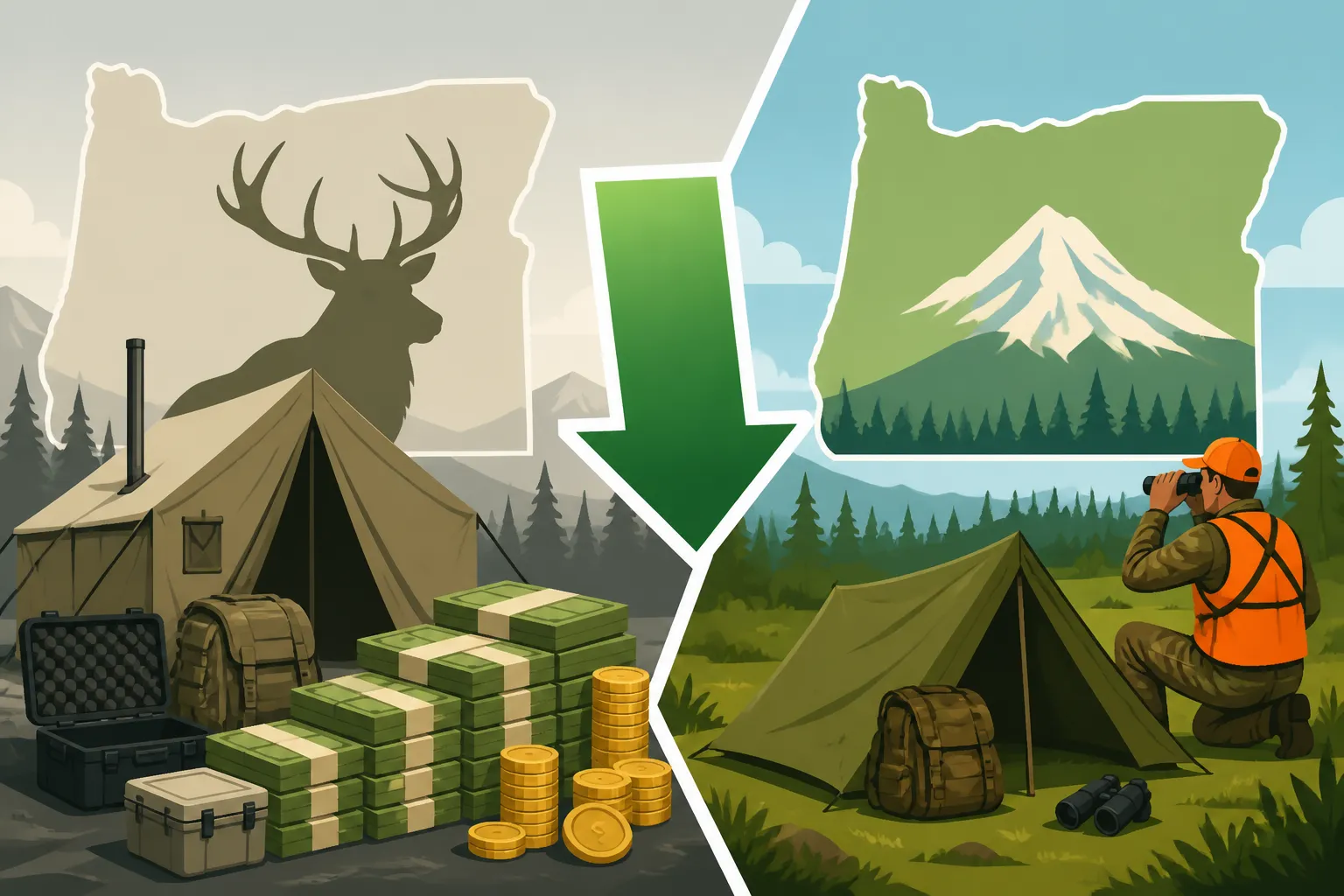
A drop camp offers a fantastic middle ground. It's significantly less expensive than a fully guided hunt, which can cost many thousands of dollars more, but provides essential access and heavy lifting support that makes a deep wilderness hunt physically feasible for many. If you have the hunting skills, navigation abilities, and desire for a truly independent backcountry experience, but lack the physical capacity or time to pack everything yourself, a drop camp is an invaluable service. Platforms like BookYourHunt and GoHunt are excellent resources for comparing these different service levels, allowing you to filter by type of hunt (guided, semi-guided, drop camp) and see pricing ranges from various outfitters. This can help you weigh the investment against the experience you desire.
Maximizing Value and Preparing for Your Drop Camp Hunt
Investing in a drop camp is a significant decision that promises an unforgettable Oregon hunting experience. To ensure you get the most value for your money and have a successful, safe trip, meticulous preparation is key.
Planning Your Wilderness Experience
The beauty of a drop camp lies in its ability to put you in pristine, remote hunting grounds, but it also places a significant onus on your self-sufficiency. Therefore, thorough planning is paramount.
First, invest considerable time in researching your chosen hunt unit and the species you'll be pursuing. This includes understanding game behavior, seasonal patterns, and specific habitat features. E-Scouting Oregon Units With Satellite Imagery can be incredibly helpful for identifying potential bedding areas, feeding zones, water sources, and travel corridors before you even set foot on the trail. You'll want to study topographical maps and understand the terrain you'll be navigating on foot from your drop camp.
Next, make an honest assessment of your group's collective hunting skills, physical fitness, and wilderness survival knowledge. Since you'll be on your own once the packer leaves, confidence in navigation, first aid, game recovery, and camp management is critical. Ensure everyone understands their role and responsibilities. Consider that your success will depend entirely on your own efforts, just as it would in a Backpack Camps in Oregon Wilderness scenario, but with the added luxury of more gear.
Finally, compile a comprehensive gear list. Think through every contingency. Oregon's weather can be unpredictable, especially in the mountains. Having quality Rain Gear That Actually Stays Dry isn't a luxury; it's a necessity. Pack layers, reliable navigation tools (GPS, map, compass, satellite communicator), a robust first-aid kit, and durable shelter items. Remember, while the outfitter provides a main tent, you might still need daypacks and emergency shelters for excursions away from the main camp.
Asking the Right Questions to Your Outfitter
Before you commit to a drop camp, a detailed conversation with the outfitter is crucial. Don't be shy about asking questions; a reputable outfitter will appreciate your diligence. Here are some key inquiries:
- Exact Location: Where precisely will the camp be dropped? Get GPS coordinates or a clear map marking.
- Camp Equipment: What specific items are included in the camp setup (tent size, stove, cots, cooking gear, water filter, food storage)?
- Game Retrieval: How many animals are included in the pack-out? What are the charges for additional animals? How is successful game handled (whole, quarters, caped for trophy)?
- Emergency Procedures: What are the communication protocols in an emergency? What's the plan for medical emergencies or unforeseen weather events? Will they provide a satellite phone or inReach device?
- Stock Feed: Are there specific rules about certified weed-free feed for the stock if you're bringing your own animals for personal use (though most drop camps are fully serviced by the outfitter's stock)? This is more relevant if you're discussing Horse and Llama Packing Into Oregon Backcountry as a standalone service.
- Contingency Plans: What happens if weather delays the pick-up? What if you fill your tag early and want to be picked up sooner?
- References: Ask for references from past drop camp clients. This can give you invaluable insight into the outfitter's reliability and the quality of their service.
It's also imperative to verify the outfitter's registration. You can check with the Oregon Marine Board to confirm they are a legally registered outfitter. Checking an outfitter’s credentials is a smart move, and sites like GoHunt often have vetting processes or client reviews that can offer additional peace of mind when you're making your selection.
Smart Budgeting Beyond the Drop Camp Fee
While the drop camp fee itself is a significant part of your budget, it's far from the only expense. Overlooking these additional costs can quickly turn your dream hunt into a financial headache.
Consider all related expenditures:
- Licenses and Tags: Oregon hunting licenses and specific big game tags are mandatory and can add up, especially for non-residents.
- Travel Costs: Fuel for your vehicle, potential flights if you're coming from out of state, and any pre- or post-hunt lodging in nearby towns.
- Food and Supplies: The cost of all your meals, snacks, and any specialized wilderness supplies like water purification tablets, freeze-dried meals, or first-aid refills.
- Personal Gear: Investing in high-quality boots, clothing, optics, and other hunting essentials is crucial for comfort and success.
- Meat Processing: Once you've harvested an animal and it's been packed out, you'll need to pay for professional processing or invest time and resources in Butchering Your Own Deer at Home.
- Taxidermy: If you're fortunate enough to harvest a trophy, taxidermy costs can be substantial.
- Tips: As mentioned, it's customary to tip your packers. A common guideline is 10-20% of the trip cost, depending on the service quality and your satisfaction.
Planning for these costs upfront ensures you have a clear picture of your total investment. Remember, a drop camp is about enabling a specific kind of hunting experience in Hunting Oregon's Wilderness Areas, and budgeting wisely will allow you to fully enjoy that experience without financial stress.
Disclaimer
This article is for general informational purposes only and does not constitute professional advice. Laws, prices and regulations vary by location and change over time. Consult a qualified professional for guidance on your specific situation.