Reading Clearcut Edges for Blacktail Bucks
Trying to pin down a mature blacktail buck in the dense, often overwhelming expanse of an Oregon clearcut can feel like searching for a needle in a haystack. The sheer amount of tangled cover, new growth, and diverse terrain makes it a formidable challenge, leading to many frustrating hunts where deer seemingly vanish into thin air. This comprehensive guide is dedicated to helping you decipher the subtle, yet critical, signs and patterns that blacktail bucks leave along clearcut edges, providing you with actionable strategies to consistently find and pursue them.
The Allure of Clearcuts for Blacktail Bucks
Clearcuts, especially those a few years old, aren't just random patches of logged ground; they're dynamic ecosystems that blacktail deer, particularly bucks, find incredibly appealing. Understanding why these areas are so attractive is the first step in learning to effectively hunt their edges.
Why Clearcuts Are Blacktail Magnets
Imagine a deer's perfect world: ample food, dense cover for safety, and easy travel corridors. Clearcuts, in their various stages of regeneration, offer exactly this. When an area is logged, sunlight suddenly hits the forest floor, triggering a massive explosion of new plant growth. This creates a smorgasbord of browse, forbs, and grasses that blacktails absolutely love. Think about the rich variety of huckleberry, salal, vine maple, and various tender shoots that spring up—it's a buffet line for deer. Bucks, needing a lot of nutrients to grow those impressive antlers and maintain their body weight, are drawn to these abundant food sources.
Furthermore, the structure of a clearcut provides a unique blend of security and sustenance. The initial logging creates a chaotic landscape of downed timber, slash piles, and scattered saplings. As these grow, they form incredibly thick, almost impenetrable pockets of cover. This dense growth offers excellent concealment from predators and hunters alike, making deer feel safe. They can bed down deep within these tangles, often just steps away from prime feeding areas, allowing them to conserve energy while still accessing food readily. It’s a delicate balance of danger and reward, and blacktails have mastered exploiting these transition zones.
Security Cover and Forage Preferences Along the Edge
Blacktail bucks are creatures of comfort and security. While they'll venture into the open areas of a clearcut to feed, they rarely stray far from dense cover. This is where the "edge" becomes so crucial. The transition zone between the mature timber and the regenerating clearcut is a highway of activity. Here, deer can feed on the tender new growth in the clearcut while having an immediate escape route into the deep, dark timber. This boundary provides both food and protection simultaneously.
Look for areas where the clearcut meets a mature timber stand that offers a steep slope, a thick riparian zone, or an old-growth finger extending into the younger growth. These spots offer layered protection, allowing deer to quickly disappear if threatened. Forage preferences will also change with the seasons. In spring and early summer, they'll target fresh green shoots. As fall approaches, they might shift to berries, acorns, or other mast crops that might still be present along the timberline. Understanding these seasonal shifts in their diet can help you pinpoint exactly which part of the edge they’re likely to be using. It’s not just about finding a clearcut; it’s about finding the right part of the clearcut edge that offers the most appealing combination of food and security at that specific time.
Decoding the Language of Clearcut Edges
Just like reading a map, learning to "read" a clearcut edge involves recognizing specific features and signs that indicate blacktail buck presence and movement patterns. These subtle clues can reveal the story of how bucks use the area.
Transition Zones and Micro-Habitats
Clearcut edges are rarely uniform. They often feature distinct transition zones and micro-habitats that concentrate deer activity. For example, where a clearcut drops into a small, unlogged ravine with a seasonal creek, or where it meets a north-facing slope that retains moisture longer, you've found a potential hotspot. These micro-habitats offer unique resources that might not be available in the broader landscape. A small patch of undisturbed old growth within the clearcut, often called a "leave tree" patch or "green island," can be a significant bedding area, especially for older, wiser bucks. They can retreat to these islands of safety, still benefiting from the surrounding browse.
Pay close attention to changes in vegetation density and species. A dense thicket of young firs mixed with vine maple along an edge provides ideal thermal and security cover, even more so than just a brushy open area. Similarly, look for draws or saddles that funnel deer movement. A clearcut might be vast, but deer, like all animals, prefer the path of least resistance. These natural funnels become prime travel corridors, often heavily used by bucks moving between bedding and feeding areas. Using tools like GoHunt, you can really zoom in on satellite imagery to identify these subtle topographical changes and vegetation variations before you even step foot in the woods, helping you narrow down your focus.
Signposts: Rubs, Scrapes, and Trails
Once you're on the ground, deer sign becomes your most important indicator. Along clearcut edges, rubs, scrapes, and well-worn trails are like neon signs pointing to buck activity. Rubs, where bucks strip bark from small trees with their antlers, are particularly telling. Fresh rubs indicate recent activity, and a "rub line"—a series of rubs leading in a specific direction—can reveal a buck's preferred travel route. Look for rubs on saplings and small trees (1-4 inches in diameter) located just inside the timberline, or on sturdy stems within the thicker clearcut edge. The height and diameter of the rub can sometimes give you a clue about the size of the buck that made it.
Scrapes, on the other hand, are bare patches of ground where a buck has pawed away the leaves and dirt, often urinating in the depression and leaving scent from glands on his forehead via an overhanging branch. These are communication hubs, especially during the pre-rut and rut. While bucks make scrapes year-round, fresh, active scrapes during the season are undeniable proof of a buck's presence. Check out "Blacktail Rut Timing in Western Oregon" for more insights on when to expect this heightened activity. Finally, don't overlook trails. While deer create many trails, look for ones that are well-worn, particularly those leading from dense cover to feeding areas or between different bedding zones. Sometimes, you'll find a single, larger track within a trail that indicates a mature buck. The key is to piece these signs together, creating a narrative of how bucks are utilizing the clearcut edge.
Water Sources That Hold Deer in Dry Country
In many parts of Oregon, especially during early seasons or dry years, water sources are paramount, and their proximity to clearcut edges can be a game-changer. Even in coastal areas that seem perpetually damp, standing or slow-moving water can draw deer. A small seep, a trickling spring, or even just a low, marshy depression can become a critical resource. Deer need water daily, and if a clearcut offers abundant forage but lacks water, they won't spend much time there.
Focus your scouting efforts on clearcut edges that border these precious water sources. Deer will often travel along the edge to access water, creating distinct trails. During dry spells, these spots can act as a natural funnel, concentrating activity as bucks come in to drink, especially at dawn and dusk. Understanding "Water Sources That Hold Deer in Dry Country" can significantly enhance your chances of ambushing a buck. While hunting near water, remember to approach quietly and position yourself downwind. A buck’s senses are sharp, and he’ll be on high alert when approaching a vital resource like water. Don't be afraid to sit and observe these areas for extended periods; patience often pays off.
Strategic Scouting and Hunting Approaches for Edges
Finding the right clearcut edge is one thing; effectively scouting and hunting it is another. These areas demand a blend of stealth, patience, and smart observation.
Still-Hunting and Sneaking the Edge
Still-hunting is perhaps the most effective method for clearcut edges, particularly in western Oregon’s dense coastal forests. This isn't about sitting still; it's about moving incredibly slowly, stopping frequently, and observing intently. Think of it as a deliberate, tactical crawl through the woods. Your pace should be measured in yards per minute, not miles per hour. Take one or two steps, then pause for several minutes, scanning every shadow, every cluster of brush, every flicker of movement. This allows you to pick apart the cover and spot deer before they spot you.
Focus on moving into the wind or with a crosswind, always paying attention to your scent cone. The natural contours of the land can sometimes help shield your movements and break up your silhouette. When moving along a clearcut edge, especially where the timber is mature, try to stay just inside the timberline. This gives you cover while allowing you to peek into the clearcut. The sound of rustling leaves or snapping twigs can give you away, so pick your footfalls carefully. In wet conditions, like those often found in the Coast Range, the damp ground can actually aid your quiet movement, making it easier to employ a slow "Still-Hunting Speed in Wet Brush". Remember, a blacktail buck's primary defense is its ability to melt into cover, so your best offense is an even slower, more deliberate approach.
Reading a Two-Year-Old Clearcut for Bucks
The age of a clearcut significantly impacts how blacktails use it. A freshly cut clearcut offers little in the way of cover, though some initial browse may attract does. A 10-15 year old clearcut, on the other hand, can be a wall of impenetrable saplings, making hunting incredibly difficult. The sweet spot, often, is a clearcut that's around 2-5 years old. In this stage, the initial burst of forage is robust, and the regenerating trees and brush are tall enough to offer good concealment but not yet so dense that they're impossible to navigate.
A "Reading a Two-Year-Old Clearcut for Bucks" strategy involves looking for specific characteristics. You'll find a mix of tender browse, young conifers, and some remaining slash piles. Bucks will use the taller, thicker patches for bedding, especially on sheltered slopes or near natural depressions. The more open areas will be feeding zones. Look for areas with diverse vegetation—patches of huckleberry, willow, and salal interspersed with young firs. These clearcuts often have enough open lanes or old skid roads that allow for glassing opportunities from strategic vantage points within the timber or on opposing slopes. This balance of feed and cover makes them highly attractive to mature bucks.
Glassing Clearcut Edges from a Distance
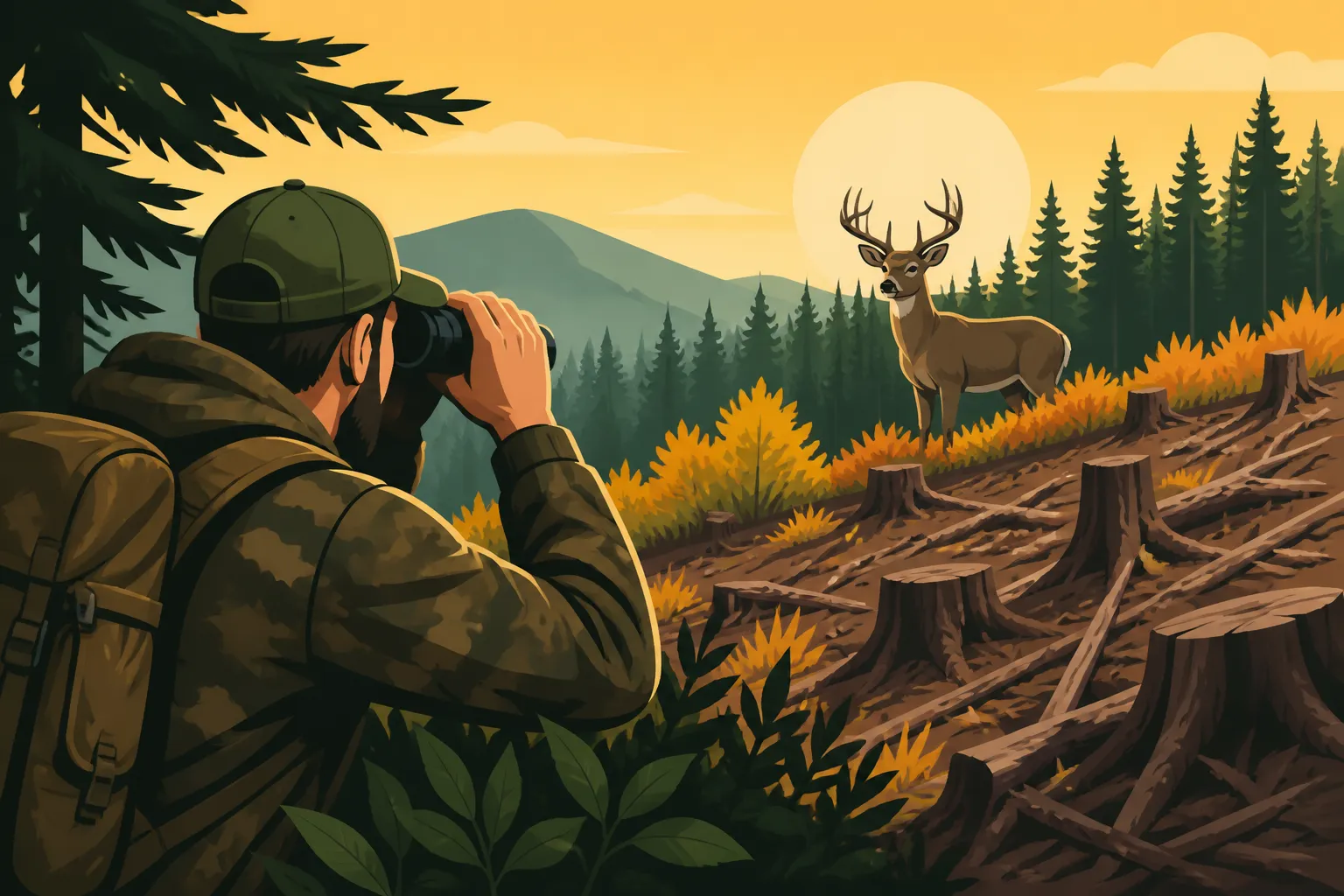
While still-hunting is crucial, sometimes the most effective way to hunt clearcut edges is from a distance. This involves finding a good vantage point, setting up your optics, and patiently glassing the entire clearcut edge. This technique is particularly effective in larger clearcuts, or when you’re scouting new territory. From a high point on an opposing ridge or even from a point within the timber that offers a good view, you can use binoculars (10×42 or 10×50 are ideal) and a spotting scope to methodically pick apart the edges.
Spend at least 15-30 minutes glassing a single area before moving on, looking for movement, a horizontal line in a vertical world (like a deer's back), or the tell-tale glint of an antler. Deer often blend in incredibly well, and what might look like a shadow can resolve into an ear or an eye with sustained observation. Pay special attention to the transition zones where the clearcut meets the timber, especially during the early morning and late evening when deer are most active. This is also where an app like GoHunt truly shines, allowing you to identify potential glassing knobs and mark them on your map, plan your approach, and even identify specific "Edge Cover Blacktails Bed In" before you even leave home. It's a strategic way to cover a lot of ground effectively without spooking deer by blindly walking through prime areas.
Seasonal Dynamics and Timing Your Hunt
Blacktail behavior, and thus their use of clearcut edges, changes significantly with the seasons and even the time of day. Timing your efforts to coincide with these patterns is critical for success.
Early Season vs. Late Season Edge Use
The early archery and general rifle seasons (late August through October) see blacktails using clearcut edges differently than the late general rifle and muzzleloader seasons (November). In the early season, particularly when it's still warm, bucks are often in velvet or have just shed it, and their primary focus is on feeding and conserving energy. They'll frequent clearcut edges that offer fresh, succulent browse, especially those with good shade during the heat of the day. They might spend more time bedded deep inside the clearcut's cover during midday, emerging at dawn and dusk. Water sources are also critical during warmer periods.
As the season progresses into late October and November, the rut begins to kick in for many blacktails in western Oregon. This is when bucks become far more mobile and less predictable in their movements. They'll still use clearcut edges for travel, but their focus shifts from simply feeding to scent-checking and chasing does. You might find them cruising edges at all times of day, laying down fresh rubs and scrapes. During this period, focusing on travel corridors along clearcut edges, especially those connecting to known bedding or doe concentration areas, can be highly productive. Knowing the nuances of "Blacktail Rut Timing in Western Oregon" is paramount here.
Hunting Blacktails in Fog and Drizzle
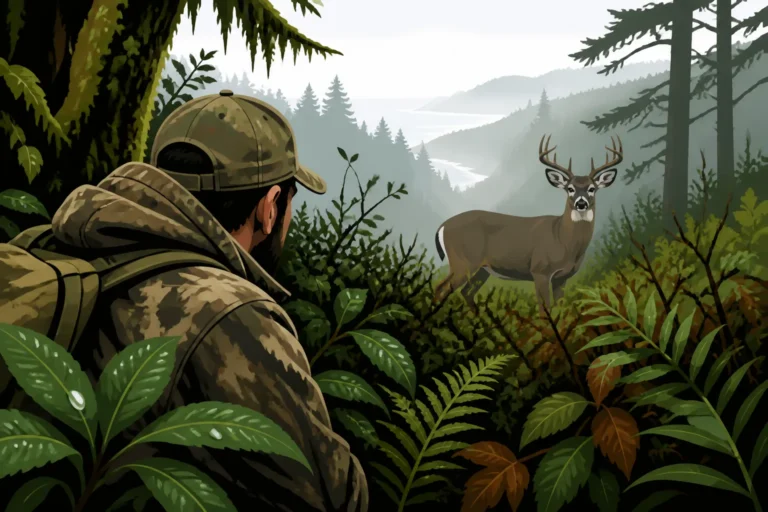
Western Oregon is renowned for its wet, often foggy weather, and these conditions, while challenging for hunters, can actually be your best friend when pursuing blacktail bucks along clearcut edges. Deer often feel more secure moving and feeding in low-light, low-visibility conditions. The damp ground muffles your footsteps, making a quiet approach much easier. The fog and drizzle also help to hold your scent close to the ground, reducing the chances of a buck winding you.
When "Hunting Blacktails in Fog and Drizzle", slow down even further. Visibility might be limited, so your effective range will be shorter, making every step and every pause even more important. Bucks are less likely to spot you from a distance, allowing you to get closer for a shot. Focus on areas where visibility is naturally limited by terrain or heavy cover, as deer will often feel most confident there. Dress in good quality rain gear that actually keeps you dry, like some of the robust waterproof shells from brands like Kuiu or Sitka, ensuring you can stay out longer and remain comfortable, even in persistent downpours. These conditions favor the patient hunter who embraces the elements.
Optimal Time of Day for Edge Activity
While bucks can be encountered at any time, certain periods of the day are typically more productive for hunting clearcut edges. The prime times are usually the first few hours after dawn and the last few hours before dusk. During these low-light periods, deer are most active, moving between bedding areas and feeding grounds. They'll often emerge from the dense timber or thick clearcut cover to feed along the edges, offering the best opportunities for spotting them.
However, don't completely discount midday, especially during the rut or in areas with less hunting pressure. Sometimes, a buck might move between two bedding areas, or chase a doe, even in the middle of the day. If you're still-hunting, continue to move slowly and deliberately throughout the midday hours. In colder weather, deer might also feed longer into the morning or emerge earlier in the afternoon to take advantage of available warmth and forage. Always remember that blacktails, especially mature bucks, are adaptable, and being flexible with your hunting schedule can sometimes yield unexpected success.
Overcoming Challenges and Common Mistakes
Hunting blacktail bucks along clearcut edges is not without its difficulties. Dense cover, unpredictable deer, and challenging terrain can test even the most experienced hunter. Being aware of these challenges and knowing how to mitigate them is crucial.
Dealing with Thick Undergrowth and Downfall
The sheer density of vegetation in regenerating clearcuts is often the biggest hurdle. After a few years, many clearcuts become a tangled mess of young trees, brush, and downed logs from logging activity. This makes quiet movement incredibly difficult, and visibility can be severely limited. Pushing through this type of cover often creates too much noise, alerting any deer in the vicinity long before you see them.
The trick is to identify and utilize the natural lanes and corridors within this thicket. Look for old skid roads, animal trails, or even drainage ditches that offer slightly easier passage. These aren't just easy routes for you; they're also prime travel routes for deer. Sometimes, even crawling on hands and knees is necessary to move quietly through particularly dense patches. Another strategy is to walk the perimeter of the absolute thickest stuff, skirting the edges of impenetrable blocks of cover rather than attempting to punch through them. Wearing durable hunting apparel, like thick canvas pants or reinforced gaiters, can prevent countless tears and scratches, making your arduous journey a bit more tolerable.
Navigating Access on Private Timber Land
A significant portion of prime blacktail habitat in Oregon, especially in the Coast Range, is on private timber land. While much of this land is open to public access, often through programs managed by the landowners themselves, understanding the rules and regulations is critical. Many timber companies, like Weyerhaeuser or Hancock, offer permit systems for access, or have specific rules about motorized travel, gate closures, and fire restrictions. Ignoring these rules can lead to trespass charges or loss of hunting privileges.
Before you plan your hunt, always verify the current access policies for the specific timber company land you intend to hunt. Websites like GoHunt or OnX Hunt are invaluable for this, often showing property boundaries and landowner information. You can also contact the timber companies directly or check the Oregon Department of Fish and Wildlife (ODFW) website for updated information. Some areas may be designated as "Walk-In Only Gates on Industrial Timber", meaning you'll have to park and hike, adding to the physical demands of your hunt. Always leave gates as you found them, pack out all your trash, and be a respectful steward of the land to ensure these access opportunities continue for everyone.
Adapting to Changing Conditions
Oregon weather is notoriously fickle, especially in the fall. A clear, crisp morning can quickly turn into a howling rainstorm or a dense fog. Fire season closures, which often occur in late summer and early fall, can also suddenly impact access to entire hunting units. Being able to adapt on the fly is a hallmark of a successful clearcut hunter. If a sudden rain moves in, consider it an advantage for quiet movement, as discussed earlier. If it clears up, look for deer moving to sunnier slopes.
Always check fire closures, road conditions, and any in-season rule changes with ODFW before and even during your hunt. Resources like the ODFW website or local Forest Service and BLM offices are essential for current information. Flexibility is key: if your planned clearcut is suddenly closed or becomes too crowded, having a backup plan or a different type of habitat to pivot to can save your hunt. Persistence, combined with an ability to read the landscape and respond to its ever-changing conditions, will ultimately lead to more consistent success in hunting blacktail bucks along clearcut edges.
| Clearcut Age (Approx.) | Primary Characteristics | Blacktail Usage | Hunting Strategy |
|---|---|---|---|
| 0-1 Year Old | Stumps, slash piles, minimal new growth, open ground. | Limited, mostly transient deer browsing initial shoots. | Avoid; little cover or sustained forage. |
| 2-5 Years Old | Tender browse, young saplings 3-6 ft tall, good mix of feed & emerging cover. | Prime feeding and transition zones, some bedding in thickest patches. High buck activity. | Still-hunt edges, glass from afar, focus on travel corridors. |
| 6-10 Years Old | Denser saplings 6-15 ft tall, beginning to close in, browse still accessible but harder to navigate. | Good security cover, still decent forage, bucks will bed deep inside. | Focus on edges, natural openings, and old skid roads. Slower still-hunting. |
| 10-20+ Years Old | Very dense "dog-hair" thickets, impenetrable, limited ground-level browse. | Primarily security cover. Bucks will travel through, but rarely feed extensively. | Hunt only the very outer edges, look for trails entering/exiting. Very difficult. |
Disclaimer
Hunting is an inherently dangerous activity. The information provided in this guide is for informational purposes only and should not be taken as a substitute for professional advice, proper safety training, or adherence to all local, state, and federal hunting regulations. Always prioritize safety, understand the laws of the state of Oregon, and respect wildlife and the environment.