Shipping Frozen Game Meat by Air
You've just bagged that dream elk or mule deer in the remote corners of Oregon, and the euphoria is real. But then a sinking feeling hits: how on earth are you going to get all this precious, hard-earned meat back home, especially if home is hundreds or thousands of miles away? The thought of navigating frozen logistics after a grueling hunt can be daunting, but this guide will walk you through everything you need to know about shipping frozen game meat by air, ensuring your harvest arrives safely.
The Logistics Labyrinth: Why Shipping Game Meat by Air is Tricky
Getting your carefully processed game meat from a cooler in Oregon to your freezer across the country can feel like a mission in itself. It's not as simple as checking an extra suitcase, and there are a lot of moving parts to consider. The rules are in constant flux, and every airline or cargo carrier seems to have its own unique labyrinth of regulations that can make a hunter's head spin after a long week in the backcountry.
Decoding Airline and Cargo Carrier Rules: It's Not Just a Suitcase
A major headache for hunters wanting to fly their meat home is the sheer complexity of airline and cargo carrier regulations. Each airline has its own policies regarding perishable goods, dry ice allowances, and whether you can check it as baggage or if it needs to go via their dedicated cargo service. Imagine showing up at the counter, exhausted but triumphant, only to be told your meticulously packed coolers are too heavy, contain too much dry ice, or simply aren't accepted as checked luggage. It's a frustrating scenario many hunters have faced. You absolutely must call your chosen airline or cargo service well in advance of your flight to get their most up-to-date and specific rules. Don't rely on online information alone; speak to a human.
Most passenger airlines will allow a certain amount of dry ice (usually 5-10 pounds) for checked luggage, but it needs to be clearly marked and in a vented container to allow carbon dioxide gas to escape safely. Exceed that limit, or fail to vent properly, and you could face delays or even have your cooler refused. For larger quantities of meat, or if you prefer a more dedicated service, options like Delta Cargo or Southwest Cargo offer freight services that are specifically designed for larger, heavier, or more sensitive shipments, but they operate out of specific terminals and often require different booking procedures. This might be a good thing to research when you're doing your initial hunt planning; for instance, when exploring potential units or applying for tags, resources like GoHunt often provide insights that might indirectly influence your post-harvest logistics decisions, prompting you to consider this early.
The Race Against Thaw: Keeping Your Meat Perfectly Frozen
Another huge concern for any hunter is the integrity of their meat. You've worked hard to field dress properly, get the meat cooled down, and process it carefully. The last thing you want is for it to arrive semi-thawed or, worse, spoiled. The journey from an Oregon processor's freezer to your home freezer can involve multiple transfers, sitting on a tarmac, or unexpected delays. These moments are critical for maintaining temperature.
High-quality insulation is paramount, but even the best cooler needs help. Dry ice is your best friend here, but knowing how much to use and how to pack it safely is key. Too little, and your meat starts to warm; too much, and you might exceed airline limits or create an unsafe environment. The goal is for your meat to be absolutely frozen solid when it leaves the freezer, and stay that way until it reaches its final destination. Thinking about this aspect of the journey often starts early, perhaps even when you're deciding between a guided or DIY hunt. If you're on a guided trip, perhaps one found through BookYourHunt, ask your outfitter about their game handling services and whether they assist with preparing meat for air travel.
Your Step-by-Step Playbook for Air Shipping Success
So, you've decided to ship your game meat by air. While it has its challenges, with careful planning and execution, it's absolutely doable. Success hinges on meticulous preparation, starting long before you even get to the airport or cargo facility.
The Art of Packaging: From Field to Freezer to Flight
The journey of your meat starts not at the airport, but in the field. Proper care from the moment your animal hits the ground is crucial. Field Dressing an Elk in Warm Early-Season Weather is important to get the internal temperature down quickly. Once quartered, ensuring the meat gets cool and then clean is vital for quality. Getting Meat Out Before It Spoils is a real concern, especially on longer hunts. Before shipping, your meat needs to be processed, ideally boned out to reduce weight, and then double-wrapped in freezer paper or vacuum-sealed. This prevents freezer burn and protects against any condensation.
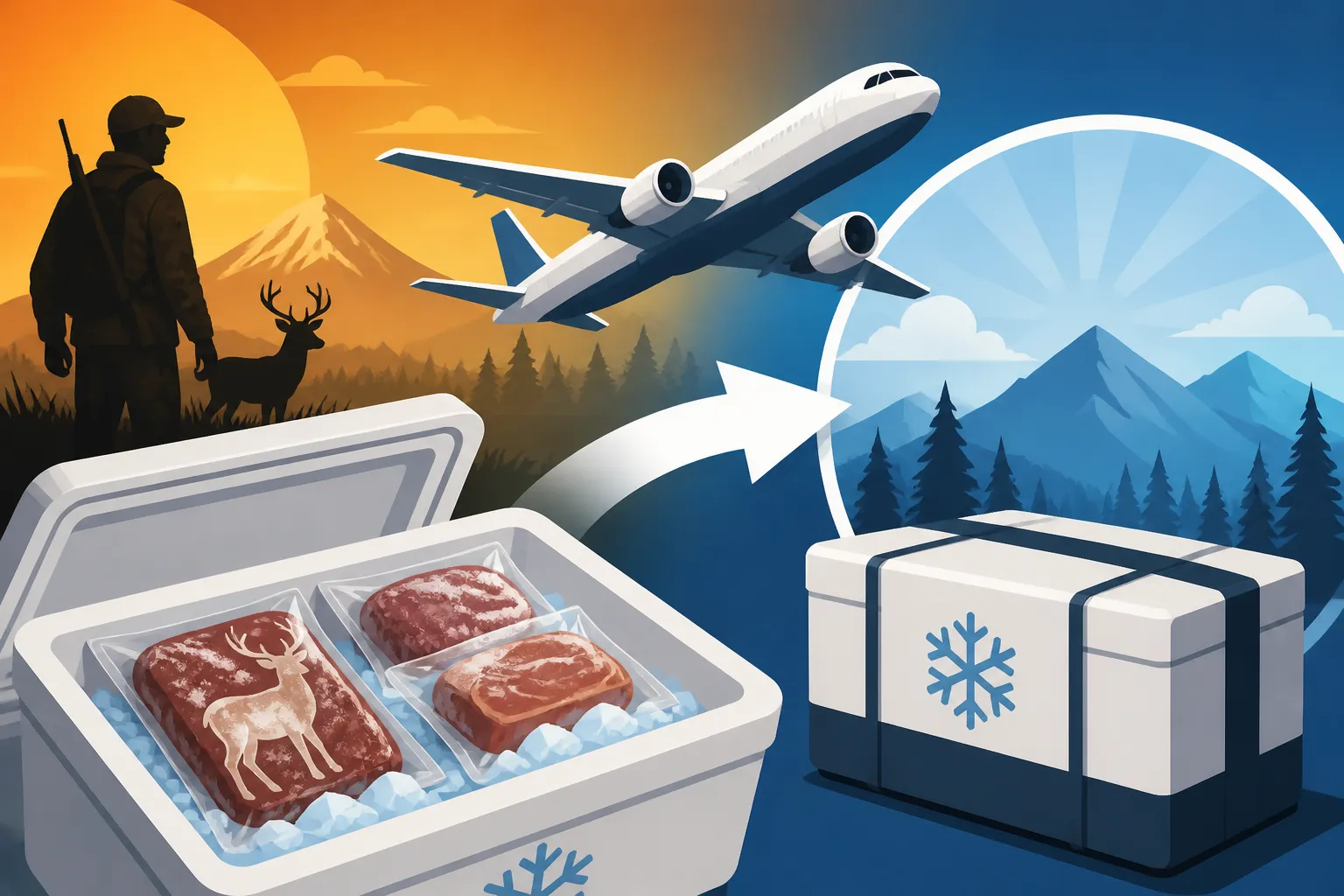
Once wrapped, the meat must be frozen solid – and I mean rock solid. This isn't a job for your home freezer; often, a commercial freezer at a meat processor or cold storage facility is best, where temperatures are much lower. Once frozen, pack it tightly into a high-quality, insulated cooler. Look for coolers with excellent R-value and sturdy latches. The less empty space in the cooler, the better it will maintain temperature. Consider layering the bottom with a couple of inches of dry ice, then your meat, and more dry ice on top. Remember that dry ice needs to be handled with gloves, and the cooler should be labeled as containing dry ice and vented according to regulations. Many hunters swear by duct taping the cooler shut to prevent accidental opening, but always ensure proper venting if using dry ice. For example, some hunters will drill a small hole in the top corner of the cooler or leave the drain plug slightly ajar to allow for gas escape.
Documentation and Labeling Essentials
The paperwork side of shipping can be tedious, but it's non-negotiable. You'll need to clearly label your cooler with your name, full address, phone number, and the destination address and contact information. Many airlines or cargo carriers will provide specific perishable goods labels, and you should use those if available. Beyond external labels, consider placing a small waterproof bag inside the cooler with a copy of your hunting license, tags (if required by the state of origin or destination), and your harvest report. This helps immensely if there are any questions about the contents or legality of the shipment.
Before you even head to the airport, contact the airline or cargo carrier to confirm their specific dry ice limitations, labeling requirements, and any special forms you might need to fill out. Some may require advanced notification for perishable shipments. Being prepared with all your documentation and knowing their procedures will save you a lot of stress and potential headaches at the counter. Remember, the folks working at the counter might not be hunters, so clearly stating "frozen game meat with dry ice" is crucial for them to direct you to the correct procedures. This foresight can be invaluable, especially when coordinating travel after a successful trip where you might have Quartering and Packing an Elk Alone far from any services.
Navigating Carriers and Costs: Making the Right Choice
Once your meat is packed like a pro, the next hurdle is figuring out who will carry it and how much it's all going to cost. This decision can vary wildly based on your destination, the amount of meat, and your budget.
Commercial Airlines vs. Dedicated Cargo Services
You essentially have two main avenues: using commercial airlines as checked baggage or utilizing dedicated air cargo services.
Commercial airlines, as mentioned, are often limited by dry ice quantity and total weight. They might charge standard oversized or overweight baggage fees, which can add up quickly. The benefit is often convenience, as you're already at the airport for your flight. However, your meat is essentially just another piece of luggage, subject to the same handling and potential for delays. If you're only bringing back a smaller amount, say a deer tenderloin and some prime steaks, this might be a viable option.
Dedicated cargo services, like those offered by major airlines (e.g., Delta Cargo, Southwest Cargo) or independent freight companies, specialize in shipping goods, including perishables. They often have different terminals, more robust handling procedures, and higher dry ice allowances. The trade-off is often higher cost and the need to transport your coolers to a separate cargo facility, which can be an extra logistical step after leaving your hunt area or processor. However, for a whole elk or even a large mule deer, this is often the most reliable and safest bet to ensure your meat arrives frozen. When planning a hunt, it's worth considering how this extra step fits into your schedule; knowing where the nearest cargo facilities are to your Meat Processing Near Oregon Hunting Camps can save you valuable time.
| Feature | Checked Baggage (Commercial Airline) | Dedicated Air Cargo (Airline or Independent) |
|---|---|---|
| Max Dry Ice | Limited (e.g., 5-10 lbs) | More flexible (higher allowances) |
| Weight Limits | Strict (overweight fees apply) | Higher, specialized for freight |
| Cost Structure | Baggage fees (oversize/overweight) | Per-pound or volume, plus handling |
| Convenience | At passenger terminal | Separate cargo terminal, might require extra travel |
| Handling | Standard luggage handling | Specialized perishable handling, climate control possible |
| Ideal For | Smaller quantities, specific cuts | Whole animals, larger volumes, higher value |
What to Expect Regarding Costs and Delivery Times
Let's be realistic: shipping frozen game meat by air is not cheap. The costs are influenced by several factors: the total weight and dimensions of your coolers, the distance the meat needs to travel, the speed of service (overnight vs. standard freight), and any additional surcharges for dry ice or specialized handling. You should absolutely factor these potential costs into your overall hunt budget before you even apply for your tags. Expect to pay a significant amount, often several hundred dollars or more, depending on the volume of meat and distance.
Delivery times can also vary. While many cargo services offer expedited shipping, there's always the chance of unforeseen delays due to weather, mechanical issues, or logistical snags. It's wise to build in a buffer and not plan to immediately cook that elk steak the moment you land. If you're driving your meat home, How Long Meat Keeps on the Drive Home might give you some peace of mind, but with air travel, it's a faster, but potentially more turbulent, journey. Always communicate your expectations and desired delivery window with the carrier and track your shipment diligently.
Beyond the Airway: Other Options for Your Hard-Earned Harvest
While air shipping is an option, it's not the only one. Depending on your distance and resources, you might find other methods more practical, cost-effective, or simply less stressful after a big hunt.
The Great Oregon Road Trip: Coolers, Ice, and the Open Highway
For many hunters, especially those driving within Oregon or to neighboring states, a well-planned road trip with an array of quality coolers is the tried and true method. This gives you complete control over your meat's environment and eliminates the airline hassle. The key is ample ice, robust coolers, and a strategy for replenishment on longer drives. Before you head out, make sure your coolers are clean and pre-chilled. Pack your frozen meat tightly, using block ice or even dry ice if you're comfortable with it, especially if you're traveling from Eastern Oregon's high desert heat back to the Willamette Valley.
Layering your meat and ice, and avoiding opening the coolers more than necessary, will keep everything cold for days. Drain meltwater regularly, but replace it with fresh ice. If you're coming from a really remote area, stopping at a local general store or even a smaller town like John Day or Lakeview for ice refills can be a hunt-saving move. Coolers, Ice and the Drive Home From Eastern Oregon covers this in much more detail, offering practical tips for managing your precious cargo over long distances. Some hunters even bring a portable freezer or generator for their truck bed, essentially turning their vehicle into a rolling cold storage unit for extended trips.
Professional Processors and Specialized Shipping Companies
Sometimes, the simplest solution is to let the professionals handle it. Many meat processors, especially those in popular hunting areas across Oregon, offer shipping services as part of their comprehensive game processing packages. They are familiar with all the regulations, have commercial freezers, and often work directly with specific cargo carriers or specialized game shipping companies. This means you can drop off your quarters, pick up your processed, vacuum-sealed, frozen cuts, and they'll take care of getting it to your door. This might seem like an added expense, but the convenience and peace of mind can be well worth it, especially if you're exhausted from a multi-day hunt like Archery Elk Hunting Oregon's August and September Seasons or simply don't have the time or equipment for a DIY approach.
These specialized services understand the nuances of shipping perishable goods, often using re-usable insulated containers and coordinating directly with air freight companies. While they often come with a higher price tag than doing it yourself, they remove a significant burden from your shoulders. It allows you to focus on the memories of your hunt rather than the logistics nightmare. This option is particularly appealing if you're coming out of a backcountry hunt where you might have needed What it Costs to Hire a Packer With Stock just to get your animal to the trailhead, and the thought of further logistical challenges is simply too much. Plus, they can handle all the details of Butchering Your Own Deer at Home if you wanted to do that yourself, but need help with the initial big cut.
Disclaimer
This article is for general informational purposes only and does not constitute professional advice. Laws, prices and regulations vary by location and change over time. Consult a qualified professional for guidance on your specific situation.