Mountain Goat Herd Growth Since Reintroduction
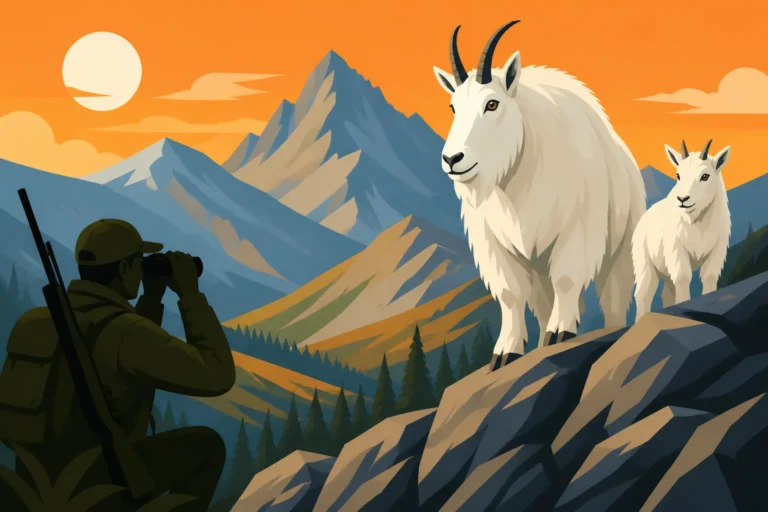
For many Oregon hunters, the thought of pursuing a mountain goat here in the Beaver State feels like a distant dream, almost mythical. These incredible animals inhabit some of the most unforgiving terrain imaginable, and securing one of the incredibly rare tags is a challenge that often requires a lifetime of applying. This guide will walk you through the fascinating journey of mountain goat reintroduction in Oregon, exploring how these elusive "white ghosts" have slowly but surely begun to reclaim their place in our rugged high country and what that means for both conservation and the extremely dedicated hunter.
The Return of the White Ghosts: A History of Oregon's Mountain Goat Reintroduction
Oregon’s jagged peaks and high-alpine environments seem tailor-made for mountain goats, yet for a long time, these iconic animals were absent from our landscape. Their return is a story of dedicated conservation efforts and a testament to the resilience of wildlife. Understanding their history helps us appreciate the delicate balance that allows them to thrive, or at least survive, in such extreme conditions.
Why Mountain Goats Disappeared from Oregon
It’s easy to imagine mountain goats always clinging to the steepest cliffs, but historical records suggest that native populations, while never widespread, once roamed parts of northeastern Oregon, particularly in the Wallowa Mountains. Their disappearance wasn't a single catastrophic event but likely a combination of factors that, over time, chipped away at their numbers until they vanished entirely. Overhunting in the late 19th and early 20th centuries undoubtedly played a significant role, as unregulated harvest often decimated small, isolated populations of slow-reproducing species like goats.
Beyond direct hunting pressure, habitat loss and fragmentation also contributed. While mountain goats are adapted to very specific, high-elevation, rocky terrain, even subtle changes in these remote ecosystems can impact them. Furthermore, the introduction of domestic livestock, particularly sheep and goats, brought with it diseases that native wild populations had no immunity to. Respiratory diseases, like pneumonia, have been particularly devastating for bighorn sheep and can affect mountain goats as well, wiping out entire herds in some areas. Without robust scientific management or conservation efforts in place during those early times, these pressures proved too much for Oregon's native mountain goat populations.
The Vision for Reintroduction: Early Efforts and Challenges
The idea of bringing mountain goats back to Oregon began to take shape in the mid-20th century, a reflection of a growing conservation ethic and a desire to restore native species to their historic ranges. The Wallowa Mountains, with their vast expanses of steep, rocky terrain, abundant forage, and limited human access, were identified as the prime candidate for reintroduction. The vision was clear: re-establish a self-sustaining population of these magnificent animals to enrich Oregon’s biodiversity and offer a unique hunting opportunity down the line.
The Oregon Department of Fish and Wildlife (ODFW), working with various partners, initiated the first significant reintroduction efforts. This involved sourcing mountain goats from established herds in other states, primarily Washington, where populations were healthy enough to spare animals. The process itself was incredibly challenging. Capturing wild goats in their native, rugged habitat is no small feat, requiring specialized darting techniques or net-gunning from helicopters. Once captured, animals had to be carefully transported and released into designated areas within the Wallowas. Initial efforts were met with mixed success; some animals dispersed widely, others succumbed to the stress of capture and relocation, or simply struggled to adapt to their new surroundings. The early years were characterized by intensive monitoring, small releases, and a learning curve about what it truly took to establish these hardy creatures in their ancestral lands.
Tracking Progress: Understanding Herd Dynamics and Population Growth
Successfully reintroducing a species isn't a one-time event; it's an ongoing process that requires constant monitoring and a deep understanding of the animal's biology and behavior. For mountain goats, this means closely tracking their numbers, identifying survival threats, and understanding their unique reproductive strategies.
Key Factors Influencing Mountain Goat Survival and Reproduction
Mountain goats are uniquely adapted to extreme alpine environments, but this specialization also makes them vulnerable to certain factors. Their survival hinges on access to high-quality habitat that provides both abundant forage and critical escape terrain. They are masters of the vertical world, relying on steep, rocky cliffs to evade predators. Mineral licks, often found in specific geological formations, are also crucial for their health, providing essential nutrients often lacking in their diet.
Predation certainly plays a role, though adult mountain goats are formidable opponents on their home turf. Cougars are probably their most significant natural predator, and occasionally bears or even golden eagles might target vulnerable young kids. However, the biggest threat to mountain goat herd health often comes from disease, particularly respiratory pathogens like pneumonia. These diseases can be transmitted from domestic sheep or goats, highlighting the importance of managing interactions between wild and domestic herds. Harsh winters with deep snow can also impact survival, especially for young or older animals, by limiting access to forage. Their reproductive rates are also quite slow; nannies typically don't breed until they are two or three years old and usually produce only one kid per year, making rapid population growth challenging.
Monitoring Techniques and Population Estimates
Counting mountain goats is an exercise in patience and precision, largely dictated by the rugged, inaccessible nature of their habitat. ODFW relies heavily on a combination of monitoring techniques to get a handle on population numbers. Aerial surveys, often conducted using helicopters in late summer or early fall when goats are visible against the green landscape, are a primary method. These surveys allow biologists to cover vast areas of steep terrain quickly, counting individuals and classifying them by age and sex where possible. However, the goats’ tendency to blend into their surroundings and hide in crevices means these counts are often minimum estimates rather than definitive totals.
Ground observations by ODFW staff and volunteers, often requiring arduous hikes into remote areas, supplement aerial data. Radio telemetry, where a small number of animals are fitted with collars, provides valuable insights into their movements, habitat use, and survival rates. Despite these efforts, obtaining precise, census-level numbers for mountain goats is incredibly difficult, unlike more accessible species. The estimates are crucial, however, as they directly inform management decisions, including the allocation of the extremely limited hunting tags. You can learn more about how wildlife agencies like ODFW approach counting game in general by reading How ODFW Counts Big Game. Hunter reports from those lucky enough to draw a tag, or even general public sightings, also contribute valuable data to understanding where these animals are living and expanding their range.
The Slow Climb: Current Herd Status and Future Outlook
The reintroduction of mountain goats in Oregon has been a long-term project, and while progress is positive, it's important to understand that these herds are still relatively small and require careful stewardship. The future of these animals in Oregon depends on continued conservation efforts and a highly conservative approach to management.
Current Population Numbers and Distribution in the Wallowas
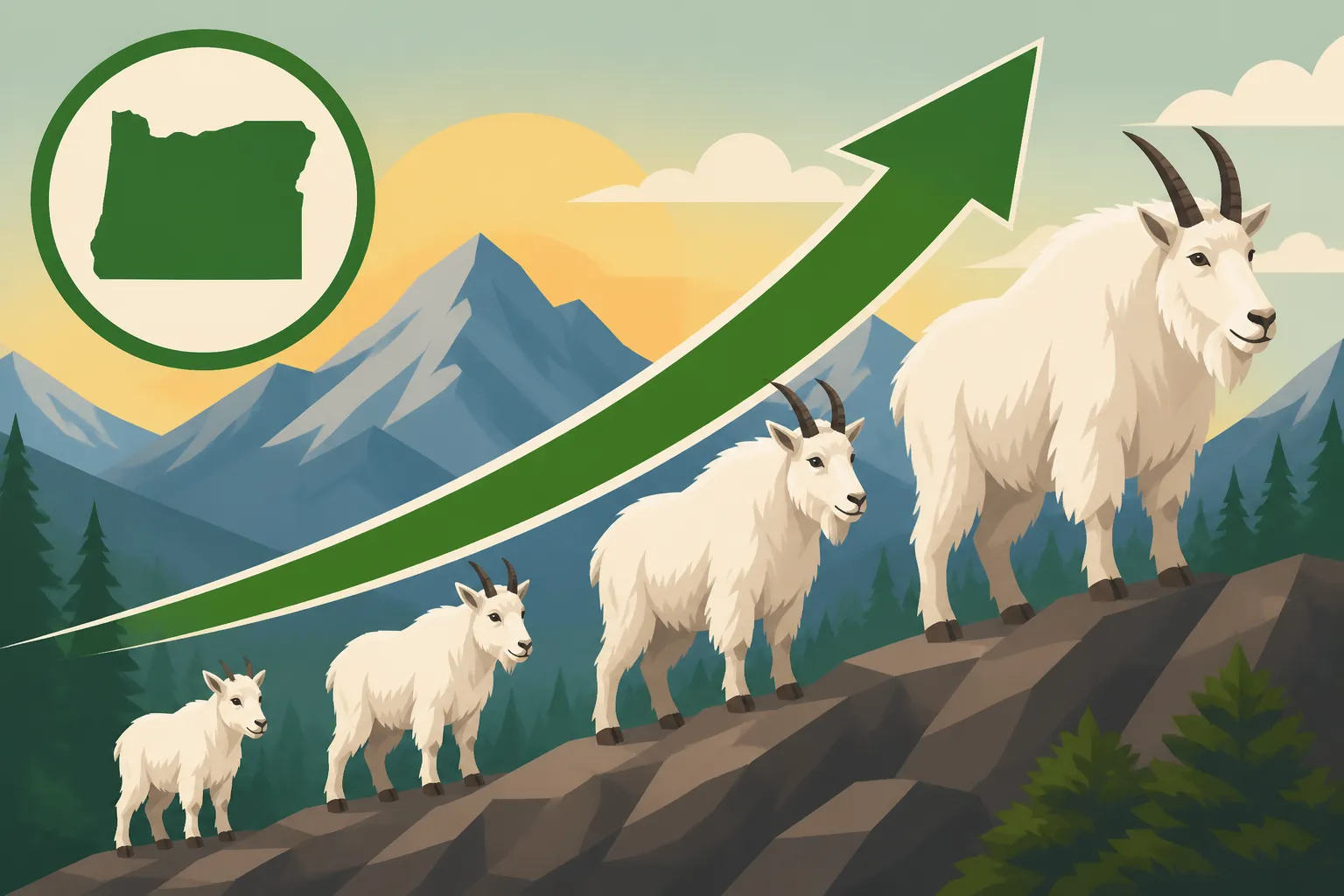
Today, the Wallowa Mountains remain the stronghold for Oregon's mountain goat population. Decades after the initial reintroduction efforts, the herds have slowly grown and become established, a testament to the suitability of the habitat and dedicated management. While exact numbers are always subject to the challenges of counting in such demanding terrain, ODFW estimates indicate a population that, though still small compared to many other game species, is healthy and showing a slow, steady increase. The primary distribution is centered around the core wilderness areas of the Wallowas, with goats occupying the highest, steepest slopes and rock faces.
You'll find them predominantly in the wilderness portions, far from roads and human disturbance, embodying their nickname "white ghosts" for their ability to disappear into the rocky landscape. While the Wallowas are the main focus, there have been discussions and sometimes small, localized transplant efforts or natural dispersal into adjacent suitable habitats. However, these are generally isolated pockets, and the overarching success story resides firmly in northeastern Oregon's highest peaks. The challenges of maintaining genetic diversity in these relatively isolated herds are also a significant management consideration. For a deeper dive into the specific location, consider looking at Rocky Mountain Goats in Oregon's Wallowas.
Management Goals and Limited Hunting Opportunities
Given the delicate nature of these reintroduced herds and their slow reproductive rate, ODFW's management philosophy is, and must remain, extremely conservative. The primary goal is to ensure the continued growth and health of the mountain goat population. This cautious approach directly impacts hunting opportunities, making an Oregon mountain goat tag one of the rarest and most coveted in the entire country.
Oregon's mountain goat tags are typically issued under a "once-in-a-lifetime" rule, meaning if you are fortunate enough to draw one, you cannot draw another in your lifetime. This policy is designed to distribute the extremely limited opportunities fairly among as many hunters as possible, rather than allowing a few individuals to harvest multiple goats. The number of tags issued annually is incredibly low—often just one or two statewide, and sometimes none at all, depending on population surveys. This makes drawing a tag a truly astronomical long shot. Oregon Mountain Goat Draw Odds are among the lowest for any big game species, often requiring hundreds, if not thousands, of applications. Platforms like GoHunt can provide valuable historical data on draw odds and unit breakdowns, helping applicants understand just how competitive these hunts are, even for points-only applicants hoping for that one-in-a-million chance. The emphasis on ethical hunting and minimizing disturbance to these fragile herds is paramount for those few who are lucky enough to pursue them.
Implications for Hunters and Conservation
The story of mountain goat reintroduction in Oregon isn't just about wildlife management; it's about the broader implications for our ecosystems, our hunting heritage, and the role each of us plays in conservation. While hunting opportunities are incredibly rare, the presence of these animals benefits everyone.
The Value of Mountain Goats Beyond the Hunt
Even if you never draw a mountain goat tag, the successful reintroduction and continued presence of these animals in Oregon's high country holds immense value. Ecologically, mountain goats are a unique component of high-alpine environments, often sharing their habitat with species like bighorn sheep. Their presence contributes to the overall biodiversity and health of these remote ecosystems. For many, the sheer opportunity to potentially spot a white ghost on a distant ridgeline while hiking or backpacking is a profound experience, connecting them to the wildness of Oregon's mountains.
Wildlife viewing and photography are significant non-consumptive uses that benefit directly from robust mountain goat populations. The symbolic importance of successfully reintroducing a native species that had vanished from the state cannot be overstated; it represents a triumph for conservation and a commitment to restoring natural heritage. Continued conservation efforts, supported by hunters and non-hunters alike through license fees and donations, remain vital to ensuring these animals thrive for generations to come.
How Hunters Can Contribute to Mountain Goat Conservation
Even with the extreme rarity of mountain goat tags, hunters play a crucial role in their ongoing conservation. First and foremost, simply supporting ODFW through the purchase of hunting licenses and applications contributes directly to wildlife management programs, including those that benefit mountain goats. Applying for a mountain goat tag, even if your odds are minuscule, further funnels funds into these critical programs. Understanding the Oregon Controlled Hunt Draw Explained and how Oregon Preference Points and How They Work can help you navigate the application process.
If, by some stroke of luck, you are one of the incredibly few to draw a tag, adhering strictly to all regulations and practicing ethical hunting is paramount. These hunts are physically demanding, requiring significant preparation and specialized gear for navigating steep, rugged terrain. Familiarize yourself with the physical demands by reviewing resources like Physical Training for an Oregon Elk Hunt. Moreover, any sightings of mountain goats, whether you have a tag or not, should be reported to ODFW. This valuable citizen science data helps biologists track their distribution and movements, contributing to more accurate population estimates. Utilize tools like GoHunt for e-scouting and understanding the terrain where these animals live, even if you’re just dreaming of a tag or planning a scouting trip to learn about the habitat. E-Scouting Oregon Units With Satellite Imagery can be incredibly useful. Ultimately, patience, realistic expectations, and a commitment to supporting wildlife conservation are the best ways hunters can contribute to the enduring legacy of Oregon's mountain goats.
Disclaimer
This article is for general informational purposes only and does not constitute professional advice. Laws, prices and regulations vary by location and change over time. Consult a qualified professional for guidance on your specific situation.