Oregon Mountain Goat Herd Locations
Hunting Oregon's high country for mountain goats is a quest that many dream of, but few ever experience. It's an endeavor shrouded in mystique, primarily because securing one of these coveted tags is incredibly difficult. This guide will help you understand where Oregon's small, yet resilient, mountain goat herds are found, giving you a realistic picture of what pursuing this once-in-a-lifetime opportunity truly entails, from pinpointing their rocky strongholds to preparing for the brutal terrain.
The Elusive Prize: Understanding Mountain Goat Hunting in Oregon
The idea of hunting mountain goats in Oregon often conjures images of remote, breathtaking peaks and incredibly challenging terrain. And that image, my friends, is absolutely spot on. It's not a casual hunt; it's a test of endurance, resolve, and sheer luck in the draw. Many hunters will spend their entire lives applying, building preference points, and studying the few available opportunities without ever holding a mountain goat tag in their hands. This rarity is precisely what makes it such a sought-after experience, but it also means that the preparation, even just for the application, needs to be incredibly meticulous. You're not just planning a hunt; you're often planning for years of anticipation.
Rarity and Challenges of an Oregon Mountain Goat Tag
Let's be blunt: drawing an Oregon mountain goat tag is akin to winning a small lottery. There are very few tags available each year, reflecting the small and carefully managed nature of the state's mountain goat population. This isn't like applying for a general season deer tag where thousands are issued. We're talking about a handful, sometimes single digits, for the entire state. This extreme scarcity means that your odds are always slim, no matter how many Oregon Preference Points and How They Work you’ve accumulated. It's a game of patience and perseverance, where applying consistently year after year is the only strategy.
Beyond the draw, the hunt itself presents formidable challenges. Mountain goats thrive in some of the most unforgiving environments Oregon has to offer – steep, rocky, high-elevation terrain where oxygen is thin and footing is precarious. You're not just walking through the woods; you're often scaling talus slopes, navigating sheer cliffs, and crossing snowfields, even in late season. The physical demands are immense, requiring excellent conditioning, surefootedness, and a head for heights. Many of these areas are deep in wilderness, meaning motorized access is strictly prohibited, and you'll be relying on your own two feet, or perhaps Horse and Llama Packing Into Oregon Backcountry, to get in and out.
The "Once-in-a-Lifetime" Experience
When you finally draw that coveted mountain goat tag, it truly is a "once-in-a-lifetime" opportunity. In Oregon, like in many states, if you successfully harvest a bighorn sheep or mountain goat, you are generally ineligible to draw another tag for that species in the future. This rule underscores the precious nature of the resource and aims to distribute these unique hunting experiences among as many individuals as possible. It means that the pressure to make the most of that single opportunity is immense. Every decision, from scouting to shot placement, carries significant weight.
This "once-in-a-lifetime" aspect also influences how hunters approach the endeavor. It often becomes a multi-year project, starting long before a tag is drawn. Researching potential units, studying mountain goat behavior, physically training, and acquiring specialized gear become part of the journey. For many, simply the act of applying each year and dreaming of the draw results is a significant part of their hunting life. And should the stars align, the actual hunt then becomes an unforgettable adventure, a story passed down through generations, irrespective of whether a goat is harvested or not. It's about the experience of being in that wild, high country.
Where the Goats Roam: Key Herd Locations in Oregon
Oregon's mountain goat population is relatively small, especially compared to states further north, and its distribution is quite localized. When people talk about mountain goats in Oregon, one specific mountain range invariably comes to mind, a testament to its dramatic, alpine environment. However, there have been efforts to expand their range, and understanding these specific locations is crucial for anyone hoping to pursue them. These aren't animals you'll stumble upon in every mountain range; they stick to very particular, rugged habitats.
The Wallowa Mountains: Oregon's Primary Stronghold
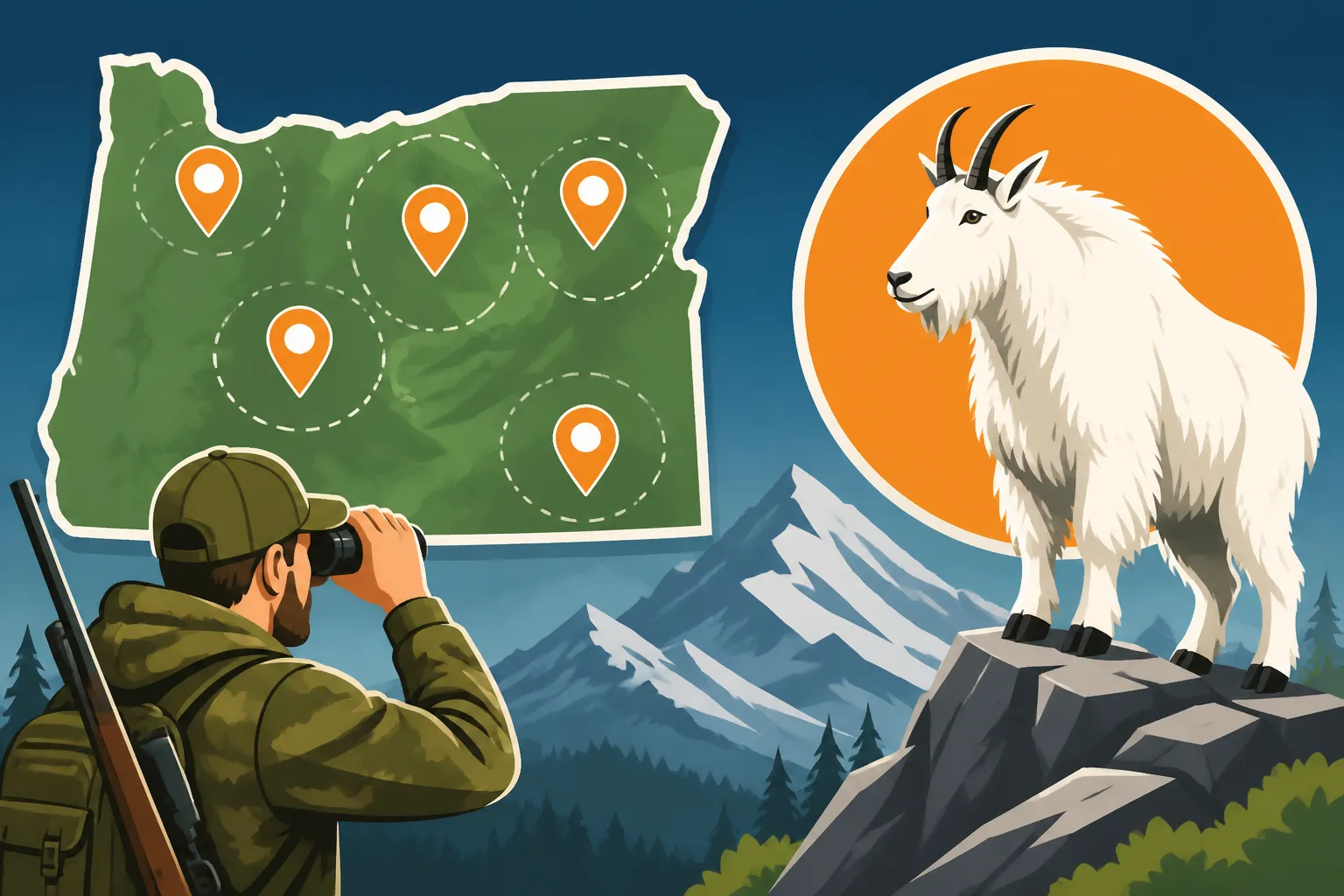
When you hear "mountain goats" and "Oregon" in the same sentence, the Wallowa Mountains are almost certainly what's being referenced. This rugged range in the northeastern corner of the state, particularly within the vast and spectacular Eagle Cap Wilderness, is the established stronghold for Oregon's largest and most robust mountain goat herds. This area provides exactly the kind of precipitous, high-elevation, rocky terrain that mountain goats depend on for survival and to evade predators. The peaks here soar well over 9,000 feet, featuring granite cirques, glacial lakes, and expansive alpine meadows interspersed with sparse timber.
The Wallowas offer everything a mountain goat could want: steep escape terrain, consistent snowfields for water, and alpine forage. They are perfectly adapted to this harsh environment. Hunters fortunate enough to draw a tag for this area will spend their time navigating incredibly challenging country. Access usually involves multi-day backpacking trips into the wilderness, often with significant elevation gain. It's important to be intimately familiar with Oregon Wilderness Rules That Ban Motorized Carts and other regulations before you head in. You'll likely encounter snow and adverse weather, even in early fall, making proper gear and physical conditioning absolutely non-negotiable.
Other Potential Mountain Goat Habitats
While the Wallowas are undeniably the primary focus for Oregon's mountain goat population, there have been some limited reintroduction efforts and sightings in other areas. Historically, mountain goats were extirpated from Oregon in the early 1900s. The current herds are the result of reintroductions starting in the 1950s. While these reintroduction efforts have been successful in establishing the Wallowa herds, other areas have not developed into huntable populations with the same consistency. It's crucial to consult the official Oregon hunting regulations each year, as they provide the most up-to-date information on hunt units and population status.
Occasionally, you might hear whispers or see reports of individual goats or very small groups in other isolated, high-elevation areas of Oregon's Cascade Range, particularly in the northern sections. These occurrences are much rarer and generally do not support a huntable population, nor are they typically open for drawing tags. Any hunting opportunities outside the Wallowas would be highly localized and would require specific biological monitoring to ensure sustainability. Always verify any potential hunt areas directly with the Oregon Department of Fish and Wildlife (ODFW) regulations, as they meticulously manage these unique herds to ensure their long-term health and growth.
Navigating the High Country: Tactics and Considerations for Mountain Goat Terrain
Hunting mountain goats in Oregon's rugged landscapes is not for the faint of heart or the poorly prepared. The terrain itself is often the biggest obstacle, far more challenging than locating the animals once you're in their habitat. This type of hunting demands specific physical capabilities, specialized gear, and a keen understanding of how to move safely and efficiently in extreme alpine environments. Ignoring these factors can quickly turn an exciting adventure into a dangerous situation.
Physical Demands and Gear for Alpine Hunting
The physical demands of an Oregon mountain goat hunt cannot be overstated. You'll be operating at high altitudes, typically ranging from 6,000 to over 9,000 feet, often ascending and descending thousands of feet daily. This requires exceptional cardiovascular fitness, strong legs, and robust joints. Many hunters start Physical Training for an Oregon Elk Hunt months, even a year, in advance, but mountain goat hunting often pushes those limits even further due to the steepness and instability of the terrain. Core strength is critical for balance on rocky slopes and with a heavy pack.
Your gear list will be a crucial component of your success and safety. You'll need sturdy, waterproof boots with excellent ankle support and aggressive traction – think mountaineering-grade. Layered clothing is essential for rapidly changing alpine weather, from freezing winds to intense sun, and good Rain Gear That Actually Stays Dry is a must. A lightweight but robust pack frame capable of carrying heavy loads is vital, as you'll likely be packing out quarters over difficult ground. High-quality optics, including a spotting scope and binoculars, are indispensable for locating goats at extreme distances and judging their size. A reliable rangefinder is also key for those long-distance shots common in open alpine country.
Scouting and Locating Goats in Steep Terrain
Scouting for mountain goats in Oregon's Wallowas often begins long before you set foot on the mountain. Using digital tools is an absolute game-changer for this kind of hunting. Satellite imagery and topographic maps, like those available on platforms such as GoHunt, allow you to e-scout potential bedding areas, escape routes, and feeding locations from the comfort of your home. Look for benches, saddles, and steep, broken cliffs with small pockets of vegetation. Goats prefer terrain where they have a commanding view and easy access to security cover. E-Scouting Oregon Units With Satellite Imagery is an invaluable skill here.
Once on the ground, glassing becomes your primary tactic. Patience is key. Find a high vantage point with a broad view of the surrounding peaks, cirques, and drainages. Use your binoculars and spotting scope to meticulously pick apart every rock band, snowfield, and patch of timber. Goats often blend incredibly well into their rocky surroundings, appearing as mere specks. Look for movement, distinct white shapes, or even just a flash of white against the grey rock. They often move slowly, browsing on sparse vegetation. Be prepared to spend hours behind glass, moving from one vantage point to another, covering vast amounts of country with your eyes rather than your feet. Remember, they often occupy the very highest, steepest parts of the landscape.
Resources for Your Oregon Mountain Goat Quest
Embarking on a quest for an Oregon mountain goat tag requires more than just physical prowess and hunting skills; it demands a deep dive into the regulatory landscape and a strategic approach to the application process. Given the rarity of these opportunities, every piece of information and every tool at your disposal can make a difference, even if it's just in managing your expectations.
Drawing Information and Application Strategies
The journey to an Oregon mountain goat tag starts with understanding the Oregon Controlled Hunt Draw Explained. This system is how the state manages harvest for limited species, including mountain goats. The application period, typically in spring, is a critical window you absolutely cannot miss. Pay close attention to the Oregon's May 15 Application Deadline. Missing it means another year without even a chance. The key here is consistency; apply every year to build those valuable preference points, even if you only apply for a point-only option. While preference points are important, the sheer rarity of mountain goat tags means that the random draw component, which accounts for a percentage of tags, also plays a significant role. This means even a first-time applicant could theoretically draw, though the odds remain stacked.
When applying, research the specific hunt units available. Tools like GoHunt can be invaluable for researching historical draw odds, success rates (where data is available), and understanding the distribution of past tag allocations. While current success rates won't guarantee future results, they provide a realistic baseline. Don't be afraid to look into the specifics of Oregon Mountain Goat Draw Odds to gauge just how competitive certain hunts are. A well-informed application is always better than a hopeful guess, even if hope is a big part of this process.
Utilizing Digital Tools for Planning
In today's hunting world, digital tools have become indispensable, especially for hunts as challenging and remote as those for mountain goats. Beyond just application data, robust mapping applications are crucial for every stage of your planning. Services like GoHunt, along with official ODFW maps, allow you to study topography, identify public land boundaries, mark potential access points, and pinpoint areas of historical goat presence. You can overlay different layers, such as wilderness boundaries, land ownership, and even past burn areas which can sometimes create new forage opportunities.
Before you even consider applying, use these tools to virtually explore the units. Are there trail systems? What are the elevation gains like? Where are the nearest towns for supplies or emergencies? Consider how you would approach a specific basin, where you might set up a multi-day camp, and identify potential escape routes in case of bad weather. Don't forget to check the Oregon Wilderness Areas Open to Hunting rules for the specific area you're interested in, as they often have unique regulations regarding camping, group size, and stock use. By thoroughly utilizing digital resources, you can develop a comprehensive understanding of the unit, even if you can't physically scout it beforehand, giving you a significant advantage should you beat the odds and draw that tag.
| Primary Herd Location | General Characteristics | Access Challenges | Recommended Research Focus |
|---|---|---|---|
| Wallowa Mountains (Eagle Cap Wilderness) | Rugged granite peaks, high alpine basins, sparse timberline, diverse forage. | Deep wilderness access, multi-day backpacking, significant elevation gain, variable weather. | Trailheads, water sources, designated camping areas, Backpack Camps in Oregon Wilderness, prevailing wind patterns. |
| Other Areas (Limited/Potential) | Isolated, very high-elevation pockets, extreme remoteness, minimal human disturbance. | Often no established trails, very difficult terrain, highly restricted access, rare sightings. | ODFW current regulations for specific hunt areas, historical sighting data, E-Scouting Oregon Units With Satellite Imagery for extreme remote areas. |
Disclaimer
This article is for general informational purposes only and does not constitute professional advice. Laws, prices and regulations vary by location and change over time. Consult a qualified professional for guidance on your specific situation.