Pronghorn Speed, Eyesight and Behaviour
Oregon's vast high desert is a place of breathtaking beauty, but it can be a truly humbling experience for any hunter trying to close the distance on an animal affectionately known as the "prairie ghost." Their incredible senses and lightning speed often leave even the most experienced hunter scratching their head, wondering how they were spotted from so far away. This guide will delve deep into the remarkable adaptations of Oregon's pronghorn, specifically their astonishing speed, unparalleled eyesight, and unique behaviors, to help you understand and ultimately outsmart these incredible animals in their native habitat.
The Pronghorn's Need for Speed on Oregon's High Desert
When you think of speed in the animal kingdom, cheetahs often come to mind. But right here in Oregon's high desert, we have an animal that can hold its own on a long-distance sprint, and that's the pronghorn. Their entire physiology is geared toward outrunning predators in wide-open country, making them a true marvel of evolution.
Unmatched Acceleration and Sustained Velocity
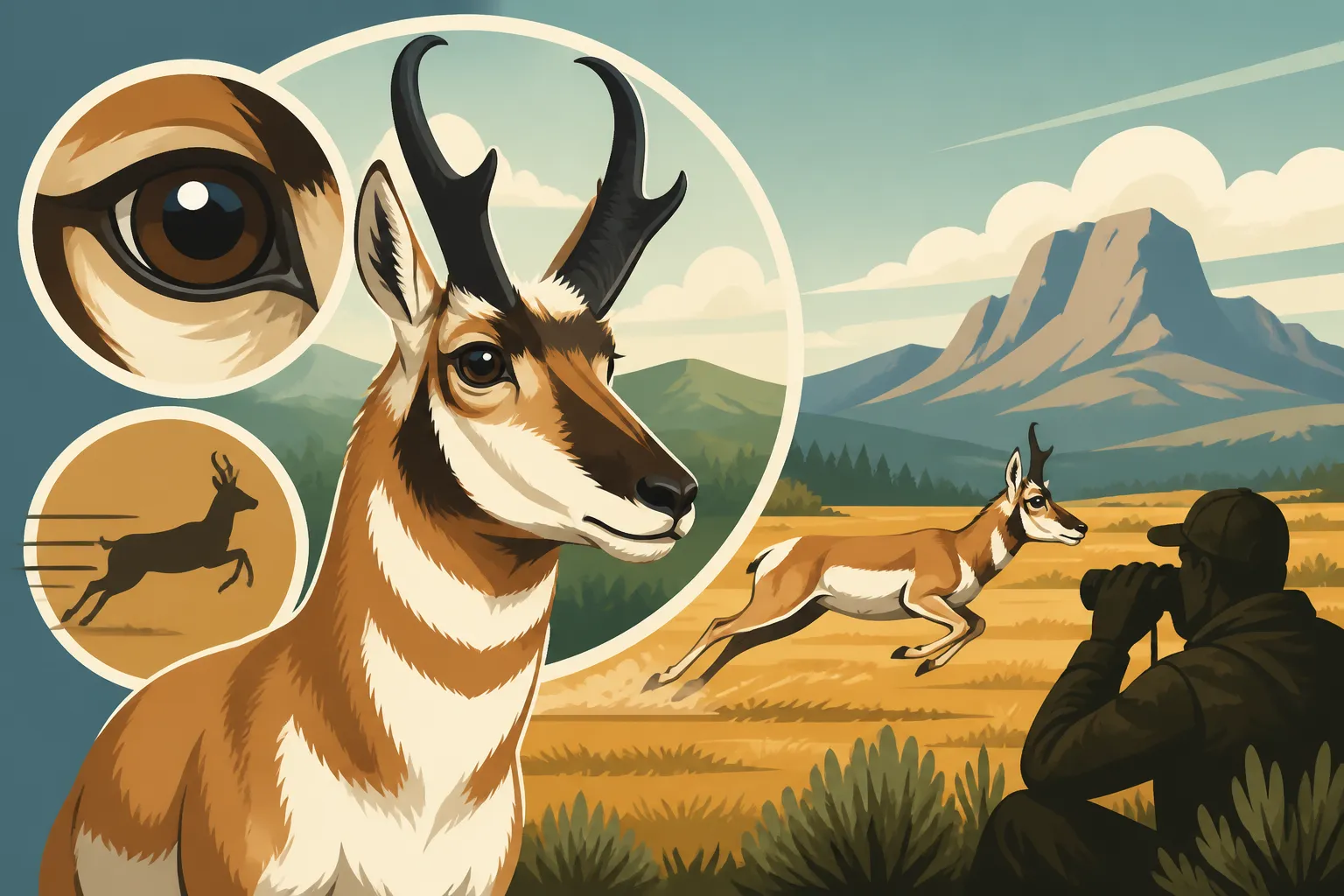
Pronghorn aren't just fast; they're built for sustained speed over considerable distances, which is a key difference from many sprinters in the animal world. They can hit speeds upwards of 55 to 60 miles per hour, making them the fastest land animal in North America. What's even more impressive is their endurance. While a cheetah might outpace them in a short burst, a pronghorn can maintain a blistering pace for several miles, easily outdistancing most predators. This incredible stamina is due to a suite of physiological adaptations: unusually large lungs and trachea for maximum oxygen intake, a huge heart that pumps blood efficiently, and a high concentration of mitochondria in their muscle cells, which are the powerhouses that fuel sustained effort. Imagine trying to chase one across the flat, expansive sagebrush flats of, say, the Steens Mountain region or parts of the Malheur National Forest; it’s an exercise in futility if you don't use cunning. Their long, slender legs and specialized hooves are perfect for covering ground quickly on the firm, often rocky, desert floor.
Escape Tactics and Herd Dynamics
When a pronghorn spots a threat, their initial reaction is often to bolt, relying entirely on that incredible speed. Unlike deer or elk that might seek dense cover, pronghorn leverage the open landscape to their advantage, putting distance between themselves and danger. This behavior is deeply ingrained because their historical predators—like the now-extinct American cheetah—were also incredibly fast. Modern predators, such as coyotes and even cougars, which might occasionally venture into pronghorn habitat, find it exceedingly difficult to catch a healthy adult pronghorn in a fair chase across open ground. When a herd is alerted, they often engage in a characteristic "flagging" behavior, where the white hairs on their rump stand erect, flashing a warning signal to other pronghorn across the vast distances of the high desert. This visual cue can travel much further and faster than a vocal warning, uniting the herd in a common escape. Understanding these herd dynamics and their ingrained flight response is crucial for any hunter trying to pattern their movements.
Pronghorn Eyesight: A High-Desert Superpower
If their speed is impressive, their eyesight is nothing short of legendary. A pronghorn's eyes are arguably their most formidable defense mechanism, making them one of the most challenging animals to approach undetected.
Binocular Vision and Wide Field of View
Pronghorn have enormous eyes relative to their head size, giving them an almost cartoonish appearance. These eyes are positioned on the sides of their head, providing an incredibly wide field of view—an estimated 300 degrees—without having to move their head. This means they can see what's directly in front of them, to their sides, and even partially behind them simultaneously. Imagine trying to sneak up on an animal that can essentially see almost all the way around itself! Their binocular vision, while not as pronounced as a human's, still provides excellent depth perception, allowing them to accurately judge distances across the vast, undulating terrain of the high desert. This combination of wide peripheral vision and sharp depth perception allows them to spot even the most subtle movement from miles away, making stealth an absolute priority for hunters. You might think you're hidden behind a small rise, but if any part of you breaks the skyline or moves in their peripheral vision, they've likely already seen you.
Detecting Color, Movement, and Depth
While often stated that deer are colorblind, pronghorn are known to perceive colors, though perhaps differently than humans. They are particularly sensitive to movement and contrasts against the background. Even a slight flicker of an improperly camouflaged shirt or the glint of sunlight off an optic can send them bolting. Their eyes are also incredibly powerful, equipped with a very high density of rods and cones, allowing for exceptional visual acuity, particularly in low light conditions such as dawn and dusk. They can resolve fine details from miles away, making it imperative for hunters to use high-quality optics, like a powerful spotting scope, which can often be researched on platforms such as GoHunt, to glass for these animals from even further distances. If you're struggling to locate them, consider how much easier it is for them to locate you. This superior vision is why Glassing Sage and Juniper for Eastern Oregon Mule Deer techniques are equally, if not more, critical when hunting pronghorn. A good set of binoculars and a spotting scope aren't just helpful; they're absolutely essential for success.
Understanding Pronghorn Behavior and Habitat in Oregon
Beyond their physical prowess, pronghorn exhibit distinct behaviors and preferences that are deeply tied to their open-country habitat. Understanding these patterns is key to finding and successfully hunting them.
Social Structure and Seasonal Movements
Pronghorn social structures can vary throughout the year. In the spring and early summer, does typically form small groups with their fawns, while bucks often gather in bachelor herds. As the rut approaches in late summer and early fall (typically August and September in Oregon), bucks become highly territorial, aggressively defending small harems of does from rival bucks. These rutting battles, while not as physically damaging as those of elk or deer, involve lots of posturing and chasing, providing some of the most exciting viewing opportunities for wildlife enthusiasts and hunters alike. Generally, pronghorn are not as migratory as mule deer or elk, often staying within a relatively confined home range unless severe weather, lack of forage, or intense hunting pressure forces them to move. However, they will shift to different areas within their range to find the best forage or water. Identifying these preferred areas, particularly around locations like the Hart Mountain National Antelope Refuge, can be greatly aided by resources like GoHunt that offer detailed mapping and habitat analysis.
Feeding Habits and Water Dependence
Pronghorn are primarily browsers, with a diet that heavily favors forbs, sagebrush, and other shrubs, though they will also eat grasses. This dietary preference allows them to thrive in arid environments where other grazers might struggle. They are incredibly efficient at extracting moisture from the plants they consume, meaning they don't need to drink water daily, especially when forage is lush. However, during the dry, hot summers typical of Eastern Oregon, water sources become critical concentration points. This dependence on water can be a key factor in hunting strategy. Knowing where the few reliable springs, guzzlers, or stock ponds are located can reveal prime areas to focus your efforts. For hunters, Finding Water on a Digital Map Before You Hunt is an invaluable skill, as these isolated water sources can draw animals from miles around, offering a unique opportunity to intercept them.
Resting and Bedding Patterns
Pronghorn generally prefer to bed in open areas, often on slight rises or knolls that offer maximum visibility across their surroundings. This strategy allows them to spot potential threats from afar, giving them ample time to react and flee. They often face into the wind or positioned to see downwind, covering all their bases visually and scent-wise. Unlike deer that might seek dense timber or brush for bedding, pronghorn’s open country habitat makes hiding almost impossible. This preference for exposed bedding means that approaching a bedded pronghorn unseen is an extreme challenge. Even if you manage to stay out of sight, their keen sense of hearing and smell still offer formidable defenses. Hunters must use every piece of terrain to their advantage, utilizing draws, coulees, and even slight changes in elevation to stay concealed during an approach.
Hunting Strategies Against Pronghorn's Defenses
Hunting Oregon's pronghorn is often called the ultimate spot-and-stalk challenge. Their combined speed and eyesight demand a different approach than hunting deer or elk in timber. It's a game of patience, precision, and leveraging every bit of available cover.
The Spot-and-Stalk Challenge
Traditional spot-and-stalk methods, usually effective for other big game, become a true test of skill when applied to pronghorn. Because they thrive in open, sparse landscapes, finding enough cover to get within shooting range without being detected is incredibly difficult. Most successful stalks involve crawling, using the tiniest folds in the terrain, and exploiting every bit of sagebrush or rock pile for concealment. It's a slow, agonizing process that can take hours for just a few hundred yards. This often results in longer shot opportunities, so practicing long-range shooting is absolutely critical. For Oregon's vast, open country, a flat-shooting rifle is often preferred, similar to the considerations discussed in Rifle Calibers That Suit Oregon Elk, though for very different ranges and conditions. Understanding the wind is also paramount, as their sense of smell, while not as celebrated as their eyesight, is still excellent. Always try to approach from downwind, or at least across the wind, to keep your scent from reaching them.
Decoying and Ambush Tactics
Given the extreme difficulty of a spot-and-stalk approach, many hunters turn to alternative tactics. Decoying can be surprisingly effective, especially during the rut. Pronghorn, particularly territorial bucks, are curious and aggressive. A well-placed pronghorn decoy can sometimes draw a buck closer, either out of curiosity or to challenge what they perceive as an intruder. However, success with decoys is highly situational and requires careful planning: get set up quickly, ensure good concealment for yourself, and be ready for a fast shot as the animal approaches. Ambush tactics, particularly near waterholes or along well-used fence crossings, can also be productive. Pronghorn often follow predictable routes when moving between feeding areas, bedding grounds, and water. Identifying these corridors, perhaps through E-Scouting Oregon Units With Satellite Imagery, and setting up an ambush point downwind before the animals arrive, can turn the tables in your favor. Just be mindful of local regulations regarding hunting near water and remember that pronghorn are incredible jumpers, but sometimes prefer to crawl under or through a fence if there's an easy opening.
Gear Considerations for Pronghorn Hunting
For pronghorn hunting, your gear choices are paramount, perhaps more so than for any other big game animal in Oregon. Optics reign supreme. A high-quality spotting scope with a tripod is non-negotiable for locating animals miles away and judging them accurately. Pair this with a good set of 10x or 12x binoculars for closer scanning. As mentioned, rifles that shoot flat and accurately at extended ranges are highly advantageous, as shot opportunities often stretch beyond what's typical for deer or elk. Consider a caliber known for its long-range performance, such as a 6.5 Creedmoor, .270 Winchester, or a 7mm Rem Mag. Lightweight, breathable, and quiet clothing in earth tones or effective camouflage patterns will aid in concealment during long stalks. Finally, a good rangefinder is absolutely essential for making accurate shot calculations in the vast, deceptive distances of the high desert. Many hunters use apps and programs like GoHunt to plot ranges and identify key landmarks during their scout.
| Feature | Pronghorn (Antilocapra americana) | Mule Deer (Odocoileus hemionus) | Roosevelt Elk (Cervus canadensis roosevelti) |
|---|---|---|---|
| Top Speed | 55-60 mph (sustained) | ~40 mph (burst) | ~35 mph (burst) |
| Vision Field | ~300 degrees | ~250-270 degrees | ~280 degrees |
| Primary Habitat | Open sagebrush steppe, grasslands | Juniper-sage, mixed conifer, rimrock | Dense coastal timber, high mountain forests |
| Key Defense | Speed, exceptional eyesight | Hiding, bounding, keen hearing | Size, strength, keen hearing, smell |
| Social Structure | Seasonal herds, rutting bucks | Small groups, bachelor herds | Large herds, breeding harems |
| Diet Preference | Forbs, sagebrush, shrubs | Browse (shrubs), some grasses | Grasses, forbs, browse |
| Stalk Difficulty | Very High | Moderate to High | Moderate to High |
Conservation and Management of Oregon's Pronghorn
Oregon's pronghorn population is a vital part of the high desert ecosystem. Understanding their conservation status and the management efforts in place helps us appreciate these unique animals even more.
Population Trends and Management Efforts
Oregon's pronghorn population has seen fluctuations over the years, but generally remains healthy in its core eastern Oregon ranges. The Oregon Department of Fish and Wildlife (ODFW) actively manages these herds through careful tag allocations, habitat improvement projects, and monitoring programs. Oregon Pronghorn Herd Size estimates typically show numbers in the thousands, but these can vary annually based on factors like winter severity, fawn survival rates, and habitat conditions. ODFW sets specific harvest objectives for each pronghorn hunt unit, balancing hunter opportunity with herd health. The controlled hunt draw system, which often requires significant preference points, helps regulate hunter numbers and ensures sustainable harvesting. If you're interested in applying, checking Oregon Pronghorn Application Odds is always a good idea to set realistic expectations.
Habitat Preservation and Challenges
The future of Oregon's pronghorn is inextricably linked to the health of the sagebrush steppe ecosystem. This vast, iconic landscape is their primary habitat, providing both food and the open visibility they rely on for survival. Habitat preservation efforts are crucial to ensuring stable populations. Challenges include habitat fragmentation from development, encroachment of invasive annual grasses (like cheatgrass) which can fuel larger and hotter wildfires, and the juniper expansion which alters open landscapes. Drought is another significant factor, directly impacting Pronghorn Fawn Survival in Dry Years and overall herd health. Organizations like the Oregon Hunters Association (OHA) and state agencies are actively involved in projects to restore sagebrush habitats, remove encroaching juniper, and improve water sources for wildlife. These efforts are not just for pronghorn but benefit a host of other sagebrush-dependent species. Understanding the unique needs of these magnificent animals, and advocating for the protection of their wild places, is a responsibility we all share.
Disclaimer
Please remember that hunting regulations, seasons, and access can change. Always consult the most current Oregon Department of Fish and Wildlife (ODFW) regulations pamphlet before planning any hunt. This guide is for informational purposes only and does not supersede official ODFW rules. Be safe, hunt ethically, and respect the land and wildlife.