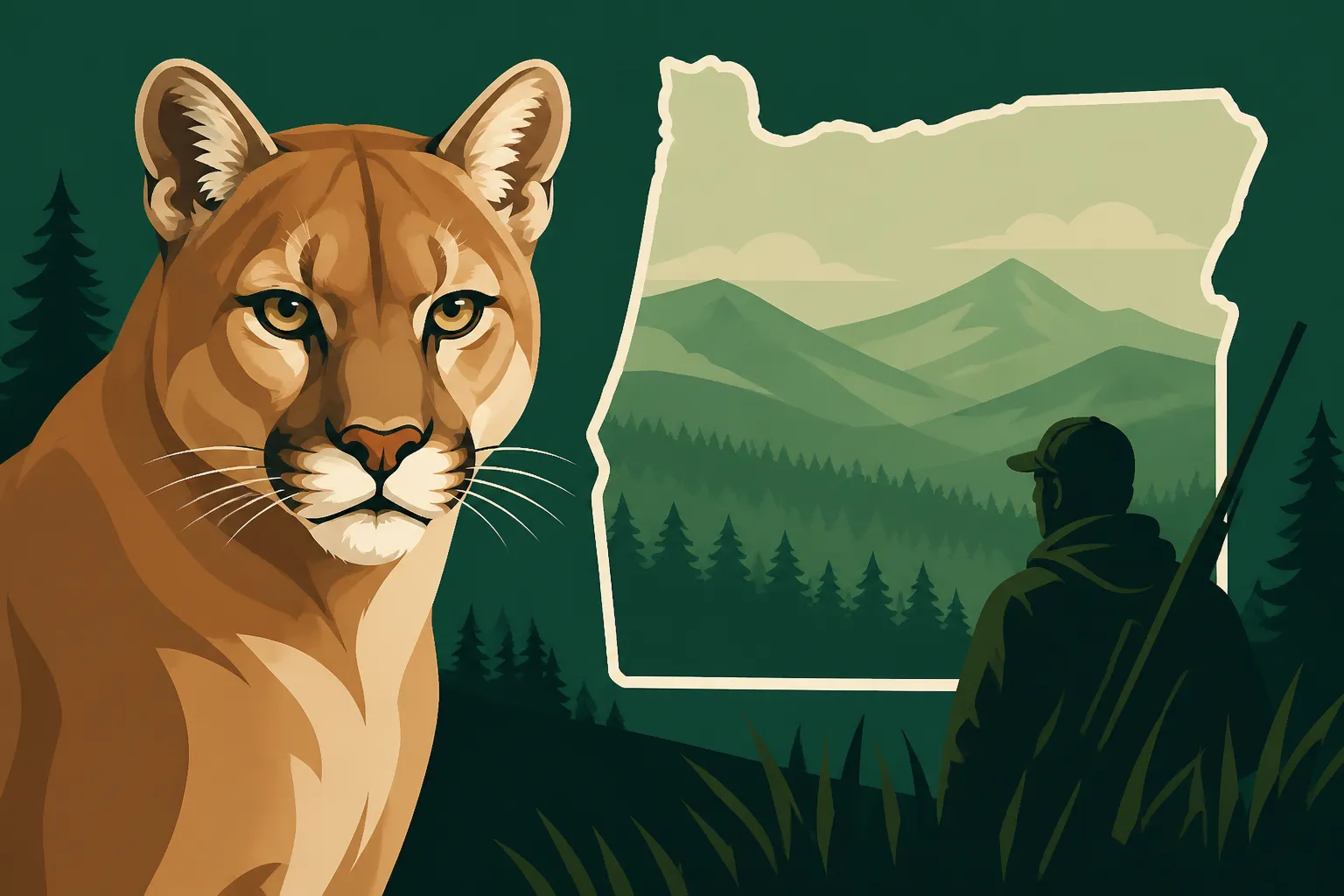
Oregon Cougar Population Estimates
The stealthy cougar, a true phantom of the forest, has always fascinated and frustrated hunters and wildlife enthusiasts alike here in Oregon. It’s tough to get a handle on how many of these incredible predators actually roam our vast landscapes, leading to endless speculation and debate. This guide is here to cut through the noise, providing a deep dive into how Oregon Fish and Wildlife (ODFW) attempts to estimate these elusive populations, what those numbers actually tell us, and why pinning down an exact count is such a monumental challenge.
The Challenge of Counting Cougars in Oregon
Trying to count cougars is like trying to count raindrops in a thunderstorm – it's incredibly difficult, and you're always going to come up with an estimate, not an exact figure. These animals are masters of concealment, living secretive lives across diverse and often rugged terrain. For those of us who spend countless hours in the woods, the occasional glimpse of a track or, if you're lucky, the fleeting sight of the cat itself, feels like a rare privilege. But it also underscores just how hard it is for wildlife biologists to get an accurate census.
Why Cougars Are So Elusive
Cougars are solitary by nature, preferring to operate under the cloak of darkness or deep cover. They inhabit vast territories, often spanning hundreds of square miles, particularly the males. Think about the dense Douglas fir forests of the Coast Range, the rugged basalt rimrock of Eastern Oregon, or the thick juniper breaks in the high desert—these are not environments where a cat stands out. Their tawny coats blend seamlessly with the dry grass, the dappled sunlight, or the shadows of the forest floor.
They're also incredibly wary, possessing keen senses that detect human presence long before we're ever aware of them. A cougar will typically evade detection, silently melting into the landscape. This natural elusiveness means traditional counting methods that rely on visual observation, like aerial surveys used for elk or deer, are simply not effective. You can fly over the most cougar-rich habitat imaginable, and you'll be hard-pressed to spot even one. This makes estimating their numbers a complex, multi-faceted endeavor that relies heavily on indirect evidence.
Historical Counting Methods and Their Limitations
Historically, cougar population estimates in Oregon, and indeed across much of the West, relied heavily on more rudimentary data. This often included things like anecdotal sightings, reports of livestock depredation, and most significantly, harvest data from hunters. When the state had a bounty system, or when hound hunting was legal, more animals were brought in, providing some insight into distribution and density in certain areas.
However, these methods had severe limitations. Hunter harvest, while providing a minimum count of animals removed from the population, doesn't tell you how many are left. It also tends to be biased towards areas with easier access or higher hunter effort, not necessarily where cougars are most abundant. Similarly, depredation reports, while important for management, only indicate where cougars are interacting negatively with humans or livestock, not their overall population size or health across all habitats. The lack of robust, scientific data led to wide variations in estimates and considerable public skepticism about the numbers. It became clear that more sophisticated, less intrusive methods were needed to provide a clearer picture of these incredible predators, especially since the state of Oregon has specific rules about Why Oregon Cougar Hunters Cannot Use Hounds.
Current ODFW Estimation Methods
Recognizing the challenges, the Oregon Department of Fish and Wildlife (ODFW) has evolved its approach, moving towards more scientifically rigorous and non-invasive techniques. These modern methods leverage technology and biological understanding to build a more comprehensive picture of cougar populations across the state. They’re still estimates, of course, but they are far more grounded in data than anything we had a couple of decades ago. This data is critical for making informed management decisions, especially given the ongoing interest in Cougar Territory Size and Movement for understanding their impact on other game species.
DNA-Based Hair Snare Surveys
One of the most innovative and powerful tools ODFW employs is DNA-based hair snare surveys. Imagine a setup in the woods that's designed to snag a tiny bit of cougar hair without harming the animal. Researchers strategically place "rub trees" or scent lures in areas known for cougar activity. These sites are often surrounded by barbed wire or adhesive strips designed to collect hair as a cougar brushes past. The cougars, being curious creatures, are drawn to the scent or the opportunity to rub, leaving behind crucial genetic material.
Once collected, the hair samples are sent to a lab where DNA is extracted. Each unique DNA profile represents an individual cougar. By collecting samples over a defined area and period, biologists can use capture-recapture statistical models to estimate population density. If they repeatedly identify the same cougar, it tells them something about that cat's movements and also helps refine the overall estimate. This method is costly and labor-intensive, requiring extensive fieldwork and lab analysis, but it provides some of the most accurate individual identification data available for these elusive animals. It allows biologists to track not just presence, but also minimum number alive in a given study area, giving us a far better handle on things than just track identification alone, which can sometimes be tricky when you're trying to discern Identifying Cougar Tracks From Dog Tracks.
Trail Camera Surveys and Track Data
Trail cameras have become indispensable tools for wildlife monitoring, and cougars are no exception. ODFW deploys hundreds, if not thousands, of trail cameras across various habitats, setting them up at game trails, pinch points, and kill sites. While a single photo doesn't give you a precise count, a network of cameras over time can reveal patterns of presence and activity. Cameras equipped with video capabilities are even better, sometimes capturing enough detail to identify individual cougars based on unique markings, scars, or even ear tears, especially from the flank shots often used to judge cougar body size and markings.
In conjunction with camera data, track surveys remain a foundational element of cougar monitoring. Biologists and trained volunteers regularly search for tracks in snow, mud, and dusty roads, particularly after fresh precipitation. While tracks don't identify individual animals, they do confirm presence, indicate recent activity, and offer insights into distribution. When combined with other data, track frequency can be an index of relative abundance. For example, if you find significantly more tracks in one unit versus another of similar size and habitat, it suggests a higher density in the former. Tools like GoHunt's mapping features can be incredibly helpful for planning these track surveys, allowing users to identify potential travel corridors, water sources, and pinch points where cougars are likely to leave sign. It's a way to leverage technology to efficiently search for that critical ground-level data.
Harvest Data and Hunter Reports
While less precise than DNA or camera studies for population estimates, hunter harvest data still plays a vital role in cougar management and understanding population trends. Each year, hunters are required to report their harvest to ODFW. This data includes the location of the kill, the sex of the animal, and sometimes age information through tooth samples. This mandatory reporting requirement helps ODFW track annual removals from the population and identify areas of higher hunting pressure or success.
When combined with other survey methods, harvest data helps validate models and provides insights into population structure. For example, a consistent harvest of mature male cougars suggests a healthy, reproducing population that can sustain that level of harvest. Conversely, a sudden increase in the harvest of young, dispersing cougars in a new area might indicate growing populations expanding into new territories. Hunter reports of Cougar Sightings Near Oregon Towns or depredation incidents also feed into ODFW's understanding of human-wildlife conflicts and population distribution. Furthermore, many dedicated hunters use mapping tools, like those found on GoHunt, to track their own observations and plan their hunts, inadvertently contributing to the broader understanding of cougar movements and density across Oregon's diverse landscapes.
Understanding Oregon's Cougar Population Trends
The combined data from ODFW's various monitoring efforts allows them to not just count cougars, but to understand the dynamics of their populations. This includes seeing how numbers are changing over time, where cougars are most concentrated, and what factors might be driving these shifts. It's a complex picture, always evolving, and rarely as simple as just "more" or "less."
Statewide Estimates and Regional Variations
According to the most recent ODFW estimates, Oregon's cougar population is believed to be between 5,000 and 6,000 animals statewide. This is a significant number, especially considering the challenges of counting them and the large areas they cover. However, this isn't a uniformly distributed population. Cougar densities vary dramatically across the state, largely dictated by habitat suitability and prey availability.
The Western Oregon cougar population, particularly in the Coast Range and the Cascades, tends to be denser due to the abundant blacktail deer and elk populations. Areas like the Willamette and Rogue Valleys, with their mix of timber and open spaces, also support strong cougar numbers. In Eastern Oregon, where prey animals like mule deer and Rocky Mountain elk are still found, cougar populations are also robust, though densities can be lower in the drier, more open sagebrush steppe. For example, the steep canyons of the John Day River or the Blue Mountains can be strongholds, while wide open plains might see fewer cats. If you're looking into specific units, mapping applications such as GoHunt can help visualize these diverse habitats and potential cougar hotspots.
Here’s a simplified look at how ODFW estimates breakdown by general region (note: these are broad examples and ODFW uses much more granular data for specific units):
| Oregon Region | Primary Habitat | Estimated Density (Relative) | Primary Prey |
|---|---|---|---|
| Coast Range | Dense coniferous forest, clearcuts | High | Blacktail Deer, Elk |
| Cascade Mountains | Mixed conifer forest, volcanic terrain | High-Medium | Blacktail Deer, Elk |
| Southwest Oregon | Mixed forest, oak woodlands | Medium | Blacktail Deer, Elk |
| Blue Mountains | Mixed conifer forest, rimrock canyons | Medium-High | Rocky Mountain Elk, Mule Deer |
| High Desert | Juniper/sagebrush, basalt flows | Low-Medium | Mule Deer, Pronghorn |
| Willamette Valley | Agricultural, scattered timber, foothills | Low-Medium | Blacktail Deer |
Factors Influencing Population Changes
Cougar populations are not static; they ebb and flow in response to a complex interplay of environmental factors. The most significant of these is prey availability. Cougars are apex predators, and where their primary food sources thrive, cougars tend to thrive too. If deer or elk populations decline due to disease, habitat loss, or severe winters, cougar numbers will often follow suit, albeit with a slight delay. This predator-prey relationship is a fundamental ecological principle and directly affects the Predator Prey Balance in Oregon Units.
Habitat is another crucial factor. Cougars need large, contiguous blocks of suitable habitat that provide cover for hunting, denning, and travel. Fragmentation of habitat due to human development, logging practices, or wildfires can impact their ability to thrive. While cougars are adaptable, they do best in areas where they can move freely without encountering excessive human disturbance. Weather, too, plays a role; severe winters can impact prey animals, leading to less food for cougars, while prolonged droughts can affect water sources and overall ecosystem health. Mortality factors, including hunter harvest (which is regulated by Oregon Cougar Tag Rules and Quotas), vehicle collisions, and inter-species conflict (though less common), also influence population dynamics. ODFW continuously monitors these factors to predict and understand population shifts.
The Debate Around Cougar Management and Population
Few animals stir as much public emotion and debate as the cougar. For many, they represent the wildness of Oregon, a symbol of untouched wilderness. For others, particularly those in rural communities with livestock or families recreating outdoors, they can represent a threat. This creates a challenging balancing act for ODFW: how to manage a robust cougar population that plays a vital ecological role, while also addressing legitimate concerns from the public.
Balancing Conservation with Public Safety and Livestock Concerns
Oregon's cougar management strategy aims for a healthy, self-sustaining population while minimizing conflicts with humans and domestic animals. On the one hand, cougars are essential to ecosystem health, helping to regulate prey populations and contributing to the overall biodiversity of our forests. Their presence is a sign of a thriving natural environment. Conservationists advocate for robust populations and policies that protect their habitat and natural behaviors.
On the other hand, cougars are powerful predators. Reports of Cougar Attacks on People in Oregon, though rare, understandably generate fear and concern. Livestock depredation, especially on sheep and calves, causes significant economic loss for ranchers and can lead to calls for increased control. ODFW responds to confirmed depredation incidents, sometimes authorizing removal of problem animals. Finding this balance is incredibly difficult and often involves listening to diverse stakeholders, from wildlife advocates to ranchers to rural homeowners. It's not just about the numbers; it's about the social tolerance for these animals living in proximity to human activity.
The Role of Hunter Harvest in Management
In Oregon, regulated hunter harvest is a primary tool used by ODFW to manage cougar populations. Unlike many other states, Oregon does not permit the use of hounds for cougar hunting, a decision made by voter initiative. Instead, cougars are typically taken by still-hunting, calling, or incidental harvest during other big game seasons. Hunters play a crucial role by providing the data needed for ODFW's models. Understanding Cougar Hunting While Deer Hunting on the Same Trip is critical, as many cougars are harvested opportunistically.
The annual harvest quota, set by ODFW, aims to maintain a healthy population while addressing local concerns. By selectively removing cougars, particularly in areas with high densities or conflicts, managers can potentially reduce depredation incidents and help stabilize prey populations. The harvest also helps manage density, preventing overcrowding that could lead to increased disease or competition. It's a contentious issue for some, but ODFW views regulated hunting as an important and effective component of their overall strategy to balance the ecological needs of cougars with the social and economic needs of Oregonians. This management approach is constantly evaluated, taking into account new research, population data, and public input to ensure sustainable cougar populations for future generations to encounter, even if those encounters are fleeting.
Disclaimer
Please remember that hunting regulations, seasons, and wildlife population estimates can change. Always consult the most current Oregon Department of Fish and Wildlife (ODFW) regulations and resources before planning any hunting activity. This guide is for informational purposes only and should not replace official ODFW publications or professional advice.