How Many Choices on an Oregon Application
Navigating the Oregon Department of Fish and Wildlife (ODFW) controlled hunt application system can feel like trying to solve a complex puzzle, especially when you're trying to figure out how to maximize your chances of drawing that dream tag. It's frustrating to put in the time and effort, only to realize you might have overlooked a strategic element that could have made all the difference. This guide will walk you through the specifics of the Oregon application, focusing on the number of choices you have and how to use them wisely to improve your hunting success.
Understanding Your Three Choices
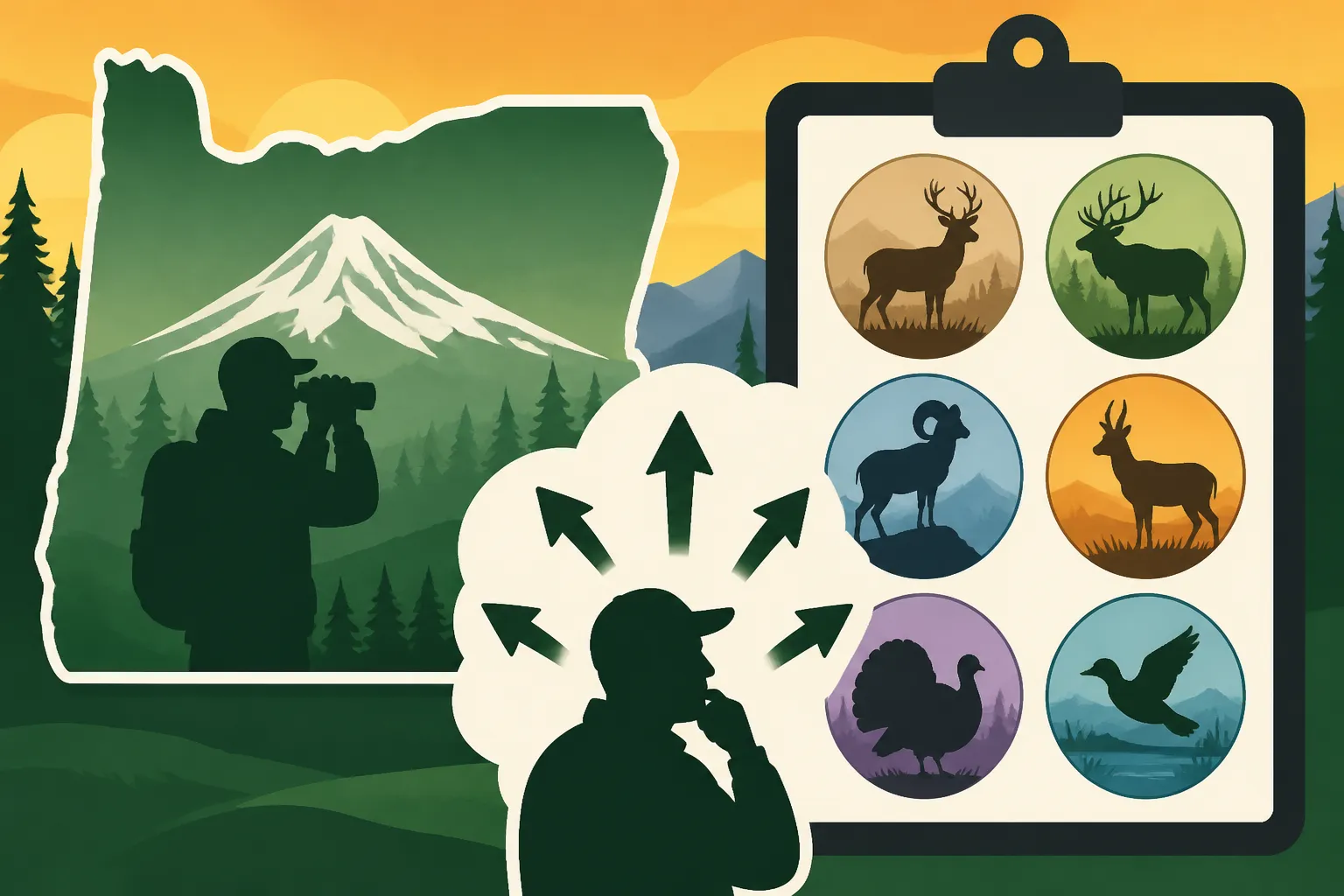
When you submit an application for a controlled hunt in Oregon, you're not just picking one hunt. ODFW actually gives you the option to select up to three different hunt choices on a single application. This three-choice system is designed to give hunters more opportunities within a single application cycle, but it's crucial to understand how each choice functions and what impact it has on your preference points. Many hunters, especially those new to the Oregon system or those coming from states with different draw mechanics, often misunderstand how these choices interact, potentially squandering valuable points or missing out on opportunities. It's not just about filling in three boxes; it's about a calculated approach to secure a tag.
First Choice: The Preference Point Powerhouse
Your first choice on the Oregon application is, without a doubt, the most important one, particularly if you're building preference points for highly sought-after hunts. This is because only your first choice considers your accumulated preference points in the draw. If you apply for a hunt as your first choice, and you have points, those points are factored into your draw odds, giving you a statistical advantage over applicants with fewer points for that specific hunt. This makes your first choice the place where you should put your absolute dream hunt or the unit you've been building points for over years.
Let's say you've been religiously applying for a specific elk hunt in Eastern Oregon, accumulating a good number of points. Placing that hunt as your first choice is essential, as it leverages all those hard-earned points. If you were to put a low-point hunt here, or even worse, a hunt you don't really want, you'd be essentially wasting the power of your points. The system is designed to reward loyalty and persistence, and the first choice is where that reward manifests. This is where tools like GoHunt become invaluable; they allow you to analyze historical draw odds, point requirements, and success rates, helping you decide which units are realistic targets for your point level. You can really dig into the data and see How Many Points for a Top Oregon Elk Hunt and if your accumulated points are in the ballpark.
Second Choice: The Opportunity Slot
Your second choice acts as a backup plan, but it operates under a very different set of rules. Unlike your first choice, your preference points are NOT considered for your second choice. This is a critical distinction that many hunters miss. If your first choice is unsuccessful, ODFW's system then looks at your second choice, but you are entered into a random drawing with all other applicants who listed that hunt as their first, second, or third choice, without the benefit of your accumulated points. Think of it as hitting the reset button on your draw odds, entering a lottery purely by chance.
This means your second choice is an excellent spot for hunts that are either very low point, general season tags that have converted to controlled, or hunts that consistently have high drawing odds for everyone, regardless of points. It's a place to put a hunt you'd still be thrilled to draw, but one that doesn't demand the strategic deployment of your hard-earned points. For instance, if your first choice was a highly competitive mule deer hunt in the Steens, your second choice could be a more accessible general season deer hunt in a different unit, offering a solid chance at a tag without risking your point accumulation. It's all about playing the odds. For more detailed insights, you can review how Why Oregon Points Only Count on First Choice.
Third Choice: The Long Shot or Point Saver
The third choice is often the most misunderstood slot on the application. Like the second choice, preference points are not considered for your third choice. This means it's another chance to draw a tag purely through random chance if your first two choices are unsuccessful. However, its primary strategic value often lies elsewhere for many seasoned hunters: as a "point saver" or a true "long shot" option.
Some hunters will place a very difficult, high-point hunt as their third choice, knowing they have virtually no chance of drawing it without points, but it serves as a placeholder. More commonly, if a hunter is solely focused on building points for a specific, future first-choice hunt and wants no chance of drawing a tag that would purge their points, they might leave the second and third choices blank, or select a hunt they absolutely won't draw. Conversely, for someone new or less concerned about points, it's another roll of the dice for a tag, perhaps for a late-season bear hunt or an antlerless elk hunt that might not attract many first-choice applicants. It truly depends on your individual strategy for the year, whether you're building points or just trying to get a tag in hand.
Strategic Application: Maximizing Your Odds
Understanding the mechanics of each choice is just the beginning. The real art of applying in Oregon lies in developing a strategic approach that maximizes your odds for the hunts you desire, while also protecting your valuable preference points. It's a delicate balance between ambition and realism, and a well-thought-out application can significantly impact your hunting season. There's nothing worse than realizing after the draw that you could have made a better choice.
Researching Hunt Statistics and Draw Odds
Before you even think about filling in those three boxes, you need to dive deep into the data. ODFW publishes extensive hunt statistics, including draw odds, harvest success rates, and the number of applicants for each hunt code. This information is your best friend when planning your application. Beyond ODFW's official resources, platforms like GoHunt provide incredibly user-friendly tools that aggregate and analyze this data, making it much easier to identify trends, understand point creep, and gauge the real difficulty of drawing a particular tag. You can see, for example, what the draw odds were for a specific hunt in the last five years and how many points were needed to draw it.
When you're researching, pay close attention to the "points required to draw" data. For your first choice, this will tell you if your current point total gives you a realistic chance. For your second and third choices, since points don't apply, you'll be looking more at the overall applicant pool size and the total number of tags available. A hunt with 100 tags and 200 applicants might be a decent second or third choice, whereas a hunt with 10 tags and 1,000 applicants is probably a wasted slot unless you're incredibly lucky. This meticulous research is key to truly understanding the Oregon Controlled Hunt Draw Explained and making informed decisions.
The Art of the Backup Plan
A smart hunter always has a backup plan, and the Oregon application's three-choice system is perfectly designed for this. Your first choice is often your ambitious goal, but your second and third choices are where you build in flexibility and opportunity. Instead of just picking random hunts, think about a tiered approach. Perhaps your first choice is a tough-to-draw bull elk tag. Your second choice could be a more achievable antlerless elk tag in a nearby unit, or even a deer tag if you're open to hunting a different species. This ensures that even if your dream hunt doesn't pan out, you still have a solid chance at a meaningful hunting experience.
Consider units that might have slightly lower success rates but significantly higher drawing odds. These are often excellent candidates for second and third choices. You might not be hunting a "trophy unit," but you'll be out in the field, which is what it's all about. It's also worth considering how controlled hunts compare to Oregon General Season Versus Controlled Hunt Tags. Sometimes, a general season tag offers more flexibility and higher odds of getting a tag, even if the "trophy potential" is perceived to be lower. Don't overlook the opportunity to get boots on the ground, even if it's not for the top-tier unit you initially dreamed of.
Party Applications and Point Averaging
If you're planning to hunt with a buddy or a group, Oregon's party application rules add another layer of complexity, particularly concerning points. When applying as a party, the system uses the lowest number of preference points among all members of the party for the first choice. This is often referred to as "point averaging," though it's more accurately "lowest point member." This means if you have 10 points and your buddy has 2, your party will enter the draw with 2 points for your first choice.
This has significant implications. If you've been building points for a specific hunt, applying with someone who has far fewer points can drastically reduce your chances of drawing that first choice. Conversely, if you're trying to help a new hunter get into a unit, you might sacrifice your higher points to increase their odds. For second and third choices, party applications still apply, but again, without the benefit of points. Understanding Party Applications in the Oregon Draw is critical to avoid disappointment and ensure everyone in your group is on the same page regarding expectations and strategy. It's a conversation worth having long before the Oregon Controlled Hunt Application Deadline rolls around.
Common Pitfalls and Smart Practices
Even with the best intentions, it's easy to make mistakes when navigating the Oregon controlled hunt application. From misunderstanding point mechanics to overlooking crucial deadlines, these missteps can cost you valuable points or a hunting opportunity. Being aware of these common pitfalls and adopting smart practices can save you a lot of headache and heartache.
Avoiding Point Purges and Missteps
The biggest fear for many point-holders is inadvertently drawing a tag that purges their hard-earned points when they weren't ready. In Oregon, if you successfully draw your first choice for a controlled hunt, your preference points for that species are reset to zero. This is a crucial rule that dictates many hunters' strategies. If you're solely focused on accumulating points for a specific, high-point hunt years down the road, you might intentionally apply for a hunt as your first choice that you know you won't draw, or select the "point only" option during the Oregon Preference Point Purchase Window. This allows you to add another point without risking drawing a tag that resets your counter.
However, if you put a hunt you could draw as your first choice, even if it's not your top dream hunt, and you draw it, your points are gone. This is why careful consideration of your first choice is paramount. For your second and third choices, since points aren't considered, drawing one of these tags does not purge your points. This is a common point of confusion. So, you can draw a second or third choice hunt and still retain all your preference points for that species for future first-choice applications. Knowing What Purges Your Oregon Preference Points is fundamental to a long-term strategy.
The $10 Application Fee and Your Choices
It's important to remember that Oregon charges a non-refundable $10 application fee per application, not per choice. This means that whether you select one, two, or all three choices, the fee remains the same. This makes using all three choices a no-brainer if you're truly seeking a hunting opportunity. For just $10, you get three chances to draw a controlled tag, plus a bonus preference point if you don't draw your first choice. It's an incredible value when compared to the cost of tags and licenses.
Thinking about the Oregon's $10 Controlled Hunt Application Fee in this light makes it clear that strategically filling out all three choices is the most cost-effective way to engage with the draw. Don't leave those second and third choice boxes blank unless you have a very specific point-building strategy that precludes drawing any hunt. Make sure you understand how to navigate the application process effectively, including where to go for help if you encounter issues before the application deadline.
Using Tools for Informed Decisions
In today's digital age, relying solely on printed pamphlets or anecdotal advice is a recipe for missed opportunities. Modern hunting tools and resources are designed to give you an edge. Websites and apps like GoHunt offer advanced filtering, draw odds calculators, and detailed unit breakdowns that go far beyond what you can find in the regulation book. They help you compare hunt codes, analyze point creep, and even explore E-Scouting Oregon Units With Satellite Imagery for potential hunting locations once you've drawn a tag.
These platforms allow you to cross-reference data for various species and units, helping you build a coherent strategy for your first, second, and third choices. For example, you can research not just elk, but also deer or bear hunts that might fit into your overall hunting plan for the year. The more data you have, and the better you understand how to interpret it, the more effective your application strategy will be. Don't wait until the Oregon Draw Results in June to realize you could have done more research.
| Choice Number | Preference Point Impact | Purpose & Strategy | Risk of Point Purge |
|---|---|---|---|
| First Choice | YES – Points are applied | Dream hunt, high-point unit, target species | HIGH – Drawing purges points |
| Second Choice | NO – Random draw only | Backup hunt, secondary species/unit, higher odds for random draw | NONE – Drawing does NOT purge points |
| Third Choice | NO – Random draw only | Long shot, point-saver, low-demand hunt | NONE – Drawing does NOT purge points |
Disclaimer
Please remember that hunting regulations and application processes in Oregon are subject to change. Always consult the most current Oregon Department of Fish and Wildlife (ODFW) hunting regulations and official website before submitting your application. This guide is for informational purposes only and should not replace official ODFW resources.