Oregon Roosevelt Elk Rifle Seasons in November
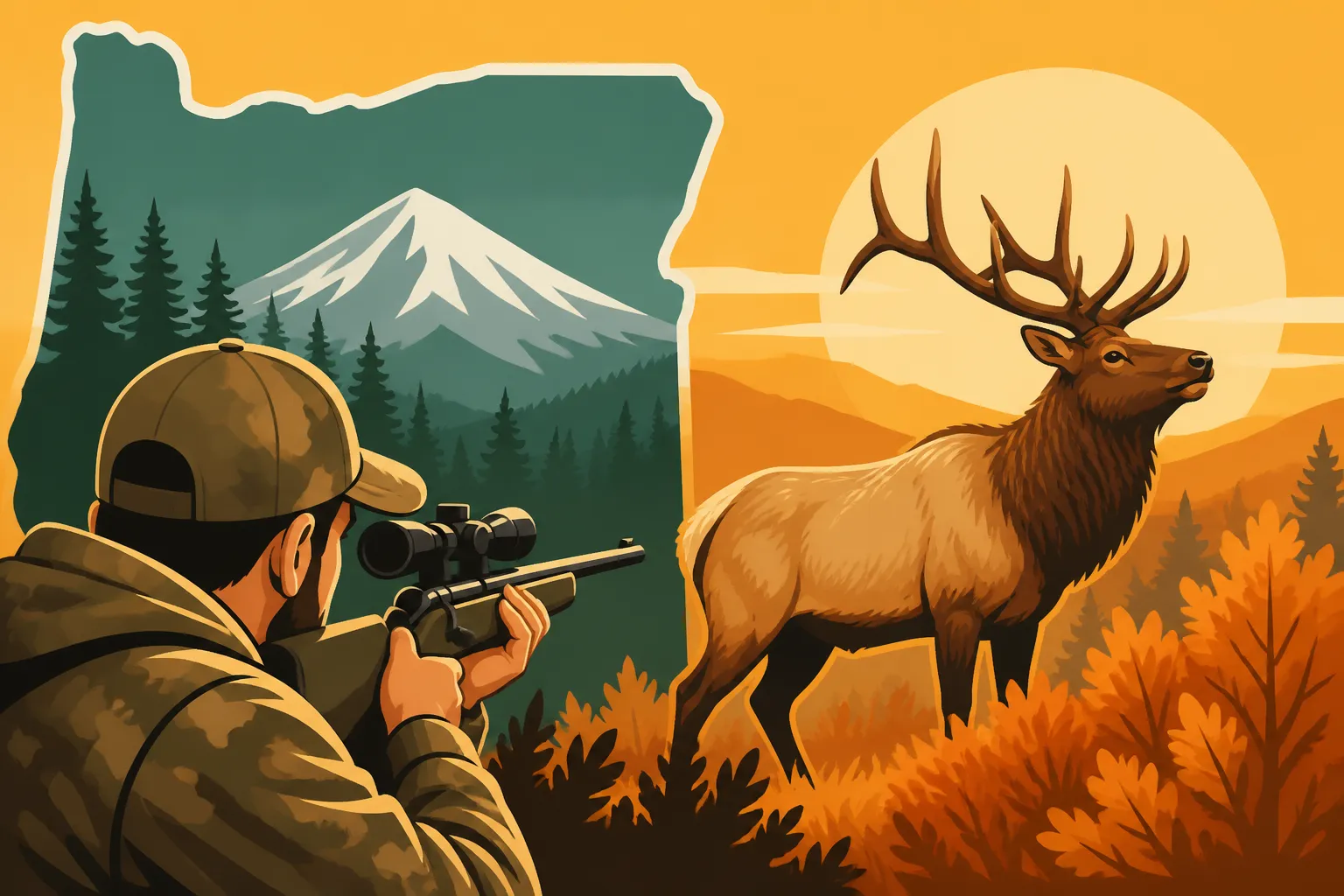
Hunting Roosevelt elk in the dense, rain-soaked forests of Western Oregon is a dream for many, but the reality often involves slogging through thick underbrush, battling relentless weather, and navigating challenging terrain. It's not a casual stroll; it's a test of grit, patience, and preparation. This comprehensive guide is here to walk you through everything you need to know about tackling Oregon's Roosevelt elk rifle seasons in November, from understanding the tag system to perfecting your strategies and gear for success.
The Allure of Oregon Roosevelt Elk Hunting
There's something uniquely captivating about hunting Roosevelt elk in Western Oregon. These majestic animals, often bigger-bodied than their Rocky Mountain cousins, thrive in some of the most rugged and verdant landscapes the state has to offer. But with that allure comes significant challenges that make success feel earned in a way few other hunts can match.
What Makes Roosevelt Elk Unique?
Roosevelt elk, Cervus canadensis roosevelti, are truly magnificent creatures, distinct from the Rocky Mountain elk found further east. They are generally larger in body size, often weighing over 900 pounds for a mature bull, making them the largest of the North American elk subspecies. Their antlers, while often not as wide or long as some Rocky Mountain bulls, tend to be very heavy and broom-tined, perfectly adapted for navigating the thick timber they call home.
Their habitat is a stark contrast to the open sagebrush and pine forests of Eastern Oregon. Roosevelt elk thrive in the temperate rainforests of the Coast Range and the western slopes of the Cascades, areas characterized by dense timber, steep canyons, and an abundance of moisture. This environment shapes their behavior, making them masters of stealth and evasion in their secluded domain. Understanding these differences, which are explored further in our guide on Roosevelt Elk in Western Oregon, is fundamental to even beginning to formulate a hunting plan. You're not just hunting an elk; you're hunting a Roosevelt, and that comes with its own set of rules and challenges.
The Western Oregon Landscape: Challenges and Rewards
Imagine dense stands of old-growth timber where sunlight rarely penetrates, choked with salal, sword fern, and vine maple. Now add in steep, broken terrain, deep drainages, and a persistent drizzle that can turn into a downpour at a moment's notice. This is the arena for a Western Oregon Roosevelt elk hunt. The rewards, of course, are immense: the sheer beauty of the ancient forests, the thrill of tracking a massive bull through its hidden world, and the unparalleled satisfaction of success in such demanding conditions.
The challenging landscape means that typical open-country tactics simply won't work. Spot-and-stalk as often practiced in Eastern Oregon, for instance, is almost impossible here due to visibility averaging less than 50 yards. Instead, hunters must become adept at still-hunting, understanding elk movement patterns through incredibly thick cover, and being intimately familiar with the sounds and signs of the forest. It demands a different kind of hunter, one who embraces the struggle as part of the experience.
Navigating Oregon's November Rifle Seasons
Oregon's system for hunting Roosevelt elk in November can feel a bit like a maze, especially if you're new to the state or used to simpler tag structures. It's crucial to understand the nuances of general season versus controlled hunts, and how to position yourself for the best chance at a tag.
Understanding the General Season Structure
For Roosevelt elk, Oregon primarily offers general rifle seasons in two distinct periods during November. These are usually referred to as the First Season and Second Season. These general season tags are typically available over-the-counter, meaning you don't have to go through the draw process, which is a huge relief for many hunters. However, there are quotas on these tags, especially for non-residents, so it’s wise to purchase them as soon as they become available.
The Oregon Coast Elk First Season Length and Oregon Coast Elk Second Season Length usually run for about five to seven days each. While exact dates can vary slightly year to year, they consistently fall within the first two weeks of November. This timing is significant because it often coincides with cooler, wetter weather, which can be both a blessing for tracking and a curse for staying dry and comfortable. Hunters must choose either the first or second season when purchasing their tag, not both. This choice often comes down to personal schedule, preferred hunting pressure (first season usually sees more hunters), and anticipated weather patterns.
Tag Allocation and Resident/Nonresident Quotas
While the November Roosevelt general season tags are available over-the-counter, it’s not a free-for-all. There are specific quotas, particularly affecting non-residents. Oregon caps non-resident general elk tags, and these can sell out quickly for popular units or if demand is high. Residents generally have an easier time securing a tag, but still, buying early is always a good practice. This process is a key distinction from other types of hunts, as detailed in our discussion on Oregon General Season Versus Controlled Hunt Tags.
Beyond the general seasons, some limited entry (controlled) hunts are also offered for Roosevelt elk, often with extended seasons or in areas with higher success rates, but these require applying through the draw. While the focus of this article is on the November rifle seasons which are predominantly general, understanding that controlled hunts exist and have a different application process is important for those seeking alternative opportunities. These controlled hunts require accumulating preference points, and drawing one can take many years, especially for prime units.
Key Dates and Application Deadlines
For general season Roosevelt elk tags in November, the critical "application" date is less about a draw deadline and more about the tag sales opening. Tags typically go on sale in August, and for non-residents especially, purchasing one as soon as possible is highly recommended to avoid missing out on the limited quota. Missing this window means no hunting opportunity for the year, regardless of your other preparations.
However, if you're considering applying for one of the controlled Roosevelt elk hunts—perhaps in a different unit or season—then the absolute most critical date is May 15th. This is Oregon's annual application deadline for all big game controlled hunts. Missing this deadline means you forgo the chance to gain a preference point or draw a coveted tag for that year, as outlined in Oregon's May 15 Application Deadline. It's a date circled in red on every serious Oregon hunter's calendar, whether they're after a controlled Roosevelt tag or something else entirely. Always double-check the current year's Oregon Department of Fish and Wildlife (ODFW) regulations pamphlet for exact dates and any potential changes.
| Season Type | Eligibility | Purchase/Application | Key Dates | Notes |
|---|---|---|---|---|
| General Rifle 1st Season | Resident & Nonresident | Over-the-counter tag purchase | Tag sales open (usually Aug); Hunt: early November | Limited non-resident tags; choose 1st or 2nd season. |
| General Rifle 2nd Season | Resident & Nonresident | Over-the-counter tag purchase | Tag sales open (usually Aug); Hunt: mid-November | Often less pressure than 1st season. |
| Controlled Roosevelt Elk Hunts | Resident & Nonresident | Controlled hunt draw application | Application deadline: May 15th; Draw results: June | Requires preference points, significantly harder to draw. |
Strategies for a Successful November Roosevelt Hunt
Hunting Roosevelt elk in November's wet, dense timber demands a strategic approach that blends patience, stealth, and a deep understanding of their behavior. It's less about long-range glassing and more about close-quarters detective work.
Locating Elk in Dense Western Oregon Timber
Finding elk in Western Oregon's dense forests is primarily about looking for fresh sign and understanding their preferred travel and bedding patterns. Unlike Eastern Oregon where you might spot elk from miles away, here, you're often looking for tracks, scat, rubs, and fresh feeding areas on logging roads, skid trails, and even faint game trails. Focus your efforts on areas with diverse forage: clearcuts that are 3-10 years old (providing browse and cover), and the edges of mature timber where elk feel secure. Pay close attention to saddles, benches, and thick draws that connect feeding and bedding areas. These serve as natural travel corridors, and knowing how to read them can be the difference between seeing a ghost and getting an opportunity.
Elk, especially in November, are often focused on finding nutritional browse to build up fat reserves for winter, but security remains paramount. They'll typically feed more actively in the early mornings and late evenings, often moving into the densest cover during the middle of the day. Scouting, even virtual e-scouting with tools like GoHunt, to identify potential pinch points and bedding sanctuaries before the season is invaluable. Look for south-facing slopes that might offer a bit more warmth and less snow accumulation in colder years.
Still-Hunting and Calling Tactics for Rifle Hunters
Still-hunting is the quintessential tactic for Roosevelt elk in dense timber. This involves moving incredibly slowly, taking a few steps, then pausing for several minutes to observe, listen, and scan every shadow and tree trunk. The goal isn't to cover miles, but to cover ground thoroughly and silently. The soft, wet forest floor of Western Oregon actually aids this, muffling your footsteps, but also making it harder to hear elk approaching. Think of yourself as a predator, flowing through the woods, using the terrain to break up your silhouette.
Calling for Roosevelt elk during the rifle seasons can be effective, but it’s often subtle compared to the bugle fests of the early archery season. Bulls are usually "rutted out" by November and less inclined to respond aggressively to bugles. Cow and calf calls, however, can still pique their curiosity or draw in a lone bull looking for company. Focus on soft mews and chirps, used sparingly, especially when you're in an area with fresh sign or have already bumped elk. Our guide on Calling Roosevelt Elk in Oregon Rainforest Timber delves deeper into these specific techniques, emphasizing close-range communication rather than long-distance shouting matches.
Weathering the Western Oregon Elements
November in Western Oregon means one thing: rain. And lots of it. From a light drizzle to an absolute deluge, you need to be prepared for constant moisture. This impacts everything from your comfort to your optics and rifle performance. Rain gear isn't just a suggestion; it's a necessity, and not just any rain gear. You need truly waterproof and durable layers that can withstand hours, if not days, of precipitation. Check out our advice on Rain Gear That Actually Stays Dry for recommendations on what stands up to the challenge.
Beyond staying dry, the weather can be your ally. Rain mutes sound, allowing for quieter movement, and fresh snow (at higher elevations) or wet ground makes tracking much easier. However, persistent fog can severely limit visibility, turning already challenging shots into impossible ones. When the weather gets truly nasty, elk often seek shelter in the thickest timber or in drainages, making these areas prime targets for still-hunting. Embrace the weather; it's part of the Roosevelt elk experience and often keeps fair-weather hunters at home, reducing pressure.
Essential Gear and Logistics for Roosevelt Rifle Hunts
Successfully hunting Roosevelt elk in November requires not just the right strategy, but also the right tools and a solid plan for after the shot. The environment demands durable, reliable gear and a mindset ready for hard work.
Rifle and Ammunition Choices for Heavy Cover
For Roosevelt elk in heavy timber, shot opportunities are often close, fast, and through brush. While the idea of a "brush-busting" bullet is largely a myth (any bullet will be deflected by heavy cover), you want a caliber that delivers significant energy and penetrates well at close to moderate ranges. Common choices include .30-06, .300 Win Mag, .338 Win Mag, and even larger calibers like .375 H&H, all loaded with tough, controlled-expansion bullets designed for heavy game. For a more detailed breakdown, refer to Rifle Calibers That Suit Oregon Elk. The key isn't necessarily a massive bullet, but one that holds together and drives deep through muscle and bone.
Optics on your rifle should prioritize light gathering and a wide field of view at lower magnifications. A 1.5-6x or 2-8x scope is often ideal, allowing for quick target acquisition in dark timber while still providing enough magnification for slightly longer shots if they arise. Forget high-power variable scopes; you'll rarely need more than 6x in the thick stuff. Ensure your scope is waterproof and fogproof, as it will be exposed to constant moisture and temperature changes. A well-zeroed rifle and confidence in your shot placement are paramount.
Staying Dry and Comfortable in the Rainforest
The cornerstone of comfort and safety in a Western Oregon November hunt is a layering system built around truly waterproof outer shells. Start with a moisture-wicking base layer, add insulating mid-layers (fleece or synthetic puffy jackets work well, as down loses insulating properties when wet), and top it all off with a bomb-proof rain jacket and pants. Look for features like pit zips and full-length leg zippers for ventilation, as you’ll be working hard and sweating even in cold, wet conditions.
Your footwear is equally critical. Waterproof, insulated boots with excellent ankle support are non-negotiable. Leather boots treated with waterproofing agents or modern synthetic boots with Gore-Tex liners are essential. Expect your feet to get wet regardless of how good your boots are, so always pack multiple pairs of wool socks and change them often to prevent trench foot and blisters. A good gaiter can also help keep debris and water out of your boots, especially when slogging through saturated undergrowth.
Packing Out Your Roosevelt Elk
Harvesting a Roosevelt elk in November in thick, steep country is just the beginning of the real work. These animals are massive, and getting the meat out quickly is vital, especially if temperatures are hovering above freezing. The "gutless method" is an absolute game-changer for these situations, allowing you to quarter the animal and remove the meat without having to roll the entire carcass or deal with the entrails. This method, which can be seen in action in guides like Quartering and Packing an Elk Alone, greatly simplifies the process and makes the subsequent pack out more manageable.
You'll need a stout, comfortable pack frame capable of handling heavy loads, game bags to protect the meat, and a sharp knife or two. Plan on making multiple trips, even with a strong partner. Getting the meat off the ground and cooling it as quickly as possible is crucial to prevent spoilage. If you’re hunting solo, or in truly remote areas, consider boning out the meat to reduce weight, making it easier to transport back to your vehicle or camp. This is where physical conditioning really pays off, as you’ll be exerting yourself under heavy loads on challenging terrain.
Common Pitfalls and Expert Tips
Even with the best preparation, hunting Roosevelt elk presents unique challenges. Knowing what to expect and having strategies to overcome common hurdles can significantly improve your odds.
Overcoming Hunting Pressure and Limited Access
Western Oregon, while wild, isn't untouched. Public lands, particularly during general seasons, can see significant hunting pressure. This pressure often pushes elk into even thicker, harder-to-reach areas, or onto private timber lands. To mitigate this, consider hunting during the week rather than weekends, or focus your efforts on areas that require more hiking or are farther from road access. The fewer roads you encounter, the less pressure you're likely to face.
Accessing private timber land can be a game-changer. Companies like Weyerhaeuser and Hancock often offer permits for access, or have specific walk-in only areas. Always check their websites well in advance of the season, as permits can sell out or require specific application processes. E-scouting tools, such as those offered by GoHunt, can be incredibly useful for identifying potential access points, land ownership boundaries, and even historical burn areas or clearcuts that might hold elk. Learning to use E-Scouting Oregon Units With Satellite Imagery to its full potential allows you to identify remote public land pockets or plan routes through challenging terrain to avoid crowds.
The Importance of Physical Conditioning
This cannot be stressed enough: a Roosevelt elk hunt in Western Oregon is a physically demanding endeavor. You will be climbing steep hills, navigating blowdowns, crossing creeks, and potentially packing out hundreds of pounds of meat over rugged terrain, often in miserable weather. If you’re not in good physical shape, your chances of success, and more importantly, your enjoyment and safety, will be significantly compromised.
Start training months in advance. Focus on cardiovascular fitness, strength training (especially for your legs and core), and hiking with a weighted pack on uneven ground. Simulate the conditions you'll face as much as possible. Being able to hike all day with a pack, then have the strength and endurance to quarter an animal and pack out heavy loads, is what separates successful hunters from those who struggle. Our guide on Physical Training for an Oregon Elk Hunt offers specific exercises and routines tailored for the demands of such a hunt.
Post-Harvest Responsibilities
Once you've successfully harvested a Roosevelt elk, your responsibilities don't end. Oregon has mandatory harvest reporting requirements for all big game animals, including elk. This is crucial for ODFW to manage herd populations and set future seasons. You must report your harvest online by a specific deadline, usually within a few weeks of the season's end, or face a $25 penalty. This penalty is strictly enforced, and it's easy to forget after the excitement and hard work of the hunt. Make a note of the deadline and report promptly; detailed information can be found in Oregon Mandatory Harvest Reporting and the $25 Penalty.
Beyond reporting, proper meat care is paramount. Getting the meat cooled quickly is critical, especially if you're not in freezing temperatures. Hang the quarters, allow for air circulation, and if necessary, use ice in coolers (ensuring the meat doesn't sit directly in melted water) for the journey home. Finding a reputable meat processor in Western Oregon can also be beneficial, as they are often well-versed in handling large game like Roosevelt elk. Don't let all your hard work go to waste by neglecting this final, crucial step.
Disclaimer
Please note that hunting regulations, season dates, and tag availability can change annually. Always consult the most current Oregon Department of Fish and Wildlife (ODFW) regulations pamphlet before planning any hunt. This guide is for informational purposes only and should not be considered a substitute for official ODFW publications. Ensure you possess all necessary licenses, tags, and permits before heading into the field. Hunt safely, ethically, and responsibly.