Two-Way Radios and Legal Use While Hunting
There’s nothing quite like the solitude and challenge of an Oregon hunting trip, but let’s be honest, staying connected with your hunting partners or ensuring your own safety when you’re miles from cell service can be a huge source of anxiety. The confusion around using two-way radios while hunting, and what's actually legal here in Oregon, can add another layer of worry. This guide aims to cut through that noise, offering clear, actionable advice on how to use two-way radios effectively and legally to enhance your hunting experience and keep everyone safe in the vastness of Oregon’s backcountry.
Understanding Oregon's Regulations for Two-Way Radios While Hunting
Navigating the rules around technology in the outdoors can feel like trying to read a topo map in the dark – confusing and prone to missteps. When it comes to two-way radios for hunting in Oregon, the law isn't about owning a radio, but rather about how you use it. This distinction is crucial for every hunter to understand.
Frequencies, Channels, and Power Output
Oregon's regulations, much like those in many other states, generally don't restrict the mere possession or general communication on two-way radios like Family Radio Service (FRS) or General Mobile Radio Service (GMRS) devices. These radios operate on specific frequencies, and their power output dictates their effective range. FRS radios are low-power, short-range devices that are license-free and perfect for communicating within a small group in relatively open terrain or within close proximity in dense cover. GMRS radios, on the other hand, offer higher power and a greater range, often capable of hitting repeaters for even broader coverage, but they do require an FCC license (which is a straightforward, one-time fee for a family license, not per individual).
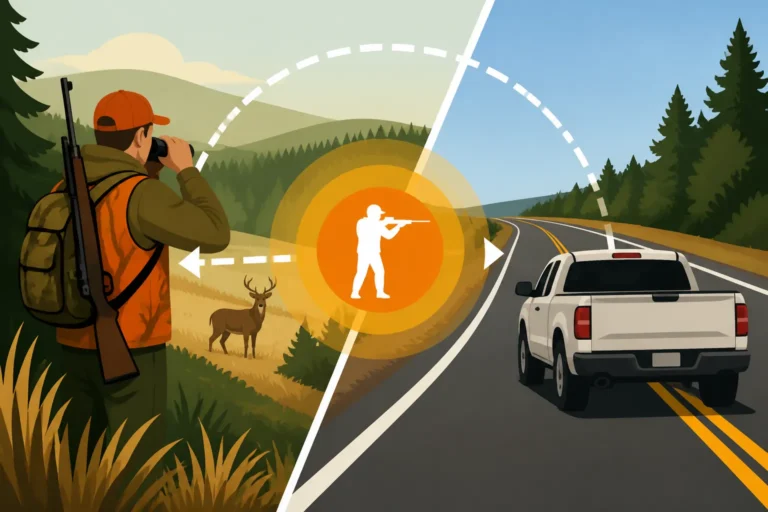
The critical legal line, however, is drawn not by the type of radio or its power, but by the purpose of your communication. Oregon Administrative Rule (OAR) 635-055-0065 explicitly prohibits the use of "radios, walkie-talkies, or other electronic devices for the purpose of communicating the location of game mammals or directing another person to game mammals." This means you can use your radio to discuss your plans for the day, check in on a partner's safety, or even coordinate a meeting spot, but you absolutely cannot use it to say, "There's a bull elk heading towards your ridge, move left!" This distinction is paramount and often misunderstood. It's about maintaining fair chase principles.
The Myth of "Radio-Free" Hunting Areas
You might have heard whispers about certain hunting areas being "radio-free zones." In Oregon, this is largely a myth in terms of general communication. There are no blanket bans on using FRS or GMRS radios for personal communication, even in designated wilderness areas. The regulations are focused on the activity of hunting, not the device itself.
What this means is that in places like the Eagle Cap Wilderness or when undertaking multi-day camps in Oregon's roadless country, you can still legally carry and use a two-way radio to talk to your hunting partners about logistics, safety, or just to keep morale up. However, the moment that communication shifts to directing another hunter to an animal or pinpointing an animal's exact, real-time location, you've crossed into illegal territory. This isn't unique to radios; even shouting across a canyon to direct a friend onto a deer would be unlawful. The intent is what matters.
It's also worth noting that other wilderness rules might apply to different devices, such as the restrictions on motorized equipment or specific types of trail cameras. While radios themselves don't typically fall under these, it's a good reminder that technology use in sensitive areas can be nuanced.
Avoiding Game Harassment and Ethical Concerns
Beyond the letter of the law, there's the spirit of fair chase and ethical hunting. Using a radio to gain an unfair advantage, such as effectively "herding" animals towards another hunter or coordinating an illegal drive, goes against these fundamental principles. Imagine you're still-hunting in wet Oregon coastal brush and quietly stumble upon a herd of elk. Using a radio to immediately tell your partner where to set up for an ambush as you push the elk towards them would be unethical and illegal.
Responsible radio use means ensuring your communications are for coordination and safety, not for manipulating game. This preserves the integrity of the hunt and respects the animals you pursue. We're out there for the challenge, the experience, and the connection to nature, not to stack the odds unfairly in our favor. Always err on the side of caution and consider if your radio use could be perceived as anything other than a safety and logistical tool. Remember, hunters are often judged by their collective actions, and ethical behavior protects our privileges in the field.
Choosing the Right Two-Way Radio for Your Oregon Hunt
Selecting the right communication tool is almost as important as choosing your rifle caliber that suits Oregon elk or your archery setup for wet Oregon timber. The diverse terrain of Oregon, from the dense Coast Range to the vast eastern high desert, demands different capabilities from your gear.
FRS Radios: Simple and Accessible
Family Radio Service (FRS) radios are the go-to choice for many hunters due to their simplicity and the fact that they don't require any special licensing. You can pick up a pair at virtually any outdoor or electronics store. They operate on channels 1-22 and typically have a maximum power output of 2 watts, though many are less.
Pros:
- No License Required: This is a big one. Just buy them and use them.
- Affordable: Often available in multi-packs, making them budget-friendly.
- User-Friendly: Simple controls, easy for anyone in your group to pick up and use.
Cons:
- Limited Range: In dense forests, deep canyons, or over long distances in hilly country, their effective range can shrink dramatically – sometimes to less than a mile.
- Lower Power Output: This directly impacts range and ability to penetrate obstacles.
- Shared Frequencies: You might run into other groups on the same channel, leading to interference or privacy concerns.
FRS radios are ideal for small hunting parties staying relatively close together, perhaps within a single drainage or on a private timber land with clear lines of sight. They're excellent for coordinating movements, confirming locations, or just a quick check-in while working through a block of timber.
GMRS Radios: More Power, More Range, Licensing Required
General Mobile Radio Service (GMRS) radios are like the big brother to FRS, offering a significant step up in power and range. They share some channels with FRS (channels 1-7 and 15-22 operate as GMRS channels with higher power), but also have exclusive channels (8-14) and the ability to access repeaters. GMRS radios can transmit at up to 50 watts, though most handheld units are in the 5-watt range. The trade-off is that you need an FCC license, which covers your immediate family for ten years.
Pros:
- Increased Range and Power: Noticeably better performance, especially in challenging terrain or over greater distances.
- Repeater Access: Some GMRS radios can connect to repeaters, which are strategically placed transmitters that rebroadcast your signal, dramatically extending your range. This is invaluable in mountainous regions.
- More Robust Build: GMRS radios, like many from brands such as Motorola and Midland, are often built to be more rugged and weather-resistant, which is essential when facing Oregon’s unpredictable conditions.
Cons:
- FCC License Required: While easy to obtain online, it's an extra step and cost.
- Higher Cost: Generally more expensive than basic FRS units.
For serious hunters who venture into more remote or expansive areas, GMRS radios are a wise investment. They provide that extra layer of confidence when you're coordinating a push, trying to locate a downed animal, or simply need to cover more ground and stay in touch. When planning your hunting strategy, especially if you're utilizing modern tools like those offered by GoHunt for detailed map scouting, consider how vital reliable long-range communication will be.
Satellite Communicators and PLBs: The Ultimate Safety Net
While not strictly "two-way radios," satellite communicators (like Garmin inReach or Zoleo) and Personal Locator Beacons (PLBs) are indispensable communication tools for any hunter venturing into Oregon's vast, cellular-dead zones. These devices leverage satellite networks to send and receive messages or, in an emergency, broadcast an SOS signal to search and rescue.
Pros:
- Global Coverage: Work virtually anywhere, regardless of cell service.
- Emergency SOS: Direct link to emergency services worldwide.
- Text Messaging: Many allow for two-way text communication, letting you update loved ones or coordinate with non-hunting contacts.
- GPS Tracking: Often include GPS mapping and tracking capabilities.
Cons:
- Subscription Fees: Require monthly or annual plans.
- Higher Upfront Cost: More expensive than FRS or GMRS radios.
- Not for Real-Time Group Chat: Slower messaging, not ideal for rapid-fire group communication.
These are your ultimate safety net, particularly crucial when you're exploring remote areas for Rocky Mountain elk in Eastern Oregon or planning multi-day camps in Oregon's roadless country. It's not about communicating game locations; it's about life-saving communication when everything else fails. Remember to always share your plans by leaving a trip plan with someone at home, and a satellite communicator can be the direct link to change those plans or signal distress. Pair this with a well-stocked first aid kit items for a remote hunt, and you're far better prepared for the unexpected.
HAM Radios: Advanced Options for Experienced Users
Amateur (HAM) radios offer the most power and flexibility, capable of communicating across vast distances, even globally, but they come with a significant barrier to entry. HAM radio operators must pass licensing exams (Technician, General, or Amateur Extra class) and have a solid understanding of radio theory and operation.
Pros:
- Extreme Range and Power: Can communicate over hundreds, even thousands, of miles.
- Versatility: Access to a wide range of frequencies and modes.
- Self-Sufficiency: A robust communication system independent of commercial infrastructure.
Cons:
- Complex Licensing: Requires dedicated study and passing an exam.
- Technical Knowledge: Operating effectively demands understanding of propagation, antennas, and more.
- Not Practical for Most Hunters: Overkill for typical hunting party communication.
While some highly experienced backcountry enthusiasts or search and rescue volunteers might utilize HAM radios, they are generally not a practical choice for the average hunter looking to simply communicate with their partners in the field.
Best Practices for Using Radios While Hunting in Oregon
Once you’ve chosen the right radio, knowing how to use it effectively and ethically is key to a successful and safe hunt. It's more than just pressing a button; it's about clear communication, gear management, and staying within the bounds of what's allowed.
Effective Communication Strategies
Think of your radio as a tool, much like calling bull elk during Oregon's archery season; it requires skill and strategy. Just like you wouldn't randomly bugle, you shouldn't use your radio indiscriminately.
- Clear and Concise Messages: Be brief and to the point. Say what you need to say clearly, then release the button. Avoid chatter that ties up the channel.
- Pre-Arranged Signals and Code Words: Before you head out, establish simple code words or phrases for common situations. For example, instead of saying "I see a big deer, he's heading towards the north fence," you might agree on "Package inbound, sector three." This keeps communication succinct and avoids accidentally running afoul of regulations regarding game location.
- Channel Management: Stick to your designated channel. If you're on GMRS, consider using one of the privacy codes (CTCSS or DCS) to filter out casual chatter from other groups, though this doesn't guarantee a private conversation, just a quieter one. Scan channels periodically if you expect to hear from someone on another frequency.
- When to Use Radios vs. Silent Signals: In many situations, especially when actively tracking or approaching game, silence is golden. Rely on pre-arranged hand signals or simply waiting until you're in a more secure position. Radios are best for broad coordination, checking safety, or when you're separated by terrain that masks sound.
Battery Life, Weatherproofing, and Durability
Oregon's weather is famously unpredictable, particularly in the Coast Range or during the late November rifle seasons. Your radio needs to be as resilient as your rain gear that actually stays dry.
- Prioritize Battery Life: Always start with fully charged batteries. Carry spares or a small power bank, especially for multi-day trips. Cold weather can drain batteries faster, so keep them warm when not in use. Some radios can be charged via USB, which offers flexibility with portable chargers.
- Weather Resistance is Non-Negotiable: Look for radios with an IP (Ingress Protection) rating of at least IPX4 for splash resistance, or higher (IPX7 or IPX8) for submersion protection. This is critical for keeping a bowstring dry in coastal rain or for surviving an unexpected downpour when you're miles from camp.
- Rugged Construction: Your radio is going to get bumped, dropped, and jostled. Choose models known for their durability. Heavy-duty plastic, reinforced casing, and securely sealed ports are features to look for. When researching gear, resources like GoHunt often highlight durable options suitable for backcountry use.
Integrating Radios with E-Scouting and Navigation
Modern hunting relies heavily on digital tools for planning and execution. Two-way radios are another piece of that integrated puzzle, helping you bridge the gap between your digital maps and real-world movements.
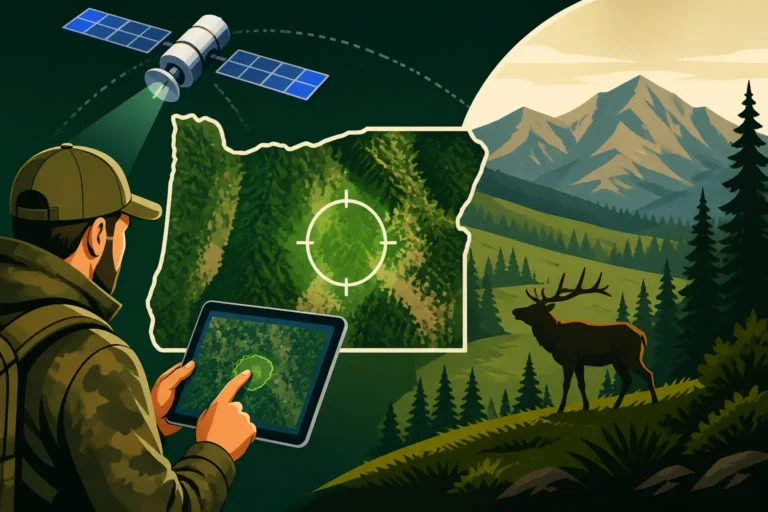
- Coordinating Movements: Use radios to coordinate movements with your hunting party across challenging terrain. For instance, if you're working a clearcut, one hunter might be on one side, another on the opposite ridge. A quick radio check can confirm positions or adjust routes without spooking game or getting lost. This can be especially useful when you're E-Scouting Oregon units with satellite imagery and planning intricate movements.
- Verifying Locations and Observations: "I'm at the big rock you marked on the map, overlooking the main draw." "Copy that, I'm just above the creek bottom." These exchanges, when done without reference to game, allow for precise navigation and shared understanding of your surroundings, which is vital whether you're finding mule deer in juniper draws or navigating dense timber.
- Complementing GPS: Your GPS or smartphone mapping app shows you where you are, but your radio connects you to where your partners are. Use them in tandem to maintain situational awareness for the entire group.
Ultimately, the goal is to use two-way radios as a force multiplier for safety and efficiency, never as a tool to undermine the ethics of the hunt.
| Radio Type | License Required | Typical Range (Miles, Line of Sight) | Best Use Case | Key Considerations |
|---|---|---|---|---|
| FRS (Family Radio Service) | No | 0.5 – 2 (up to 5 in open) | Small groups, short distances, light cover | Prone to interference, limited battery life |
| GMRS (General Mobile Radio Service) | Yes (FCC) | 2 – 8 (up to 20+ with repeaters) | Larger groups, varied terrain, longer distances | Requires license, higher cost |
| Satellite Communicator | No (Subscription) | Global | Emergency SOS, remote texting, GPS tracking | Subscription fees, not for real-time group chat |
| HAM (Amateur Radio) | Yes (FCC Exam) | Very long (local to intercontinental) | Advanced users, emergency comms, specialized tasks | Significant learning curve, not typical hunting use |
Disclaimer
The information provided in this guide is for general informational purposes only and does not constitute legal advice. Hunting regulations, including those pertaining to electronic devices, can change. Always consult the most current Oregon Department of Fish and Wildlife (ODFW) regulations pamphlet and relevant Oregon Administrative Rules before engaging in any hunting activities. Hunters are personally responsible for understanding and adhering to all applicable laws and regulations.