Blowdown and Access After a Windstorm
There's nothing quite as deflating as spending months meticulously planning your Oregon hunt, only to have a massive windstorm sweep through just days before opening day, turning your carefully scouted trails into an impassable jungle of downed timber. We've all been there, staring at a forest road completely choked with blowdown, wondering if our hunt is over before it even begins. This guide is here to walk you through how to deal with the aftermath of a windstorm, from assessing the damage to safely navigating affected areas and still finding success in the field.
Understanding the Immediate and Lingering Impact of Oregon Windstorms
Oregon, with its vast stretches of mature timber, particularly in the Coast Range and Cascades, is no stranger to powerful windstorms. These aren't just a nuisance; they can fundamentally alter the landscape and, consequently, our hunting plans. The immediate aftermath often brings a sense of chaos, but the lingering effects can reshape entire sections of prime hunting ground for years.
Immediate Blockages and Road Closures
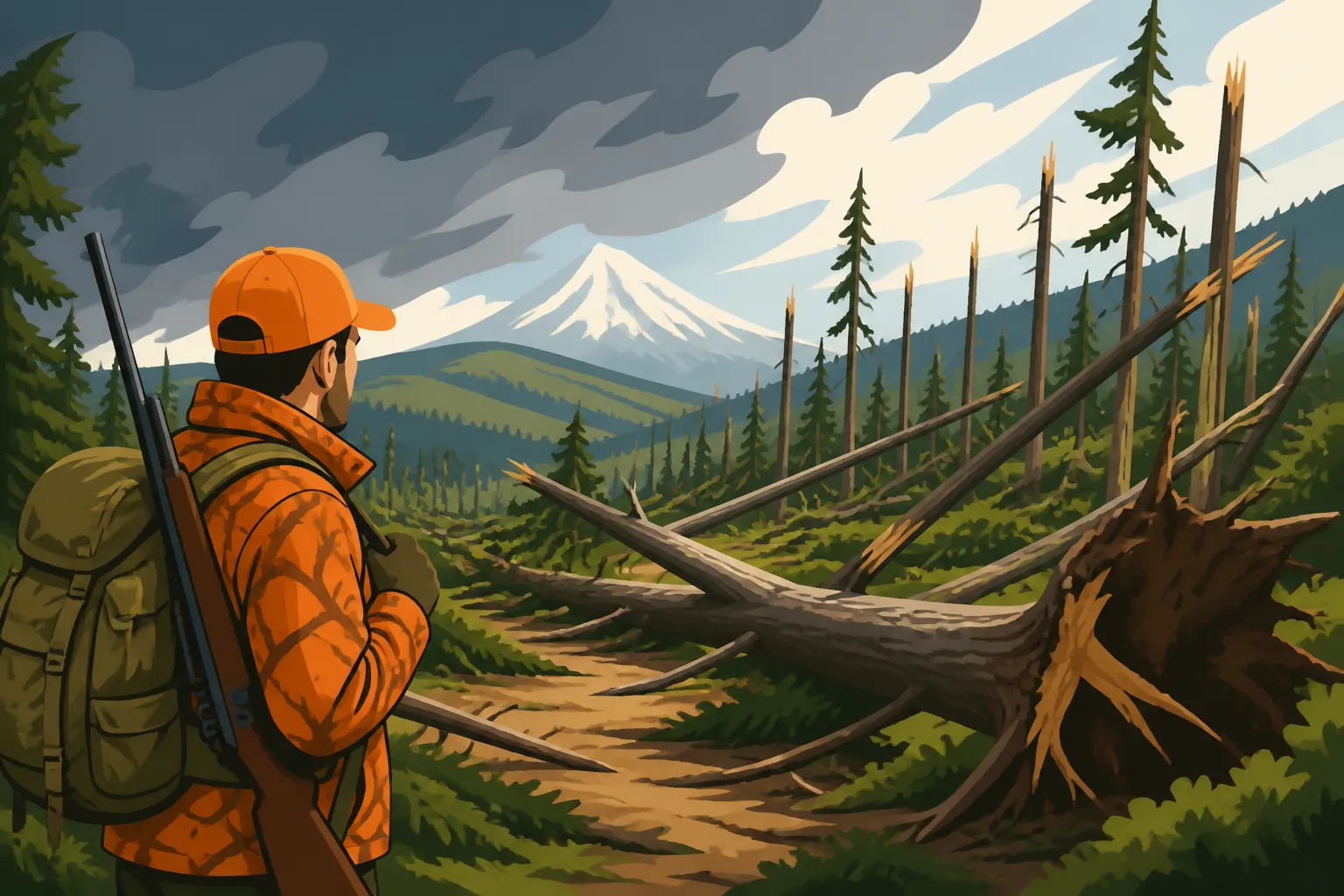
The most immediate and obvious impact of a windstorm is the sheer physical obstruction. Roads, especially those less traveled or within deeper timber units, can become entirely impassable. It's not just a few branches; we're talking about massive old-growth firs and cedars, some with root wads bigger than a pickup truck, ripped from the earth and lying across the only access point to your honey hole. This can shut down entire sections of public land or private timber company access, sometimes for weeks or even months if the damage is extensive and not a priority for clearing.
Just a few years back, a late-season storm rolled through the central Cascades, and what was normally a reliable two-track into some great elk country turned into a nightmare of crisscrossed logs. We'd planned to drive right to a particular ridge line to start our still-hunt, but we ended up hiking an extra three miles just to get to where we thought the road ended. Even if the main county roads are clear, those crucial forest service roads or private timber spurs that get you away from the crowds can be completely forgotten by road crews. You might find yourself staring at an unexpected gate, or worse, a section of road completely wiped out by a landslide triggered by heavy rains accompanying the wind. It pays to check local forest service alerts or ODFW announcements, though these can sometimes lag behind the actual conditions on the ground.
Long-Term Changes to Habitat and Travel Routes
Beyond the immediate headaches, windstorms bring significant, long-lasting changes to the habitat. When vast swathes of forest are blown down, it creates a mosaic of new cover, open areas, and incredibly difficult terrain. What was once dense, dark timber might now be a jumbled mess of broken tops and upturned root wads, offering new bedding areas for elk and deer. These new "blowdown jungles" can become sanctuaries for game, providing thick security cover that's almost impossible for hunters to penetrate silently.
Conversely, areas that were once thick might now have unexpected openings, creating new browse opportunities as sunlight hits the forest floor. Deer, especially blacktails in western Oregon, will often gravitate to these areas as new vegetation springs up in the aftermath. The game trails you've painstakingly mapped out over years can be obliterated, requiring you to literally forge new paths. This can be frustrating, but it also presents an opportunity. Animals are adaptable; they'll find new ways to move through the landscape, and a savvy hunter can learn to read these new patterns. Think of it as a natural reset button for a unit, forcing both you and the animals to adapt. This dynamic shift is similar in some ways to how Hunting a Recent Burn for Elk can change an area.
Scouting and Planning Post-Storm Access
Successfully hunting after a windstorm hinges on intelligent scouting and flexible planning. You can't just assume your old spots will be accessible or even viable. You need to gather intelligence and be prepared to adapt.
Utilizing Digital Tools for Pre-Trip Assessment
Before you even load up the truck, your smartphone or computer can be your best friend. Start by checking the websites of the U.S. Forest Service, Bureau of Land Management (BLM), and the Oregon Department of Forestry (ODF). Many of these agencies will post updates on road closures, especially in high-traffic recreation areas. While not always real-time, it's a good first step.
Next, dive into satellite imagery. Services like Google Earth or hunting-specific apps like GoHunt offer satellite views that can be surprisingly current. Look for areas where the canopy looks disturbed, large swaths of broken timber, or new gaps where trees once stood. Comparing recent imagery with older versions can show you the extent of the blowdown. Pay close attention to the roads you plan to use. Are they clearly visible? Are there any obvious blockages? Remember, satellite images aren't instantaneous, so a storm that just blew through might not be reflected yet. However, for a storm that happened weeks or months ago, these tools are invaluable for E-Scouting Oregon Units With Satellite Imagery. You can also utilize features like overlaying Oregon's Travel Management Areas Explained to understand which roads are typically open versus closed, helping you anticipate potential issues.
On-the-Ground Reconnaissance and Safety
There's no substitute for boots on the ground, especially after a major weather event. If possible, consider a quick pre-hunt trip to assess the actual conditions. Drive as far as you can, then walk in. This isn't just about finding open routes; it's about safety. Downed timber is inherently dangerous. There could be "widowmakers" – broken tops or branches precariously hung up in other trees – waiting to fall. Roots can be unstable, and walking on downed logs can be slippery and risky, especially if wet.
When you're doing this reconnaissance, take pictures, drop waypoints on your GPS or phone app, and make detailed notes. Identify alternative routes. Maybe the main road is blocked, but a lesser-used spur trail that was barely visible before is now your best bet, especially if it runs along a ridge where the wind impact might have been less severe. Always let someone know where you're going and when you expect to be back. A small hatchet or folding saw might be useful for clearing minor brush or smaller limbs, but never attempt to clear large, complex blowdown unless you are trained and equipped for it, and have permission if on private or managed lands. Often, the best course of action is to find a way around.
Navigating Blowdown in the Field
Once you're actually hunting in an area affected by blowdown, your tactics, gear, and movement will need a serious overhaul. It's a completely different game than walking through open timber or clearcuts.
Equipment and Techniques for Traversing Downed Timber
Moving through blowdown is exhausting and noisy. Your typical silent stalk becomes a series of careful, deliberate steps, often climbing over, under, or around massive obstacles. Good footwear is non-negotiable. You'll want sturdy, high-ankle boots with excellent traction, like those recommended for Boots for Wet Coastal Hunting, because you'll be negotiating slippery logs and uneven terrain constantly. Trekking poles can provide much-needed stability, helping you maintain balance and test for unstable footing.
Forget about speed. Your movement through blowdown needs to be agonizingly slow and methodical. Each step should be planned. Look for natural gaps, deer and elk trails that might have been re-established, or paths of least resistance. Sometimes, it's easier to climb a few feet up a ridge to bypass a particularly dense section of downed timber. Other times, you might find yourself crawling. Think like a cat, using your hands and knees. This is also where a good pack frame comes in handy, as you might need to carry heavier loads for longer distances if vehicle access is limited. Consider the principles of Pack Frame Load Weight for One Hunter if you're venturing deep.
Here's a quick comparison of terrain challenges:
| Terrain Type | Pre-Storm Forest Trail | Light Blowdown Section | Heavy Blowdown Jungle |
|---|---|---|---|
| Visibility | Moderate to Good | Intermittent, broken | Poor, obstructed by logs |
| Sound | Quiet, soft steps possible | Cracking twigs, shuffling | Loud, unavoidable noise |
| Effort | Low to Moderate | Moderate to High | Very High, physically taxing |
| Speed | Fast Paced | Slow to Moderate | Extremely Slow, stop-and-go |
| Navigation | Clear trails | Deviations, minor detours | New routes needed, disorienting |
| Game Detection | Visual, auditory | Primarily auditory | Auditory, close range visual |
Altered Animal Movement and Hunting Strategies
Animals, especially elk and deer, are masters of adapting to their environment. Blowdown areas can become both a refuge and a barrier for them. Initially, the chaos might scatter them, but they'll quickly learn to use the new cover to their advantage. The dense tangles provide incredible security from predators and hunters alike. You'll often find them bedding in the blowdown, particularly on the lee side of ridges where the wind's initial impact was severe.
Your hunting strategy needs to change. Still-hunting becomes incredibly difficult due to the noise, so you might need to shift to more ambush-style tactics. Find the edges of the heaviest blowdown, especially where it transitions into more open timber or clearcuts, and look for new game trails that animals are establishing around the worst of it. Funnels created by the downed timber can be prime ambush points. Calling strategies might also need adjustment; you might need to call more aggressively to penetrate the sound-muffling effect of the timber, or position yourself more strategically to get a shot if an animal responds. Understanding how game moves through these Oregon's Wildlife Management Units and New Hunt Areas after a landscape-altering event is crucial.
Legal and Ethical Considerations After a Windstorm
The urge to clear a path or make things easier can be strong, but it's vital to know the rules and respect the land, especially when dealing with such widespread natural disturbance.
Understanding Forest Service and ODFW Regulations
On public lands managed by the Forest Service or BLM, you generally cannot use a chainsaw to clear roads without a specific permit. Even a handsaw might be restricted depending on the area and the specific closure orders in place. The primary goal of these agencies after a major event is safety and forest recovery, not necessarily immediate hunter access. Always check with the local ranger district before attempting any significant clearing. Unauthorized clearing can result in fines or penalties.
Also, be mindful of any emergency closures. Sometimes, particularly dangerous areas (like those with extreme "widowmaker" potential or active landslides) might be closed to all public entry for safety reasons. You need to respect these closures for your own safety and to avoid legal trouble. These are often posted online, similar to how agencies update Checking Oregon Fire Closures Before the Season.
Respecting Private Timber Lands and Restoration Efforts
Oregon has a patchwork of private industrial timberlands, many of which allow public access under certain conditions or through permit systems. After a windstorm, these companies face enormous challenges in salvaging timber and reforesting damaged areas. Their priorities will be safety for their crews, timber salvage, and reforestation, which means access might be severely restricted or altered.
If you usually hunt on private timber land, assume access rules have changed. Check the specific timber company's website (e.g., Weyerhaeuser, Hancock) for updated access maps, gate closures, and permit requirements. They might implement new closures or even revoke existing permits for safety reasons. Trying to push through an area that a timber company is actively clearing or salvaging is not only dangerous but can jeopardize future public access to that land. Remember, their primary business is timber, and severe blowdown is a massive economic hit. Respect their efforts, and understand that their crews might be working in dangerous conditions to clean up the mess. For more details on these access programs, refer to information on Timber Company Access Fees and Gates in Oregon.
It's a tough pill to swallow when a favorite hunting spot is laid waste by a windstorm, but with careful planning, digital scouting, safe navigation, and a respectful attitude toward the land and those managing it, you can still find opportunities. Sometimes, the silver lining of such an event is discovering new, untamed corners of the forest that offer unique and challenging hunting experiences.
Disclaimer
The information provided in this guide is for general informational purposes only and does not constitute legal advice. Hunting regulations, access rules, and safety protocols can change rapidly. Always consult the most current Oregon Department of Fish and Wildlife (ODFW) regulations, U.S. Forest Service, BLM, and private timber company rules and alerts before planning or undertaking any hunting activity. Safety in the field is paramount, and it is the individual hunter's responsibility to understand and comply with all applicable laws and regulations.