Rattling for Blacktail Bucks
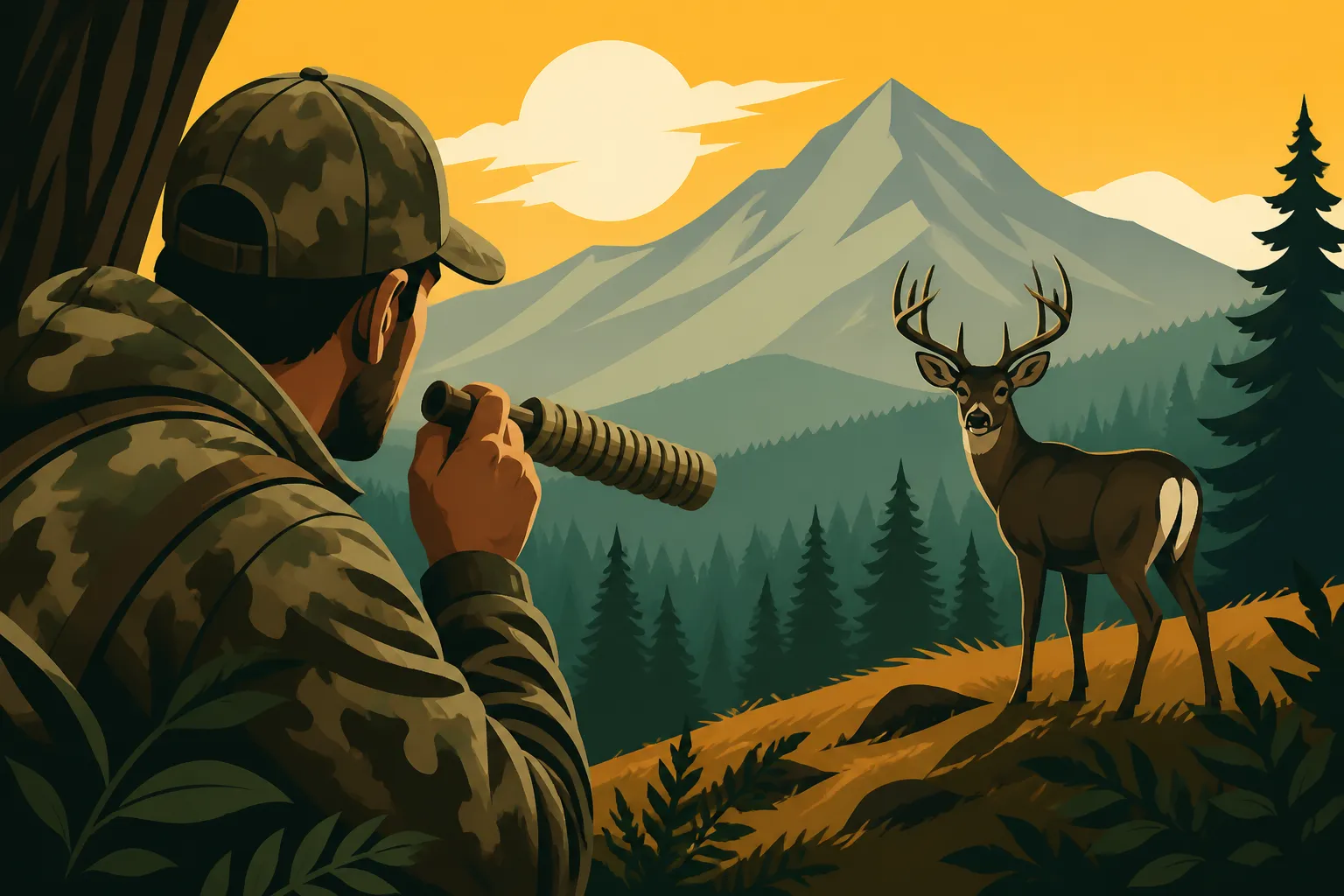
The distinct challenge of hunting blacktail deer, particularly when they seem to vanish into the dense Western Oregon timber, often leaves hunters feeling frustrated and empty-handed. But there's a timeless tactic, especially effective as the rut approaches, that can turn a quiet morning into an unforgettable encounter: rattling. This guide dives deep into why rattling works for these elusive bucks and how you can master the technique to bring them into range.
Understanding the Blacktail Rut and Why Rattling Works
Blacktail deer are notoriously shy and masters of camouflage, making them incredibly difficult to consistently pattern. However, once the pre-rut and rut phases kick in, their natural instincts begin to override some of that inherent caution. Bucks become more aggressive, more territorial, and more willing to investigate disturbances that might signal a rival or a receptive doe. This shift in behavior is precisely what rattling exploits, turning their own biology against them.
When to Rattle: Timing is Everything
Timing is absolutely paramount when it comes to rattling for blacktail bucks. While you can try it outside the rut, your chances of success are dramatically lower. The sweet spot for blacktail rattling typically aligns with the pre-rut and the peak rut periods. In many parts of Western Oregon, this usually means late October through mid-November, though it can vary slightly by elevation and specific region. It's during this window that bucks are actively seeking does and are more likely to respond to the sounds of a dominance display or a fight.
Early morning and late evening, when deer are most active, are prime rattling times. I've had good luck just after first light, when bucks are still on the move or perhaps bedding down after a night of cruising. A lot of hunters focus on the first hour or two after sunrise, and the last hour before sunset. During the midday lull, it's generally less effective, though a patient hunter might still get a curious buck to investigate, especially if there’s a cold snap that encourages more daytime movement. Knowing the precise Blacktail Rut Timing in Western Oregon for your specific unit can give you a significant advantage, so always check local resources or use tools like GoHunt's detailed maps and reports to fine-tune your approach. Don't waste your efforts when bucks are focused solely on feeding or recovering from the post-rut exhaustion.
Prime Blacktail Habitat for Rattling Success
Rattling isn't a magical charm that works everywhere. You need to be in the right kind of blacktail country for it to be effective. Think about where bucks naturally move, feed, and chase does. Areas with a good mix of dense cover and more open edges are ideal. Clearcuts, especially those that are a few years old and have some brushy regrowth, are fantastic spots. A Reading a Two-Year-Old Clearcut for Bucks strategy often involves looking for areas where the young growth provides both browse and bedding cover, creating natural travel corridors.
Focus on areas of thicker cover adjacent to feeding zones, or along benches and saddles that serve as natural travel routes between bedding and feeding. Bucks often use these areas to stage before entering open spaces. Creek bottoms and draws that offer concealment and funnel deer movement are also excellent choices. Look for fresh sign—rubs, scrapes, and tracks—which indicate current buck activity. If you're seeing a lot of sign, you know you're in an active area where bucks are already establishing dominance and seeking does, making it a prime candidate for rattling. Don't just set up in a random patch of woods; target specific terrain features that concentrate deer.
The Psychology Behind Rattling for Bucks
The reason rattling works so well, particularly during the rut, lies in a buck's primal instincts. When a buck hears the clash of antlers, it usually signifies one of two things: a fight between two rival bucks, or a buck attempting to breed a doe that might be resistant. Both scenarios are incredibly intriguing to a dominant or even a subordinate buck looking for an opportunity.
A buck hearing a rattling sequence might respond for several reasons. He might be a dominant buck coming to assert his territory and break up a fight. He could be a younger buck hoping to sneak in and pick up a doe while the bigger boys are distracted. Or, he might simply be a curious buck drawn by the commotion, trying to determine what's happening in his neighborhood. The key is that it taps into their competitive nature and their drive to breed. You're essentially creating an irresistible drama in the woods that they feel compelled to investigate. It's a calculated gamble, but when it pays off, it's one of the most exciting ways to hunt these tough Oregon deer.
Gear and Techniques for Effective Rattling
You don't need a massive amount of specialized gear to start rattling, but having the right tools and knowing how to use them makes all the difference. It's not just about clanking antlers together; there's an art to making it sound convincing enough to fool a wary blacktail.
Choosing the Right Rattling Antlers or Calls
When it comes to the actual "rattling" implement, you have a few options, each with its own pros and cons.
- Real Shed Antlers: Many seasoned hunters swear by real shed antlers. They offer the most authentic sound because they're made of bone, just like the real thing. You'll want to use a pair of comparable size to simulate bucks fighting – usually a couple of decent two or three-point sheds for blacktails. The downside is they can be bulky to carry, and you might ding up your nice sheds. They can also be a bit cumbersome to handle, especially if you need to quickly transition to shooting your rifle or bow. However, for sheer realism, they're hard to beat.
- Synthetic Rattling Bags/Horns: Brands like Rattle Bag, Rattling Forks, and Knight & Hale make synthetic rattling systems. These are much more compact and easier to carry. They often consist of small plastic or composite rods that mimic the sound of antlers clashing when rubbed or smacked together. Some are designed as "rattling bags" with pieces of plastic inside that create the sound when shaken. While they might not perfectly replicate the exact sound of bone-on-bone, they are often good enough, especially in areas with dense vegetation where sound doesn't travel far anyway. They’re also quiet to carry and quick to deploy, which is a huge advantage when a buck pops up unexpectedly.
- Grunt Tubes and Doe Bleats: While not rattling tools themselves, these are crucial companions. A grunt tube allows you to mimic a buck's grunt, a doe's bleat, or a fawn's distress call. Often, combining a rattling sequence with a few grunts can make the scenario even more believable. A doe bleat, in particular, can be a great follow-up if a buck hangs up just out of range, suggesting a receptive doe is involved in the "fight." You can learn more about effective calling in our guide to Cow Calls That Pull a Herd Bull Off His Cows – while it's for elk, the principles of using vocalizations to draw animals are similar.
Here’s a quick comparison of popular rattling options:
| Rattling Tool | Pros | Cons | Best Use Case |
|---|---|---|---|
| Real Shed Antlers | Most authentic sound, natural feel | Bulky, can be noisy when carried, risk of damage | High-realism, slower setup |
| Synthetic Rattling Horns | Compact, durable, quick deployment, quiet carry | Sound can be less natural, may lack bone-on-bone "clack" | Mobile hunting, quick responses |
| Rattling Bags | Easiest to carry, quiet, simple to operate | Least authentic sound, can sound muted | Novice users, very dense cover where sound is muffled |
| Grunt Tubes/Doe Bleats | Versatile, adds realism, good for follow-ups | Not a primary rattling tool, requires practice | Complementary to rattling, adding vocalizations |
Setting Up Your Rattling Sequence
Once you have your rattling tools, the next step is to understand how to use them effectively. It's not just about making noise; it's about telling a story.
- Find Your Spot and Set Up: Choose a location with good visibility, especially downwind, and an escape route if a buck charges in. You want to be hidden but able to see a buck approaching from a distance. Consider the wind direction carefully; you don't want your scent to blow to an incoming buck.
- Start Soft and Build Intensity: Begin with light ticks and rubs, mimicking two bucks sparring or sizing each other up. This is your "intro" to the "fight." Do this for 15-30 seconds.
- Intensify the Fight: After the initial sparring, gradually increase the intensity. Clash the antlers together harder, rake them through brush, and break small twigs. Imagine two bucks really going at it, pushing and shoving. This intense phase can last 30-60 seconds. You want to sound like a genuine struggle.
- Incorporate Grunts and Bleats: During or immediately after the intense rattling, add a few aggressive buck grunts. If you want to make it even more enticing, especially if you think a buck is nearby but hanging up, a soft doe bleat can suggest a receptive female is the prize of the fight.
- Listen and Wait: This is the most critical part. After your sequence, immediately go silent and remain absolutely still for at least 5 to 10 minutes, or even longer. Many bucks will approach cautiously, trying to pinpoint the source of the sound. They often circle downwind to scent-check the area, so be ready for them to appear from unexpected directions. Patience is a virtue here.
- Repeat (or Move On): If you don't get a response after 10-15 minutes, you can try another sequence. Vary the intensity and duration. If after two or three attempts in the same spot you're still not getting any action, it's probably time to move to a new location. Remember, a deer's ears are incredibly sensitive, and they'll hear your sequence from a fair distance.
Practicing your sequence at home, or even better, in the woods before opening day, will help you get a feel for the sounds and flow. Consider how different environmental factors might affect sound travel. In dense Still-Hunting Speed in Wet Brush conditions, sound might not carry as far, requiring you to be more mobile or rattle more frequently.
Positioning Yourself for a Shot
Getting a buck to come in is only half the battle; you need to be ready to seal the deal. Your setup is paramount. Always position yourself with good cover, but also with clear lanes of fire or arrow flight in multiple directions. Remember, a blacktail responding to rattling is often looking for a fight, and they might come in hot and fast, or they might approach with extreme caution, circling downwind.
If possible, set up with a natural barrier behind you, like a large tree or a ridge, to break up your silhouette. Have a comfortable sitting or kneeling position that allows you to easily raise your weapon without excessive movement. It's often helpful to have your rifle rested or your bow at the ready, especially during the silent waiting period. Use binoculars to scan the edges and thickets for any subtle movement – a flicking ear, a patch of dark hair, or the tell-tale white of a throat patch. Many bucks will pause just inside the cover, trying to get a visual before committing. Having an excellent set of Optics for Dark Timber Versus Open Sage is essential here. Be ready to shoot quickly and accurately; these opportunities can be fleeting. It’s also wise to consider the sun’s position, so it's not directly in your eyes when scanning.
Advanced Rattling Strategies and Common Mistakes
Rattling is more than just clanging antlers; it's a dynamic interaction with a smart, cautious animal. To truly master it, you need to understand how to read a buck's reactions and avoid common pitfalls.
Combining Rattling with Calling
While rattling provides the visual and auditory cue of a fight, adding vocalizations can elevate your realism significantly. Think of it as painting a more complete picture for the approaching buck.
- Dominant Buck Grunts: As mentioned, mixing in a few deep, guttural buck grunts right after a heavy rattling sequence suggests a victorious or aggressive buck. This can really challenge a nearby buck to come investigate.
- Doe Bleats: A subtle doe bleat, especially a "hot" estrous bleat, can be a game-changer. If a buck hears a fight, and then hears a receptive doe in the vicinity, his urgency to intervene or claim the prize dramatically increases. It makes the scenario of two bucks fighting over a doe far more convincing. You might even lead with a doe bleat to grab attention, then follow with soft rattling to hint at a developing situation.
- Fawn Distress Calls: Less common for rattling but still effective in certain situations, a fawn distress call can sometimes bring in a doe, which in turn can bring in a buck. It creates a different kind of curiosity and urgency.
The key is not to overdo it. A few well-placed grunts or bleats are more effective than a constant cacophony. Experiment with the timing and volume. Sometimes, a subtle approach after a loud crash is all it takes to tip a hesitant buck over the edge.
Reading a Buck's Reaction and Adjusting
A buck’s body language will tell you a lot about how he’s responding to your rattling. Being able to read these cues and adjust your strategy accordingly is a mark of an experienced rattled.
- Hesitation and Circling: If a buck comes in and hangs up, circling downwind, he's scent-checking. He wants to smell what he's hearing. In this situation, remain absolutely motionless. Any movement will bust you. If he gets your wind, he's gone.
- Approaching Slowly and Cautiously: A buck that moves slowly, head low, frequently stopping to scan, is wary. He's interested, but also on high alert. You might try a very soft, short rattling sequence or a soft grunt to pique his interest further, but don't overdo it.
- Charging In: Sometimes, especially a dominant buck, will come in fast and aggressively. Be ready! These opportunities are fleeting.
- Sticking Up: If a buck suddenly stops and looks directly in your direction with his ears swiveling, he's heard or seen something that's making him suspicious. Freeze immediately. Don't move a muscle until he relaxes or moves on. If he eventually turns to leave, a soft doe bleat might just turn him around for one last look.
- No Response: If after several minutes of silence you get no visual, try another, slightly different sequence. If still nothing, consider moving your setup. A good strategy on public land, especially in thicker areas, is to move a few hundred yards and try again, effectively Public Land Scouting in Oregon Before the Draw Results your way through promising terrain.
Remember, every buck is an individual, and every situation is different. Be flexible and adaptable, and let the buck's behavior guide your next move.
Avoiding Common Rattling Pitfalls
Even seasoned hunters can make mistakes when rattling. Being aware of these common errors can significantly increase your success rate.
- Rattling Too Loud or Too Often: You don't need to sound like two bulls crashing through a logging road. For blacktails, a realistic sparring match is usually more convincing. Over-rattling or rattling too loudly can actually spook cautious deer or make the sound seem unnatural. Start softer and build.
- Not Staying Still Enough: This is probably the biggest mistake. Once you finish your sequence, you must become a statue. Any fidgeting, adjusting your pack, or looking at your phone will be picked up by a buck’s sharp eyesight. Blacktails have incredible vision, especially for movement. Many bucks are busted because the hunter moved too soon after calling.
- Ignoring the Wind: A buck responding to rattling will almost always try to get downwind of the sound source to scent-check. If your wind is blowing directly towards the area you expect the buck to come from, he will bust you every time. Always set up with the wind in your favor, or at least crosswind. Use wind indicators and pay attention to shifts. Tools like GoHunt's mapping overlays are excellent for understanding wind direction relative to your position and potential approach corridors.
- Poor Visibility: Rattling in super-dense brush with no visibility is usually a wasted effort. You need to be able to see a buck approaching to react and get a shot. Choose spots that offer lanes of sight, even if it's just small windows.
- Lack of Patience: This technique requires serious patience. Bucks don't always come charging in immediately. They might take several minutes to circle, stop, and assess. Cutting your waiting period short is a common mistake that leads to missed opportunities. Give it 10-15 minutes of absolute stillness after each sequence.
- Unrealistic Sounds: Trying to imitate a giant Rocky Mountain elk fight when hunting small blacktails is going to sound off. Match the intensity and duration to the size of the deer you’re hunting. Blacktail bucks are smaller and their antlers generally make a less booming sound than their larger relatives.
By understanding the blacktail's instincts, refining your technique, and learning from these common errors, you'll be well on your way to bringing in that elusive Western Oregon buck. Good luck out there!
Disclaimer
Hunting is an inherently dangerous activity. This article provides general information and recommendations. Always consult the most current Oregon Department of Fish and Wildlife (ODFW) regulations, practice firearm and archery safety, and ensure you have the proper licenses and tags before hunting. Wildlife behavior can be unpredictable, and success is never guaranteed. Hunt ethically, responsibly, and be prepared for all conditions.