Edge Cover Blacktails Bed In
Finding a blacktail buck in the dense, often unforgiving terrain of Western Oregon can feel like searching for a ghost. These elusive deer have an uncanny ability to vanish into seemingly thin air, frustrating even the most seasoned hunters. This comprehensive guide will walk you through the nuanced world of blacktail deer and their preferred bedding areas within the critical "edge cover," helping you unravel the mystery of where these magnificent animals choose to hide.
The Allure and Elusiveness of Edge Cover
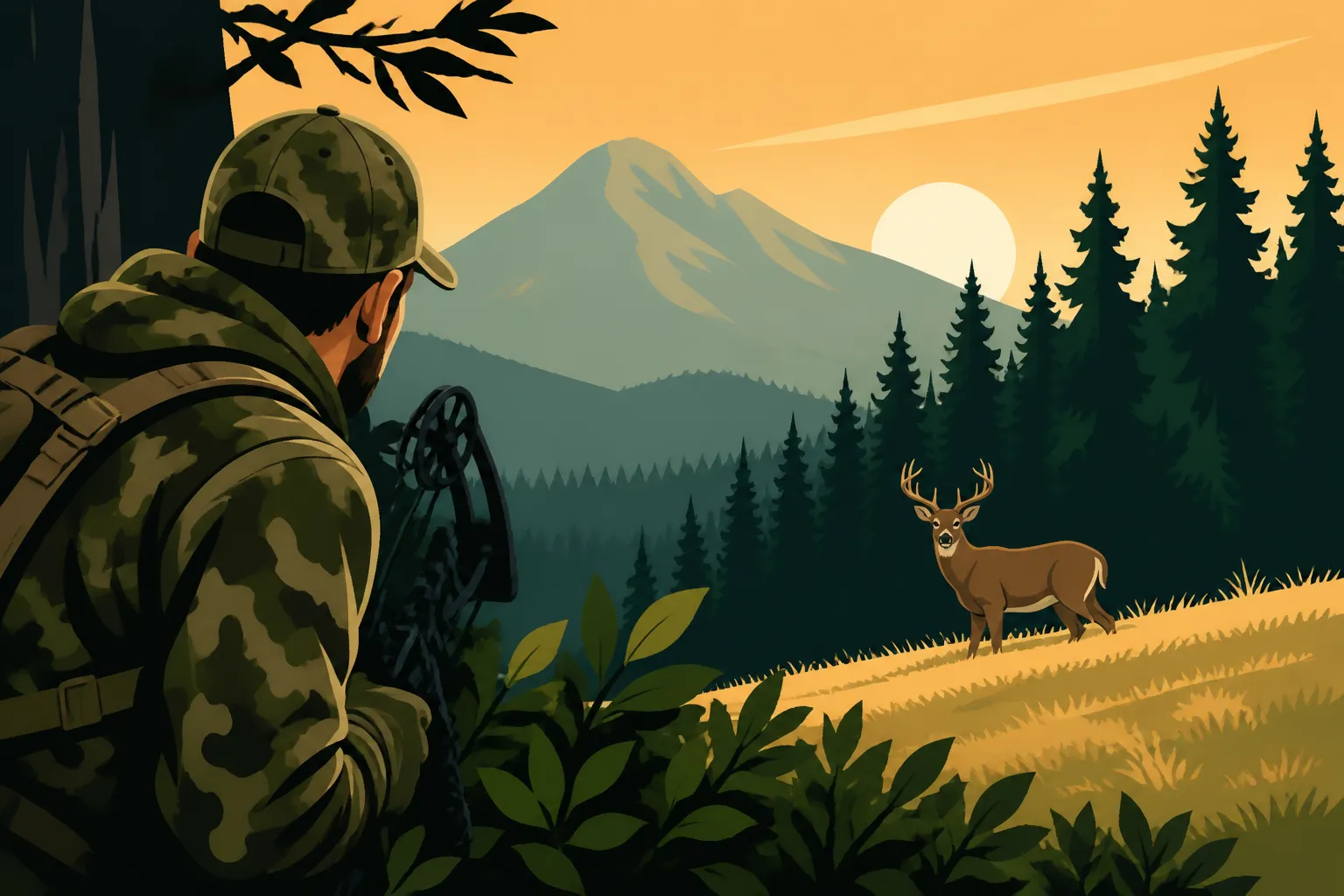
Blacktail deer are masters of concealment, and nowhere is this more evident than in their use of edge cover. Unlike their mule deer cousins who often favor more open country, or even the sprawling herds of Rocky Mountain elk, blacktails thrive in the transition zones, the places where one type of habitat abruptly meets another. This isn't just a random preference; it's a finely tuned survival strategy that allows them to remain hidden while still having immediate access to food and water. If you've ever walked through a clearcut boundary or a timber stand's fringe and felt like deer should be there but couldn't spot them, you were likely right on the money – they were just expertly tucked into that edge cover.
These edges can manifest in countless ways across Oregon's varied landscape. Think about the abrupt transition from a dense, mature timber stand to a recent clearcut, or the fringe where a brushy thicket meets an open grassy slope. It could be the border between a riparian zone and an upland forest, or even the often-overlooked junction of a logging road and a wall of young firs. These aren't just lines on a map; they are dynamic ecosystems where food, water, and security converge. The very difficulty in spotting deer in these areas is precisely why blacktails choose them – they offer unparalleled sanctuary from predators, including us.
What makes edge cover so appealing is its multi-layered protection. The dense vegetation provides visual concealment, breaking up a deer's outline and allowing it to melt into the shadows. The varying heights of plants, from low-lying ferns and salal to taller huckleberry and young trees, create a canopy that deflects scent and muffles sound. Furthermore, these transitional areas often provide diverse food sources. Deer can browse on new growth in the open section, then immediately retreat into the security of the dense cover without expending much energy or exposing themselves unduly. It’s the ultimate hide-and-seek game, and the blacktail deer are absolute pros.
Why Blacktails Choose These Specific Hiding Spots
Blacktail deer aren't just randomly picking a spot to lay down; their choice of bedding in edge cover is driven by a deep-seated instinct for survival, coupled with the practical needs of their daily lives. Understanding these motivations is key to unlocking their patterns and, ultimately, increasing your chances of success in the field.
Security from Predators
The primary driver for bedding in dense edge cover is security. Blacktails face predation from cougars, bears, and, of course, human hunters. Thick cover provides multiple layers of defense. First and foremost, it offers visual camouflage. A blacktail’s muted brown and grey coat, combined with the broken light and shadow of dense brush, makes them incredibly difficult to spot, even at close range. They’ll often bed down with their back to the thickest part of the cover, allowing them to watch their backtrail.
Beyond visual concealment, the physical density of the cover acts as a barrier. Pushing through tangled salal, sword fern, and blackberry thickets is noisy and slow, alerting the deer to an approaching threat long before it's visible. This gives them crucial seconds to quietly slip away or hunker down, effectively vanishing. This is especially true in areas with higher hunting pressure, where deer become incredibly adept at using even the slightest change in terrain or vegetation to their advantage. They learn quickly that open areas mean exposure, and dense edges mean safety.
Access to Food and Water
While security is paramount, deer also need easy access to food and water. Edge cover often provides the best of both worlds. Imagine a clearcut that's a few years old: the sunshine reaching the forest floor encourages a flush of new growth – clover, huckleberry, fireweed, and various forbs that deer love to browse. Right next to this buffet is the impenetrable wall of mature timber or a younger, dense reprod stand. A blacktail can step out, feed for a while, and then with just a few steps, be back in the protective embrace of the thick cover.
Similarly, these edges frequently run along draws or riparian areas that hold consistent water sources. A deer can bed on a ridge or bench overlooking a creek, knowing that a drink is just a short, safe descent away. The energy conservation this strategy provides is significant, especially during colder months or the demanding rut season. Learning to identify these food-water-cover interfaces is a crucial skill for any hunter. Using mapping tools like GoHunt can help you pinpoint these converging features, from old clearcuts to riparian corridors, allowing you to scout smarter from home.
Thermoregulation and Comfort
Don't underestimate the role of comfort and thermoregulation in a blacktail's bedding choices. On a hot, sunny day, dense canopy cover provides shade and cooler temperatures, especially along north-facing slopes or in deep draws. Conversely, on a cold, windy, or rainy day, that same thick cover offers a break from the elements. The intertwining branches and dense understory act as a natural windbreak and can significantly reduce exposure to driving rain or snow.
Deer will adjust their bedding sites throughout the day and with changing weather patterns. On a crisp morning, they might bask in the early sun on an east-facing slope with light cover, but as the day warms, they'll move to cooler, denser shade. During a blustery storm, they'll burrow deep into the most sheltered pockets they can find, often on leeward slopes or in deep draws. Paying attention to weather patterns, elevation, and aspect can help you predict exactly where deer will seek refuge, allowing you to fine-tune your approach. For more on navigating challenging conditions, check out "Hunting Blacktails in Fog and Drizzle".
Dissecting the Anatomy of a Blacktail Bed
Understanding what makes a good blacktail bed means getting into the specifics of the actual vegetation and terrain features. It's not just "thick stuff"; there are nuances that dictate precisely where a deer will choose to lie down.
Key Vegetation Types for Blacktail Beds
In Western Oregon, certain plant communities are practically magnets for blacktail bedding. Salal is a ubiquitous understory plant, often forming dense, chest-high mats. Its waxy leaves and sturdy stems create excellent visual cover. Sword fern similarly creates dense, green curtains that deer readily disappear into. Combine these with huckleberry bushes, especially in slightly older clearcuts or openings, and you have a perfect recipe for concealment and a readily available browse.
Further into the timber, or in regenerating stands, you’ll find young Douglas firs and western hemlocks growing so thickly that their lower branches interlock, forming an almost impenetrable wall. These "dog hair" thickets are incredibly difficult for a human to navigate quietly, making them prime bedding locations. Deer will often create small tunnels through these thickets, allowing them to move silently and unseen. Even common blackberry patches, while formidable for hunters, offer fantastic thorny protection and cover for a bedded deer. They provide the ultimate "don't bother me" sign for predators.
Terrain Features Enhancing Edge Cover Beds
It's not just the plants; the terrain itself plays a massive role in creating ideal bedding scenarios within edge cover. Blacktails are masters of using topography to their advantage, often seeking out subtle features that provide an elevated view or increased protection.
Ridges and benches overlooking draws or feeding areas are classic spots. A deer can bed just over the lip of a ridge, hidden from view but with the wind in its face, allowing it to detect anything approaching from below or ahead. The slight elevation provides a thermal advantage and a better vantage point without exposing the deer. Similarly, small knolls or humps within a larger patch of cover can provide a 360-degree advantage, albeit with more visual exposure.
Draws and saddles are also critical. A deep draw lined with thick timber or brush provides a secluded, sheltered travel corridor, and deer will often bed on the sides of these draws, especially if they are well-vegetated. Saddles – low points in a ridge – act as natural travel funnels, and deer will often bed nearby, giving them easy access to both sides of the ridge. Knowing how to identify these features, especially when E-Scouting Oregon Units With Satellite Imagery, can save you countless hours of unproductive hiking.
Here's a quick look at common edge cover types and their appeal:
| Edge Cover Type | Typical Location | Blacktail Appeal | Hunting Considerations |
|---|---|---|---|
| Clearcut-Timber Fringe | Junction of young growth & mature trees | Excellent food access with immediate, dense security; sun for browsing. | Approach into the wind; be mindful of steep slopes. |
| Riparian Corridor | Along streams, rivers, wet draws | Water access; lush browse; dense, often deciduous cover for thermal regulation. | Can be very noisy due to water flow; often very thick. |
| Ridge Line Transition | Crest of a ridge meeting a slope | Vantage point; wind detection; good escape routes on both sides. | Approach from below with caution; use wind to your advantage. |
| Old Roadbed/Trail Edge | Abandoned logging roads, game trails | Easy travel for deer; linear cover offers distinct bedding lines. | Hunters often use these roads too; deer are wary here. |
| Steep Slope/Bench | Flat spots on steep hillsides | Security through difficult access; good thermal cover. | Physically demanding; watch for rolling rocks/debris. |
Effective Strategies for Hunting Edge Cover Blacktails
Now that we understand why blacktails love edge cover, let's talk about how to hunt them successfully. It requires a blend of patience, stealth, and a deep respect for the deer's senses.
The Art of Still-Hunting Edges
Still-hunting is arguably the most effective method for blacktails in dense edge cover. This isn't about covering ground quickly; it's about moving at a snail's pace, pausing frequently, and using your optics to pick apart every shadow and branch. Think of it as hunting at 0.5 miles per hour, or even slower. Your goal is to see the deer before it sees you. For more detailed advice, read about "Still-Hunting Speed in Wet Brush".
When you're working an edge, whether it's the boundary of a clearcut or a brushy draw, focus on moving into the wind or with a crosswind. This helps mask your scent. Take two or three steps, then stop for several minutes, scanning thoroughly. Look for horizontal lines (a deer's back), contrasting colors (patches of fur against green foliage), or the flicker of an ear. Use binoculars, even in dense cover, to examine every suspicious patch of vegetation. Sometimes, all you'll see is a small patch of hide or an antler tine. Patience is your greatest virtue here; many blacktails are busted by hunters moving too quickly.
Using Terrain and Wind to Your Advantage
The wind is your compass and your greatest ally when hunting blacktails. They rely heavily on their sense of smell, and you simply cannot consistently get close to them if your scent is blowing directly to their bedding area. Always try to approach from downwind, or at least with a good crosswind that carries your scent away from where you expect deer to be.
Consider the topography. If you're hunting a ridge that slopes down into a draw, and the wind is blowing uphill, deer bedded on the top of the ridge will likely be facing downhill, relying on their nose to detect anything coming from behind. In this scenario, approaching from the side or slightly below the ridge, working into the wind, would be a more strategic move. Similarly, if you're working a steep hillside, the wind can swirl, so pay close attention to thermal drafts – air currents that move uphill in the morning as the ground warms and downhill in the evening as it cools. Integrating these factors into your scouting with tools like GoHunt, which often have wind and topography overlays, can significantly improve your planning.
Calling and Post-Rain Tactics
While blacktails aren't known for being as responsive to calling as, say, Rocky Mountain elk, subtle calls can sometimes coax a curious buck out of dense cover, especially during the rut. Soft doe bleats or fawn bleats can pique their interest without alarming them. When Blacktail Rut Timing in Western Oregon is in full swing, rattling antlers can also work, but be prepared for a quick, close encounter if it does. The key is to be extremely subtle and patient, setting up where you have good shooting lanes and can remain hidden.
Hunting right after a good rain is another excellent tactic for edge cover blacktails. The wet ground dampens noise, making your footsteps quieter, and the deer might be a little more active as the forest comes alive with moisture. The rain also washes scent, giving you a slight advantage. Blacktails are often more comfortable moving around in damp conditions, and the fresh greenery can encourage more active browsing along those very edges.
Common Pitfalls and How to Avoid Them
Even with the best intentions, hunting blacktails in edge cover can be incredibly frustrating. It's easy to make mistakes that quickly ruin your hunt.
Moving Too Fast and Not Stopping Enough
This is the number one killer of blacktail hunts. We're often conditioned to cover ground, to "find" the deer, but with blacktails in thick cover, they are often finding you first. Resist the urge to march through the woods. Embrace the slow pace. Take a few steps, then stop for at least two to three minutes, scanning every visible inch of cover, then scan again. It's amazing what you'll see on the second or third look once your eyes adjust and your brain processes the patterns.
Think about the environment: the rustling leaves, the shifting shadows, the endless tangle of branches. It takes time for your eyes to discern the subtle irregularities that indicate a bedded deer. If you're constantly moving, you'll never give yourself that crucial time to detect movement or a hidden form. Many times, the deer is watching you long before you ever know it's there.
Underestimating Blacktail Senses
Blacktails have an incredible sense of smell, sharp eyesight, and sensitive hearing. You cannot afford to be sloppy. Pay attention to your scent: wear clean hunting clothes, consider scent elimination sprays, and most importantly, always hunt with the wind in your favor. Their eyesight is geared toward detecting movement, so minimize sudden motions. When you pause, do so smoothly, melting into the background.
Their hearing, especially in dense timber, is remarkable. Twigs snapping underfoot or the scraping of your backpack against brush can send them bolting. If you have to push through thickets, do so slowly and deliberately, trying to mimic natural forest sounds. This isn't always possible, but the more conscious you are of your noise, the better. Consider a good pair of waterproof boots that allow for quiet movement.
Not Using Optics Effectively in Dense Cover
It might seem counterintuitive to use binoculars in super thick cover, but it's essential. Instead of just scanning with your naked eye, which tends to focus on broad shapes, use your binoculars to systematically pick apart the cover. Look for anything that doesn't quite fit: a patch of brown or grey fur, a horizontal line in a vertical world, a shiny black eye, or the dark curve of an antler.
Good optics for dark timber are crucial. Look for binoculars or a scope with excellent light-gathering capabilities to help pierce the shadows. Focus on the transition zones, the slight openings, or the edges where sunlight might highlight a hidden form. Even a small patch of moss or a shadow can sometimes mimic a deer, and your optics will help you confirm or deny the presence of an animal. This meticulous approach is how you'll spot the deer that others walk right past. When scouting, remember to look for Edge Cover Blacktails Bed In and keep an eye out for any sign of recent activity.
Ignoring Local Knowledge and Current Conditions
Every piece of blacktail country is unique, and conditions change annually. What worked last year might not work this year. Deer shift their patterns based on food availability, water sources, hunting pressure, and weather. Don't be afraid to adapt. Talk to local hunters, check recent Oregon Department of Fish and Wildlife (ODFW) reports if available, and use current information to inform your hunt.
For example, a banner huckleberry year might mean deer are feeding more heavily in specific areas, while a dry summer might push them closer to reliable water sources in deep draws. If you see signs of heavy hunting pressure, expect the deer to be even more tucked away in the densest, nastiest cover they can find. Using resources like ODFW's online mapping tools or premium scouting apps like GoHunt can provide invaluable, up-to-date intel on terrain, historical animal locations, and public land boundaries, helping you make informed decisions about where to focus your efforts for Blacktail Deer Hunting in Oregon's Coastal Clearcuts.
Disclaimer
Hunting is an inherently dangerous activity. This guide provides general information and recommendations for hunting blacktail deer in Oregon. Always prioritize safety, adhere to all Oregon Department of Fish and Wildlife regulations, and obtain proper licenses and tags. Conditions in the field can change rapidly, and hunters are responsible for their own safety and decisions.