Dispersed Camping in Oregon During Hunting Season
There's nothing quite like the crisp air of an Oregon autumn, the promise of a bugling bull elk or a cagey blacktail buck, and the sheer freedom of a hunting camp far from the crowds. But finding that perfect, secluded spot to pitch your tent or park your rig, especially when the forest roads are buzzing with other hunters, can feel like trying to draw a tag in a low-odds unit. This guide is here to untangle the complexities of dispersed camping in Oregon during hunting season, helping you find those hidden gems and set up a successful, responsible camp.
Understanding Dispersed Camping in Oregon: The Basics
Dispersed camping, often called boondocking or dry camping, is essentially camping outside of a designated campground. There are no picnic tables, no fire rings, no vault toilets, and certainly no hookups. It's just you, your gear, and the wild. For many Oregon hunters, this is the ultimate way to experience the hunt, offering unparalleled access to prime hunting areas and a level of solitude that developed campgrounds simply can't provide. However, with that freedom comes responsibility and a strict adherence to rules designed to protect our precious public lands.
The primary difference from a formal campground is the lack of amenities and oversight. You are responsible for everything: bringing in all your water, packing out all your trash, and managing your waste. This autonomy is what draws so many hunters to it, allowing them to set up their base camp right on the edge of a promising basin or deep in the timber where the game lives. It's about immersion, not convenience.
Rules for dispersed camping can vary slightly depending on the land management agency. Generally, you're expected to camp at least 200 feet from water sources, roads, and developed trails. There's often a stay limit, typically 14 days within a 30-day period on most federal lands, to prevent long-term residency and ensure fair use for everyone. Understanding these basic parameters is your first step to a hassle-free experience. Always check with the local Forest Service or BLM office for specific regulations in the area you plan to hunt, as some areas might have temporary restrictions due to fire danger or wildlife migration.
Where to Pitch Your Hunting Camp: Navigating Oregon's Public Lands
Oregon boasts an incredible amount of public land, primarily managed by the U.S. Forest Service (USFS) and the Bureau of Land Management (BLM), which are your go-to options for dispersed camping. State forests and wildlife areas also exist, but their dispersed camping rules can be more restrictive or non-existent, so always verify beforehand. Finding the right spot involves knowing the lay of the land, understanding regulations, and often, some good old-fashioned E-scouting.
National Forests
Across Oregon, you'll find numerous National Forests offering vast opportunities for dispersed camping. The Wallowa-Whitman National Forest, Umatilla National Forest, and Malheur National Forest in Eastern Oregon, for example, cover immense areas, providing access to Rocky Mountain elk and mule deer country. On the western side, the Willamette National Forest, Umpqua National Forest, and Siuslaw National Forest offer dense timber ideal for Roosevelt elk and blacktail deer. These forests are usually crisscrossed by a network of forest roads, ranging from well-maintained gravel to barely-there two-tracks, where you can often find suitable pull-offs or clearings to set up camp.
When looking for a spot in a National Forest, pay attention to signs. Some areas might have specific "no camping" directives, especially near popular trailheads, wilderness boundaries, or sensitive wildlife habitats. You'll also encounter Travel Management Areas (TMAs), where certain roads are closed seasonally or permanently to motorized vehicles. While you might not be able to drive your rig down these closed roads, they often offer fantastic walk-in camping opportunities deeper in the woods, giving you even more solitude. Remember, always leave gates and fences as you found them. Checking Oregon Road Closures Before You Go is a critical step in your pre-hunt planning, preventing frustration when you arrive.
Bureau of Land Management (BLM) Lands
BLM lands in Oregon, particularly in the eastern and southern parts of the state, often present a different landscape, characterized by sagebrush flats, juniper woodlands, and rimrock canyons. Units like those near Bend and La Grande offer a mix of terrain. These areas can be excellent for mule deer, antelope, and chukar. Dispersed camping on BLM land generally follows similar principles to National Forests: find a flat spot, away from water and roads, and minimize your impact.
What you might find on BLM lands compared to National Forests are fewer developed roads, but more wide-open spaces. This can make vehicle access a bit more challenging in some spots, requiring high-clearance 4×4 vehicles, but it also means fewer people. Make sure you understand Motorized Travel Rules on Oregon BLM Land, as unauthorized off-road travel can quickly lead to resource damage and hefty fines. Look for existing clearings or old two-track spurs to minimize new impacts. Apps like onX Hunt are invaluable here, clearly showing BLM boundaries and road networks, helping you distinguish legal access from private land or restricted areas.
State Forests and Other Public Lands
Oregon also has State Forests, such as the Tillamook State Forest or Santiam State Forest, and various Wildlife Areas. While these areas can offer excellent hunting, their dispersed camping policies are often more stringent. Some State Forests might have designated primitive campsites rather than truly dispersed options, or they might require permits. Wildlife Areas, managed by the Oregon Department of Fish and Wildlife (ODFW), often have even stricter rules, sometimes prohibiting camping entirely or restricting it to specific, signed areas during hunting seasons to manage pressure and protect wildlife. Always consult the specific agency's website or call their local office well in advance if you plan to camp on these lands.
Setting Up for Success: Essential Tips for Your Dispersed Hunting Camp
Dispersed camping isn't just about finding a spot; it's about preparing for self-sufficiency and ensuring your presence leaves no trace. This becomes even more critical during hunting season when you might be setting up camp for several days or even a multi-day backpack hunt in Oregon's roadless country.
Leave No Trace Principles
The cornerstone of dispersed camping is "Leave No Trace." This means packing out everything you pack in, including all trash and food scraps. When it comes to human waste, you'll need to dig a cathole at least 6-8 inches deep and 200 feet from water sources, trails, and campsites. If you're camping with a larger group or for an extended period, consider investing in a portable waste system. Gray water from washing dishes should be strained to remove food particles and dispersed widely, again, away from water sources.
Fire is another significant concern, especially in dry Oregon summers and falls. Always check fire restrictions before you go. If fires are allowed, use an existing fire ring if possible, or build a small one in a safe, cleared area. Make sure your fire is dead out and cold to the touch before leaving it unattended, even for a short hunt. The last thing any hunter wants is to be responsible for a wildfire that shuts down hunting access for everyone.
Water, Food, and Bear Safety
Water is heavy, and unless you're near a reliable, filterable source, you'll need to pack in all the water you'll use for drinking, cooking, and cleaning. For longer trips, caching water safely can be an option, but ensure it's secure from wildlife. First Aid Kit Items for a Remote Hunt should also be high on your packing list, as help is often a long way off.
Food storage is paramount, especially in bear country. Oregon is home to a healthy black bear population. Even if you don't see them, they're out there, and they're attracted to human food. All food, trash, and scented items (like toiletries) should be stored in bear-resistant containers, hung from a tree, or secured in a hard-sided vehicle or trailer. Never store food in your tent. Being aware of Bear Hunting in Oregon Without Bait or Hounds means understanding that bears are constantly foraging, and your camp could be an easy target if not properly secured.
Camp Setup and Comfort
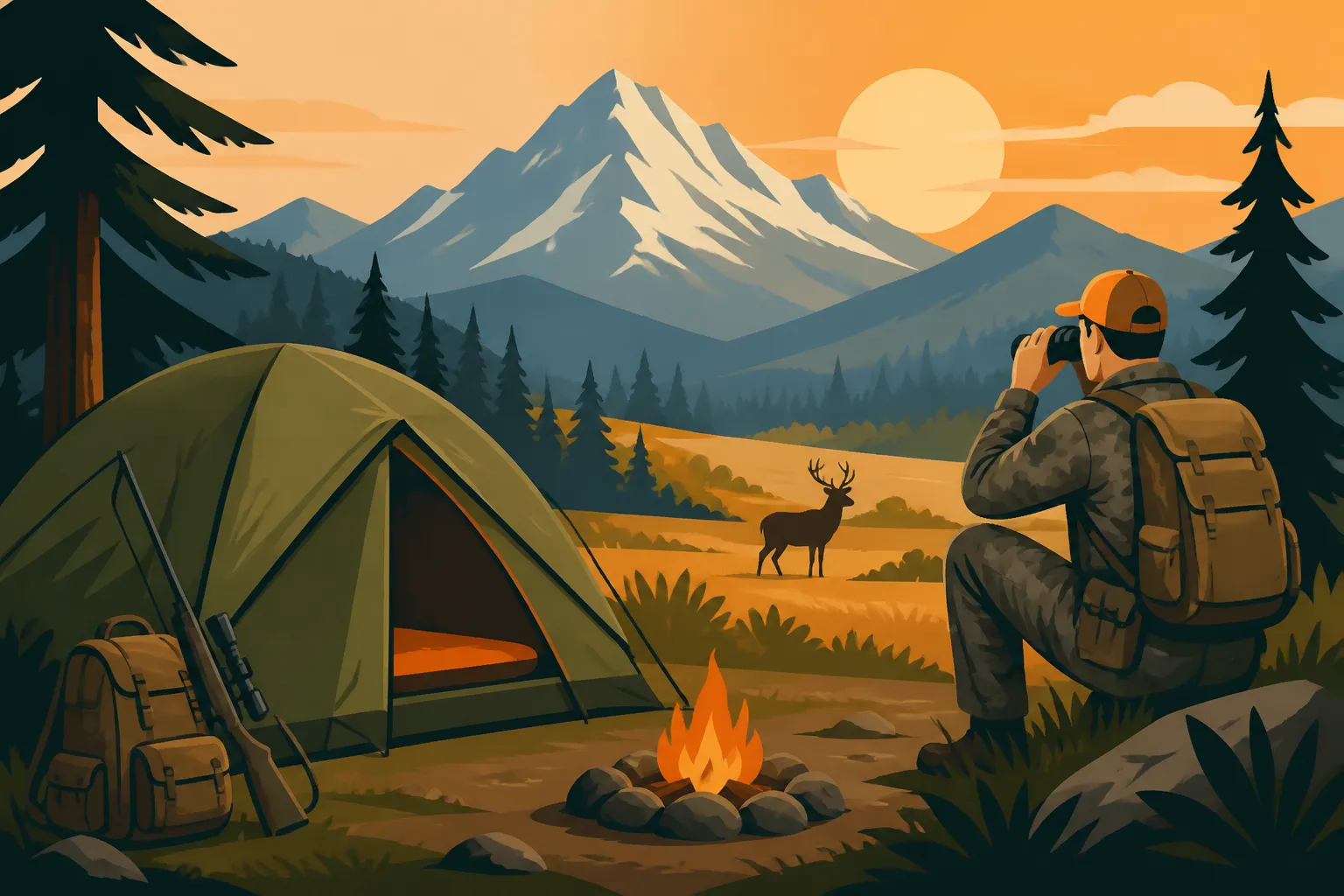
Consider your tent placement carefully. Look for natural shelter from wind or rain, and ensure good drainage if a storm rolls in. In Western Oregon's wet coastal timber, finding truly dry ground can be a challenge, so a good ground tarp and Rain Gear That Actually Stays Dry are non-negotiable. If you're using a wall tent and stove for a colder Eastern Oregon hunt, ensure proper ventilation and clear any flammables from around the stovepipe. Your choice of camp type, whether it's a backpack tent, a larger canvas wall tent, or an RV, will dictate how much gear you can bring and how deep into the backcountry you can go. Remember, Oregon Wilderness Rules That Ban Motorized Carts means if you're truly deep, it's all on your back.
| Public Land Type | Typical Vehicle Access | Dispersed Camping Rules | Common Game Species | Key Considerations |
|---|---|---|---|---|
| National Forests | Varied (gravel to 4×4) | Generally allowed (200ft rule) | Elk, Deer, Bear, Cougar, Turkey | TMAs, fire restrictions, elevation changes |
| BLM Lands | Varied (some rough) | Generally allowed (200ft rule) | Mule Deer, Antelope, Chukar | Open terrain, water scarcity, road conditions |
| Oregon State Forests | Usually good (gravel) | Restricted, sometimes designated | Blacktail Deer, Elk, Bear | Check specific forest rules, potential permits |
| ODFW Wildlife Areas | Often good | Highly restricted, often no camping | Waterfowl, Upland Birds, Deer | Check specific area rules, often day-use only |
Leveraging Technology: Finding Your Ideal Dispersed Camp Spot
In the modern hunting world, technology can be your best friend when it comes to planning and executing a dispersed camping trip. Gone are the days of relying solely on paper maps, though a good physical map is still a wise backup.
Mapping Applications
Mapping apps like onX Hunt and GoHunt have revolutionized how hunters scout and navigate public lands. These tools layer private and public land boundaries directly onto detailed satellite imagery, topographic maps, and even road networks. You can easily see which parcels are National Forest, BLM, or private timberland. This is crucial for identifying legal dispersed camping zones and avoiding accidental trespass.
With onX Hunt, for example, you can identify potential clearings or flat spots by scanning satellite images. You can then toggle on different layers to see forest roads, trails, water sources, and even historical burn areas or timber cuts that might offer good camping. You can drop waypoints on promising spots, measure distances, and even download maps for offline use—an absolute lifesaver in areas without cell service. Similarly, GoHunt offers detailed unit profiles that can indirectly guide you to camping areas by highlighting general habitat types and access points that are often suitable for dispersed camping. E-Scouting Oregon Units With Satellite Imagery is a skill worth developing, and these apps are the primary tools.
Agency Websites and Resources
While mapping apps are powerful, always cross-reference information with official agency sources. The websites for the U.S. Forest Service (FS) and Bureau of Land Management (BLM) for Oregon offer a wealth of information. You can often find Motor Vehicle Use Maps (MVUMs) that detail legal roads and seasonal closures, fire restriction updates, and specific alerts for areas you plan to visit. These are often available as GeoPDFs that can be downloaded and used with GPS-enabled devices or apps.
Don't underestimate the value of a phone call to the local ranger district office. The folks working there are a treasure trove of real-time, ground-level information. They can tell you about current road conditions, recent fire activity, logging operations, and any special restrictions you might not find easily online. They can also often point you towards areas that are less frequented but still offer great camping and hunting opportunities. Preparing for an Oregon hunt, whether it's Archery Elk Hunting Oregon's August and September Seasons or Oregon Elk Hunting Tactics for the November Rifle Seasons, always benefits from this kind of detailed pre-trip research.
Dispersed camping during hunting season in Oregon offers an unparalleled connection to the landscape and the hunt. It takes more planning and self-reliance than a developed campground, but the rewards—solitude, direct access to game, and an authentic outdoor experience—are well worth the effort. By understanding the rules, knowing where to go, preparing adequately, and using the tools at your disposal, you can transform a good hunt into an unforgettable backcountry adventure.
Disclaimer
This article is for general informational purposes only and does not constitute professional advice. Laws, prices and regulations vary by location and change over time. Consult a qualified professional for guidance on your specific situation.