Interstate Unit on the California Line
Hunting in Oregon presents a unique set of challenges and rewards, and few places embody this quite like the Interstate Unit, nestled right on the California line. It's a place where ecosystems blend, regulations blur if you're not careful, and the thrill of the hunt often comes with the added complexity of borderland navigation. This guide aims to unravel the intricacies of hunting this distinctive unit, helping you prepare for a successful and legal adventure.
Understanding the Interstate Unit's Unique Location
The Interstate Unit isn't just another section of Oregon's vast hunting landscape; its name perfectly describes its defining characteristic: a unit that directly abuts the California state line. This geographical reality creates a distinctive hunting environment, unlike areas entirely contained within Oregon's eastern sagebrush plains or its dense coastal timber. Here, you're operating in a transitional zone where the characteristics of two states' landscapes, and even their wildlife populations, can subtly merge.
What Defines the Interstate Unit Boundary
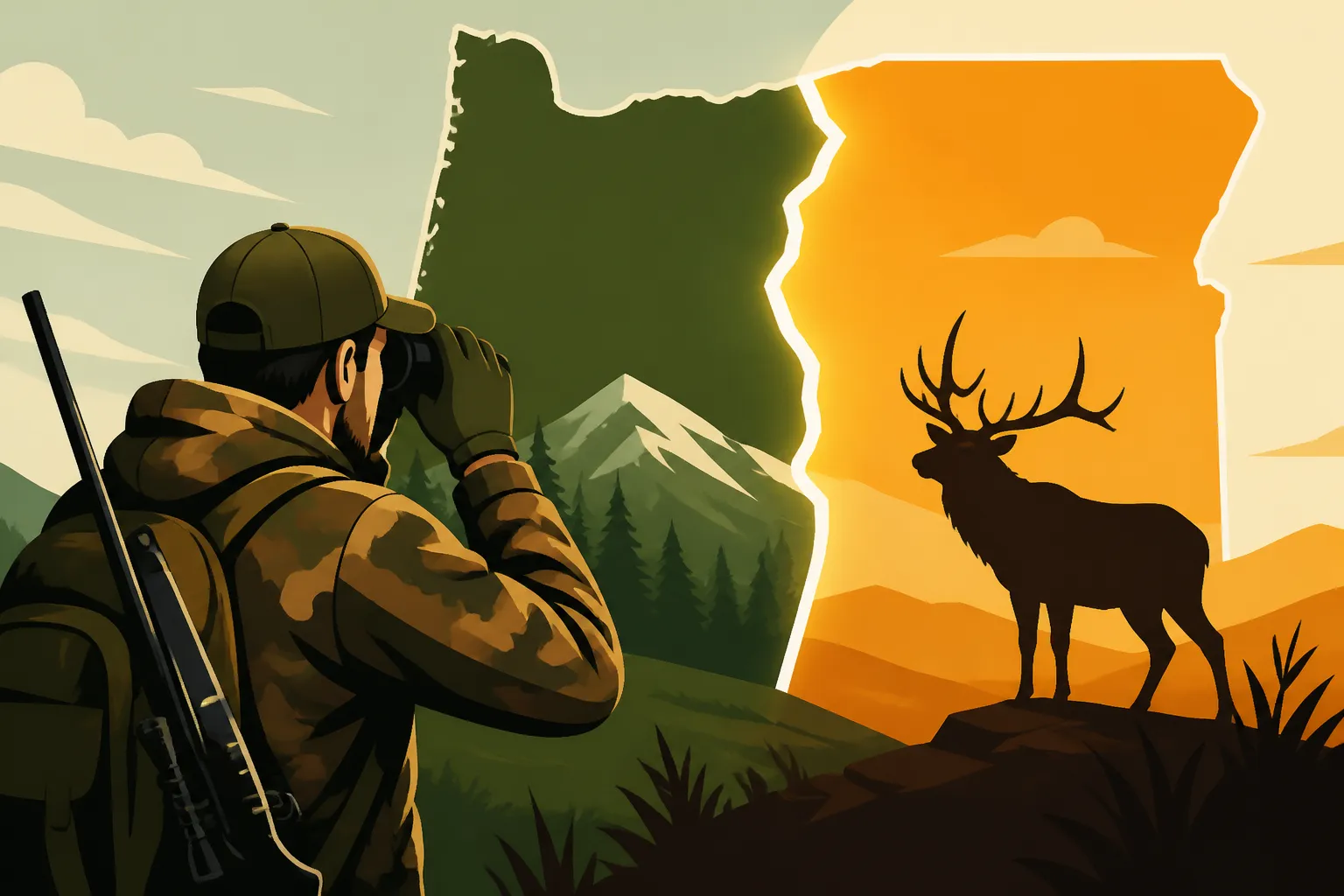
Imagine standing with one foot in Oregon and one in California – that's the essence of the Interstate Unit. Its southern boundary is quite literally the state line itself. To the west, the unit might extend into the rugged Siskiyou Mountains, bringing in more timbered, western Oregon characteristics. To the east, depending on the exact coordinates, you might still feel the influence of the high desert, but generally, this area tends to lean more towards mixed conifer and oak woodlands, transitioning from more arid zones into wetter, more mountainous terrain.
This unique positioning means the unit often straddles varied topography, from rolling hills and open fields near the valley floors to steep, brushy canyons and dense timber patches at higher elevations. The presence of Interstate 5 cutting through this region, while a major transportation artery, also highlights the blend of landscapes. You can drive through open pastureland one moment and be climbing into thick forest the next, all within the unit's general vicinity. This varied terrain means hunters need to be prepared for a multitude of conditions and adapt their strategies accordingly, often changing tactics within a single day's hunt.
For those who typically hunt deep in the Coast Range or far out in Eastern Oregon's expansive units, the Interstate Unit offers a different flavor. It’s less about a single dominant ecosystem and more about a tapestry of habitats. This can be fantastic for wildlife diversity, but it also demands a thorough understanding of the specific micro-habitats you plan to target. Knowing where the open pockets meet the thickets, or where seasonal water sources might attract game, becomes paramount in such a diverse landscape.
Navigating State Line Regulations
One of the biggest anxieties for hunters in any border unit, and certainly in the Interstate Unit, is the risk of inadvertently crossing into another state while hunting. Oregon and California have entirely separate hunting regulations, seasons, tag requirements, and even rules regarding loaded firearms in vehicles. It's a minefield if you're not diligent, and ignorance is absolutely no excuse when it comes to wildlife enforcement.
Picture this: you've been tracking a promising buck all morning, the perfect shot finally presents itself, and in the excitement, you pursue the animal for a short distance only to realize, post-harvest, that you've crossed into California. Now you're facing potential poaching charges, confiscation of your animal, and a whole host of legal headaches in two states. This scenario is a real fear for many hunters in this unit, and it highlights the absolute necessity of constant situational awareness.
This is where modern technology becomes a non-negotiable part of your gear. Using a mapping application like onX Hunt, with its clear display of state and property lines, is crucial. You need to know your exact location at all times, not just generally, but down to the foot. Before you even set out, familiarize yourself with the precise boundary lines, particularly in areas where game movement might lead you across. Always err on the side of caution; if there's any doubt about your position relative to the state line, hold off on making a move until you can confirm. This vigilance ensures you stay within the legal framework of your Oregon tag.
Game Species and Habitat in the Interstate Unit
The Interstate Unit's borderland geography makes it a fascinating area for game. It's a crossroads where species often associated with distinct regions can overlap or transition, offering a diverse hunting experience for those willing to learn its nuances. The primary draws here are deer, but elk, bear, and various predators also call this area home.
Mule Deer and Blacktail Dynamics
The Interstate Unit lies in an area where the ranges of Oregon Mule Deer and the Herd Range Decline and Columbian Blacktail Deer of Western Oregon can converge. This means hunters need to be particularly keen on identifying their target species, as regulations and even physical characteristics can differ significantly. Mule deer, typically found in more open, eastern Oregon habitats, might be present in the more arid, eastern fringes or higher, less timbered slopes within the unit. They'll often be found near pockets of sagebrush, bitterbrush, or in transition zones with scattered timber.
Conversely, the bulk of the deer population will likely be blacktails, particularly as you move into the denser timber and brush typical of western Oregon. Blacktails prefer thick cover, clearcuts, and the heavy undergrowth of the Coast Range and southern Cascades. They are masters of concealment, often slipping away undetected even when hunters are mere yards away. Identifying whether you're looking at a mule deer or a blacktail can sometimes be tricky in a transitional zone, especially for younger animals or at a distance. Pay close attention to ear size, tail color and shape, and antler configuration—mule deer typically have a bifurcated antler growth (forking), while blacktails often have a more standard main beam with tines.
Hunting strategies will vary wildly depending on which species you're targeting and the specific habitat you find them in. For mule deer, you might be glassing open hillsides at dawn and dusk, much like in eastern units. For blacktails, it's often a game of still-hunting through thick cover, slowly picking apart clearcuts, or waiting patiently on game trails. Understanding the subtle habitat preferences of each species within this blended unit is key to putting yourself in the right place at the right time.
Other Opportunities: Elk, Bear, and Predators
While deer are often the main focus, the Interstate Unit also holds populations of other big game species, adding to the diversity of hunting opportunities. Roosevelt Elk in Western Oregon can certainly be found here, particularly in the more rugged, timbered draws and slopes. Their presence indicates a healthier, more mature forest ecosystem that provides both forage and cover. Hunting these elk demands patience, knowledge of their travel patterns, and a willingness to navigate challenging terrain. Their calls might carry through the valleys, especially during the early archery season, drawing hunters into thick stands of timber.
Black bears are also common inhabitants of this region, thriving in the dense undergrowth and varied food sources available. Oregon Black Bears in the Coast Range and Cascades are opportunistic feeders, moving between berry patches, acorn flats, and areas with available carrion. Spot-and-stalk spring bear hunting can be productive on green-up slopes, particularly in clearcuts or along south-facing hillsides where vegetation emerges first. Remember that Oregon does not allow baiting or hound hunting for bears, making it a true test of tracking and spotting skills.
Furthermore, the Interstate Unit is home to predators like coyotes and Cougars in Oregon After the Hound Ban. Cougars, being apex predators, will follow their prey—deer and elk—making their presence a constant factor. While elusive, encountering cougar sign is always a possibility, and for those with a valid tag, it offers another challenging pursuit. Calling techniques can sometimes bring a cougar into range, adding an exciting dimension to the hunt. The presence of these other species means a hunter needs to be prepared for varied encounters and to carry the appropriate tags if they wish to pursue them.
Accessing and Hunting the Interstate Unit
Gaining access to huntable land is often the biggest hurdle for hunters in Oregon, and the Interstate Unit is no exception. Its position on the state line means a patchwork of land ownership, requiring careful planning and detailed navigation. Knowing who owns what, and how to legally access it, is paramount.
Public Land Avenues and Challenges
The Interstate Unit offers a mix of public lands, primarily managed by the U.S. Forest Service (USFS) and the Bureau of Land Management (BLM). These lands are generally open to hunting, offering vast opportunities for those willing to explore. However, unlike large, contiguous blocks of public land found in some other states, southern Oregon's public holdings, especially near the I-5 corridor, can often resemble a checkerboard pattern. This means private parcels are often intermingled with public lands, creating boundaries that are not always obvious on the ground.
Navigating this mosaic requires excellent mapping resources. Tools like onX Hunt are invaluable here, providing clear overlays of land ownership and making it much easier to identify public versus private property. You can download maps for offline use, which is critical in areas with spotty cell service, ensuring you always know where you stand. Remember that even if you find yourself on public land, access to it might require crossing private property, which necessitates explicit permission from the landowner. Oregon BLM Land Open to Hunting can offer fantastic opportunities, but you must confirm your entry and exit points are legal.
Furthermore, public lands in this unit can vary dramatically in terms of terrain and accessibility. Some areas might have well-maintained forest roads leading deep into prime hunting country, while others could require miles of hiking through dense brush or over steep, rocky slopes. Always check for current road closures, fire restrictions, and any special regulations that might apply to specific areas within the unit before heading out. A little homework before your trip can save you a lot of frustration and ensure a legal, enjoyable hunt.
Private Land Considerations and Permits
A significant portion of the huntable land within the Interstate Unit, particularly in the lower elevations and near agricultural areas, is privately owned. Respecting private property is not just good etiquette; it's the law. Trespassing is a serious offense, and it can quickly sour relations between landowners and hunters, potentially leading to more closures in the future. If you identify a promising private parcel, the only way to hunt it legally is to gain explicit permission from the landowner.
Many landowners in this region may be open to granting access, especially if approached respectfully and well in advance of the season. It helps to have a clear plan, a polite demeanor, and to offer to share contact information. Sometimes, asking a landowner for access might also reveal opportunities you hadn't considered. Organizations like the Oregon Department of Fish and Wildlife (ODFW) also have programs like "Access and Habitat" or "By-Permission" properties which can provide opportunities on private lands. Checking the ODFW website for these programs is a great starting point for finding legal access. Asking Permission on Oregon By-Permission Land is a skill worth developing, as it can unlock some fantastic hunting grounds.
For larger industrial timber lands, which are common in this part of Oregon, access policies vary widely. Some companies might offer paid permits for seasonal access, while others might allow walk-in access on certain tracts. It's crucial to research the specific timber companies that own land in your target area and understand their current policies. These policies can change frequently, so always check the most up-to-date information directly from the timber company's website or by contacting them. Never assume access based on past experience or word-of-mouth; verify before you step foot on their land.
Strategies for Success in a Borderland Unit
Hunting the Interstate Unit effectively requires a blend of modern scouting techniques, a readiness to adapt to varied conditions, and a strong commitment to ethical and legal hunting practices. It's not a unit where you can simply show up and expect success without significant preparation.
E-Scouting and Boots-on-the-Ground Reconnaissance
Given the complex nature of the Interstate Unit—its varied terrain, diverse habitat, and mixed land ownership—e-scouting is an absolutely indispensable first step. Before you even pack your boots, spend hours poring over satellite imagery on platforms like onX Hunt or GoHunt. These tools allow you to identify potential bedding areas, feeding zones, water sources, and most importantly, clear land ownership boundaries and access points. Look for transitions in vegetation, dark timber pockets adjacent to clearcuts, or draws that provide cover and travel corridors. E-Scouting Oregon Units With Satellite Imagery can reveal details you might miss on paper maps, like subtle benches or hidden springs.
Once you have a few promising spots identified through e-scouting, it’s time for boots-on-the-ground reconnaissance. There’s no substitute for actually walking the land, observing game trails, finding fresh sign, and understanding the lay of the land firsthand. Pay attention to prevailing wind directions, escape routes for game, and potential ambush points. During your scouting trips, use a GPS or your mapping app to mark waypoints for gates, trailheads, water sources, and any signs of game. This physical scouting helps you verify your e-scouting observations and develop a concrete hunting plan, especially if you plan to still-hunt or set up ambushes. Trail Camera Placement on Public Land can also be a valuable scouting tool, helping you pattern game movement without constant physical presence.
| Deer Species | Primary Habitat | Antler Characteristics | Tail Description | Hunting Style Suggestion |
|---|---|---|---|---|
| Blacktail Deer | Dense timber, clearcuts, brushy canyons | Main beam, tines off main beam (forked or pointed) | Dark brown/black on top, white underneath, shorter | Still-hunting, tracking, stand hunting on trails |
| Mule Deer | Open ridges, bitterbrush flats, scattered timber | Bifurcated (forked) antlers | White with a black tip, longer | Glassing, spot-and-stalk from afar |
Adapting to Diverse Terrain and Conditions
The Interstate Unit's transitional nature means you might encounter a wide range of conditions, sometimes even within a single hunt. From the relatively mild, open terrain in some valleys to steep, heavily timbered slopes and rocky outcrops, the landscape demands versatility. This means your physical fitness needs to be up to par, and your gear must be able to handle anything Oregon's weather can throw at you.
For instance, if you start your hunt in a lower elevation, drier area pursuing mule deer, you might be focused on long-range glassing and patient spot-and-stalk tactics. However, if that same hunt takes you into higher, wetter timber after elk or blacktail, your approach changes dramatically. Here, you'll need to be proficient in moving quietly through dense brush, identifying fresh sign, and potentially calling. Your optics should be versatile enough for both dark timber and open country; Optics for Dark Timber Versus Open Sage are key for discerning game in challenging light conditions.
Your footwear and rain gear are also critical, especially if you're hunting during the fall or winter seasons. Coastal rains can push eastward into this unit, turning trails into slick mud and soaking unprepared hunters to the bone. Invest in quality waterproof boots that offer good ankle support for steep, uneven ground. Boots for Wet Coastal Hunting will prevent cold, wet feet from ending your hunt prematurely. Layering is also essential, allowing you to adapt to temperature swings that can occur as you gain or lose elevation throughout the day. A reliable Rifle Choice for Oregon Elk and Deer that can handle various distances and conditions will also serve you well in this mixed-bag unit.
Disclaimer
This article is for general informational purposes only and does not constitute professional advice. Laws, prices and regulations vary by location and change over time. Consult a qualified professional for guidance on your specific situation.