Oregon Landowner Permission Basics
It's a common story in Oregon: you've got your tag in hand, your gear is ready, but you're staring at a hunting map that's a patchwork quilt of public and private land. Many hunters feel overwhelmed or frustrated, unsure how to even begin navigating those private parcels that often hold incredible game. This guide will walk you through the essential steps and etiquette for securing landowner permission, helping you unlock new hunting opportunities and build lasting relationships in the process.
The Crucial Role of Private Land in Oregon Hunting
Oregon is a state with vast public lands, no doubt, but a significant portion of prime hunting ground—especially in western Oregon and key agricultural areas—is privately owned. Overlooking these lands means missing out on potential success and limiting your options considerably.
The Reality of Limited Public Access
While national forests and BLM lands offer incredible opportunities, they also see a tremendous amount of pressure, especially during general seasons. Think about the throngs of hunters you might encounter in popular units, all vying for the same public access points. This crowding can make for a less enjoyable experience and often pushes game deeper into more remote, hard-to-reach areas, or onto adjacent private properties. Relying solely on public land means you're competing with a much larger pool of hunters, often for game that is already pressured and wary. It’s a tough reality, and it means we need to think beyond just the green on the map.
Habitat Quality and Game Numbers on Private Holdings
Private lands, particularly agricultural fields, timber company holdings, or large ranches, often boast superior habitat. Farmers might leave food sources like corn or alfalfa standing, which acts as a magnet for deer and elk. Timber companies manage forests in ways that create diverse age classes of timber, from clearcuts offering forage to mature stands providing cover. These lands can offer undisturbed bedding areas, plentiful food, and limited human intrusion, which translates to healthier, more numerous, and often less pressured game animals. It’s not uncommon for the biggest bucks and bulls to spend the vast majority of their lives on private property, only venturing onto public land during specific times or under intense pressure.
Supplementing Public Land Opportunities
Securing permission on private land isn't just about finding new places to hunt; it's about enhancing your overall hunting strategy. Imagine you're hunting a public land unit, and you constantly see elk moving onto a neighboring private timber parcel at dawn. With permission, that boundary suddenly becomes an opportunity, not a frustrating barrier. Private land can serve as a vital piece of the puzzle, providing a strategic advantage. It can act as a fallback when public areas are too crowded, or it can be the key to accessing a specific herd or animal that consistently utilizes a private parcel. Think about using a tool like onX Hunt to visualize how private parcels intersect with public land, revealing potential pinch points or travel corridors you might otherwise miss.
Understanding Oregon's Trespass Laws
Before you even dream of stepping foot on private land, you absolutely must understand Oregon's trespass laws. Ignorance is no excuse, and violating these laws can lead to serious legal consequences, not to mention a damaged reputation for all hunters.
Posted Land Versus Unposted Land
In Oregon, there's a common misconception that if land isn't explicitly "posted" with no trespassing signs, it's fair game. This is absolutely incorrect and a dangerous assumption. All private land in Oregon is considered off-limits for hunting, fishing, or trapping unless you have express permission from the landowner. The presence or absence of a "No Trespassing" sign doesn't change the underlying law. While signs serve as a clear warning, their absence does not grant implied permission. It simply means the landowner hasn't chosen to mark their boundaries. Always assume private land is closed until you have a clear, direct, and explicit "yes."
Key Elements of Criminal Trespass
Criminal trespass in Oregon occurs when a person enters or remains unlawfully on premises. "Unlawfully" means without permission from an owner or other person authorized to give permission. For hunters, this means if you don't have that direct, explicit permission, you are trespassing. The law distinguishes between first-degree and second-degree trespass, with factors like being armed or entering a dwelling increasing the severity. Even simply walking onto private property with a firearm while hunting, without permission, can be considered armed trespass, carrying stiffer penalties than unarmed trespass. It's not just about harvesting an animal; it's about your mere presence on the land.
Consequences of Hunting Without Permission
The repercussions of hunting without permission can be severe and long-lasting. At minimum, you could face fines, forfeiture of your hunting equipment (including your firearm or bow, and even your vehicle), and loss of your hunting privileges for a significant period. Imagine losing your right to hunt for years, all because you took a chance on someone else's property. Beyond the legal penalties, you also risk damaging the public image of hunters everywhere. Landowners who have bad experiences with trespassers are far less likely to grant permission to anyone else, creating a ripple effect that harms the entire hunting community. It's a lose-lose situation that's entirely avoidable. Oregon Wildlife Violation Penalties can be steep, so it's critical to be informed.
How to Approach Landowners for Permission
This is where the rubber meets the road. Approaching a landowner can feel intimidating, but with the right preparation and attitude, you can significantly increase your chances of success. Remember, you're asking for a privilege, not asserting a right.
Researching and Identifying Landowners
Before you even think about knocking on a door, do your homework. Use property tax records, which are often available online through county assessor websites, to identify the legal owner of the parcel you're interested in. Mapping tools like onX Hunt are absolutely invaluable here. They overlay property boundaries with landowner names and sometimes even contact information right on your phone. This allows you to pinpoint exactly who owns the land adjacent to public access or a known game corridor. Knowing the landowner's name and having a clear understanding of their property lines shows respect and preparedness, immediately setting you apart from someone who just shows up unannounced. Consider looking up Using the Oregon Hunting Map Online to get a feel for available tools.
Making the Initial Contact In-Person, Phone, or Letter
The best method of contact often depends on the situation and your comfort level.
- In-Person: This is often the most effective, as it allows for direct conversation and building rapport. Choose a time when the landowner is likely to be home and not busy (avoid meal times, early mornings, or late evenings). Dress respectfully, leave your hunting gear in your vehicle, and start with a polite introduction. Be prepared for a "no," and accept it graciously.
- Phone Call: If an in-person visit isn't practical or you're unsure if they're local, a phone call can work. Keep it brief, polite, and clearly state your purpose. Have your questions ready and respect their time.
- Letter: A well-written letter can be effective if you can't reach them otherwise, or if you want to provide more detailed information about yourself and your request. Include your contact information, the specific area you're interested in, and why you believe their property would be a good fit.
Regardless of the method, always be respectful, courteous, and articulate.
What to Say and What Not to Say
When you make contact, remember: You are selling yourself as a responsible, ethical hunter.
-
Do's:
- Introduce yourself clearly: "Hi, my name is [Your Name], and I'm a hunter interested in deer hunting in this area."
- Be specific: "I noticed your property borders the [Public Land Name] and I've seen some elk sign near the fence line. I was wondering if you ever allow respectful hunters to access your land for [specific game animal]?"
- Offer assurances: "I'm a very careful hunter, always mindful of property lines and livestock. I'd be happy to share my contact information, show you my license and tags, and only hunt specific areas you designate."
- Offer to help: "Is there anything I could do to help you out around the property in exchange for access? Fence mending, clearing brush, etc."
- Ask about their rules: "Do you have any specific rules or areas you'd prefer I avoid?"
- Leave your contact information: Even if they say no, leave a card or piece of paper with your name and number. Situations change.
-
Don'ts:
- Don't assume anything: Never start with "I saw a huge buck on your property, can I hunt it?" This sounds presumptuous.
- Don't pressure them: A "no" means no. A polite "Thank you for your time anyway" goes a long way.
- Don't show up in camo with a rifle: This can be intimidating.
- Don't ask about their other hunters: "Do you let anyone else hunt here?" is not your business.
- Don't complain about other hunters: Focus on your own merits.
- Don't lie or exaggerate: Honesty is paramount.
It's a conversation, not an interrogation. Be genuine, and let your character shine through.
Navigating Different Types of Private Land Access
Not all private land permission is created equal. Oregon has a few distinct categories of private land, each with its own set of rules and access methods beyond simply asking a farmer. Understanding these differences can open up more avenues for hunting.
Traditional Direct Permission
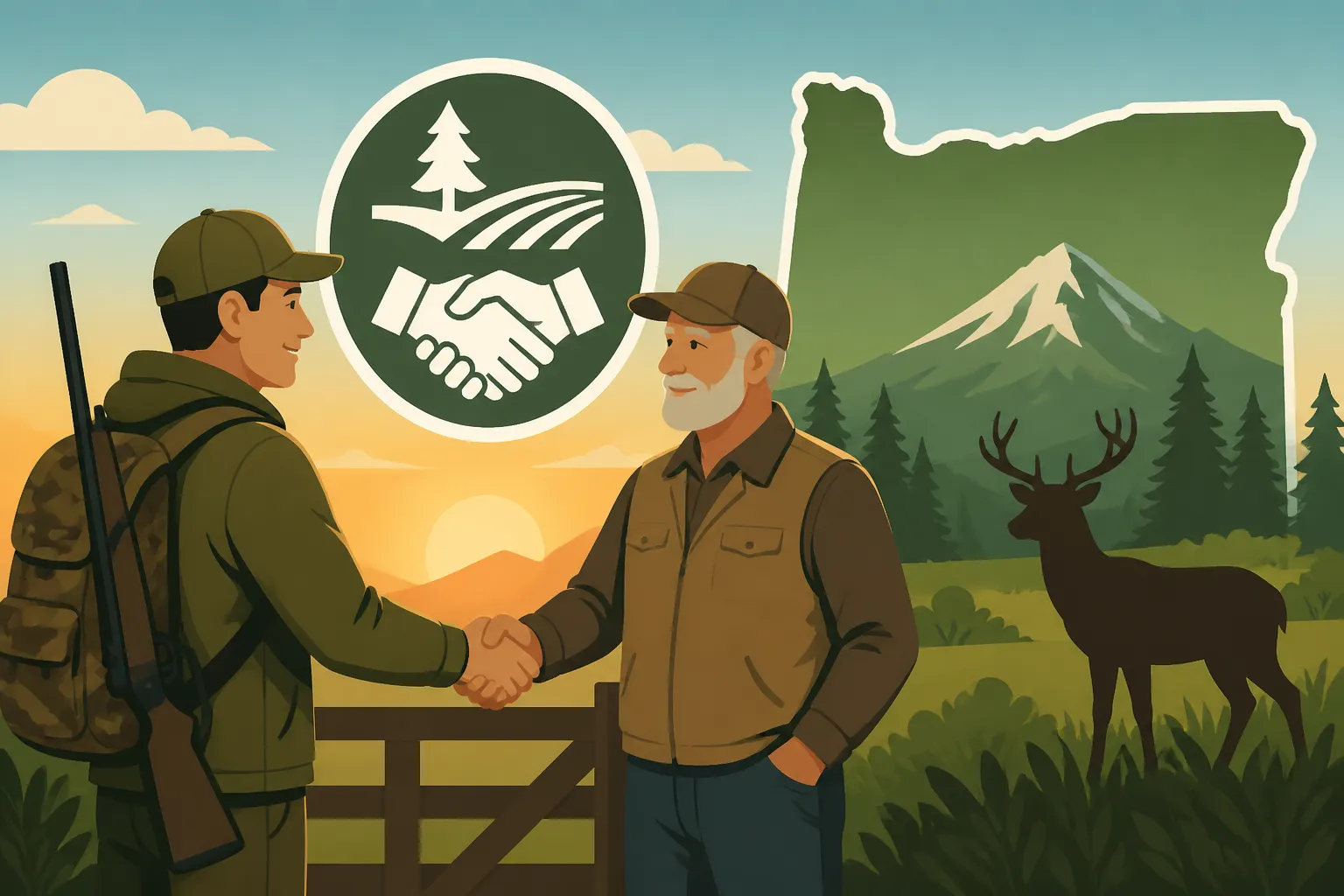
This is the classic scenario: you identify a private landowner, make contact, and they grant you explicit permission to hunt their property. This might be a handshake deal, a signed written agreement, or simply a verbal "yes." This type of permission is often the most rewarding because it builds a direct relationship. You might be the only hunter on the property, or one of a very select few. The key here is always to clarify the specifics: what game can you hunt? What areas are off-limits? How long does the permission last? Are guests allowed? Always try to get it in writing, even if it's just a simple text message confirming the details. It protects both you and the landowner.
Industrial Timberland Permit Systems
Vast tracts of Oregon are owned by large industrial timber companies like Weyerhaeuser or Hancock Forest Management. These companies often have their own specific rules and permit systems for public access, including hunting. Access might be granted through a paid permit, a lottery system, or even designated "walk-in only" areas. Many of these companies have online portals where you can check maps, purchase permits, and read their specific regulations. For example, some companies require specific colored vests, prohibit motorized vehicles, or have gates that are locked during certain seasons. It's crucial to check with each company directly, as their rules can change annually and vary by location. These lands can be incredible for Blacktail Deer Hunting in Oregon's Coastal Clearcuts or even elk, but you absolutely must play by their rules. Information on Hunting Private Timber Land With a Permit is invaluable here.
Oregon's Access and Habitat Program and Open Fields
The Oregon Department of Fish and Wildlife (ODFW) runs programs designed to improve hunter access to private land. The Access and Habitat (A&H) Program works with landowners to open private land to hunting, often in exchange for habitat improvements or other benefits. These properties are typically marked on ODFW maps and might be designated as "Welcome to Hunt" properties or "By Permission" properties. "Welcome to Hunt" properties usually mean walk-in access is granted during specific seasons, while "By Permission" still requires you to contact the landowner directly through ODFW-provided contact info.
The Open Fields Program is another fantastic initiative, often targeting waterfowl or upland bird hunting on agricultural lands that have significant goose or pheasant populations causing damage. Landowners are compensated for allowing public access. These programs are often highlighted on the ODFW website and can be a goldmine for hunters looking for opportunities beyond crowded public lands. Always check the specific rules for each A&H or Open Fields property, as they can vary greatly. Learning about Oregon Open Fields Properties and How to Find Them is highly recommended.
Here's a quick comparison of these access types:
| Access Type | Description | Key Considerations |
|---|---|---|
| Direct Permission | Individual landowner grants permission, often verbally or in writing. | Requires direct contact, building rapport. Rules are set by landowner. Best for exclusive access. |
| Industrial Timberland | Large timber companies manage access via permits, gates, and specific rules. | Requires purchasing permits, understanding company-specific regulations (e.g., Weyerhaeuser, Hancock). Rules vary. |
| Access & Habitat (A&H) | ODFW partners with landowners to open land. "Welcome to Hunt" or "By Permission." | Check ODFW maps and specific property rules. May be walk-in or require direct contact. |
| Open Fields | ODFW program focused on agricultural damage. Often for birds. | Check ODFW for participating properties and specific game seasons. Often managed for specific game species. |
Building and Maintaining Positive Landowner Relationships
Getting permission once is great, but nurturing that relationship for future opportunities is truly the goal. A positive relationship ensures you might have access year after year, and potentially even be referred to other landowners.
Respecting Property and Rules
This is non-negotiable. If a landowner grants you access, you are a guest, and you must treat their property with the utmost respect. This means:
- Adhering to all their rules: If they say no vehicles, you walk. If they say stay out of a specific pasture, you do.
- Leaving gates as you found them: Open means open, closed means closed. Always double-check. Leaving Gates and Fences as You Found Them is a basic but critical courtesy.
- Avoiding damage: Don't break fences, cut across fields unless given permission, or disturb livestock.
- Cleaning up: Pack out all your trash, including spent shell casings. Leave no trace you were there, except perhaps for a thank you note.
- Not overstaying your welcome: Stick to the agreed-upon times and dates.
- Being safe: Always know your backdrop, especially on private land where houses, barns, or livestock might be present.
- Reporting what you see: If you notice a broken fence, a downed tree, or something unusual, inform the landowner. It shows you care about their property.
Disregarding even one rule can instantly ruin the relationship, not just for you, but for any hunter who might ask for permission after you.
Offering Help and Giving Back
A successful hunt is fantastic, but the relationship shouldn't end there. Think about what you can offer in return for the privilege of hunting.
- Offer to share game meat: A venison roast or elk steaks are always appreciated, especially if the landowner enjoys wild game.
- Help with chores: If they run cattle, offer to help mend fences or fix a water trough. If they farm, offer to help with a harvest or clear some brush. This doesn't have to be a condition of access, but a genuine offer of help goes a long way.
- Send a thank you note or card: A handwritten note expressing your gratitude is a small gesture that leaves a big impression. It shows genuine appreciation.
- Provide an update: Let them know how your hunt went, even if you weren't successful. They often appreciate hearing about the wildlife on their land.
These actions demonstrate that you value the relationship beyond just the hunting opportunity itself. They show you're a good neighbor and a responsible member of the community.
The Value of Communication and Trust
Open and honest communication is the bedrock of any good relationship, and it's no different with landowners.
- Communicate your intentions: Let them know when you plan to be on their property, and when you've left. A quick text message or phone call can prevent misunderstandings or worries.
- Be transparent: If you accidentally make a mistake (like leaving a gate open briefly), own up to it immediately and apologize.
- Be trustworthy: Your word is your bond. If you say you'll do something, follow through. If you commit to hunting only a certain area, do so.
- Respect their privacy: Don't bring extra guests without asking first. Don't share their private information or the location of their property with others without their explicit permission.
Building trust takes time and consistent effort. It's a long-term investment that pays dividends in hunting access and positive community relations. Landowners often become wonderful friends, and the opportunity to spend time on their land can be far more valuable than the game itself. Investing in these relationships is one of the most fulfilling aspects of hunting in Oregon.
Disclaimer
This article is for general informational purposes only and does not constitute professional advice. Laws, prices and regulations vary by location and change over time. Consult a qualified professional for guidance on your specific situation.