Elk Hoof Disease in Western Oregon
It’s a sight that can stop any hunter dead in their tracks: an elk, struggling to put weight on a leg, moving with an agonizing limp through the thick timber of Western Oregon. This isn't just an accidental injury; often, it's a sign of a serious and heartbreaking condition known as elk hoof disease. This guide will walk you through what this disease is, how to spot it, its impact on our beloved Roosevelt elk, and what you, as a concerned hunter, can do about it.
Understanding Elk Hoof Disease: What It Is and Why It Matters
When we talk about "elk hoof disease" in Oregon, we're primarily referring to Treponeme-associated Hoof Disease, or TAHD. It’s a bacterial infection, driven by a specific group of bacteria called Treponemes, which are known to cause similar issues in livestock. Imagine a persistent, painful infection that literally eats away at an elk's hooves, making every step a challenge. It's not just a minor ache; this disease can be debilitating, eventually leading to severe lameness and, tragically, even death.
This isn't a new problem that just popped up, but it has certainly become more prevalent and concerning, especially among our Roosevelt Elk in Western Oregon. These majestic animals navigate incredibly challenging terrain, from the steep, wet slopes of the Coast Range to the dense, often muddy river bottoms of the Cascades. Healthy hooves are absolutely critical for their survival – for escaping predators, foraging for food, migrating, and even breeding. When TAHD takes hold, it compromises their very ability to live naturally, and that’s a real blow to the health of our herds and frankly, to the spirit of hunting these incredible creatures. Seeing an elk suffer like this is tough on any outdoorsperson, and it highlights why understanding and addressing this issue is so important.
The disease manifests as a progressive breakdown of the hoof structure. Initially, you might not see much, but over time, the hoof tissue softens, grows abnormally long or distorted, and can even start to slough off. It's not pretty, and it's incredibly painful for the animal. Think about trying to walk with a constant, severe foot injury – that's essentially what these elk are enduring. The bacteria thrives in moist, soft ground conditions, which, as any hunter who's spent time in Western Oregon knows, is pretty much the norm for much of the year. This environmental factor makes our region particularly vulnerable to the spread and persistence of TAHD.
Recognizing the Symptoms: What to Look For in the Field
Spotting elk hoof disease in the wild can be challenging, especially in dense cover, but there are distinct signs that can alert you to a potential issue. The most obvious, and often heartbreaking, symptom is lameness. You'll see an elk limping, favoring one leg, or struggling to move with a normal gait. They might hesitate to put weight on a particular foot, or their movements might appear stiff and unnatural. This isn't just a slight bob; often, it's a pronounced, almost desperate effort to move forward. Imagine watching a powerful bull trying to climb a steep incline, but his front leg buckles with every step – it’s a clear indicator something is very wrong.
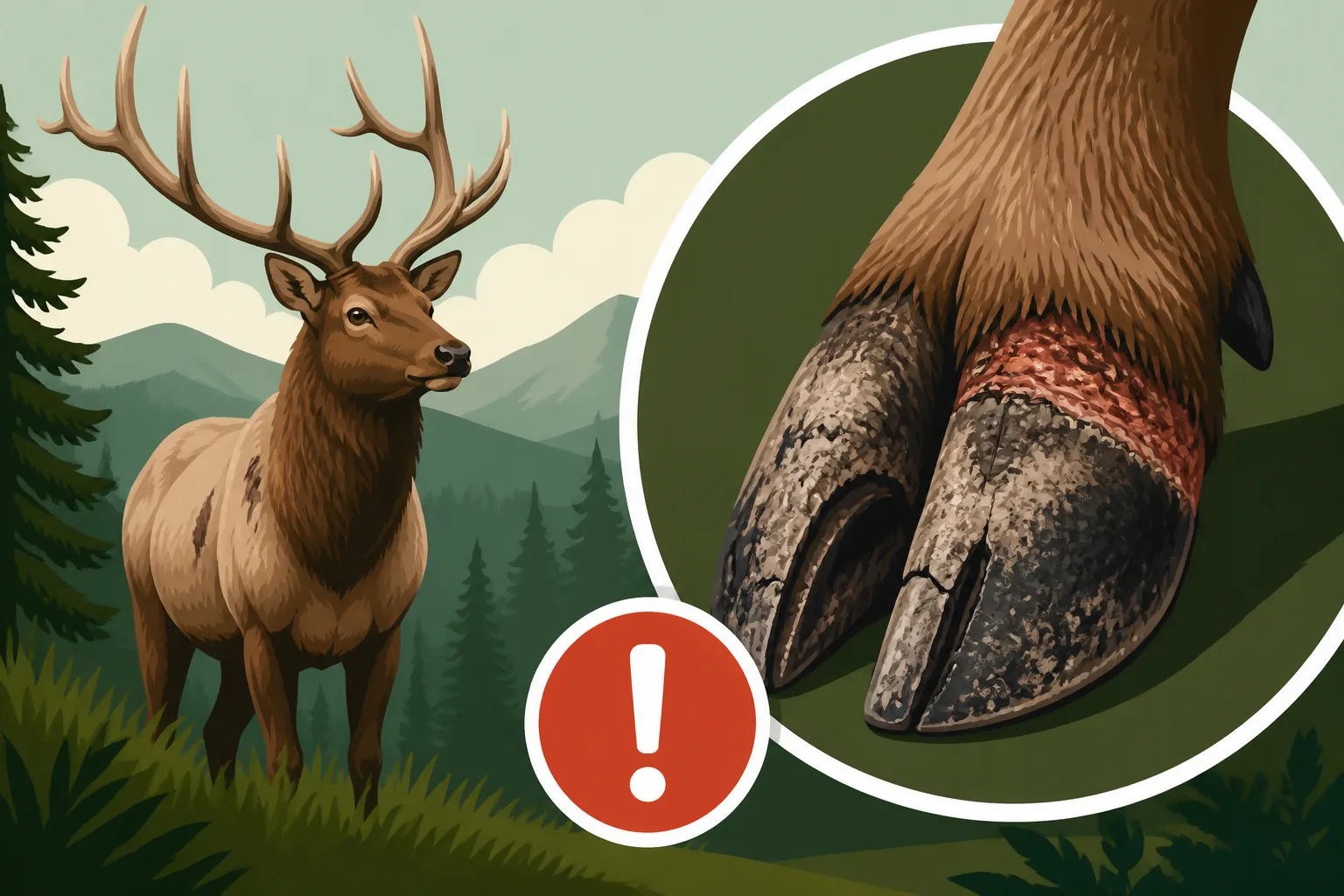
Beyond the visible limp, look for actual physical changes to the hooves themselves. This requires a bit more observation, often from a distance, or closer inspection if you're lucky enough to recover an animal. Affected hooves often appear elongated, overgrown, or deformed, almost like witches' feet. The outer casing might separate from the underlying tissue, or parts of the hoof wall might be missing entirely. You might see lesions, ulcers, or a grayish, necrotic tissue. In advanced cases, the hooves can literally be falling apart, making it impossible for the elk to bear weight. When you see track imprints, they might look abnormal, indicating a splayed or uneven footfall. These distortions can affect one, two, or even all four hooves, though it often starts in one or two and progresses from there.
Elk suffering from TAHD might also exhibit behavioral changes. Because of the pain and difficulty moving, they may separate from the herd, appearing more isolated. They might be less inclined to flee from perceived threats, making them more vulnerable to predation – something that directly impacts Elk Calf Survival and Predation in Oregon. Their foraging efforts could be reduced, leading to poorer body condition over time, especially during harsh winters or late-season hunts when food is already scarce. A limping animal simply cannot compete as effectively for resources or cover the necessary ground to find optimal forage. While these behavioral cues can be subtle, when combined with obvious lameness or hoof deformities, they paint a clearer picture of an animal in distress. Of course, any limping animal could simply have an injury, like a broken leg or sprain from a fall, but when you start seeing the characteristic hoof distortions, that’s when TAHD becomes a strong possibility. It's a tough distinction to make sometimes, but paying attention to these details can help you report observations accurately.
The Spread and Impact of TAHD in Western Oregon
The scientific community is still learning the full story of TAHD, but it’s understood that the disease thrives and spreads in certain conditions. The bacteria responsible for TAHD are believed to be present in the environment, particularly in wet, muddy areas. When elk walk through these contaminated zones, the bacteria can enter through small cuts, abrasions, or even just softened hoof tissue. Direct contact between elk, especially in dense herds or at shared bedding and feeding sites, is also considered a significant factor in transmission. Imagine a herd milling about in a muddy wallow or crossing a wet creek bed; this is prime real estate for bacterial transfer. The persistent wet weather patterns in Western Oregon, combined with areas of disturbed soil from logging or heavy recreational use, create a perfect storm for the disease to take hold and spread.
Geographically, TAHD is most prevalent in Western Oregon, especially within the Coast Range and portions of the Cascade Mountains. Units like the Trask, Wilson, Alsea, and Santiam are areas where hunters and wildlife managers have observed higher incidences. This correlates directly with the moist, temperate rainforest conditions these areas provide. While it’s certainly a concern across the entire state, the impact is undeniably more pronounced in these western regions where our Roosevelt elk herds roam. This isn't to say Eastern Oregon elk are immune, but the environmental factors there are less conducive to widespread outbreaks.
The impact of TAHD extends beyond just individual animal suffering. On a herd level, chronic lameness can significantly reduce an elk's ability to reproduce, successfully raise calves, and evade predators like cougars and bears. When a significant portion of a herd is affected, you can see a decline in overall herd health and productivity. Animals that can't move well struggle to access adequate nutrition, which further weakens their immune systems, making them more susceptible to other diseases or environmental stressors. This cycle can create a downward spiral for segments of the population. The Oregon Department of Fish and Wildlife (ODFW) actively monitors the situation, collecting data, conducting research, and working to understand the full scope of the disease and its long-term implications. Their goal is to develop effective management strategies, but it's a complex puzzle with no easy answers.
What Hunters Can Do: Reporting and Responsible Practices
As hunters and stewards of Oregon's wildlife, we have a crucial role to play in monitoring and, hopefully, mitigating the spread of elk hoof disease. One of the most important things you can do is report any sightings of limping or diseased elk to the Oregon Department of Fish and Wildlife (ODFW). Every report helps wildlife biologists track the disease's distribution, assess its prevalence, and understand its impacts on local herds. Don't assume someone else will report it; your observation could be the missing piece of data ODFW needs. You can typically find a direct contact or online reporting form on the ODFW website, or reach out to your local ODFW district office. This kind of Reporting a Sick Animal to ODFW is invaluable for ongoing Oregon Wildlife Disease Surveillance.
Beyond reporting, adopting responsible field practices is essential to minimize any potential human contribution to the spread. The bacteria can cling to mud and debris, so thoroughly cleaning your boots, tires, and any hunting gear (like trekking poles, game carts, or even your pack frame) before moving between different hunting areas or returning home is a small but impactful step. Think about it: you spend hours tromping through muddy clearcuts in your Boots for Wet Coastal Hunting, those boots collect everything. A simple scrub with a stiff brush and water can go a long way. If you're using a vehicle to access different parts of a unit, a quick power wash of your tires and wheel wells can help prevent transferring contaminated soil from one location to another.
When it comes to harvesting an animal that appears to be affected by TAHD, there are a few considerations. If you harvest an elk with hoof disease, it’s still generally safe to consume the meat, as the disease is localized to the hooves and doesn't affect the muscle tissue. However, it’s always wise to practice good hygiene during field dressing and processing, just as you would with any wild game. Ensure that you wear gloves and thoroughly clean all your tools. Dispose of the affected hooves properly, either by burying them deeply or bagging them for municipal waste disposal, to prevent further environmental contamination. This is where knowledge of Field Dressing an Elk in Warm Early-Season Weather and proper meat handling becomes even more critical. If you have concerns about an animal's overall health beyond the hooves, consulting with ODFW is always a good idea. Ultimately, being a responsible hunter means not only pursuing game ethically but also contributing to the long-term health and vitality of the resource. Staying informed and taking these proactive steps helps protect Oregon's incredible elk herds for generations to come.
Disclaimer
This article is for general informational purposes only and does not constitute professional advice. Laws, prices and regulations vary by location and change over time. Consult a qualified professional for guidance on your specific situation.