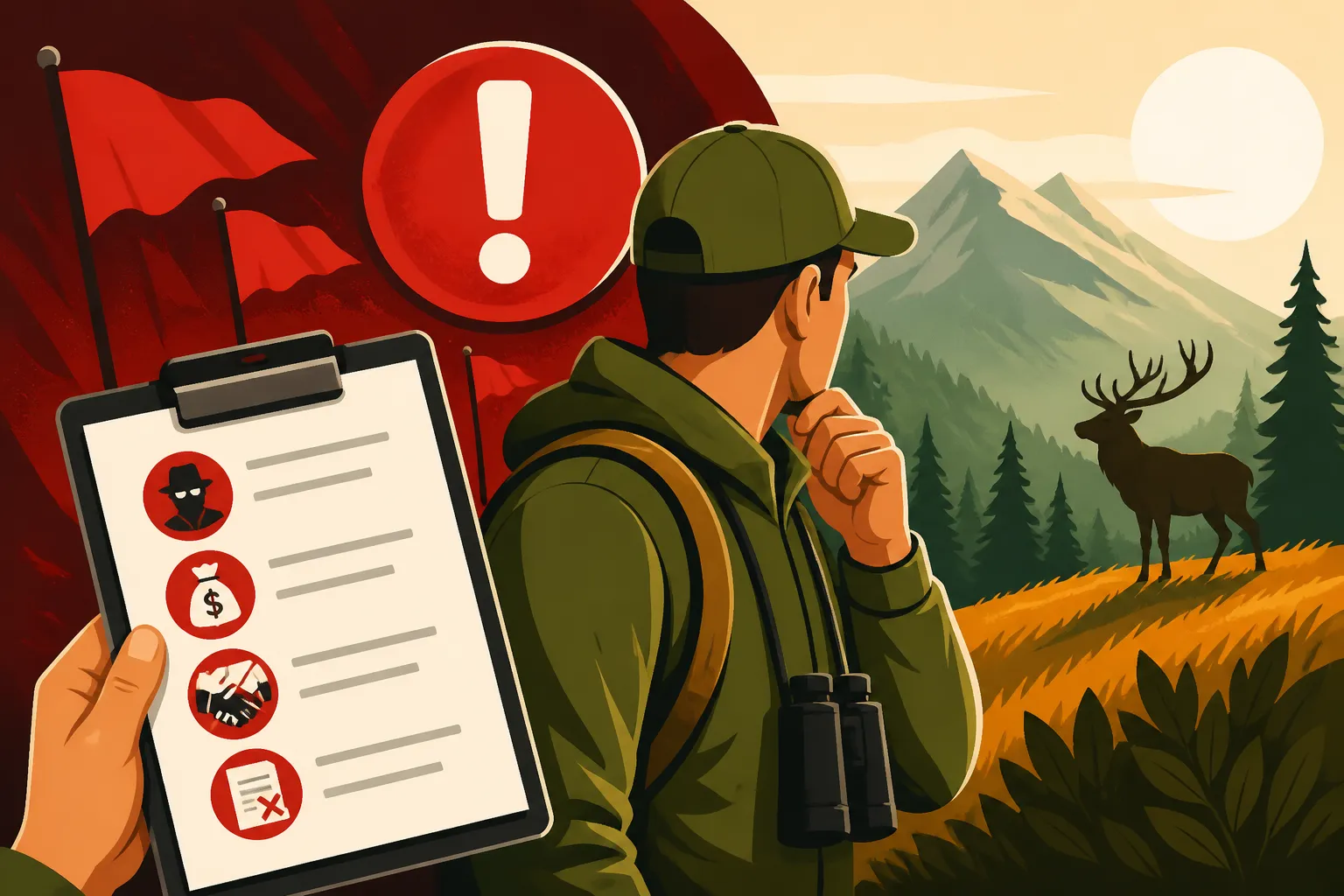
Red Flags When Booking a Hunt
There's nothing quite like the thrill of planning an Oregon hunting adventure – the anticipation of chasing Roosevelt elk through dense coastal timber, spotting a high desert mule deer, or even stalking a wily black bear. But that excitement can quickly turn to frustration, or worse, outright disappointment if you're not careful about who you book your hunt with. This guide is all about helping you identify the warning signs, or "red flags," that can crop up when you're researching and trying to secure a guided hunting trip in our beautiful state, so you can make informed decisions and avoid costly mistakes.
The Allure of the Hunt and the Risk of Scams
For many hunters, especially those new to Oregon's diverse landscapes or traveling from out of state, a guided hunt offers the promise of a higher success rate, local knowledge, and an incredible experience without the heavy lifting of solo scouting and logistics. We all dream of that perfect trip, the one where everything goes smoothly, and we bring home a fantastic memory – and hopefully some meat! However, the very nature of this dream, combined with the financial investment involved, can make hunters vulnerable to less-than-reputable operators.
The Dream Hunt Versus Reality
Picture it: you're scrolling through social media or a hunting forum, and you see an amazing photo—a monster bull elk taken in a breathtaking Oregon setting. The outfitter's caption promises "guaranteed opportunities" or "trophy animals at unheard-of prices." It's easy to get swept up in the fantasy, to imagine yourself in that picture, holding that set of antlers. But sometimes, these vivid pictures and bold claims are designed to hook you into a situation that simply doesn't exist. Oregon's hunting can be tough, physically demanding, and success is never truly guaranteed, no matter how good the guide. The reality of hunting often involves long days, harsh weather, and the humility of coming home empty-handed. A good guide prepares you for this reality, not a fairytale.
When you're dealing with big game, substantial tag fees, travel costs, and the excitement of a new experience, it’s understandable to want the best possible outcome. Unscrupulous individuals understand this desire and are adept at painting a picture that’s just a little too perfect. They know how to tap into that hunter's dream, often exaggerating success stories, glossing over difficulties, or even outright fabricating testimonials. This can lead to a significant mismatch between your expectations and what the outfitter can actually deliver, often leaving you out of pocket and thoroughly disheartened.
Why Hunters Fall Victim to Bad Deals
We want to believe the best in people, especially when they're presenting themselves as experts in a field we're passionate about. Hunters often fall victim to bad deals because they might not know what questions to ask, what to look for in a legitimate operation, or they're simply too eager to secure a spot on what sounds like an incredible hunt. The pressure of limited tags, application deadlines, and the desire to "get in" on a hot hunt can override common sense. Sometimes, it's just a lack of experience with the commercial side of hunting that leads to overlooking critical details.
Furthermore, the hunting industry, while largely filled with honest and hardworking professionals, does have its share of opportunists. Some might not be outright scammers, but simply under-qualified or poorly organized. They might rely on vague promises rather than clear, detailed plans because they lack the experience or resources to deliver on specifics. It’s crucial to remember that a guide is providing a professional service, and like any other service, it should come with clear expectations, a detailed agreement, and a track record of professionalism. When you don't perform adequate due diligence, you can easily end up paying for an experience that is far below standard or, in the worst cases, doesn't even materialize.
Unclear Communication and Vague Promises
One of the most immediate red flags you’ll encounter when dealing with an outfitter or guide is a pattern of unclear, inconsistent, or evasive communication. A professional operation thrives on clarity and transparency, especially when you're planning a trip that involves significant time and money. If you're struggling to get straight answers, it's a sign to proceed with extreme caution.
Evasive Answers and Delayed Responses
When you first reach out to a guide, you're looking for information: dates, costs, what's included, what to expect. If their responses are consistently vague, short on details, or avoid direct answers to your specific questions, that's a problem. For example, you might ask about their success rate on public land for a particular species, and they respond with a general statement like, "We always work hard for our clients," rather than giving you actual numbers or a realistic perspective. Or you might inquire about their hunting area, and they just say "Eastern Oregon" without naming specific units or public land designations.
Beyond vagueness, watch out for guides who take an unusually long time to respond, or who require multiple follow-ups for simple questions. While everyone gets busy, a consistent pattern of poor communication before you've even committed a deposit can indicate how they'll handle logistics and issues once you're on the hunt. Imagine needing critical information during the hunt itself, and facing the same delays. It’s a tell-tale sign of disorganization or a lack of commitment to client service. A reliable guide should be eager to share details and inspire confidence, not create doubt through silence or non-answers. If they are hard to pin down now, think about how difficult it will be when you have a problem a thousand miles from home.
Over-the-Top Guarantees and Unrealistic Success Rates
Oregon hunting is, well, hunting. It's not a petting zoo, and there are no guarantees when it comes to wild animals on public land. If an outfitter is promising a "guaranteed kill" or boasts a 100% success rate on elk or big bucks year after year, especially on general season public land hunts, that should immediately raise your suspicion. While some high-fence operations or exclusive private land leases might offer very high success, these are rare and come with a hefty price tag that would likely be clearly advertised. Most legitimate guides will talk about "opportunity rates" or provide realistic success percentages that account for the unpredictable nature of wild game and varying hunter skill levels.
A guide who makes promises that sound too good to be true is likely trying to close a deal quickly without regard for reality. They might be setting you up for disappointment, or worse, have no intention of delivering on those grandiose claims. Ask detailed questions about how they achieve those success rates, what factors contribute to them, and what happens if you don't harvest an animal. A confident and honest guide will explain the variables, the effort involved, and the realistic chances, rather than just selling you on a pipe dream. Be especially wary of any guide offering low prices for these "guaranteed" hunts, as that often points to a scam.
Lack of Specifics on Hunt Logistics
A professional guide will have a plan, and they should be able to articulate it clearly. This includes details like:
- Accommodations: Are you staying in a wall tent, a cabin, or a motel? What are the sleeping arrangements?
- Meals: What kind of food is provided? Who cooks? Can they accommodate dietary restrictions?
- Transportation: How will you get to and from the hunting area? What vehicles are used?
- Daily Schedule: What does a typical day look like? How early do you start?
- Gear List: What equipment do you need to bring? What does the outfitter provide?
- Meat Care: How will meat be handled in the field and transported out? What are their plans for warm weather?
If an outfitter is vague about these crucial logistical points, it suggests they either don't have a solid plan, or they're not being transparent about the quality of the experience. For instance, if they simply say "we provide camp," without detailing if it's a spike camp, a base camp, or an RV, you can't properly prepare. A lack of specific details means you don't know what you're actually paying for, and it leaves too much room for unpleasant surprises once you're on location. The best outfitters, often listed on platforms like BookYourHunt, provide extensive detail in their listings, giving you a clear picture of what to expect.
A proper outfitter understands that clients need to mentally and physically prepare for the hunt, and that requires knowing the terrain, the gear, and the daily grind. Vague responses to these kinds of questions indicate a fundamental lack of professionalism or, even worse, a deliberate attempt to hide potential shortcomings. You should feel confident that your guide has thought through every aspect of the trip and can communicate those plans effectively.
Questionable Business Practices and Paperwork
Beyond communication, the business side of booking a hunt needs to be buttoned up. Any hesitation or anomaly in the financial or legal aspects of the transaction should be a major red flag. This is where you protect your investment and ensure you're dealing with a legitimate operation.
No Written Contract or Vague Agreements
This is perhaps one of the biggest red flags of all. Any legitimate outfitter or guide will provide a clear, detailed, and legally binding written contract. This document should spell out everything: the dates of the hunt, the species you're hunting, what's included (food, lodging, transportation, guiding services), the total cost, payment schedule, cancellation policy, refund policy, and any specific terms and conditions. If an outfitter tells you a handshake is enough, or provides a flimsy document with minimal detail, walk away.
A good contract protects both you and the guide. It clarifies expectations and provides recourse if things go sideways. Without it, you have little to no legal standing if the guide fails to deliver on promises or if a dispute arises. Think of it like any other major purchase or service agreement; you wouldn't buy a car or book a wedding without a detailed contract, and a guided hunt is often a significant financial outlay. Make sure to review any contract thoroughly, ask questions about anything unclear, and don't be afraid to request modifications or clarifications before signing. You want to see specific clauses outlining what happens if the hunt is cut short due to weather, if you get sick, or if the guide becomes unavailable. What an Oregon Guide Contract Should Say is a good resource to review what to look for.
Demanding Full Payment Upfront or Unusual Payment Methods
While a deposit is standard practice for booking a guided hunt, demanding full payment upfront, especially many months in advance, without a clear, staggered payment schedule, is highly unusual and risky. Reputable outfitters typically ask for a deposit (often 30-50%) to secure your dates, with the balance due closer to the hunt date, sometimes 60-90 days prior. This allows both parties some flexibility and shows good faith.
Be very wary if a guide insists on cash-only payments, wire transfers, or gift cards. These methods offer little to no protection for the buyer and make it incredibly difficult to recover your funds if something goes wrong. Standard payment methods include checks, credit card payments (which offer consumer protection), or bank transfers to a legitimate business account. If they say they can only accept Venmo or PayPal as a "friend" payment, that's a huge warning sign, as those methods also bypass buyer protection. Protecting your financial investment is paramount, and payment terms are a key indicator of professionalism. Guide Contracts and Deposits in Oregon discusses typical payment structures.
Missing or Questionable Licensing and Insurance
In Oregon, anyone offering for-hire guide services on the waters of the state, or offering hunting, fishing, or outdoor recreational activities where payment is received, must be registered as an outfitter guide with the Oregon State Marine Board. This registration ensures they meet certain safety and professional standards. A legitimate guide should be able to provide their Marine Board registration number upon request. You can (and should) verify this information directly with the Marine Board or through their online database. Oregon Guide Registration Through the Marine Board explains this process in detail.
Furthermore, a professional outfitter carries liability insurance to protect both themselves and their clients in case of an accident or unforeseen event. If a guide cannot provide proof of current liability insurance, it's a massive red flag. Hunting, especially in rugged Oregon terrain, carries inherent risks, and you want to know that you are covered in the unlikely event of an injury. If a guide seems reluctant or unable to provide their registration number or proof of insurance, it’s a clear sign that they might not be operating legally or responsibly. Don't risk your safety or your investment with someone who isn't properly credentialed. Checking an Oregon Guide's Registration is an essential step in your due diligence.
Poor Online Presence and Lack of References
In today's digital age, even the most traditional hunting outfitters usually have some form of online presence. While a slick website isn't everything, a complete absence of information, or suspicious online activity, should raise an eyebrow. This is where your detective skills come in handy to verify an outfitter's reputation.
Scant or Outdated Online Information
When you search for an outfitter online, what do you find? A professional operation will likely have a functional website, a presence on social media (Facebook, Instagram), and potentially listings on hunting booking platforms like BookYourHunt. If all you can find is a bare-bones social media page that hasn't been updated in years, or a website that looks like it was designed in the early 2000s and is full of broken links, that's a potential red flag. It suggests a lack of investment in their business or that the operation might be defunct or unreliable.
Similarly, a guide with no online footprint at all, or one whose only presence is through vague forum posts, should make you cautious. While word-of-mouth is still powerful in the hunting community, a complete lack of digital presence makes it incredibly difficult to verify their legitimacy or track record. Look for consistent branding, up-to-date contact information, and recent client photos or testimonials. GoHunt, for example, often features outfitters with strong, verifiable presences that help you research.
Unwillingness to Provide Client References
Any reputable outfitter will be proud to share contact information for past clients who can speak to their experience. This is a standard request, and a guide who balks at providing references or offers only a single, vague testimonial should be viewed with suspicion. You want to talk to real people, ideally recent clients, who can give you an honest assessment of the guide's professionalism, the quality of the hunt, camp conditions, and overall experience.
When you do get references, make sure to follow up! Ask specific questions, such as:
- What was the guide's communication like before, during, and after the hunt?
- Were the accommodations and meals as advertised?
- How hard did the guide work to put you on game?
- Were there any unexpected costs or issues?
- Would you hunt with this guide again?
Be wary if all the references are from many years ago, or if they all seem to know each other personally, which could indicate a skewed view. A solid list of varied, recent references is a strong green flag. Conversely, a guide who hides their past clients is often hiding something else too. Getting References From Past Clients is a critical step in your vetting process.
Negative or Suspicious Reviews
Online reviews are a double-edged sword, but they're still a valuable tool. Look for reviews on multiple platforms – Google, Facebook, hunting forums, and dedicated outfitter review sites. A few mixed reviews are normal; not every client will have the same experience, and some might have unrealistic expectations. However, a pattern of consistently negative reviews, especially regarding safety, professionalism, communication, or ethics, is a massive warning sign.
Also, be alert to suspicious review patterns. This could include a sudden influx of overly positive, generic reviews all posted around the same time, which might indicate fake reviews. Or, conversely, a complete absence of reviews for an outfitter claiming to have been in business for many years. Cross-reference what you find online with information you gather from references and direct communication. A guide who actively engages with and addresses negative feedback in a constructive way often demonstrates transparency and a commitment to improvement, which can actually be a good sign. However, outright denial, aggressive responses, or attempts to discredit reviewers are major red flags.
Unfamiliarity with Oregon's Specific Rules and Terrain
Oregon is a unique hunting state, with distinct regulations, diverse ecosystems, and specific challenges. A guide operating here must have deep, current knowledge of both the game and the rules. If they seem to speak generally or contradict known regulations, it's a huge cause for concern.
Generic Advice and Lack of Local Unit Knowledge
Oregon has a complex system of wildlife management units, herd ranges, and specific regulations for different areas and species. A truly knowledgeable Oregon guide will be intimately familiar with the unit(s) they hunt, understanding local game patterns, access points, topography, and seasonal changes. If an outfitter gives you only generic hunting advice that could apply to any state, or struggles to provide specific details about the unit you're interested in, that's a red flag. For instance, if you ask about Archery Elk Hunting Oregon's August and September Seasons in a specific unit and they can't articulate common elk behavior or specific terrain features there, they might not truly be a local expert.
You want a guide who can talk about historical success in your specific hunt area, how they adapt to weather changes there, and specific strategies for that terrain—whether it's the thick rainforests of the Coast Range or the expansive rimrock country of Eastern Oregon. They should be able to discuss nuances like Calling Roosevelt Elk in Oregon Rainforest Timber versus Glassing Eastern Oregon Rimrock for Mule Deer. A guide who is vague about their hunting grounds or seems to operate "wherever the game is" without specific plans for particular units might be an opportunist who hasn't done their homework, or worse, someone who trespasses or operates illegally.
Disregard for Oregon Regulations and Ethics
Oregon has strict hunting regulations regarding seasons, bag limits, weapon types, and even how you retrieve game. Any guide who suggests bending or breaking rules, or seems unconcerned with ethical hunting practices, is a serious red flag. This could include:
- Suggesting you over-harvest or take an animal outside legal shooting hours.
- Discussing hunting on private land without explicit permission, or implying they have access they don't.
- Talking about using bait or hounds for species where it's illegal (like bear or cougar in Oregon).
- Ignoring rules about travel management areas or motorized vehicle restrictions.
- Showing disrespect for wildlife, land, or other hunters.
A guide is a professional who should uphold the highest standards of ethics and legality. Their actions reflect on you as their client. Getting involved with a guide who disregards regulations not only puts your hunt at risk but could also lead to significant fines, penalties, or even loss of hunting privileges for you. Remember, ignorance of the law is no excuse, and as the hunter, you are ultimately responsible for your own actions. Oregon Hunter Education Requirements cover many of these foundational principles. Always ensure your guide operates within the bounds of the law, as highlighted by Oregon Guide Ethical and Professional Standards.
Unrealistic Expectations About Oregon's Hunting Conditions
Oregon offers incredible hunting, but it's often challenging. The weather can be extreme, from scorching desert heat in early season to relentless rain and snow in the fall. The terrain varies from steep, brushy mountains to vast, open sagebrush. A good guide will prepare you for these realities, not downplay them. If a guide makes the hunt sound like a walk in the park, or minimizes the physical demands, especially for a backcountry elk hunt, they might not be giving you the full picture.
For instance, they should be clear about the physical fitness required for Packing Out an Elk in Oregon's Wilderness Units or the need for specific rain gear when hunting Blacktail Deer Hunting in Oregon's Coastal Clearcuts. If they tell you that any old boots and a basic jacket will be fine for a November rifle hunt in the Cascades, that's a warning sign. They should be emphasizing preparation, not downplaying challenges. You want a guide who prepares you for the worst conditions and is equipped to handle them, ensuring your safety and comfort as much as possible, not one who paints an overly rosy, and potentially dangerous, picture.
| Feature | Green Flag (Good Sign) | Red Flag (Warning Sign) |
|---|---|---|
| Communication | Prompt, detailed, direct answers, open to questions. | Vague, evasive, delayed responses, avoids direct questions. |
| Promises | Realistic opportunity rates, explains challenges. | "Guaranteed kill," 100% success, prices too good to be true. |
| Contract | Detailed, written, covers all aspects (dates, costs, refunds). | Handshake deal, flimsy document, vague terms. |
| Payment | Standard deposit, balance due later, accepts credit cards. | Demands full upfront, cash-only, wire transfers, gift cards. |
| Legitimacy | Shares Marine Board registration and proof of insurance. | Reluctant to provide credentials, no insurance. |
| Online Presence | Current website, active social media, multiple positive reviews. | Outdated site, no online presence, suspicious review patterns. |
| References | Provides multiple recent client contacts, encourages calls. | Refuses references, provides only old or limited contacts. |
| Local Knowledge | Deep understanding of specific Oregon units, game patterns. | Generic advice, unfamiliar with local regulations/terrain. |
| Ethics/Legality | Emphasizes adherence to all Oregon hunting laws, ethical. | Suggests bending rules, discusses illegal methods, disregards safety. |
| Logistics | Clear details on camp, food, transportation, gear. | Vague on accommodations, meals, daily plan, what to bring. |
Trusting Your Gut and Due Diligence
Ultimately, booking a guided hunt is a personal decision, and sometimes, even when all the checkboxes seem to be ticked, something just doesn't feel right. That gut feeling is a powerful tool, and it's something you should never ignore. Beyond that, the responsibility for thorough vetting lies squarely with you.
The Importance of a Gut Feeling
You've done your research, talked to references, and reviewed the contract. But if, after all that, you still have a nagging doubt, a little voice telling you something is off, listen to it. Perhaps the guide's demeanor shifted, or they said something that felt slightly disingenuous. Maybe their "enthusiasm" felt more like high-pressure sales. These subtle cues can be powerful indicators. Our intuition often picks up on inconsistencies or red flags that our conscious mind might overlook.
Don't let the excitement of the hunt or the fear of missing out pressure you into ignoring these feelings. It's far better to pass on a potential hunt and lose a small deposit than to commit to a multi-thousand-dollar trip that turns into a nightmare. A good relationship with your guide is built on trust and mutual respect, and if that foundation isn't there from the start, it's unlikely to materialize during the intensity of a hunting trip. You are investing not just money, but your precious time and expectations into this experience. Trusting your instincts is a crucial final filter in your decision-making process.
Steps for Thorough Vetting
To minimize your risk and ensure you're booking a legitimate, high-quality hunt, here's a step-by-step approach to vetting potential outfitters:
- Initial Research: Start with online searches. Look for websites, social media, and third-party booking sites like BookYourHunt. Read all available reviews, but be critical. Look for patterns, not just isolated comments. GoHunt is another excellent resource for researching and comparing outfitters, often providing detailed profiles and user reviews.
- Contact and Initial Q&A: Reach out via phone or email. Ask comprehensive questions about their experience, hunt areas, success rates (realistic ones!), what's included, and what's not. Pay close attention to their communication style and responsiveness.
- Request References: Demand a list of recent clients (within the last 1-2 years). Contact all of them and ask detailed, open-ended questions about their experience. Be sure to ask about challenges and how the guide handled them. Questions to Ask an Oregon Outfitter provides a great starting point for your conversations.
- Verify Credentials: Request their Oregon State Marine Board outfitter guide registration number and proof of current liability insurance. Verify the registration directly with the Marine Board.
- Review the Contract: Insist on a written contract. Read every word. Understand the payment schedule, cancellation policy, refund terms, and what happens in various unforeseen scenarios. If you're unsure, have a trusted friend or legal professional review it. Pay attention to clauses on Hunt Insurance Worth Buying if you feel the need for additional protection.
- Trust Your Gut: After all the objective research, reflect on your overall impression. Does something feel off? If so, reconsider. There are many fantastic, ethical guides out there, so don't settle for anything less than complete confidence.
By following these steps, you significantly increase your chances of booking a successful and enjoyable Oregon hunting adventure, free from the stress and disappointment of dealing with red flags.
Disclaimer
This article is for general informational purposes only and does not constitute professional advice. Laws, prices and regulations vary by location and change over time. Consult a qualified professional for guidance on your specific situation.