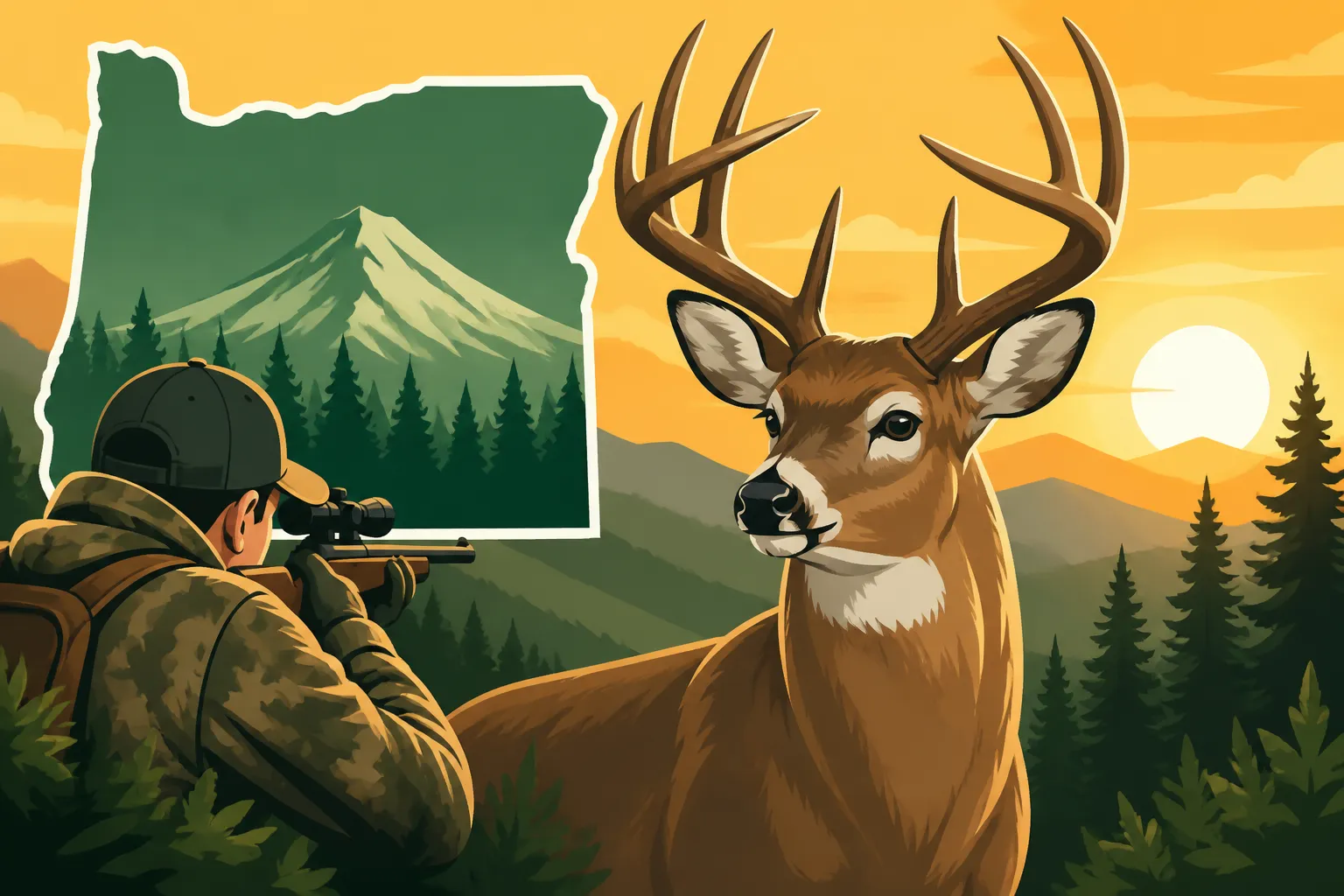
Oregon Buck Deer Season Opening Day
That crisp autumn air, the vibrant changing leaves, and the overwhelming sense of anticipation – few things get an Oregon hunter’s heart pumping like the thought of buck deer season opening day. For many, it's the culmination of months of scouting, preparation, and hopeful dreaming. But knowing exactly when that magical day arrives, and how to best prepare for it, can be a maze of regulations and unit specifics. This guide is here to untangle all that, helping you pinpoint those crucial opening dates and hit the woods ready for success.
The Electric Buzz of Buck Deer Opening Day
There's nothing quite like the collective hum of excitement that precedes Oregon's buck deer opening day. For countless hunters across the state, it's more than just another date on the calendar; it’s a tradition, a challenge, and a chance to immerse themselves in Oregon’s stunning landscapes. However, that excitement can quickly turn to frustration if you're not absolutely clear on the details. Many hunters, especially those new to a specific unit or coming from out of state, grapple with conflicting information or simply miss key nuances in the regulations. The truth is, Oregon's deer seasons aren't a one-size-fits-all affair, and understanding the specific opening day for your hunt requires a bit of homework.
It’s easy to get caught up in the tales of past seasons or the latest trail cam photos from your buddies, but failing to verify the official opening day for your tag can lead to a missed opportunity or, worse, a violation. This isn't like punching a time clock; there are no do-overs if you show up a day late or a day early. The key is knowing precisely where to look and what to look for in the Oregon Department of Fish and Wildlife (ODFW) regulations. That first light on opening morning, with all the possibilities it holds, is earned through careful planning and diligent date checking.
Why Opening Day Matters So Much
Opening day isn't just arbitrary; it's often strategic. It's the moment when deer, particularly mature bucks, are typically still adhering to summer patterns, before heavy hunting pressure scatters them into denser cover or shifts their routines entirely. This can mean more predictable movements, especially if you've done your summer scouting diligently. Bucks might still be hitting specific food sources or waterholes they’ve frequented for weeks, making them slightly more vulnerable to a well-placed hunter.
However, the flip side is that everyone else has the same idea. Opening day often sees the highest concentration of hunters in the woods, especially in easily accessible public land areas. This isn't necessarily a bad thing, as other hunters can sometimes push deer around, inadvertently sending them your way. But it also means you need to be acutely aware of your surroundings, practice extra safety, and have a clear understanding of shooting lanes and backstops. It's a balance between capitalizing on early season patterns and navigating increased human presence.
Decoding Oregon's Buck Deer Season Opening Dates
Oregon's vast and diverse landscape means that deer seasons are structured to reflect regional differences in species, habitat, and management goals. Generally speaking, your opening day will hinge on two primary factors: whether you're hunting blacktail deer in Western Oregon or mule deer in Eastern Oregon, and whether you possess a general season tag or a controlled hunt tag. For the purposes of opening day, we're primarily concerned with the general seasons, as controlled hunts have specific, often later, draw-dependent dates.
Western Oregon, with its dense forests and coastal ranges, is home to the Columbian blacktail deer. These elusive creatures often lead hunters through challenging terrain, and their season dates are set to accommodate their habitat and behavior. Eastern Oregon, characterized by high desert, rimrock, and sagebrush, offers opportunities for mule deer, a species facing its own set of management challenges and thus, often more restrictive hunt structures.
Western Oregon Blacktail Deer General Seasons
For hunters pursuing blacktails in Western Oregon, the general rifle season typically kicks off in early October. This timeframe is strategically set to avoid the peak of the rut, which usually occurs later in the fall. The early October start gives hunters a chance before the weather potentially turns severe and before the deer become entirely focused on breeding activities.
The general Western Oregon buck deer season usually runs for a period of about two weeks, giving hunters a solid window to fill their tags. It's important to remember that this "Western Oregon" designation applies to units generally west of the Cascade crest, like the Alsea, Trask, Wilson, and Siuslaw units. Hunters often find themselves navigating thick timber, clearcuts, and river bottoms. Checking the ODFW regulation pamphlet each year is paramount, as exact dates can shift slightly. You’ll want to confirm the precise start and end dates for your specific unit.
Eastern Oregon Mule Deer General Seasons
Over in Eastern Oregon, the general season for buck mule deer typically opens a bit later than the blacktail season, often starting in mid-October. This timing takes into account the different migratory patterns and habitat of mule deer in the high desert, Blue Mountains, and Steens Mountain regions. Mule deer migrations often kick into gear with the onset of colder weather, pushing them from high country summer range to lower elevation wintering grounds.
The Eastern Oregon general mule deer season is usually shorter, often lasting only about five to seven days. This shorter duration reflects the ODFW's conservative approach to managing mule deer populations, which have faced challenges in recent decades. Units like the Paulina, Grizzly, and Warner offer general season opportunities. The intensity of this shorter season means preparation is even more critical. Many hunters utilize tools like GoHunt to analyze unit data and scout potential areas effectively, maximizing their limited time in the field.
A Quick Glance at General Season Openers
To give you a clearer picture, here’s a simplified breakdown of typical general season opening dates for buck deer in Oregon. Always consult the official ODFW hunting regulations for the current year, as dates can vary.
| Deer Species/Region | Typical General Archery Opener | Typical General Rifle Opener | Season Length (Approx.) | Notes |
|---|---|---|---|---|
| Western OR Blacktail | Late August / Early September | Early October | 2 weeks (Rifle) | Earlier archery opportunities |
| Eastern OR Mule Deer | Late August / Early September | Mid-October | 5-7 days (Rifle) | Shorter, more competitive |
| Any Legal Weapon | N/A | Varies by Controlled Hunt | Varies | Specific units, draw only |
Remember, this table provides typical ranges. The official Oregon hunting regulations pamphlet is your definitive source for exact dates each year.
It's also worth noting that while we're focusing on opening day, Oregon also offers specific Oregon Archery Season Dates for Deer and Elk that usually begin in late August or early September, offering an earlier opportunity for bowhunters across both regions.
Pre-Season Preparation for a Successful Opening Day
Opening day success isn't just about showing up; it's about showing up prepared. The months leading up to the season are just as crucial, if not more so, than the hunt itself. This preparation encompasses everything from physical conditioning to detailed scouting and ensuring your gear is dialed in. Ignoring these steps can drastically reduce your chances, leaving you wondering why you're not seeing any deer while others are filling their tags.
One of the biggest frustrations for hunters is feeling underprepared when the season finally arrives. Maybe you didn't scout enough, or perhaps your rifle isn't sighted in properly, or you realize your boots are falling apart on the first day. These small oversights can snowball into a miserable experience. The time you invest now in preparation is an investment in a more enjoyable and successful hunt.
Scouting Your Chosen Unit
Successful hunters understand that the hunt begins long before opening day. Public Land Scouting in Oregon Before the Draw Results is absolutely critical, especially in a state like Oregon with diverse and often challenging terrain. For blacktails, this means hitting the thick coastal timber, exploring clearcuts of various ages, and identifying travel corridors between feeding and bedding areas. Knowing how to read a Reading a Two-Year-Old Clearcut for Bucks can be a game-changer, as these areas often provide both forage and cover.
For mule deer in Eastern Oregon, scouting shifts to understanding their patterns in sagebrush flats, juniper draws, and rimrock country. Glassing at first light from a vantage point, looking for deer moving off feed into bedding areas, is a time-honored technique. Many hunters leverage modern tools for E-Scouting Oregon Units With Satellite Imagery to identify promising terrain features, water sources, and potential travel routes from home. Apps and platforms like GoHunt provide invaluable layers for land ownership, historical data, and topographical maps, allowing you to narrow down your focus before you ever step foot in the woods. Identify specific ridges, saddles, and draws that bucks might use to travel undetected. Look for fresh sign like rubs, scrapes, and tracks.
Essential Gear Check and Practice
Before opening day, every piece of your hunting gear needs a thorough inspection. This isn't just about having it; it's about ensuring it works perfectly when it counts. Your rifle, for instance, should be sighted in precisely for the distances you expect to shoot. If you're hunting blacktails in dense timber, shots might be close, while mule deer in open country could require longer range accuracy. Don't just assume your scope is still zeroed from last season; take it to the range and confirm your Sighting In Before the Season Opens.
Consider your clothing: durable, quiet, and weather-appropriate layers are a must. Oregon weather can be notoriously unpredictable, especially in the Cascades or Coast Range where a sunny morning can quickly turn into a rainy afternoon. Good quality rain gear is non-negotiable. And speaking of the wet stuff, Boots for Wet Coastal Hunting can make or break your comfort and ability to stay in the field. Test your backpack, sharpen your knives, and check your headlamp batteries. Even small items like calls, rangefinders, and binoculars should be readily accessible and in good working order.
Understanding Unit-Specific Regulations
Oregon's broad season dates are just the starting point. Each Wildlife Management Unit (WMU) or the new "Herd Ranges" that ODFW has implemented can have specific regulations that dictate what, where, and how you can hunt. For example, some units might have antler point restrictions (APRs), specifying that a buck must have a minimum number of points on one or both antlers to be legal. Other units might have different weapon restrictions or special access rules.
It's critical to download and thoroughly read the current year's Oregon Big Game Regulations. Don't just skim it; internalize the rules for your specific unit. Pay attention to:
- Antler Restrictions: Is it a "forked horn or better" rule, or more complex?
- Weapon Regulations: Are there specific units with muzzleloader-only or archery-only restrictions outside the general season?
- Travel Management Areas (TMAs): Many areas, particularly on public lands managed by the Forest Service or BLM, have restrictions on motorized vehicle use. Understanding how to interpret a Reading Green Roads on an Oregon Travel Management Map is crucial to avoid fines and ensure you can access your hunting spots legally.
- Private Land: Always know property boundaries. Tools from providers like GoHunt often include plat maps, helping hunters identify land ownership. If you plan to hunt private land, securing permission well in advance is essential. Asking Permission on Oregon By-Permission Land should be done respectfully and with clear communication.
Navigating Opening Day Crowds and Ethical Hunting
The anticipation of opening day is shared by many, and that means you're unlikely to have the woods entirely to yourself, especially in popular general season units. This can be a significant source of frustration for hunters seeking solitude, but it's a reality of public land hunting. The key is to anticipate the crowds and adjust your strategy accordingly, all while upholding the highest standards of ethical hunting.
It’s disheartening to encounter disrespectful behavior or unsafe practices in the field. We all have a responsibility to ourselves, our fellow hunters, and the wildlife we pursue to act ethically and safely. Opening day is a prime time for these issues to surface, simply because there are more people in the woods.
Strategies for Finding Solitude
While many hunters will stick to easily accessible areas near roads or established trails, a little extra effort can often lead to more secluded and productive hunting grounds.
- Go Deeper: The further you are from a road or trailhead, the fewer people you're likely to encounter. This often means being willing to walk a few extra miles. Consider a backpack hunt where you can get into remote areas that day hunters won't reach.
- Hunt Rougher Terrain: Steep canyons, dense blowdowns, or particularly brushy areas tend to deter many hunters. Blacktail deer, in particular, are experts at utilizing such cover. If you're willing to put in the physical work, these spots can be golden.
- Look for Overlooked Pockets: Sometimes, the "honey holes" are small, isolated patches of cover or feed tucked away between private timber blocks or hard-to-reach corners of public land. These require diligent map scouting and possibly Finding Public Access in Oregon through small, unmaintained easements.
- Hunt Mid-Week: If your schedule allows, hunting on a Tuesday or Wednesday instead of Saturday or Sunday can drastically reduce competition. Many weekend warriors will have gone home, leaving the woods quieter.
- Focus on Different Times: Most hunters are out at first light and last light. Consider a mid-day still-hunt through heavy cover. Deer often bed down in dense areas during the middle of the day, and a slow, methodical approach can sometimes catch them off guard. Learning the nuances of Still-Hunting Blacktails in Wet Oregon Coastal Brush can be invaluable.
Practicing Ethical Hunting and Safety
With increased hunter density on opening day, ethical considerations and safety become paramount.
- Identify Your Target: Always be 100% certain of your target and what's beyond it. Never take a "sound shot" or shoot into heavy brush without positive identification. This is not just an ethical rule; it's a legal and life-saving one.
- Respect Other Hunters: If you see another hunter, give them ample space. Don't crowd their setup or walk directly into their hunting area. A friendly wave or nod is appropriate, but avoid unnecessary noise or conversation that could disrupt their hunt.
- Leave No Trace: Pack out everything you pack in. This includes spent shell casings, food wrappers, and any other trash. Strive to leave the area better than you found it.
- Know Your Shooting Zones: Be aware of the 300-foot rule in Oregon, which prohibits shooting within 300 feet of an occupied dwelling, building, or livestock structure unless you have permission. Also, be mindful of roads and trails. Oregon's 300-Foot Rule Beside an Open Road is critical to understand.
- Wear Hunter Orange: While not always required for deer hunting in dense cover (check specific regulations), it's highly recommended, especially on busy opening days. It significantly increases your visibility to other hunters, reducing the risk of accidental injury.
By approaching opening day with a solid understanding of the regulations, thorough preparation, and a commitment to ethical conduct, you set yourself up for the best possible experience, regardless of whether you punch your tag.
Disclaimer
The information provided in this guide is for general informational purposes only and does not constitute legal advice. Hunting regulations in Oregon are complex and subject to change. Always consult the official Oregon Department of Fish and Wildlife (ODFW) hunting regulations pamphlet for the current year, as well as any in-season updates, before planning or engaging in any hunting activities. It is the hunter's sole responsibility to understand and comply with all applicable laws and regulations.