Cougar Sightings Near Oregon Towns
It used to be a rare event to see a cougar in Oregon, something you'd only hear about from deep woods hunters or remote ranch owners. But let's be real, lately, more and more folks are reporting cougar sightings right on the edges of our towns, in suburban backyards, and even occasionally much closer than we'd ever like. This can be unsettling, creating real anxiety for parents, pet owners, and anyone who enjoys our beautiful Oregon outdoors. This guide is here to shed some light on why these magnificent but formidable predators are showing up closer to home, what you absolutely need to do if you encounter one, and how we can all learn to coexist more safely.
Understanding Why Cougars Come Close to Town
The expansion of human populations and development into traditional wildlife habitats is the biggest factor in why we're seeing more cougars. But it's not just about us moving into their territory; there are also factors that draw them closer to where we live.
Habitat Encroachment and Urban Sprawl
Think about it: Oregon's population has been growing, and with that comes more houses, roads, and infrastructure pushing out into what was once wildland. Subdivisions pop up on the edges of national forests, state parks, and even large private timberlands. This means that areas that were once prime, undisturbed cougar habitat are now fragmented or directly adjacent to human settlements. Cougars, being intelligent and adaptable predators, don't just vanish; they learn to navigate these new landscapes. They might use greenbelts, undeveloped parcels, or riparian corridors as travel routes, often bringing them right past our homes. We're essentially building our towns right next to their highways, and sometimes even on top of them.
It's not that cougars are actively seeking out human contact – quite the opposite. They're trying to avoid us. But when their natural hunting grounds are reduced or bisected by development, they have fewer options. A prime example is areas bordering the Coast Range or the Cascades, where sprawling communities now bump directly into dense forest. The deer and elk herds that cougars follow also use these transitional zones, bringing the cats along with them. Understanding these fundamental shifts in landscape use helps explain why these encounters are becoming less of an anomaly and more of a new normal.
Prey Availability in Suburban Edges
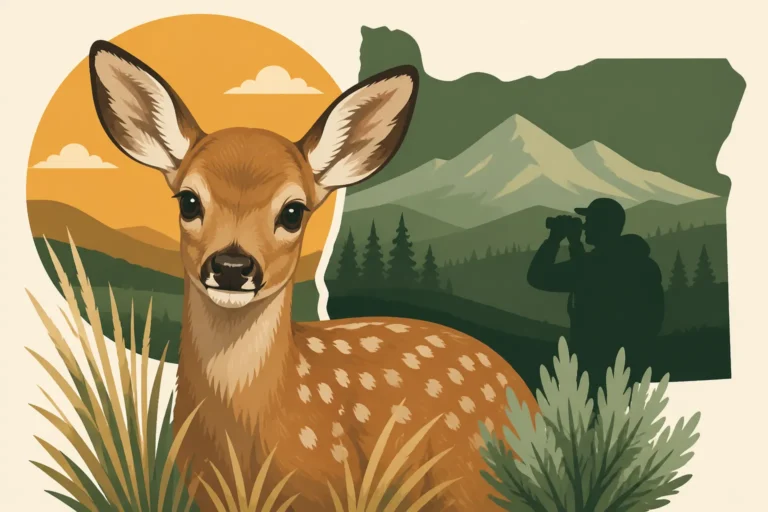
Another huge draw for cougars is the buffet of easily accessible prey that often congregates around human-populated areas. Deer, especially blacktail deer in western Oregon, thrive in fragmented habitats. They'll browse on ornamental plants, graze in green spaces, and find shelter in suburban thickets. A healthy deer population right on the edge of town is a siren song for a cougar. It’s far easier for a cougar to stalk a deer that's preoccupied with munching on someone's rose bushes than to hunt deep in the timber where competition might be higher and cover different.
Beyond deer, many homes offer other potential food sources. Free-roaming domestic cats and small dogs can unfortunately become prey. Chickens, goats, and other small livestock, even if penned, represent a concentrated food source. A cougar, facing the energy demands of survival, will exploit these opportunities. This is why you'll often hear about cougars showing up in rural-residential areas, where hobby farms and open spaces provide both cover and sustenance. These "easy meals" can make a cougar accustomed to being near human activity, increasing the likelihood of sightings.
Young, Dispersing Cats
Not all cougar sightings involve established, adult animals. A significant portion of these close-to-town encounters involve young cougars, typically between one and two years old. When young cougars reach maturity, they are forced to leave their mother's territory to find their own hunting grounds. This is a critical and dangerous time for them. They are less experienced hunters, more prone to taking risks, and often travel long distances to avoid dominant older cats.
These dispersing young cougars often end up in marginal habitats, which can include the edges of human settlements, as they search for available territory and food. They might be less wary of humans simply because they haven't learned the full dangers yet, or they're desperate for a meal. This explains why a cougar might appear disoriented or bold, not necessarily aggressive, but simply trying to survive in an unfamiliar environment. Their nomadic nature means they might pass through your area once and never return, or they might linger if they find easy prey. Tools like GoHunt can help you visualize these transitional areas and potential travel corridors, allowing you to better understand where these young cats might be moving through.
What to Do When You See a Cougar
Seeing a cougar can be a truly heart-stopping moment. It's natural to feel a rush of fear, but how you react can make all the difference for your safety and the cougar's. Knowing these steps beforehand is crucial.
Staying Safe During an Encounter
If you are lucky enough to spot a cougar, the absolute first rule is to never run. Running can trigger a cougar's chase instinct, and they are incredibly fast. Instead, stand your ground, make yourself look as large as possible, and maintain eye contact. This means opening your jacket, raising your arms, and if you have children or pets with you, pick them up immediately to protect them and prevent them from running. Make loud noise – yell, clap, stomp your feet. The goal is to convince the cougar that you are not prey and that you are a potential threat. Many people instinctively want to pull out their phone for a photo, but your priority must be safety.
Slowly back away, giving the cougar an escape route. Never turn your back on it. If the cougar approaches, become more aggressive in your actions. Throw rocks, sticks, or anything you can get your hands on. Fight back fiercely if an attack occurs. Aim for the face and eyes. While rare, Cougar Attacks on People in Oregon do happen, and statistics show that victims who fight back have a much higher survival rate. Remember, a cougar is a powerful predator, but it often relies on surprise and its prey's flight instinct. Disrupting that pattern is your best defense.
Protecting Pets and Livestock
Our pets and smaller livestock are unfortunately highly vulnerable to cougar predation, especially if they are left unattended outdoors, particularly during dawn, dusk, and nighttime hours when cougars are most active. This is a tough pill to swallow for those of us with free-ranging animals, but it's a reality we must face if we live in cougar country. For dogs and cats, bringing them indoors at night is the simplest and most effective measure. If they must be outside, ensure they are in a secure, predator-proof enclosure. A simple chain-link fence won't necessarily deter a determined cougar. Think about overhead coverings and digging prevention.
For livestock like chickens, goats, or even smaller calves, robust enclosures are paramount. Electrified fences can be highly effective, delivering a memorable shock that teaches cougars to stay away. Consider installing motion-activated lights or alarms around pens, which can startle a cougar and send it packing. You might also look into livestock guardian dogs, specific breeds that are raised to protect livestock and can be a significant deterrent. It's about making your property less of an easy meal and more of a hassle for a cougar. Proactive measures are always better than reactive ones when it comes to protecting your beloved animals.
Reporting Your Sighting
Reporting cougar sightings to the Oregon Department of Fish and Wildlife (ODFW) is incredibly important. Even if the cougar simply walked through your yard and moved on, they need to know. These reports contribute to a broader understanding of Oregon Cougar Population Estimates and their movements, helping wildlife managers make informed decisions. Don't assume someone else has reported it; every piece of information helps paint a clearer picture.
When you report, try to provide as much detail as possible:
- Date and Time: Be precise.
- Location: Use a specific address or intersection.
- Description of the Cougar: Was it large, small, light-colored, dark? Did it appear healthy?
- Behavior: What was it doing? Walking, running, stalking, eating? Did it seem aggressive or just passing through?
- Direction of Travel: Which way did it go?
- Any distinguishing features: Were there tracks? Did it have a limp or a scar?
ODFW differentiates between non-threatening sightings and those involving property damage, repeated presence, or aggressive behavior. If there's an immediate threat, such as a cougar stalking people or attacking pets, call 911 immediately. For non-emergency sightings, contact your local ODFW office. This information is vital for understanding Cougar Territory Size and Movement and identifying potential conflict zones, allowing ODFW to step in if necessary to protect both humans and the cougars themselves.
| Action When You See a Cougar | Do | Don't |
|---|---|---|
| Encounter Reaction | Stand tall, make yourself large, maintain eye contact, make noise, slowly back away. | Run, turn your back, crouch down, or play dead. |
| Protecting Others | Pick up small children and pets immediately. | Let children or pets run ahead or wander unsupervised. |
| If Attacked | Fight back aggressively, aim for face/eyes. | Give up, curl into a ball, or pretend to be unconscious. |
| Pet/Livestock Safety | Bring pets inside at night. Secure livestock in robust, predator-proof enclosures. | Leave pets unattended outside, especially at dawn/dusk/night. |
| Reporting | Report all sightings to ODFW (emergency or non-emergency). | Assume someone else will report it, or ignore a sighting. |
| Documentation | Note details like time, location, behavior, size. | Approach the cougar for a closer look or a photo. |
Coexisting with Cougars in Populated Areas
Living in Oregon means sharing the landscape with incredible wildlife, including cougars. While their presence near towns can be unnerving, we have a responsibility to learn how to minimize conflicts and foster coexistence. It’s a two-way street, and understanding their needs can help us secure our own.
Making Your Property Less Attractive to Cougars
The best defense is often a good offense when it comes to deterring wildlife. By making your property less appealing to cougars and their prey, you significantly reduce the chances of an unwanted encounter. Start by removing attractants. This includes making sure your garbage cans are secured and not overflowing, as scavengers like raccoons and opossums are also food sources for cougars. Bird feeders, while lovely, can attract rodents and small birds, which in turn can attract larger predators. Consider removing them or placing them away from your home.
Focus heavily on deterring deer. Fence off gardens, use deer-resistant landscaping, and ensure there’s nothing readily available for deer to browse on. Remember, where the deer go, the cougars often follow. Trim back dense brush around your yard and outbuildings, removing potential hiding spots for a cougar to ambush prey. Ensure outdoor lighting is functional and bright, especially around animal pens and common pathways. For those living on larger parcels, consider motion-activated sprinklers or noise deterrents around vulnerable areas. Every step you take to make your property less inviting makes a difference, turning your yard from a potential hunting ground into a deterrent zone.
Educating Your Community
One of the most powerful tools we have for coexistence is education. Many people simply don't understand cougar behavior or what to do during an encounter, leading to panic or missteps. Community meetings, local school programs, and neighborhood watch groups can all play a role in disseminating accurate information. Sharing resources like this guide, or information from the ODFW, can empower residents with knowledge rather than fear. We need to move past the sensationalized myths and embrace the reality of these animals.
Discussions should cover safe practices for recreating outdoors, especially in areas bordering wildlands. Advise residents to hike or run in groups, carry deterrents like air horns, and keep dogs on leashes. For children, teach them what to do if they see a cougar and never to approach any wild animal. Encourage reporting all sightings to build a robust local database. A well-informed community is a resilient community, better equipped to handle the occasional visit from a wild neighbor. When we all understand the risks and responsibilities, we can create a safer environment for both humans and wildlife.
Local Wildlife Management Approaches
When cougar sightings become frequent or pose a direct threat, local wildlife management comes into play. ODFW is on the front lines, responding to reports and assessing situations. Their approach is usually reactive, meaning they intervene when a cougar becomes a nuisance or a danger, rather than pre-emptively managing populations within urban boundaries. They follow strict protocols for handling cougars, often attempting non-lethal deterrents first, such as hazing or relocation, especially for young, healthy animals that haven't shown aggressive tendencies.
However, repeated depredations on livestock or aggressive behavior towards humans can lead to more drastic measures. This is why reporting is so crucial – it allows ODFW to evaluate the specific cat and situation. Understanding Oregon Cougar Tag Rules and Quotas also provides context for how wildlife populations are managed statewide. Sometimes, a cougar that has become too habituated to human presence and has lost its fear may need to be removed to ensure public safety. These are never easy decisions, but they are made with the intent of protecting both human life and the long-term health of the cougar population by preventing widespread negative perceptions that could lead to broader conflict.
The Broader Picture of Cougar Presence in Oregon
Oregon's landscapes are home to a thriving cougar population, a testament to the state's diverse ecosystems. Understanding their place in the broader natural world helps us grasp why they sometimes venture closer to our neighborhoods.
Oregon Cougar Population Numbers
While getting an exact count of a solitary, elusive predator like a cougar is incredibly challenging, ODFW utilizes various methods to estimate Oregon Cougar Population Numbers. These estimates indicate a healthy and stable population across much of the state, particularly in the forested areas of the Coast Range and the Cascades, as well as parts of Eastern Oregon. Their numbers have generally rebounded since the hound hunting ban in the mid-1990s, showcasing their resilience and adaptability.
This strong population is a sign of a healthy ecosystem, as cougars are apex predators, playing a crucial role in maintaining balance. However, a robust population also means that young, dispersing cougars are consistently seeking new territories, which, as we discussed, often leads them to the fringes of human development. Keeping track of these numbers through scientific monitoring, alongside public sighting reports, helps ODFW manage harvest quotas and develop strategies for human-wildlife coexistence.
Cougar Prey and Deer Herd Impact
Cougars are obligate carnivores, meaning their diet is almost exclusively meat. Their primary prey in Oregon consists of deer, both blacktail and mule deer, and elk calves. They are efficient hunters, and their presence helps keep prey populations healthy by targeting weak, old, or sick animals, which in turn helps prevent overbrowsing of vegetation. The impact of Cougar Prey and Deer Herd Impact is a complex and often debated topic among wildlife biologists and hunters. Some argue that high cougar numbers can contribute to deer population declines, while others emphasize the role of habitat loss, disease, and severe winters.
The reality is that cougars are a natural part of Oregon's ecosystem, and their predation on deer is a fundamental ecological process. Understanding this relationship helps us appreciate the role cougars play. Hunters also contribute valuable data to ODFW, especially concerning deer and elk populations, which informs overall wildlife management plans. Ultimately, a balanced ecosystem includes predators like cougars, and their movements are often directly tied to the movements and availability of their primary food sources.
Disclaimer
This article is for general informational purposes only and does not constitute professional advice. Laws, prices and regulations vary by location and change over time. Consult a qualified professional for guidance on your specific situation.