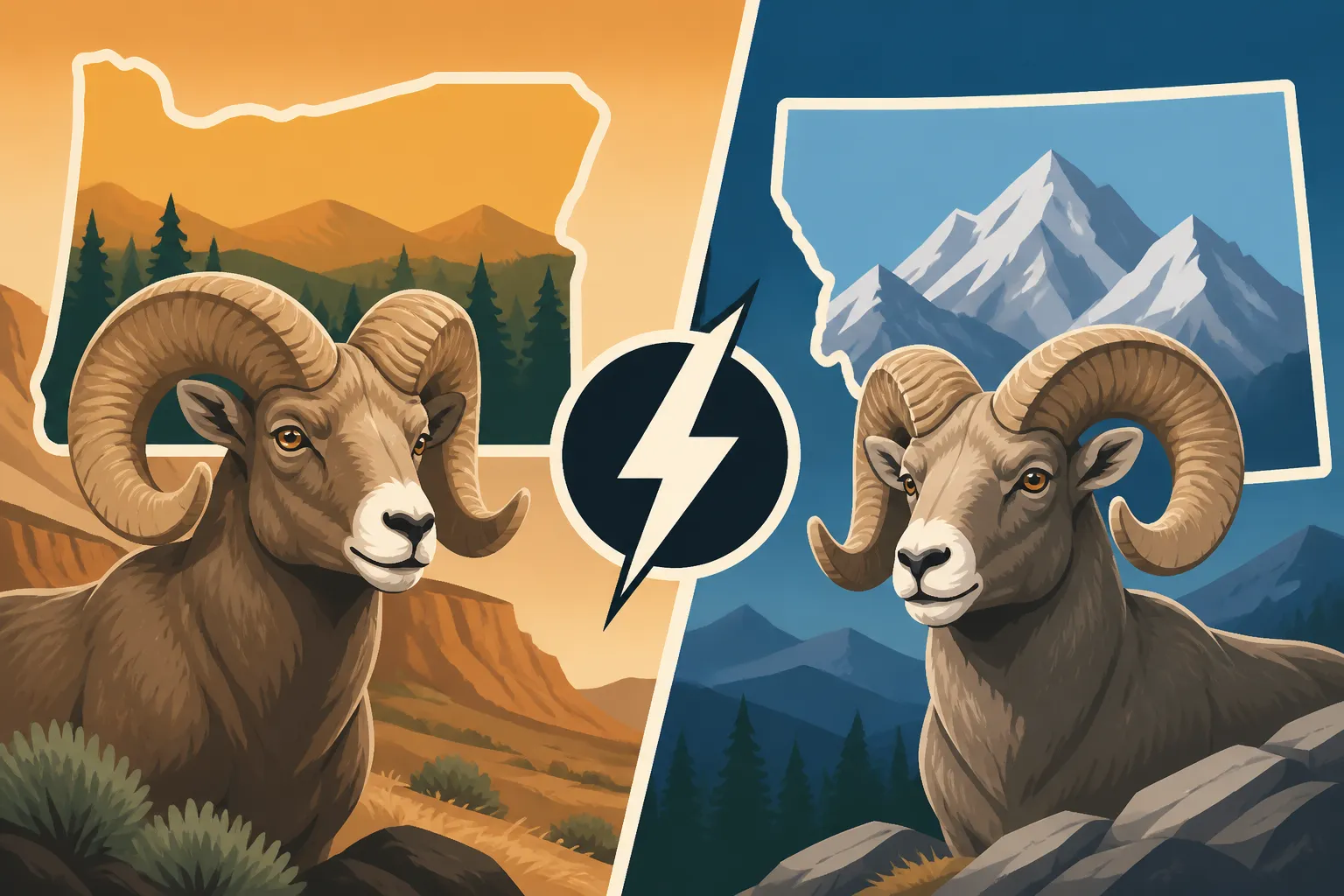
Oregon California Bighorn Versus Rocky Mountain Bighorn Tags
Navigating the world of Oregon bighorn sheep tags can feel like trying to solve a complex puzzle, especially when you're trying to figure out the difference between California bighorn and Rocky Mountain bighorn opportunities. Many hunters, myself included, have spent countless hours poring over regulations and maps, only to be left with more questions than answers about these incredible, once-in-a-lifetime hunts. This guide is here to untangle that confusion, breaking down the unique aspects of each species and how their tag allocation and hunting experiences differ across our beautiful state.
Understanding Oregon's Bighorn Sheep Populations
Oregon is a truly special place, home to two distinct subspecies of bighorn sheep, each with its own unique characteristics, habitats, and, consequently, its own specific hunting opportunities. While both are majestic symbols of our wild landscapes, understanding their differences is crucial for any hunter dreaming of a bighorn tag. It's not just about a different name; it's about different terrains, different challenges, and ultimately, different application strategies.
The Distinctive California Bighorn Sheep
The California bighorn (Ovis canadensis californiana) is the most widespread bighorn subspecies in Oregon, primarily found in the rugged, arid canyons and rimrock country of the southeastern and central parts of the state. Think of places like Steens Mountain, the Owyhee Breaks, and parts of the John Day River country. These sheep are incredibly adapted to their harsh, dry environments. They tend to have lighter-colored coats, often a grayish-brown, which blends seamlessly with the rocky, sage-dotted terrain they call home. Their horns are typically more tightly coiled than their Rocky Mountain cousins, often forming a complete curl or even extending past the jawline, giving them that classic bighorn silhouette.
These animals are a testament to successful reintroduction efforts in Oregon. Many of the herds we hunt today are the result of conservation work that started decades ago after they were extirpated from much of their historical range. Hunting for California bighorns often involves incredibly strenuous hikes in steep, rocky canyons, often far from roads or even established trails. You’ll spend countless hours behind glass, picking apart distant hillsides and cliff faces. The mental and physical challenge is immense, but the reward of finding a ram in this iconic Oregon landscape is unparalleled. Hunters often find themselves in units like the East Whitehorse or Juniper, where access can be challenging but the reward is immense.
The Elusive Rocky Mountain Bighorn Sheep
Rocky Mountain bighorn sheep (Ovis canadensis canadensis), on the other hand, represent a much smaller, and arguably more elusive, population in Oregon. These magnificent animals are almost exclusively found in the Wallowa Mountains of northeastern Oregon, primarily within the Hells Canyon National Recreation Area and the Eagle Cap Wilderness. Their habitat is drastically different from the arid lands of the California bighorns; they prefer higher elevations, steeper, timbered slopes, and the rugged, towering peaks of the Wallowas. Their coats are typically darker, a richer brown, providing excellent camouflage against the dark rock and sparse timber of their alpine homes. Their horns tend to be heavier and more flared than the California bighorn, often with wider spreads and a more open curl, though still impressive.
Hunting a Rocky Mountain bighorn in Oregon is truly an expedition into some of the state's wildest and most remote country. It often requires packing into deep wilderness areas, dealing with significant elevation changes, and navigating incredibly challenging terrain. The weather in the Wallowas can change in an instant, adding another layer of complexity to these hunts. Access often means horse or llama packing into areas like the Imnaha Unit or parts of the Snake River Unit. Due to their limited range and smaller population, tags for Rocky Mountain bighorns are exceedingly rare, making them perhaps the most coveted big game tag in Oregon. The sheer scale of the landscape and the physical demands mean that preparation for such a hunt is not to be taken lightly.
Navigating the Oregon Bighorn Tag System
Applying for a bighorn sheep tag in Oregon is a dream for many, but the process can be intimidating. Unlike deer or elk, where there are general season opportunities or preference points, bighorn sheep tags operate under a completely different, highly competitive, and very limited system. Understanding these nuances is paramount to even having a chance at drawing one of these coveted tags.
Applying for California Bighorn Tags
For California bighorn sheep, the application process in Oregon is part of the annual controlled hunt draw. However, a critical distinction for bighorns is that Oregon has no point system for sheep tags. This means that every applicant has the same odds of drawing a tag, regardless of how many years they've applied or how many times they've been unsuccessful. This can be both frustrating and exhilarating; frustrating because your loyalty to the system doesn't build equity, but exhilarating because every year brings a fresh chance, a clean slate, for every applicant.
When you apply, you'll specify your first, second, and third hunt choices, just like with deer or elk. However, you'll need to choose specific California bighorn units, such as "Steens Mtn," "John Day River," or "Owyhee Unit." The Oregon Department of Fish and Wildlife (ODFW) lists the available units and tag numbers in the annual Big Game Regulations booklet. Typically, only a handful of tags are issued for each unit, often only one or two, making the odds incredibly long. For example, a unit might only offer one ram tag, with hundreds, if not thousands, of applicants vying for it. Hunters often use tools like GoHunt to research historical draw odds for specific units, helping them decide where to focus their precious application. It's a strategic game, where some hunters opt for the highest population units hoping for slightly better odds, while others choose their absolute dream unit, knowing the odds are astronomical but the reward priceless. Remember, applying for an Oregon Bighorn Sheep and Goat Application also makes you eligible for the "once-in-a-lifetime" rule for these species.
Applying for Rocky Mountain Bighorn Tags
The application process for Rocky Mountain bighorn sheep tags in Oregon is essentially the same as for California bighorns, but with even tighter constraints due to the smaller, more localized populations. You'll still apply through the controlled hunt system, selecting your first, second, and third choices from the available Rocky Mountain bighorn units. The critical difference remains: no preference points apply here either. It's a purely random draw.
The number of Rocky Mountain bighorn tags offered annually is typically even lower than for California bighorns, sometimes only one or two tags across the entire subspecies. Units like the "Wallowa-Snake" or "Hells Canyon" are the primary areas where these tags are offered. Because of their extreme rarity, the draw odds are often in the tens of thousands to one, or even higher. It's truly the lottery of hunting. Many applicants simply apply every year, holding onto the hope that this will be their year. The dream of hunting a bighorn ram in the iconic Wallowa Mountains is a powerful motivator, even with such slim chances. If you're serious about understanding past draw trends, even for these rare tags, services like GoHunt offer detailed historical data, allowing you to see just how many applicants vie for these few coveted spots each year. It really underscores the "once-in-a-lifetime" nature of these hunts.
Odds, Strategy, and What to Expect
When it comes to bighorn sheep hunting in Oregon, the word "odds" often dominates the conversation. It's a game of chance, but understanding those chances and forming a thoughtful strategy can make the application process feel less like a shot in the dark and more like a calculated pursuit of a long-held dream.
Comparing Draw Odds and Tag Availability
As we've discussed, both California and Rocky Mountain bighorn sheep tags are highly sought after, but their availability and associated draw odds reflect their respective population sizes and distributions.
California Bighorn Odds:
Generally, California bighorn tags are slightly more available than Rocky Mountain tags, simply because there are more huntable populations across a wider geographic area. However, "more available" is a relative term when we're talking about bighorns. A typical California bighorn unit might offer 1-3 ram tags, drawing thousands of applicants. This translates to draw odds that are often in the range of 1:1,000 to 1:5,000 or more, depending on the unit and the year. Units with historically higher success rates or more accessible terrain tend to be more popular, pushing those odds even higher. For hunters just starting to understand the system, digging into data about Oregon Sheep Draw Odds for Residents or even Oregon Sheep Draw Odds for Nonresidents can provide a stark reality check but also inform their application strategy.
Rocky Mountain Bighorn Odds:
For Rocky Mountain bighorns, the tag availability plummets. It's not uncommon for only one or two Rocky Mountain bighorn ram tags to be issued across the entire state in a given year. The draw odds for these hunts can be astronomical, easily surpassing 1:10,000, and sometimes approaching 1:30,000 or more for a single tag. This makes them one of the rarest tags in the Lower 48. Because of this extreme rarity, many hunters who commit to applying for Rocky Mountain bighorns do so more out of a deep reverence for the animal and the landscape than a calculated expectation of drawing. It's a true dream hunt.
In terms of strategy, some hunters might alternate their first choice between a California and a Rocky Mountain unit each year, spreading their hopes. Others might consistently apply for the same California bighorn unit, hoping that eventually, their name will be drawn from the hat. Given there's no point system for Why Oregon Sheep Has No Point System, every year is a new opportunity for everyone. For those looking to maximize their odds, even slightly, researching the Best Oregon Bighorn Unit Odds and understanding historical applicant numbers can be insightful. This is where platforms like GoHunt become invaluable for data analysis, helping applicants make informed, albeit still long-shot, decisions.
| Feature | California Bighorn Sheep | Rocky Mountain Bighorn Sheep |
|---|---|---|
| Primary Range | Southeastern & Central Oregon (e.g., Steens, Owyhee) | Northeastern Oregon (e.g., Wallowa Mountains, Hells Canyon) |
| Habitat | Arid canyons, rimrock, sagebrush country | High-elevation mountains, timbered slopes, rugged peaks |
| Coat Color | Generally lighter, grayish-brown | Generally darker, richer brown |
| Horn Shape | Tighter coils, often past jawline | Heavier, more flared, wider spread, more open curl |
| Tag Availability | Very limited, but slightly more than Rocky Mountain | Extremely limited, often 1-2 tags statewide |
| Typical Draw Odds | 1:1,000 to 1:5,000+ | 1:10,000 to 1:30,000+ |
| Physical Demands | Very high, steep canyons, dry conditions | Extremely high, high elevation, wilderness packing, harsh weather |
| Reintroduction | Successful reintroduction in many areas | Primarily remnant populations, some reintroduction |
| Conservation Status | Stable in many areas, ongoing management | Vulnerable, highly managed, impacted by pneumonia |
| Access | Often remote, some road access, significant hiking | Primarily wilderness or roadless, requires packing in |
Unit Specifics and Hunting Considerations
Once that magical draw notification arrives – if it ever does, fingers crossed! – the real work begins. The unit you drew dictates much of your hunting strategy, and knowing the differences between typical California and Rocky Mountain bighorn units is key.
California Bighorn Units:
Units like Steens Mountain, Owyhee, or John Day River are known for their vast, open landscapes. Hunting here means endless glassing. You'll spend hours, even days, meticulously picking apart cliff faces, basalt rimrock, and distant hillsides with high-powered binoculars and spotting scopes. The terrain is often steep and broken, requiring excellent physical conditioning and tough footwear. Water sources can be extremely limited, so planning for hydration is critical. You'll likely be hiking many miles a day, often gaining and losing significant elevation. Scouting beforehand, whether physically or through E-Scouting Oregon Units With Satellite Imagery, is crucial to identify potential ram hangouts, water sources, and access points. Weather can be extreme, with hot days in early fall transitioning to bitter cold and wind. Being prepared for everything is a must. Knowing the unique challenges of the unit you draw, like the specific terrain of Where Oregon Reintroduced Bighorns, will be invaluable.
Rocky Mountain Bighorn Units:
Units in the Wallowa Mountains, such as the Imnaha or parts of the Snake River, present a vastly different challenge. This is true wilderness hunting. Expect to pack in, either with horses, llamas, or on your back, deep into roadless country. The terrain is dramatically steep, with dense timbered slopes, deep canyons, and high alpine basins. Navigation can be tricky, and weather patterns are notoriously unpredictable, even in September. Snow and freezing temperatures can occur any time from late summer through the fall. The hunt itself might involve more still-hunting through timbered areas, though glassing will still be paramount in open basins and on ridge lines. Physical conditioning for these hunts needs to be at an elite level, as you'll be operating at higher altitudes and covering incredibly challenging ground for multiple days. Given the remoteness, self-sufficiency and a robust First Aid Kit Items for a Remote Hunt are non-negotiable. Understanding the specific challenges of Rocky Mountain Bighorn Herds in the Wallowas, including the potential for high-elevation access or difficult river crossings, will be vital for any successful hunt.
Regardless of which bighorn tag you might be lucky enough to draw, these hunts represent the pinnacle of big game hunting in Oregon. They demand respect for the animal, the land, and your own physical and mental limits. They are truly once-in-a-lifetime experiences that will test you in every way possible.
Disclaimer
The information provided in this guide is for general informational purposes only and does not constitute legal advice. Hunting regulations and seasons in Oregon are subject to change. Always consult the most current Oregon Department of Fish and Wildlife (ODFW) regulations and official sources before planning any hunting trip. It is your responsibility to know and follow all applicable laws and regulations.