Hunting Camp Fire Restrictions in Dry Years
There's nothing quite like the excitement of planning an Oregon hunting trip, meticulously mapping out your route, scouting your spot, and dreaming of crisp mornings in the woods. But then, as summer drags on and the landscape turns tinder-dry, the creeping dread of fire season sets in. You find yourself constantly checking the news, wondering if your carefully planned hunt will be derailed by closures, or if you'll even be allowed to have a warming fire at camp. It’s a frustrating reality for anyone who loves to hunt in our beautiful, yet often parched, state. This guide is here to walk you through Oregon’s fire restrictions, what they mean for your hunting camp, and how to stay informed so you can hunt safely and legally, even in the driest years.
The Shifting Sands of Oregon's Fire Season Rules
Oregon's landscapes are incredibly diverse, from the wet coastal ranges to the arid high desert, and so are the agencies that manage fire restrictions. What's perfectly fine in one corner of the state could land you in serious trouble just a few miles down the road. This isn't just bureaucratic red tape; it's a critical effort to protect our forests, wildlife, and communities from devastating wildfires, especially during severe drought conditions.
Who Calls the Shots on Fire Restrictions?
The first thing to understand is that there isn't one single, statewide authority dictating all fire restrictions. Instead, it's a patchwork of jurisdictions, each with its own set of rules and updates. It can feel like a full-time job just keeping track of it all, but knowing who to check is half the battle.
- Oregon Department of Forestry (ODF): These folks manage state-owned forests, private timberlands, and respond to fires on a huge chunk of non-federal land. If you're hunting in areas like the Tillamook State Forest or on lands managed by large timber companies, ODF is your primary source for fire restrictions. Their rules often involve "Regulated Use" periods and "Industrial Fire Precaution Levels (IFPLs)," which impact everything from campfires to chainsaw use.
- U.S. Forest Service (USFS): If your hunting adventure takes you into any of Oregon's national forests – think Deschutes, Malheur, Umatilla, Wallowa-Whitman, or Siskiyou National Forest – the USFS sets the rules. These often align with national guidelines but can have local variations depending on specific forest conditions. You'll want to check the website for the specific national forest your hunt unit falls within. For instance, in the vast stretches of the Blue Mountains, conditions can vary widely, necessitating different rules even within the same forest.
- Bureau of Land Management (BLM): Much of Eastern and Central Oregon's high desert hunting grounds are managed by the BLM. Their fire restrictions will apply to these public lands, which are often particularly susceptible to rapid fire spread due to grass and sagebrush. They often have specific "fire prevention orders" for their districts, like the Prineville or Burns BLM districts.
- Oregon Department of Fish & Wildlife (ODFW): While ODFW doesn't set fire restrictions directly, they are crucial for communicating how those restrictions might affect hunting seasons or even cause emergency closures of hunt units. They will often defer to ODF, USFS, or BLM for the actual fire rules but will notify hunters if, say, an entire unit is closed due to a large wildfire or extreme fire danger. It’s always smart to check the ODFW website for any in-season changes to hunts.
The key takeaway here is that you'll likely need to check multiple sources depending on where your hunting unit is located. Platforms like GoHunt can be incredibly useful for consolidating some of this information, offering maps and links to help you navigate the various jurisdictions, but always double-check with the primary agency.
Decoding the Danger: Levels, Phases, and What They Mean
It's not just about "fire ban" or "no fire ban." Oregon agencies use specific systems to communicate fire danger and associated restrictions. Understanding these terms will help you interpret the rules effectively.
- Fire Danger Levels: These are often expressed as Low, Moderate, High, Very High, and Extreme. They're a general indicator of how easily fires can start and spread, and how difficult they might be to control.
- Low/Moderate: Generally, fewer restrictions, but still requires vigilance.
- High: Fire starts easily, spreads rapidly. Expect some restrictions on campfires and maybe some industrial activities.
- Very High/Extreme: Fires start readily from all causes, spread incredibly fast, and are very difficult to control. This is when you'll see the most stringent restrictions, often including full campfire bans, strict rules on vehicle use, and even area closures.
- Regulated Use (ODF): ODF often implements a "Regulated Use" period, which is broken down into phases.
- Phase 1: Usually includes basic restrictions like no open fires except in designated campgrounds, and limits on certain industrial activities to cooler parts of the day.
- Phase 2: Stricter, often banning all open fires outside of private, maintained residences, limiting smoking to vehicles or clear areas, and even requiring a fire extinguisher and shovel in vehicles.
- Phase 3: The most restrictive, often a complete ban on all open fires, smoking, and highly restricting industrial operations, sometimes leading to outright area closures.
- Industrial Fire Precaution Levels (IFPLs) (ODF): These are mainly for commercial timber operations, but some of the rules can indirectly affect hunters, especially if you're hunting on private timberlands that might be temporarily closed or have very specific access rules during high IFPLs. These levels go from I to IV, with IV being the most severe, often halting all industrial activity.
- Public Use Restrictions (USFS/BLM): These are similar to ODF's Regulated Use and often involve stages. They might prohibit campfires, smoking, chainsaws, and even motorized vehicle use off maintained roads during specific hours or altogether. You might encounter situations where a particular wilderness area has different restrictions than a front-country campground nearby. For example, if you're planning a multi-day camp in Oregon's roadless country, understanding these specific nuances can be critical.
The most frustrating part? These conditions can change rapidly. A week of unseasonably hot, dry winds can push an area from "High" to "Extreme" overnight. This means that the rules you checked a month ago when planning your hunt might be entirely different on opening day. Always, always check the current status just before you leave and even periodically during your trip if you have cell service.
Common Restrictions Impacting Your Hunt
When fire danger escalates in Oregon, it's not just about dousing your campfire. The rules can be extensive, affecting everything from where you can park your truck to what time of day you can use a chainsaw to clear a downed tree. These restrictions are put in place for a good reason, and ignoring them can lead to devastating consequences, not to mention hefty fines.
Campfires and Open Flame: More Than Just Wood Fires
This is the most well-known restriction, and for good reason. Escaped campfires are a leading cause of wildfires.
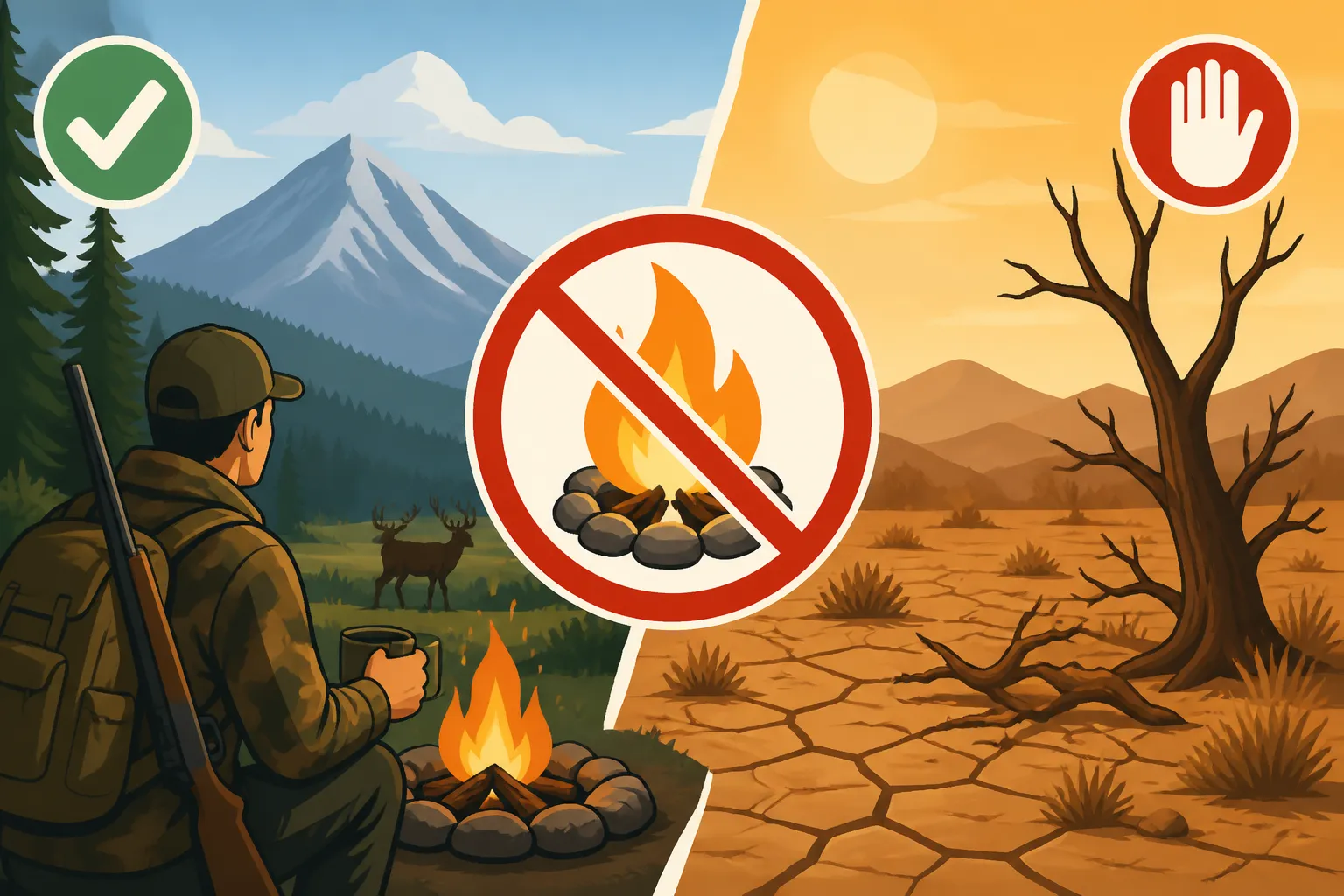
- Wood Campfires: During dry years, wood campfires are almost universally restricted, especially outside of designated, developed campgrounds with metal fire rings. In many hunting areas, especially on national forest or BLM lands outside of developed sites, they will be completely prohibited. This includes those cozy, small fires you might rely on for warmth or cooking.
- Real-life scenario: Imagine you’re hunting the Ochoco National Forest in late September, hoping for a crisp fall evening by the fire. If the fire danger is "High," you’ll likely find that campfires are totally banned outside of developed campgrounds. You can't just dig a pit and build one.
- Charcoal and Briquettes: Don't think you can skirt the rules with a charcoal grill. Often, any open flame from charcoal or briquettes is also included in campfire bans. These can still throw sparks or leave embers that can ignite dry grass long after you've packed up.
- Smoking Restrictions: Many regulations extend to smoking. You might be restricted to smoking only within an enclosed vehicle, in designated campgrounds, or in an area that is completely cleared of flammable vegetation, often 3 feet in diameter or more, and even then, often only while standing in gravel, dirt, or pavement. This means no casual cigarette break while walking through dry brush.
- Alternatives: If you're a coffee connoisseur or need hot meals, a propane stove is often your best bet, but even these can be restricted in the most extreme conditions or in certain areas. Always confirm. Make sure your propane device is in good working order and has no leaks.
It's tempting to think your small, contained fire won't cause a problem, but it only takes one ember on a windy day to spark a disaster. The best practice is to assume no open flames are allowed unless you've confirmed otherwise for your specific location and current conditions.
Navigating Vehicle and Equipment Limitations
It’s not just fires; your vehicle and even simple tools can be a fire hazard during dry periods. Many hunters use ATVs, side-by-sides, or drive off-road to access hunting areas or retrieve game.
- Motorized Vehicle Use Off Improved Roads: This is a big one. During high fire danger, many agencies will restrict motorized vehicle travel to "improved roads" only. An "improved road" typically means a graveled or paved road that is regularly maintained. Driving your truck or ATV through dry grass, even for a short distance to a camping spot or to retrieve a downed animal, can easily ignite a fire from hot exhaust or catalytic converters.
- Example: You might be hunting a unit with vast BLM land in Eastern Oregon. A shortcut across a dry sagebrush flat could be a major violation. Instead, you'll need to stick to designated routes, often marked on maps provided by the land management agency. This means you need to be very familiar with reading a Travel Management Area Map Before You Drive.
- Spark Arrestors: Any internal combustion engine – whether on your truck, ATV, side-by-side, generator, or chainsaw – must be equipped with a properly functioning spark arrestor. This is usually a year-round requirement, but enforcement and the consequences of non-compliance are amplified during fire season.
- Firefighting Equipment in Vehicles: Some restrictions mandate carrying specific firefighting equipment in your vehicle. This can include a shovel (long-handled, round point, at least 26 inches long), and a gallon of water or a 2.5-pound ABC fire extinguisher. These are not just good ideas; they can be legal requirements.
- Time-of-Day Restrictions: Even if some activities are allowed, they might be restricted to cooler, less windy times of day. For example, operating a chainsaw might only be permitted before 10 AM or after 8 PM.
These rules aim to prevent sparks from machinery and hot vehicle components from igniting highly flammable dry fuels. It also limits access to areas where a fire could quickly become uncontrollable.
The Silent Rules: Chainsaws, Welding, and More
Beyond the obvious, some specific activities and tools commonly used by hunters or those in rural settings come under scrutiny during fire season.
- Chainsaw Use: Hunters often carry chainsaws to clear downed trees from forest roads or to cut firewood (when fires are allowed). However, during dry conditions, chainsaws are a significant fire risk due to sparks from the chain hitting rocks or metal, and hot exhaust. As mentioned, there are often strict time-of-day restrictions for chainsaw use, or outright bans during extreme conditions. If allowed, you'll definitely need a shovel, fire extinguisher, and water nearby.
- Welding and Grinding: While less common for the average hunter, if you're doing any camp repairs or working on equipment in a remote setting, welding, grinding, or using other spark-producing tools will be heavily restricted or completely prohibited. The risk of sparks igniting nearby dry vegetation is too high.
- Exploding Targets/Tracer Ammunition: For those sighting in before the season opens, exploding targets and tracer ammunition are almost always banned during fire season due to their high ignition risk. Even shooting steel targets can create sparks that ignite dry grass. Practice safe shooting at designated ranges.
- Maintaining Your Camp Area: While not a restriction on an activity, maintaining a clean camp is crucial. Clear all dry grass, leaves, and debris from around your tents, vehicles, and any cooking areas. This creates a defensible space should a small spark occur.
Understanding these less-obvious restrictions is vital for a safe and legal hunt. It requires a bit more foresight than just remembering "no campfires," but it’s all part of being a responsible hunter in Oregon.
Your Strategy for Staying Informed and Safe
Navigating Oregon's fire restrictions during a hunting season requires a proactive and informed approach. You can't just hope for the best; you need to know where to get the most current information and how to prepare your hunt to minimize risk. After all, the last thing any of us want is to be responsible for starting a wildfire or to have our hunt cut short by an unexpected closure.
Real-Time Information: Your Best Defense
The dynamic nature of fire season means that conditions and restrictions can literally change overnight. What was open and allowed yesterday might be closed and prohibited today. Relying on outdated information from a month-old regulation pamphlet is a recipe for disaster.
- Official Agency Websites: Your absolute best and most reliable sources are the websites of the land management agencies directly overseeing your hunting area.
- Oregon Department of Forestry (ODF): ODF’s website has a dedicated section for fire restrictions by protection district. This is critical for state forests and private timberlands. They usually have an interactive map or a list of current restrictions.
- U.S. Forest Service (USFS): Each national forest in Oregon (e.g., Umatilla, Wallowa-Whitman, Deschutes) has its own website. Look for "Fire Information," "Alerts & Notices," or "Recreation Conditions" sections. They will post Public Use Restrictions (PURs) and area closures.
- Bureau of Land Management (BLM): Similar to the USFS, the BLM manages its lands by district (e.g., Prineville, Burns). Check the specific BLM district website for your hunt area.
- InciWeb: This national incident information system is invaluable during active fires. It provides real-time updates, maps, and closure information for large wildfires across the country, including Oregon. If there’s a major fire near your unit, InciWeb will have the details.
- Oregon Department of Fish & Wildlife (ODFW): While they don't set fire restrictions, ODFW will alert hunters to major area closures or changes to hunt seasons due to fire. Always check their "Hunting Resources" or "Emergency Closures" pages before heading out.
- Local Ranger Stations and Field Offices: Don't underestimate the power of a phone call. Local ranger districts (for USFS), BLM field offices, or ODF district offices often have the most up-to-the-minute local intelligence. They can tell you about specific roads that might be closed or areas currently experiencing high fire activity.
- Oregon 511 System: For road closures related to fires or other emergencies, the Oregon Department of Transportation’s 511 system (available online or by phone) is excellent. A major fire can shut down highways and forest roads, impacting your access. Knowing how to use Oregon's 511 system can prevent you from driving hours only to find your route blocked.
- Third-Party Platforms: Tools like GoHunt can be fantastic for pre-hunt scouting, overlaying land ownership, and often providing links to the official fire restriction pages for various units. While convenient, always use them as a starting point and verify critical information directly with the official agency. These platforms can help you visualize potential fire risks by showing burn scars from previous years or identifying areas with dense, dry fuels.
Make it a habit to check these resources not just a week before your hunt, but also the day before you leave, and even on your way to the hunting grounds if you're passing through areas with connectivity.
Proactive Measures for a Fire-Safe Hunt
Beyond knowing the rules, you have a responsibility as a hunter to actively prevent wildfires. A little preparation goes a long way in ensuring your hunt is safe for you, your fellow hunters, and the environment.
- The Fire Safety Kit: This isn't optional during fire season; it's essential. Every vehicle should have:
- A shovel: A long-handled, round-point shovel (at least 26 inches in length) is legally required in some areas.
- A fire extinguisher: A minimum 2.5 lb, ABC-rated fire extinguisher is often mandated. Make sure it's fully charged and easily accessible.
- Water: At least one gallon of water, or more, for small dousings.
- Saw: If you're using a chainsaw, these items are often mandatory for its operation.
- Vehicle Awareness:
- Parking: Avoid parking your vehicle over dry grass, brush, or other flammable materials. The hot catalytic converter on your exhaust system can quickly ignite these fuels. Always park on pavement, gravel, or in areas cleared to bare dirt.
- Maintenance: Ensure your vehicle is in good working order. No dragging chains, no worn-out wheel bearings throwing sparks. Spark arrestors on ATVs, side-by-sides, and other equipment should be checked to ensure they are clean and functional.
- Tire Pressure: Low tire pressure can lead to hot tires and rims, increasing friction and potential spark generation. Keep your tires properly inflated, especially when driving off-road.
- Campfire Alternatives: If campfires are banned, embrace alternatives. Propane stoves are excellent for cooking. Headlamps and lanterns provide light. Dress in layers to stay warm without a roaring fire. If you’re truly out in the backcountry, think about how you might manage a Backpack Camps in Oregon Wilderness without traditional fire.
- Smoking Responsibility: If smoking is permitted, do so only in vehicles or designated cleared areas. Never flick a butt out the window; use your ashtray. Better yet, consider taking a break from smoking during your hunt.
- Be the First Responder: If you see smoke or a small fire, act immediately if it's safe to do so. Use your shovel and water to try and put it out. If it's too large or dangerous, note the exact location (GPS coordinates are best) and report it to 911 or the local fire dispatch immediately. Every minute counts.
- Plan Your Access: When e-scouting Oregon units with satellite imagery, pay attention to potential access points that are on improved roads. Have backup routes in mind, as main forest roads can be closed due to fires. Also, understand that if you plan to be packing out an elk in Oregon's wilderness units, fire restrictions might make it even harder, potentially limiting vehicle access to trailheads.
By taking these precautions and staying informed, you not only protect yourself and our invaluable natural resources but also contribute to a positive public image for hunters. Let’s make sure we're part of the solution, not the problem, when it comes to wildfire prevention.
Summary of Common Fire Restrictions
To help you keep track, here's a general overview of restrictions you might encounter during Oregon's dry years. Always check current, local conditions before heading out, as these can change daily.
| Restriction Type | Low/Moderate Fire Danger | High Fire Danger | Very High/Extreme Fire Danger |
|---|---|---|---|
| Campfires | Generally allowed in designated areas; caution advised. | Restricted to designated campgrounds with metal rings; often banned in dispersed sites. | Total ban on all open fires, charcoal, briquettes. |
| Smoking | Allowed in clear areas, vehicles, or developed sites. | Restricted to enclosed vehicles, designated sites, or areas cleared to bare mineral soil (at least 3 ft). | Total ban outside enclosed vehicles; often banned even in vehicles within certain areas. |
| Motorized Vehicles | Generally allowed on established roads and off-road where permitted. | Travel restricted to improved roads; specific off-road areas may be closed. | Travel restricted to paved or graveled roads; all off-road travel prohibited. |
| Chainsaw Use | Generally allowed with proper spark arrestor and fire tools. | Time-of-day restrictions (e.g., before 10 AM/after 8 PM); fire tools required. | Often completely prohibited. |
| Welding/Grinding | Generally allowed with proper precautions. | Significant time-of-day restrictions; fire tools and lookout required. | Total ban. |
| Exploding Targets/Tracers | Generally prohibited during fire season regardless of danger level. | Total ban. | Total ban. |
| Required Equipment | None specifically mandated for vehicles, but advisable. | Shovel, 1 gallon water OR 2.5 lb ABC fire extinguisher often required in vehicles. | Shovel, 1 gallon water AND 2.5 lb ABC fire extinguisher often required. |
| Area Access | Fully open, subject to regular land management rules. | Some roads or specific management areas may close. | Widespread road and area closures are common. |
Remember, this table is a generalization. The specific rules for the specific unit and land management agency you are hunting with will always supersede these guidelines. Keep an eye on the official channels, and consider checking Oregon's 300-Foot Rule Beside an Open Road as it relates to shooting and safety near roadways, which can sometimes be linked to fire concerns.
Disclaimer
The information provided in this article is for general guidance and informational purposes only. Fire restrictions in Oregon are dynamic and can change frequently based on weather conditions, fire activity, and land management agency decisions. Always verify current fire restrictions and closures directly with the relevant land management agencies (Oregon Department of Forestry, U.S. Forest Service, Bureau of Land Management, and Oregon Department of Fish & Wildlife) before and during your hunting trip. Failure to comply with fire restrictions can result in severe penalties, including fines and liability for fire suppression costs. Hunt safely and responsibly.