Glassing Rimrock at First Light
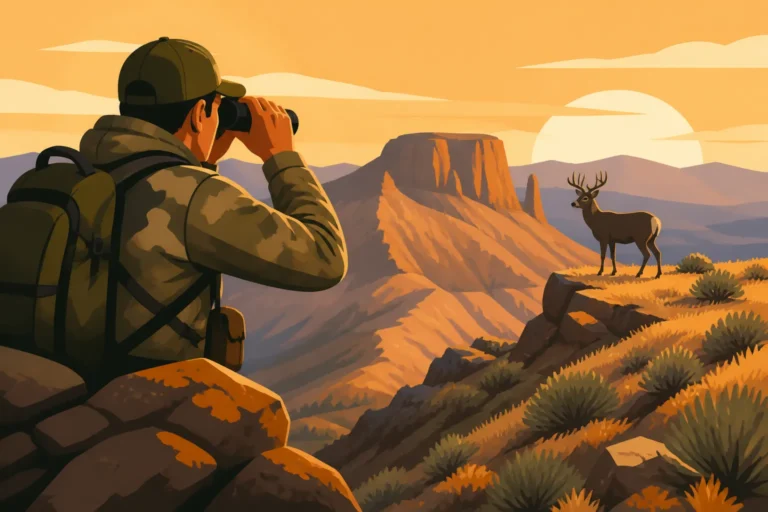
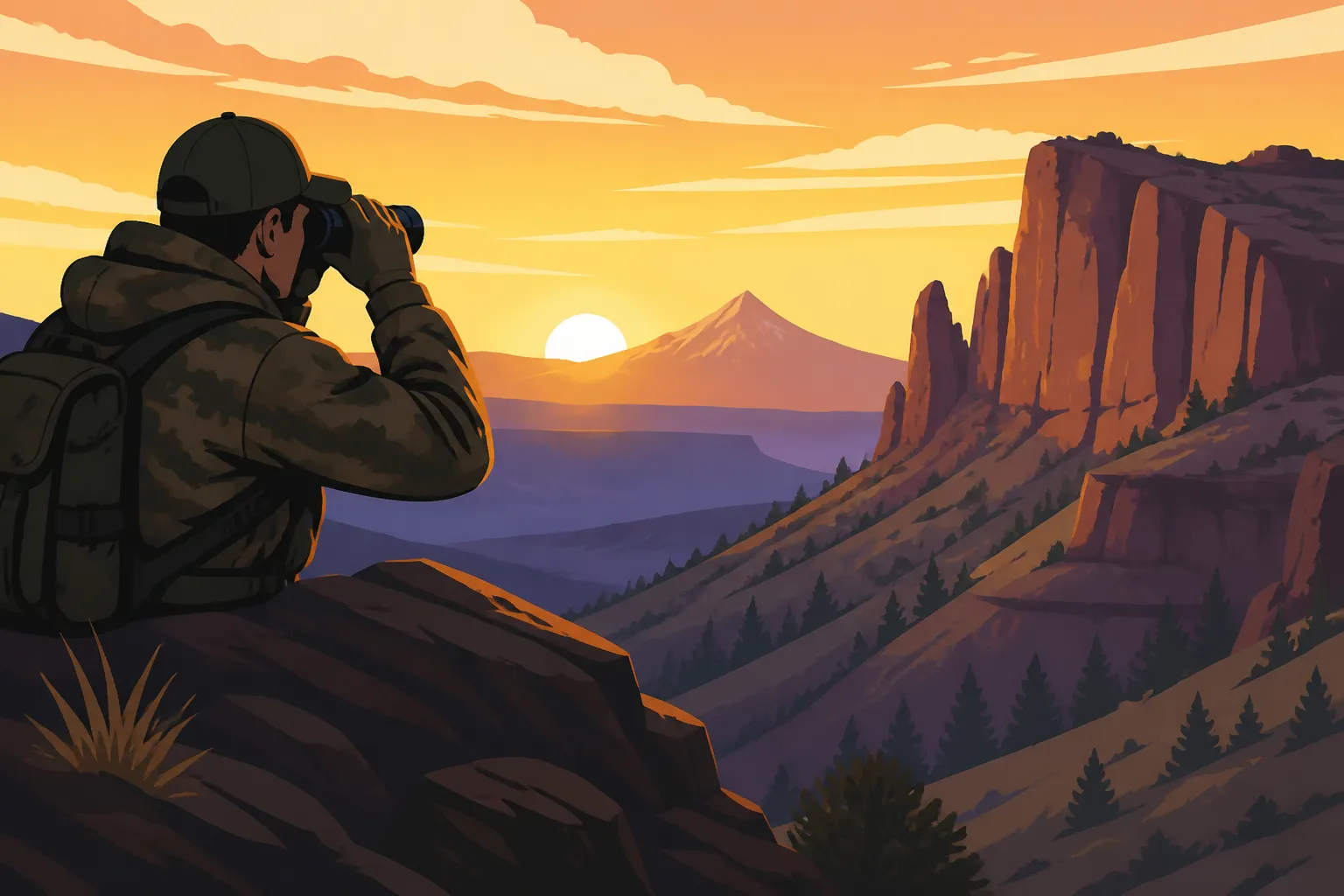
There’s nothing quite like the feeling of waking up well before dawn, the air crisp and still, knowing you’re heading to a prime glassing spot in Eastern Oregon. But if you've spent countless hours staring through binos only to see nothing move until well after the sun is high, you know the frustration. This guide is here to walk you through the subtle art of effective glassing in rimrock country, especially during those critical first moments of legal light, to help you consistently find game when it's most active.
The Magic of First Light in Rimrock Country
The moment the sky begins to lighten in the east is a magical, yet fleeting, window of opportunity for hunters in Oregon's high desert. Deer, elk, and even pronghorn are creatures of habit, and their dawn rituals are often predictable if you know what to look for and where.
Why Early Morning Glassing is Non-Negotiable
Animals are most vulnerable and active during the crepuscular hours – dawn and dusk. At first light, you'll often catch mule deer moving from their nighttime feeding grounds, which might be open sage flats or sparse juniper stands, back toward the dense cover of north-facing slopes or the deep shadows of rimrock canyons where they'll bed for the day. Similarly, pronghorn will be feeding out in the open, often silhouetted against the brightening horizon, before the full heat of the sun drives them to seek what little shade or thermal cover the high desert offers. This transition period, usually lasting only an hour or two after legal shooting light, is your absolute best chance to spot them. Miss this window, and you're often left searching for bedded animals, which is a significantly tougher challenge.
Understanding these patterns is key. For example, if you're targeting deer, they might spend the night grazing on succulent forbs in a sage flat below a rimrock cliff. As the sun barely kisses the highest rock formations, they'll begin their slow, deliberate ascent or traverse towards more secure bedding. It's during this leisurely morning stroll that they're most visible. This is also a fantastic time to implement Glassing Sage and Juniper for Eastern Oregon Mule Deer, as the transition zone between the two habitats often sees high animal activity.
Understanding Rimrock Terrain and Its Challenges
Eastern Oregon’s rimrock country is a diverse and challenging landscape. It’s characterized by dramatic basalt cliffs, steep talus slopes, scattered juniper trees, and vast expanses of sagebrush. This isn't flat, open ground; it's broken, convoluted, and offers countless hiding spots. Animals here are masters of using this terrain to their advantage. They'll bed on small benches beneath an overhang, tuck themselves into the shadow of a large juniper, or disappear into the labyrinthine draws and coulees that dissect the landscape.
The biggest challenge is that from a distance, the broken nature of the rimrock can create "buck fever" for your eyes – every shadow looks like an animal, every rock formation appears to have antlers. The sheer volume of visual information can be overwhelming. Animals use the natural contours and vegetation to vanish almost instantly. A buck might feed for ten minutes on an exposed slope, and then with a single step, be completely out of sight behind a juniper tree or a rock outcropping. Hunters focusing on Finding Mule Deer in Juniper Draws will attest to how quickly a deer can disappear in seemingly sparse cover. Knowing the terrain and anticipating where animals might move or bed down is just as important as having good optics.
Essential Gear and Setup for Effective Glassing
Effective glassing isn't just about having good eyesight; it's about having the right tools and knowing how to use them. In the vastness of Eastern Oregon, your optics are your most valuable scouting and hunting tool.
Optics: Binoculars, Spotting Scopes, and Tripods
When you're trying to pick apart rimrock at first light, your optics are everything. You absolutely need high-quality binoculars, at least 10x magnification, but many experienced hunters prefer 12x or 15x for their primary glassing. Brands like Maven, Vortex, and Leupold offer excellent clarity and low-light performance, which is crucial when the light is just barely creeping over the horizon. Don't skimp here; the difference between budget glass and quality optics is immediately apparent, especially in those marginal lighting conditions.
But here’s the kicker, and it’s non-negotiable for serious rimrock hunting: you need a spotting scope on a sturdy tripod. This isn't just for long-range identification; it's for eliminating eye strain and allowing you to methodically pick apart terrain for extended periods. A 20-60x spotting scope, mounted on a solid tripod, will turn what looks like a distant juniper into a potential bedding area, or a dark shadow into the outline of a mule deer. Without a tripod, even 10x binoculars become shaky after a few minutes, leading to fatigue and missed details. The tripod stabilizes your view, allowing your eyes to truly relax and discern subtle movements or shapes that would otherwise go unnoticed. This is especially true when considering Optics for Dark Timber Versus Open Sage, where clarity and stability in variable light are paramount.
Choosing Your Glassing Perch
Your success hinges as much on your location as it does on your optics. A good glassing perch offers a commanding view of the terrain you intend to hunt, minimizes human disturbance, and allows you to use the wind to your advantage. Ideally, you want to be elevated, looking down into draws, across sage flats, and at the faces of opposing rimrock formations. A perch that's higher than your intended hunting area allows you to see animals moving on benches or feeding on slopes.
Consider the sun's position. At first light, you want the rising sun at your back, illuminating the slopes you're watching. This backlighting makes animals stand out, sometimes even glowing as the first rays hit them. If you're looking directly into the sun, you'll be fighting glare and shadows, making it nearly impossible to pick out game. Also, think about the wind. You want to be upwind or crosswind of the area you're glassing to prevent your scent from spooking animals that might be below or nearby. Finally, ensure your perch offers some natural cover or a good backdrop to break up your silhouette. Nothing spooks game faster than a hunter skylined on a ridge.
Mapping and Planning Your Approach
Before you even step out the door, extensive planning using mapping tools is essential. Modern hunting apps like GoHunt have revolutionized this aspect. You can spend hours e-scouting from your couch, identifying potential glassing knobs, likely travel corridors, and bedding areas. Look for specific features: saddles connecting two mesas, benches below prominent cliffs, shaded draws, and any green-up or water sources that might concentrate animals. These tools allow you to study the topography in detail, marking waypoints for your glassing spots and potential stalk routes.
For instance, using GoHunt’s satellite imagery, you can identify a series of small, dark patches that might be junipers in a seemingly barren area – these could be exactly where a mule deer buck will bed. You can also trace old two-track roads or game trails that could lead you into position or serve as an escape route after a successful harvest. Understanding the lay of the land digitally helps you to be much more efficient when you’re on the ground, especially when you're doing E-Scouting Oregon Units With Satellite Imagery to find those hidden gems. Planning your approach to your chosen glassing perch in the dark is also critical – know your route, anticipate obstacles, and ensure you arrive quietly and well before legal light.
Techniques for Spotting Game in Challenging Light
Spotting game in low light and complex rimrock terrain is a skill developed over time. It requires discipline, patience, and a systematic approach.
The Grid Search Method and Patience
One of the most effective techniques is the "grid search." Instead of randomly scanning the landscape, pick a section of terrain – say, a quarter-mile by a quarter-mile patch of rimrock face. Start at one edge and slowly, methodically, scan across horizontally, then drop your optics slightly and scan back in the opposite direction. Do this until you’ve covered the entire section. Then move to the next section.
This systematic approach forces your eyes to examine every rock, every juniper, every shadow. You’re not looking for an entire animal immediately; you’re looking for parts of an animal. A horizontal line that doesn’t quite fit the vertical lines of a juniper, a patch of hide that looks too smooth or too angular, the flicker of an ear, or even just a shadow that looks "too deep" or out of place. It’s about picking apart the scene, bit by bit. Many times, you won’t spot a deer until it moves a muscle, even if it was "there" the whole time. Patience is paramount here; it's not uncommon to spend 30-45 minutes picking apart a single hillside before a subtle movement gives an animal away. This level of detail-oriented scanning is what will reveal those bedded bucks that seem to melt into the landscape.
Interpreting Animal Movement and Behavior
At first light, animals often move deliberately, almost cautiously. A mule deer buck might take a few steps, pause for several minutes, browse a bit, then move again. You’re looking for these small, unhurried movements. Watch for a flick of a tail, an ear twitch, or the slight shift of a head. These subtle cues are your best indicators.
Animals, especially deer, will also utilize thermals. As the sun begins to warm the ground, air currents will start to rise. Deer often move to higher ground or reposition themselves to take advantage of these rising thermals, which carry their scent upward and away, making it harder for predators (like you!) to detect them. Pay close attention to north-facing slopes and deep draws, as these areas stay cooler longer and can hold animals well after the sun hits the east-facing slopes. In these early morning hours, animals might also be moving to get into position to soak up the first rays of sun to warm themselves after a cold desert night. Remember to check out areas where Water Sources That Hold Deer in Dry Country might be, as deer often visit these at first light.
Dealing with Sun Glare and Shadows
The rising sun can be both your friend and your enemy. While it illuminates the landscape, it can also create harsh glare and deep, deceiving shadows. Position yourself so the sun is at your back, lighting up the slopes you're glassing. As the sun climbs higher, you'll need to adjust your focus. Shadows can hide animals perfectly, so pay extra attention to the shaded sides of junipers, the bottoms of draws, and the lee side of rimrock formations. Animals often use these shadows for concealment as they move towards their bedding areas.
If you find yourself facing glare, try to find an alternative angle or use your hand or a hat brim to shade your binoculars or spotting scope. Sometimes, shifting your position by just a few feet can eliminate enough glare to reveal what was previously hidden. Conversely, those deep shadows that obscure might also be where a wise old buck is trying to disappear. When using your spotting scope, make small, incremental adjustments to the focus, and even the zoom, to try and "punch through" the shadows and reveal any hidden forms.
Common Mistakes and How to Avoid Them
Even seasoned hunters make mistakes, especially when it comes to glassing. Being aware of these common pitfalls can significantly improve your success rate.
Rushing the Process and Lack of Discipline
The biggest mistake a hunter makes is impatience. It's so tempting to scan quickly, see nothing, and then move on. But that’s precisely how you miss game. The rimrock isn't a billboard; animals are masters of camouflage and stillness. You need to commit to truly picking apart a section of terrain. This means disciplined, slow, methodical glassing for extended periods.
Many hunters will glass an area for five or ten minutes, decide it's empty, and then move. Often, the animal they were looking for was simply bedded, or slowly moving through a brushy draw, and wouldn't be seen until much later. Resist the urge to constantly relocate. Find a good perch, settle in, and give the area time. Think about the duration of How Long to Sit a Cougar Set – sometimes you need to commit to similar stretches for deer and elk too. Animals may not appear immediately; they might be just cresting a ridge, getting up from their beds, or moving into view from deeper cover. The most successful glassers are those who demonstrate the most discipline.
Overlooking Obvious Spots and "Buck Fever"
Sometimes, the game isn't hidden in the most remote, rugged canyon. It might be on a small bench right below a frequently traveled road, or a draw surprisingly close to your glassing perch. We often convince ourselves that the biggest bucks will be in the hardest-to-reach places, and while that's often true, it makes us overlook closer, more accessible areas. Every hunter experiences a touch of "buck fever" where excitement or anticipation can make them see animals that aren't there, or conversely, cause them to miss what is there.
Constantly re-evaluate. After a thorough grid search of a distant hillside, take a few minutes to slowly glass the terrain much closer to your position. Check the little pockets of juniper or brush directly below you or just across a small draw that you might have dismissed as "too close." Use mapping tools like GoHunt to review terrain features repeatedly, looking for those often-overlooked benches or small pockets of cover that could hide a trophy buck. Sometimes, the easiest access points are exactly where a smart animal decides to hole up because hunters ignore it.
Not Adapting to Changing Conditions
Rimrock country weather can change in a heartbeat, and with it, animal behavior. A sudden wind shift can push animals into different cover, or a rising temperature can send them to deeper shade earlier in the morning. Smoke from distant wildfires, as discussed in Smoke and Visibility During Fire Season, can drastically reduce visibility. Being adaptable is key. If the wind suddenly switches and is now blowing your scent into your glassing area, you need to be prepared to move to a new location. If the sun quickly burns off the morning cool, animals will move to bedding earlier.
Always be observing the conditions around you. Are the thermals starting to rise? Is the wind picking up? Is a cloud passing over, creating new shadows? These changes dictate how and where animals will move. Don't stick to a rigid plan if the conditions demand a change. Continuously analyze and adjust your strategy to maximize your chances of spotting game. This also includes knowing when to switch from glassing to Still-Hunting Speed in Wet Brush if conditions drastically change and visibility drops.
Glassing Perch Comparison
| Feature | Ideal Glassing Perch | Poor Glassing Perch |
|---|---|---|
| Elevation | High point, looking down into canyons and slopes | Bottom of a draw, limited line of sight |
| Sun Position | Sun at your back, illuminating opposing slopes | Facing directly into the rising sun, lots of glare |
| Wind Direction | Upwind or crosswind of target area | Downwind, blowing scent directly to game |
| Background/Cover | Natural cover to break silhouette, good backdrop | Silhouetted against the sky, exposed |
| Visibility | Panoramic views, able to see into shadows and draws | Obstructed views, too much close-range brush |
| Comfort | Able to sit comfortably and stably for extended time | Uncomfortable, requiring constant movement |
| Accessibility | Reachable quietly well before light | Difficult, noisy approach, arriving late |
Disclaimer
Hunting is an inherently dangerous activity. This guide provides information for educational purposes only. Always prioritize safety, adhere to all local and state hunting regulations, and consider consulting with experienced local hunters or professional guides before venturing into the field. Be aware of your physical limitations and environmental conditions.