Hunting Blacktails in Fog and Drizzle
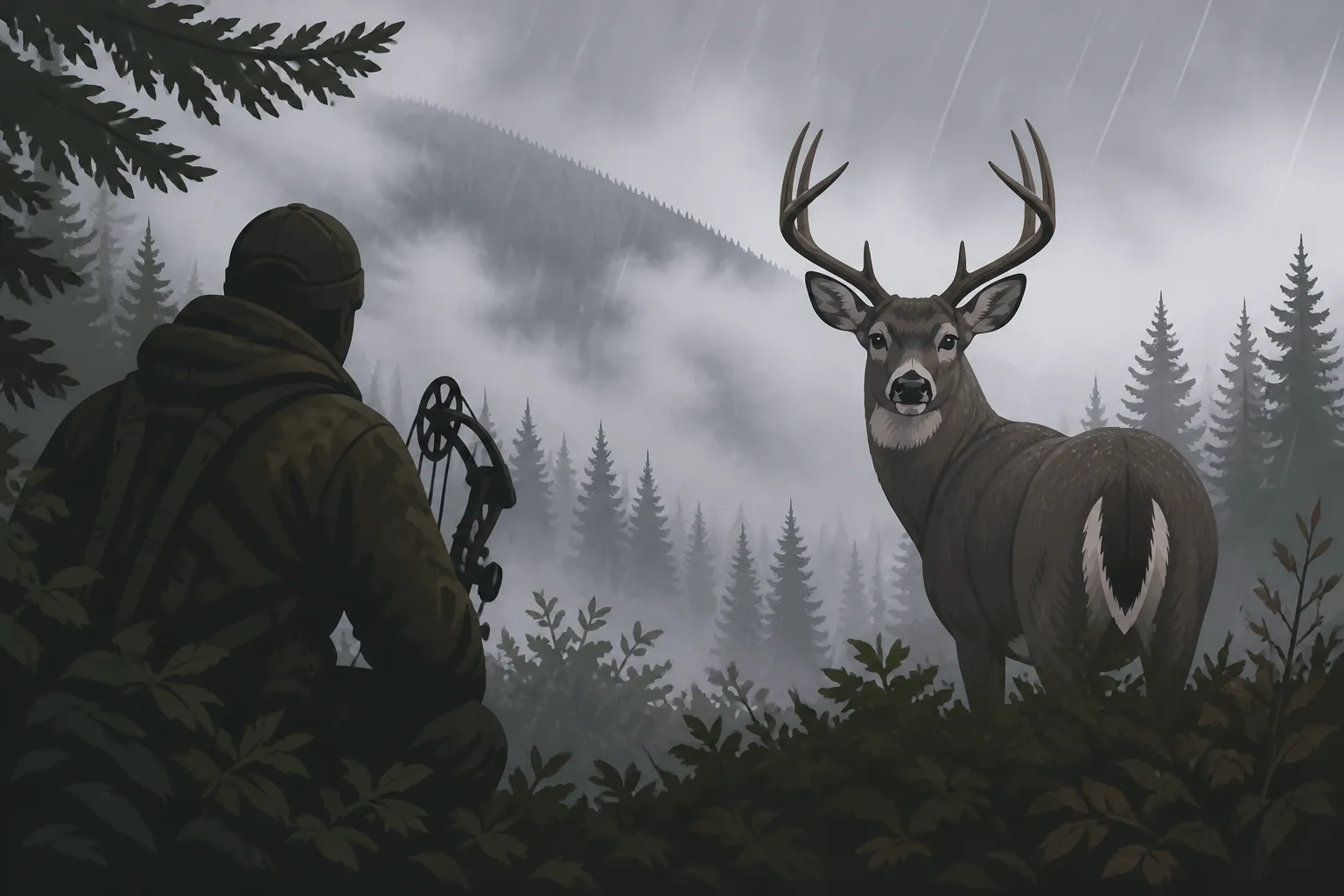
Hunting blacktails in Oregon can be a challenging endeavor, but throw in a thick blanket of fog and persistent drizzle, and suddenly it feels like you're playing a whole different game. The frustrations are real: visibility drops to mere yards, your gear gets soaked, and the deer seem to vanish into the soup. This guide is here to walk you through proven strategies and practical advice to not only endure these conditions but to actually thrive and increase your odds of success when hunting blacktails in the Pacific Northwest's notoriously wet weather.
Understanding Blacktail Behavior in Wet Weather
When the clouds roll in, and the rain starts to fall, blacktail deer don't just disappear; they adapt. Their behavior changes significantly, and understanding these shifts is key to locating them and having a successful hunt.
Why Fog and Drizzle Change Blacktail Movement
Think about it from a deer's perspective: a heavy downpour can be loud, obscuring their ability to hear predators, and prolonged wetness can make them uncomfortable. Fog, on the other hand, can act like a security blanket. It reduces visibility for both predator and prey, often making blacktails feel more secure moving in areas they might normally avoid during bright daylight. Drizzle, as opposed to a full-on deluge, can soften the forest floor, making it quieter for deer to move through. This is a critical factor for hunters, as it means deer might be less cautious about their own noise, but also that your noise will be more muffled.
However, sustained, cold drizzle combined with wind will eventually push deer into the thickest, most sheltered cover they can find. They're looking for a break from the elements, trying to conserve energy and stay warm. This means thinking like a deer and identifying areas that offer maximum protection from precipitation and wind, even if those areas are not traditional "prime" hunting spots in fair weather. The wind direction also plays a crucial role; deer will often bed with the wind at their back, facing downwind to catch any threats approaching from in front of them, but this can shift in swirling fog.
Preferred Bedding and Feeding Areas
In foggy, drizzly conditions, blacktails will often adjust their bedding and feeding patterns. Instead of open clearcuts or exposed slopes, they'll gravitate towards dense, protective cover. This might be a thick stand of reprod timber, a dense salal patch, or a deep ravine that offers a natural windbreak. These areas provide both physical shelter from the rain and visual security from predators, including hunters. They might not move far from their beds in truly miserable weather, often browsing on nearby vegetation within the confines of their secure cover.
When it comes to feeding, blacktails are opportunistic. In light drizzle or fog, they might still be out browsing on various forbs and shrubs. However, if the weather turns nasty, they'll often hold tight. You'll want to focus your efforts on the edges of these dense bedding areas, as deer will often push out briefly to feed when there's a slight lull in the weather, or just after the heaviest rain subsides. Understanding Edge Cover Blacktails Bed In is particularly important here, as these transitional zones offer both food and immediate refuge. Using tools like GoHunt to identify areas with dense vegetation alongside typical feeding areas can help narrow down your search.
Essential Gear for Hunting in Fog and Drizzle
Oregon's wet climate demands serious attention to gear. Hunting in fog and drizzle isn't just uncomfortable without the right equipment; it can be downright miserable and even dangerous if you get too cold or wet.
Staying Dry and Comfortable
The absolute cornerstone of hunting in wet conditions is quality rain gear. This isn't just about a jacket; it's a system. You need truly waterproof outerwear, not merely water-resistant. Look for reputable brands that offer GORE-TEX or similar high-performance waterproof membranes, ensuring that seams are taped and zippers are sealed. It's often worth the investment in a top-tier rain suit from brands like Sitka or Kuiu if you plan to hunt the coast range often. Layering is also crucial: a good moisture-wicking base layer, an insulating mid-layer (like fleece or a puffy jacket), and then your waterproof shell will keep you warm even if the outer layers get damp. Don't forget waterproof pants that can stand up to thick, wet brush.
Beyond your main outerwear, pay close attention to the details. A waterproof hat with a brim will keep rain out of your eyes and off your face. Waterproof gloves are non-negotiable; cold, wet hands make handling a rifle or bow extremely difficult and quickly lead to discomfort. Finally, your feet are your foundation. High-quality waterproof boots, like those designed for Boots for Wet Coastal Hunting, are essential. Look for boots with aggressive tread for slippery terrain and sufficient height to keep water out when crossing small streams or navigating deep puddles. Carry extra socks in a dry bag—there's nothing quite like fresh, dry socks mid-hunt to boost morale.
Optics and Visibility Challenges
Fog and drizzle present significant challenges for your optics. Your rifle scope, binoculars, and rangefinder are all prone to fogging up externally, and sometimes even internally if they're not sealed properly. To combat external fogging, use hydrophobic lens treatments or anti-fog wipes. Keep lens caps on whenever possible, and use a small microfiber cloth dedicated to your optics. Some hunters even carry a small, portable desiccant pack in their binocular harness to help with moisture.
Visibility is naturally reduced in fog, sometimes to as little as 50-100 yards. This means you need to adjust your hunting style accordingly. Your binoculars might not be as effective for long-range glassing, forcing you to focus on closer scrutiny of terrain. When choosing a scope, a good quality optic with excellent light transmission and a wider field of view can make a difference in low light and limited visibility. Avoid overly high magnification, as it can actually make the fog appear thicker and harder to see through. For safety, always be aware of your surroundings and any potential obstacles or other hunters, especially when visibility is compromised. This is where good scouting, perhaps initially using platforms like GoHunt for e-scouting and then confirming with on-the-ground recon, really pays off.
Effective Hunting Tactics for Low Visibility
When you're literally hunting in a cloud, your traditional tactics might not be as effective. It's time to slow down, use all your senses, and embrace the conditions.
Slow Still-Hunting and Tracking
Fog and drizzle are tailor-made for still-hunting. The soft, wet ground muffles your footsteps, giving you a distinct advantage. This is where your Still-Hunting Speed in Wet Brush needs to drop significantly—think one slow step, then pause for several minutes, scanning every shadow and listening intently. The reduced visibility means you're not going to spot deer at long distances, so you need to close the gap before you see them. Move deliberately, carefully placing each foot to avoid snapping twigs or rustling leaves.
Focus on terrain features that funnel deer or offer natural cover, such as ridge lines, benches, and the edges of dense timber or clearcuts. In thick fog, deer might also feel bold enough to move through more open areas, knowing they're less likely to be seen. Pay extra attention to fresh tracks; the soft, damp ground will often leave clear imprints, indicating recent activity. Following a fresh track in these conditions can be incredibly productive, as you might be much closer to the deer than you realize. Look for details in the tracks: how fresh are they? Are the edges sharp or rounded? Are there dew drops inside the tracks? These clues can tell you if the deer is still nearby.
Reading Sign in Soft Ground
The damp ground of a foggy, drizzly day is a sign-reader's paradise. Not only do tracks stand out, but other crucial indicators of deer presence become more apparent. Look for disturbed leaves where a deer has recently walked, fresh droppings that are still moist, or rubs on saplings that look recently scraped. Fresh browse on twigs will show a clean, wet cut. These subtle cues, often missed in drier conditions, scream "deer were here recently!"
Focus your search around areas where you'd expect blacktails to be moving between bedding and feeding. Consider areas with an abundance of forage like huckleberry, salal, or other shrubs that deer favor. The dampness also carries scent better, so pay attention to your nose for the musky smell of deer. While e-scouting with tools like GoHunt can pinpoint potential areas, it's the detailed, slow, on-the-ground reading of sign that will put you on a buck in these conditions. When working the edges of a clearcut, remember that Reading a Two-Year-Old Clearcut for Bucks means looking for dense new growth where deer might bed down or browse, especially if it offers protection from the weather.
Capitalizing on Sound and Scent
In low visibility, your ears and nose become as important as your eyes. The fog and drizzle can play tricks with sound, but they can also make it easier to hear subtle movements. The dripping of water from trees can mask your own sounds, but it can also make it harder to hear a deer. Listen for the distinct sound of hooves on wet leaves or soft ground, the snapping of a twig, or the rustling of brush as a deer moves. Sometimes, in truly thick fog, you might hear a deer before you ever see it.
Scent also behaves differently in moist, heavy air. Instead of rising and dissipating quickly, it tends to hug the ground and travel more predictably with the wind. This means you need to be hyper-vigilant about wind direction and playing it to your advantage. Hunt into the wind, or cross-wind, ensuring your scent isn't blowing ahead of you. Consider using scent eliminator sprays on your gear, and absolutely avoid any strong artificial scents like cologne or highly fragrant soaps. A deer's nose is its primary defense, and in conditions where sight is limited, they rely on it even more heavily.
Post-Harvest Considerations in Wet Conditions
Successfully taking a blacktail in challenging conditions is a huge accomplishment, but the work isn't over. Handling your game properly in wet, potentially mild weather is critical to ensure the meat is of the highest quality.
Field Dressing and Meat Care
The moment you harvest an animal in foggy or drizzly conditions, you need to think about meat care immediately. Moisture combined with internal body heat can create a breeding ground for bacteria, leading to spoilage. Your first priority is to field dress the animal as quickly and cleanly as possible. Get the guts out to start the cooling process. This is similar to the urgency required when Field Dressing an Elk in Warm Early-Season Weather, even if the ambient temperature is lower, the internal heat is a major factor. Hang the deer if possible, even just from a sturdy branch, to allow air circulation around the carcass.
If you can't hang it, at least get it off the wet ground using logs, branches, or even your pack frame. Wipe down any blood on the meat with a clean cloth or paper towels, but avoid rinsing with water, as this can introduce more bacteria. If you have game bags, put them on as soon as the animal is field dressed. These bags protect the meat from flies, dirt, and debris while allowing air to circulate, which aids in cooling and forming a protective "crust" on the meat. If the weather is mild (above 40°F), consider boning out the meat into quarters or even smaller pieces to maximize air exposure and cooling, especially if you have a long pack out ahead. For recovery of an animal that might have moved a bit, understanding Blood Trailing in Sword Fern and Salal will be invaluable, as blood sign can be tough to follow in dense, wet undergrowth.
| Aspect | Fair Weather Strategy | Fog and Drizzle Strategy | Key Gear Considerations |
|---|---|---|---|
| Visibility | Long-range glassing, open country | Short-range, meticulous scanning, focus on movement | High-quality, anti-fog optics, lens cloths, rain hat |
| Movement/Still-hunt | Moderate pace, quiet footing | Extremely slow, deliberate steps, frequent pauses | Waterproof boots, quiet layers, gaiters |
| Sign Reading | Tracks, rubs, droppings, general area | Enhanced track/scat visibility, fresh browse, subtle cues | Headlamp (for early/late light), keen eye for detail |
| Scent/Sound | Wind awareness, hearing is secondary | Heightened wind awareness, rely heavily on hearing, muffled sounds | Scent control spray, quiet fabrics, ear plugs (for rain noise) |
| Deer Location | Open feeding, travel corridors | Dense cover, sheltered edges, brief feeding forays | E-scouting maps (GoHunt), topo maps for terrain relief |
| Meat Care | Cool quickly, avoid sun exposure | Immediate field dressing, game bags, off wet ground | Game bags, sharp knife, latex gloves, emergency blanket |
Disclaimer
The information provided in this guide is for informational purposes only and is not a substitute for official Oregon Department of Fish and Wildlife (ODFW) regulations. Hunting laws and conditions can change rapidly. Always consult the current ODFW hunting regulations pamphlet before heading into the field, and ensure you have all necessary licenses and tags. Prioritize safety, ethical hunting practices, and respect for wildlife and private property.