Trailhead Parking Passes in Oregon
There's nothing quite like the feeling of pulling up to a remote trailhead, gear packed, spirits high, ready to hit the dirt on an Oregon hunting adventure—only to be met with that little sign informing you that a parking pass is required. It's a common snag that can throw a wrench into even the best-laid plans, leaving you scrambling for a pay station or, worse, risking a ticket. This guide is here to untangle the often-confusing world of trailhead parking passes in Oregon, helping you understand what you need, where to get it, and how to avoid that particular pre-hunt headache.
The Essential Role of Trailhead Passes in Oregon's Outdoors
It’s easy to feel a bit put out when you see a fee required just to park your rig, especially when you’re headed into what feels like pristine wilderness. However, these passes play a crucial role in maintaining the very access and beauty we hunters cherish across Oregon. Think of it as a small investment in the future of our outdoor pursuits.
Protecting and Maintaining Our Wild Spaces
The funds generated from trailhead passes don't just disappear into some bureaucratic black hole. Instead, they are typically earmarked directly for the management, upkeep, and improvement of the very trails, parking areas, and facilities you use. Imagine stepping onto a well-maintained trail, clear of fallen logs, with sturdy bridges over streams, and knowing that your small fee helped make that possible. These funds contribute to things like:
- Trail Repair and Construction: Fixing washouts, clearing blowdowns, building new sections of trail that improve access and reduce erosion.
- Restroom Facilities: Keeping those vault toilets clean (or at least functional) and stocked, which is a blessing in the backcountry.
- Signage and Kiosks: Providing important information about regulations, hazards, and trail maps, ensuring you know where you’re going and what’s expected.
- Habitat Restoration: In some cases, funds can even go towards larger conservation efforts, protecting the very wildlife you’re pursuing.
Without these dedicated revenue streams, many of our favorite hunting access points and trails would fall into disrepair, becoming harder to navigate, less safe, and more environmentally degraded.
Navigating the Patchwork of Land Management Agencies
One of the biggest sources of confusion for hunters and outdoor enthusiasts in Oregon is the sheer variety of agencies managing our public lands. It’s not a single, unified system, and understanding this patchwork is key to knowing which pass you need. You might be hunting in a National Forest one day, then drive across the state to a Bureau of Land Management (BLM) area, only to access a specific waterfowl area managed by Oregon State Parks another. Each of these entities often has its own set of rules and, you guessed it, its own required passes.
- U.S. Forest Service (USFS): Manages vast tracts of land, particularly in the Cascades, Coast Range, and Eastern Oregon's Blue Mountains. Their passes are often the most common you’ll encounter at mountain trailheads.
- Bureau of Land Management (BLM): Oversees extensive areas, especially in the high desert of Eastern Oregon. While many BLM trailheads don't require passes, specific developed recreation sites often do.
- Oregon State Parks (OSP): Manages state parks, recreation areas, and some wildlife areas. Their system is distinct from the federal agencies.
- Oregon Department of Fish and Wildlife (ODFW): While ODFW manages wildlife areas for hunting, fishing, and wildlife viewing, they often defer to state or federal pass requirements for parking at shared access points, though some specific ODFW properties might have their own permit systems.
This means that a pass valid for a National Forest trailhead won't necessarily work for an Oregon State Park, and vice-versa. It requires a bit of homework, but knowing which agency owns the land you're heading into is the first step in figuring out your pass situation. This is where tools like onX Hunt can be incredibly helpful, as they clearly delineate land ownership, helping you anticipate pass requirements before you even leave home.
Deciphering Oregon's Most Common Trailhead Permits
When planning your Oregon hunting trips, you're likely to encounter a few specific passes more often than others. Understanding what each one covers and where it's typically required will save you a lot of grief.
The Ubiquitous Northwest Forest Pass
If you spend any significant time hunting or recreating in Oregon's National Forests, the Northwest Forest Pass will quickly become your best friend. This is arguably the most common pass you'll encounter at trailheads throughout the Cascade Range, Coast Range, and other forested regions managed by the U.S. Forest Service.
The Northwest Forest Pass is designed to provide access to day-use recreation sites, including many trailheads, within the National Forests of Oregon and Washington. It’s not always required, as some very primitive trailheads or simple pull-offs may not be designated fee sites, but for any developed trailhead with amenities like a sign, vault toilet, or improved parking area, it's a good bet you'll need one.
- What it covers: Primarily day-use fees at designated federal recreation sites in Oregon and Washington National Forests. This includes many popular trailheads used for accessing prime elk and deer country.
- Annual vs. Daily: You can purchase an annual pass, which is a great value if you plan multiple trips throughout the year. If you're only making a single trip to a National Forest fee area, a daily pass is usually available at self-pay stations or local vendors.
- Who needs it: Anyone parking a vehicle at a designated fee site. This means if you're dropping a buddy off, they don't need a pass, but your vehicle does if it remains parked at the trailhead.
- Where it doesn't apply: This pass does not cover Oregon State Parks, BLM-managed lands (unless specifically noted through a cooperative agreement), or other federal lands like National Wildlife Refuges unless they explicitly accept it.
- Other Federal Passes: While the Northwest Forest Pass is specific to the Pacific Northwest, many federal lands also accept broader interagency passes like the America the Beautiful National Parks and Federal Recreational Lands Pass. If you travel nationally or visit National Parks, this might be a better option as it covers a wider range of federal sites. However, for most Oregon-specific National Forest hunting, the Northwest Forest Pass is the go-to.
Whether you're heading into the Wallowa-Whitman National Forest for Rocky Mountain elk or navigating the Umpqua and Rogue River-Siskiyou Forests for blacktail deer, this pass will likely be relevant.
Oregon State Parks Day-Use Fees and Annual Permits
Oregon State Parks offers an incredible array of outdoor experiences, and while many of them are coastal or more traditional park settings, some provide direct access to excellent hunting opportunities, particularly for waterfowl or in certain forest units that border state land. The pass system here is completely separate from federal passes.
- Day-Use Permits: Many Oregon State Parks require a day-use fee for parking. These are usually purchased on-site at kiosks or through digital payment systems.
- Annual Pass: If you frequently visit Oregon State Parks, an annual pass is a cost-effective choice. It allows you to park at any Oregon State Park day-use area for a full year.
- Where it applies: Exclusively to Oregon State Parks and some ODFW-managed properties that have cooperative agreements. It will not work for federal lands.
- Specific hunting relevance: While less common for deep backcountry elk hunting, these passes are absolutely essential if you plan to access a waterfowl hunting area managed by OSP, or if your route to public timber land involves parking at or passing through a State Park. For example, some units where you might hunt upland birds or even deer can have access points managed by State Parks.
Always check the Oregon State Parks website for specific regulations and pass requirements for your chosen destination.
Less Common but Crucial: BLM and Wilderness-Specific Permits
While the Northwest Forest Pass and Oregon State Parks permits cover the lion's share of trailhead access, there are a few other situations where you might encounter specific fees. These are often site-specific or related to unique management designations.
- Bureau of Land Management (BLM) Fees: Much of Oregon's BLM land, particularly in the eastern high desert, is open country where parking fees at primitive trailheads are rare. However, at developed BLM recreation sites—think specific campgrounds, boat launches, or popular scenic viewpoints that also happen to be access points to larger hunting areas—you might find a small day-use fee required. These are often managed locally, and signage will usually indicate the requirement. Again, an interagency federal pass like the America the Beautiful pass would typically cover these.
- Wilderness Area Permits: This is a slightly different category. While a Wilderness Area trailhead usually requires a Northwest Forest Pass (as most Wilderness Areas are within National Forests), some highly popular or environmentally sensitive Wilderness Areas have additional permitting systems beyond just parking. These might be a free self-issue permit at the trailhead to track visitor use, or a quota system requiring an advanced reservation and fee. These additional permits are usually focused on managing the number of people entering the wilderness, not just parking a vehicle, but they are an important part of the overall access picture. For example, popular sections of the Eagle Cap Wilderness might have different requirements than less-trafficked areas.
- Other Agency Specifics: Occasionally, you might encounter a county park, a private timber company access fee (which is different from a parking pass but restricts access), or a unique local recreation district that charges a fee. These are much rarer for general hunting access but worth keeping in mind if you're researching a very specific spot. When you're Reading a Travel Management Area Map Before You Drive, sometimes these local nuances become apparent.
Navigating this mosaic of permits can be tricky, but a good rule of thumb is: if there’s an obvious sign, an improved parking lot, or any type of facility, assume a pass might be required.
| Pass Type | Primary Coverage Area | Annual Cost (Shape) | Day-Use Option? | Where to Buy | Good For Hunters In… |
|---|---|---|---|---|---|
| Northwest Forest Pass | Oregon/Washington National Forests | Moderate | Yes | Ranger Stations, Visitor Centers, Online, Sporting Goods Stores, Self-Pay | Elk/deer hunting in Cascades, Coast Range, Blue Mtns |
| Oregon State Parks Pass | Oregon State Parks | Moderate | Yes | State Parks, Online, Kiosks, Some DMV Offices | Waterfowl, upland bird, or specific deer hunts via OSP access |
| America the Beautiful Pass | All Federal Fee Sites (National) | Higher | No (Annual only) | National Park Entrances, Online, Participating Federal Recreation Sites | Hunters who visit multiple federal lands across the US |
| BLM Day-Use | Specific Developed BLM Sites | Low | Yes | On-site Kiosks (often cash/check only), Local Vendors, Some accept Federal passes | Accessing specific desert recreation areas with amenities |
Note: Specific prices and availability can vary. Always check the official agency websites for the most current information.
Your Strategy for Acquiring and Using Oregon Trailhead Passes
Okay, so you know why passes exist and which ones are common. Now, let’s talk practical application. Getting and properly using your passes doesn't have to be a major chore if you have a system.
Where and How to Purchase Your Passes
Forethought is your friend here. Don't wait until you're at a remote trailhead at 4 AM to realize you need a pass.
- Online: For most federal and state annual passes, purchasing online through the respective agency's website (e.g., US Forest Service, Oregon State Parks) is the easiest and most reliable method. You often receive a temporary pass to print immediately while your official pass is mailed.
- Ranger Stations and Visitor Centers: These are excellent resources. Not only can you purchase annual or daily passes, but you can also ask staff specific questions about the area you're heading into, pick up maps, and get current conditions. This is particularly useful if you're new to an area or there have been recent closures or changes.
- Local Sporting Goods Stores and Retailers: Many larger sporting goods stores, outdoor shops, and even some general stores near popular recreation areas are authorized vendors for Northwest Forest Passes and sometimes State Park passes. This can be a great last-minute option if you're passing through a town.
- Self-Pay Stations: At many trailheads, especially for daily passes, you'll find a self-pay kiosk. These usually involve filling out an envelope with your vehicle information, inserting cash or a check, and tearing off a stub to display on your dashboard. Crucially, these often only accept cash or check, so always have small bills on hand.
- Digital Payment Apps: A growing number of sites are adopting digital payment systems via smartphone apps. While convenient, remember that cell service can be spotty to non-existent at many remote trailheads, so don't rely solely on this option unless you're certain you'll have connectivity.
Always aim to purchase annual passes well in advance of the hunting season. For day passes, make sure you have small bills and a pen in your glove box as a backup.
Best Practices for Displaying Your Pass
Having the pass isn't enough; it needs to be visible to avoid a ticket. Park rangers and enforcement officers are diligent, and they can't assume you have a pass if they can't see it.
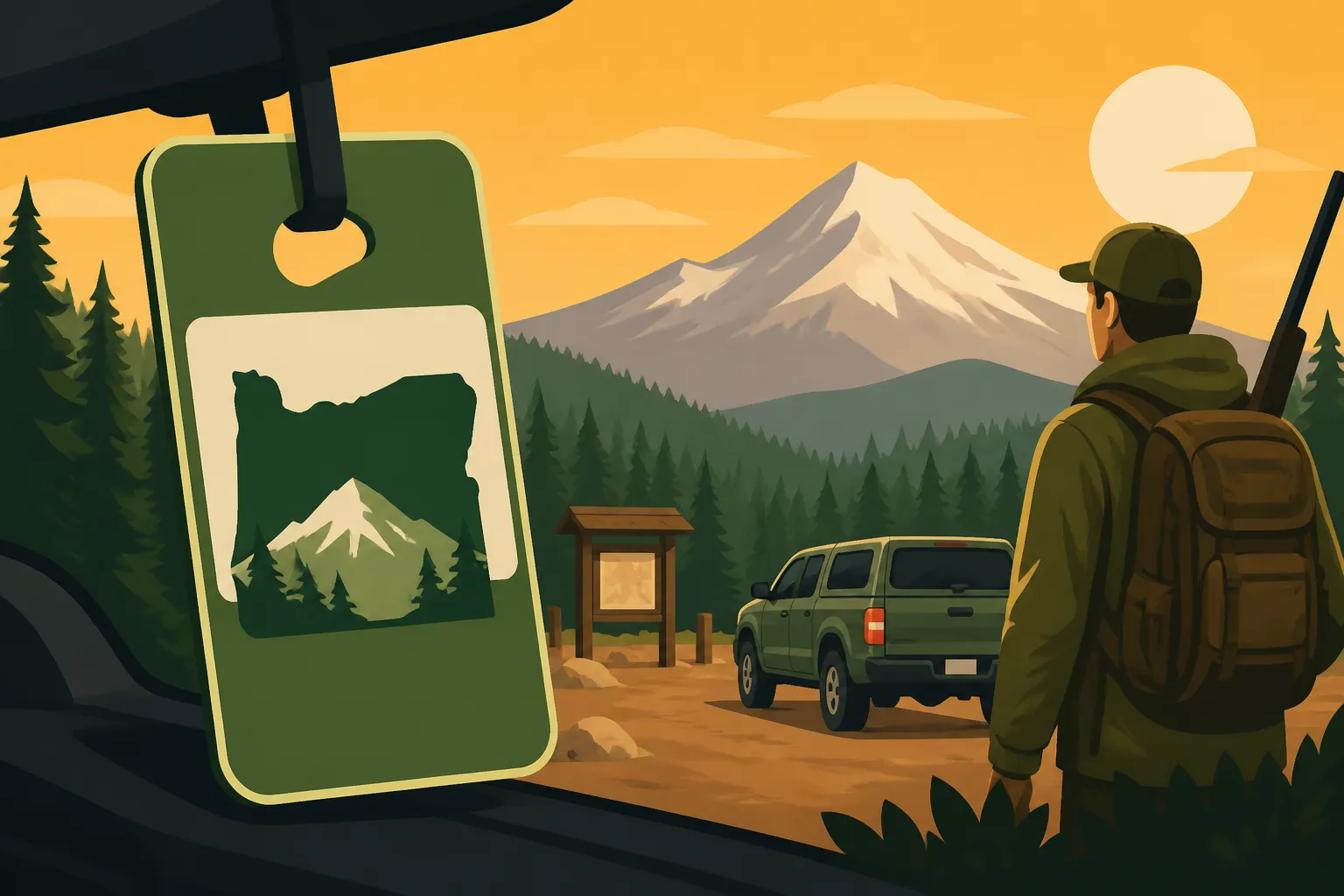
- Clear Visibility: Place your pass clearly on your vehicle's dashboard, usually on the driver's side, with the relevant dates and pass number facing up so it's easily readable from outside the vehicle. If it’s a hangtag, ensure it’s visible from the rearview mirror.
- Avoid Theft: While rare, passes (especially annual ones) can sometimes be stolen if left too prominently displayed or if your vehicle is unsecured. Consider moving it to a less obvious spot, like tucked into the sun visor, once you've been checked, or taking it with you if you're concerned about crime.
- Multiple Vehicles: If you have multiple vehicles you use for hunting, you'll need a separate pass for each, or you’ll need to remember to transfer your hangtag pass to the vehicle you're using that day. This is a common oversight that leads to tickets.
- Temporary Passes: If you’re using a printed temporary pass from an online purchase, ensure it's on durable paper and legible. Laminating it can be a good idea for multi-day hunts in wet conditions.
Leveraging Digital Tools for Planning and Purchase
In the age of technology, our phones and computers can be powerful allies in managing trailhead passes. While they don't replace physical passes entirely, they significantly aid in planning.
- E-Scouting: Before you even leave home, use detailed mapping apps like onX Hunt or GoHunt to E-Scouting Oregon Units With Satellite Imagery. These platforms often show land ownership boundaries, helping you quickly identify whether a trailhead is on National Forest, BLM, or State Parks land. This immediately tells you which type of pass you might need.
- Agency Websites and Maps: The official websites for the U.S. Forest Service (USDA Forest Service) and Oregon State Parks are goldmines of information. They often have maps indicating fee areas and explicit instructions on required passes. Many also offer downloadable GeoPDF maps that work offline, which can include pass information.
- Online Purchase Confirmation: After purchasing an annual pass online, always save the confirmation email or a screenshot of your temporary pass on your phone. This provides proof of purchase in case your physical pass hasn't arrived or you forget it.
- Third-Party Apps: Some apps are emerging that allow for digital purchase and display of passes, particularly for state parks or certain federal sites. However, always verify that the app is officially sanctioned by the agency and that the digital pass will be accepted at your specific trailhead. The key is knowing if you'll have cell service to complete the transaction or display the pass.
Avoiding the Dreaded Ticket: Tips for Oregon Hunters
Nobody wants to come back from a hard day of hunting, tired and hopefully heavy-handed, only to find a citation on their windshield. A little preparation goes a long way to preventing this entirely avoidable frustration.
Pre-Trip Research is Your Best Defense
This cannot be stressed enough. The best way to avoid a ticket is to know exactly what's required before your tires even hit the gravel road leading to the trailhead.
- Identify Your Hunting Unit and Access Points: Pinpoint the exact trailheads or parking areas you plan to use.
- Check Land Ownership: As mentioned, use mapping tools like onX Hunt to see if your access point is on National Forest, BLM, State Park, or other land. This will narrow down the type of pass you need.
- Verify Requirements: Once you know the land manager, visit their official website or call the local ranger district office. They can confirm current pass requirements for specific trailheads. For instance, if you're planning to hunt in areas like Wallowa-Whitman National Forest Hunting or Ochoco National Forest Hunting Areas, a quick call to the local office will clarify specific trailhead pass requirements.
- Look for TMAs and Closures: Sometimes, what looks like a simple trailhead might be part of a larger Travel Management Area (TMA) with specific rules for parking or vehicle access. Always check Reading a Travel Management Area Map Before You Drive or look for information on Checking Oregon Road Closures Before You Go as these often coincide with trailhead access.
Packing Multiple Pass Options for Unexpected Detours
Life happens, and hunting plans can change on a dime. A road closure, a last-minute tip from a local, or simply spotting better sign further down the road might lead you to an alternative trailhead you hadn't originally scouted.
- Keep a Day Pass Handy: Even if you have an annual pass, it’s not a bad idea to keep a blank daily pass envelope and a pen, along with some small bills, in your glove box. This way, if you unexpectedly arrive at a fee site that doesn't accept your annual pass (e.g., a State Park when you only have a Northwest Forest Pass) or you're using a different vehicle, you can still pay.
- Consider an Interagency Pass: If you hunt or recreate across various federal lands in Oregon and beyond, the America the Beautiful Pass is an excellent investment. It covers most federal fee sites, simplifying things immensely.
- Digital Backups: Always have screenshots or downloaded proof of your digital passes or online purchases saved to your phone for offline access, especially when you know you'll be in areas without cell service.
The Consequences of Forgetting Your Pass
It's a frustrating situation, but forgetting or neglecting to display a required pass can lead to more than just a minor inconvenience.
- Fines: The most common consequence is a parking citation, often ranging from minor to significant, depending on the agency and location. These are official government fines and ignoring them can lead to further penalties.
- Towing: In rare but serious cases, especially if your vehicle is perceived as abandoned or if it's impeding access, authorities might have it towed. This is an expensive and time-consuming headache no hunter wants to deal with.
- Damage to Your Hunt: Beyond the financial cost, receiving a ticket can sour an otherwise successful hunt, or worse, cut your trip short if you have to deal with vehicle issues.
- Impact on Future Access: Consistent non-compliance by users can sometimes lead to stricter enforcement or changes in access rules for everyone.
It’s always worth the few extra minutes of preparation to ensure you’re compliant. Think of it as part of your hunting ethics – respecting the land, the rules, and the efforts that go into maintaining these incredible resources for everyone. Making sure you have the correct Northwest Forest Pass Requirements in Oregon or other necessary permits is a small price to pay for uninterrupted access to Oregon's fantastic hunting grounds.
Disclaimer
This article is for general informational purposes only and does not constitute professional advice. Laws, prices and regulations vary by location and change over time. Consult a qualified professional for guidance on your specific situation.