What a Mule Deer Herd Range Is
Hunting in Oregon, especially for mule deer, has seen its share of changes over the years, and one of the biggest shifts that can leave hunters scratching their heads is the move towards "herd ranges" instead of just traditional units. It's completely understandable to feel a bit lost when the boundaries you've known for years suddenly seem to encompass something much larger and less defined by a line on a map. This guide is here to walk you through exactly what a mule deer herd range is, why Oregon made this change, and what it truly means for you as a hunter trying to navigate these new realities.
Understanding Oregon's Shift to Mule Deer Herd Ranges
For decades, many of us grew up hunting based on clearly defined Wildlife Management Units (WMUs). You looked at the map, found the unit number, and that was your hunting area. Simple, right? Well, for animals that move across vast landscapes, those arbitrary lines often didn't make much sense, and Oregon realized a more ecological approach was necessary, particularly for our struggling mule deer populations.
The Traditional Unit System Versus Herd Ranges
Historically, Oregon's hunting framework relied heavily on a system of administrative units. These were often drawn based on geographical features like rivers, roads, or mountain crests, creating distinct "boxes" on a map. While this provided a clear structure for regulating hunts and managing specific areas, it presented a significant challenge for wildlife managers. Mule deer, being highly migratory animals, don't pay attention to human-drawn lines. A single herd might summer in one unit, migrate through another, and winter in a third. This meant that managing a herd effectively by simply adjusting tag numbers within one unit often missed the bigger picture of the herd's overall health and movement patterns. It could be frustrating for hunters, too, when a unit you knew well suddenly had different management prescriptions that didn't seem to account for the deer you were actually seeing move through. The move to herd ranges aims to address this inherent mismatch, creating a management framework that better reflects the actual biology and behavior of the deer themselves.
What Exactly Defines a Mule Deer Herd Range?
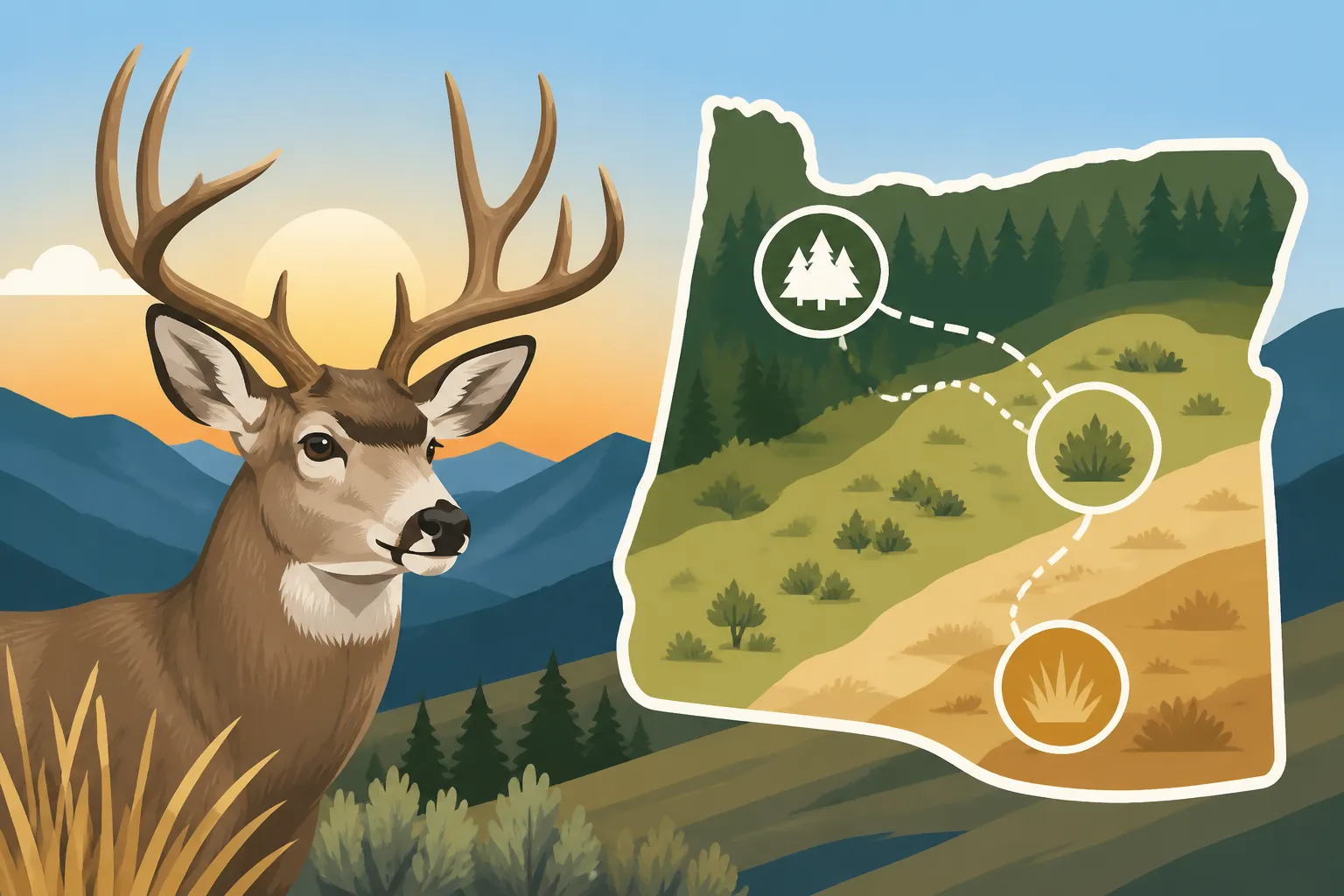
So, if it's not a unit, what is a herd range? Think of a mule deer herd range as a comprehensive geographical area that a specific population of mule deer utilizes throughout its entire annual cycle. This isn't just about where they are during hunting season; it's about their winter range, their summer range, and all the critical migration corridors that connect these seasonal habitats. It's an effort to manage deer as biological populations, not just as numbers within a square on a map.
Wildlife biologists define these ranges using a wealth of data. This includes extensive telemetry studies where deer are fitted with collars to track their movements year-round, aerial surveys to estimate populations and observe patterns, and historical data accumulated over decades. The goal is to identify the crucial areas these deer need to survive and thrive. By understanding the full extent of a herd's movement, managers can implement more targeted conservation and hunting strategies. For instance, if a specific migration corridor is bottlenecked or heavily impacted by development, managing it as part of a larger herd range allows for protection efforts that wouldn't be possible when looking at fragmented units. Oregon has identified Oregon's 22 Mule Deer Herd Ranges, each representing a unique, recognized population of mule deer that moves across a specific landscape.
Why the Herd Range Approach Matters for Mule Deer
The transition to herd ranges isn't just an administrative tweak; it's a fundamental shift driven by a deep concern for the long-term health and sustainability of Oregon's mule deer. Many of us have witnessed the worrying trends in mule deer numbers, and this new management strategy is a direct response to those challenges.
Better Management for Declining Populations
Let's face it: our mule deer populations in many parts of Oregon have been struggling. This decline isn't a secret, and it's a frustration many hunters share. The herd range approach directly addresses this by providing wildlife managers with a more holistic tool to tackle the complex issues contributing to these declines. Instead of just looking at harvest data from a single unit, they can now assess factors like habitat degradation across an entire migratory pathway, analyze predation impacts across winter and summer ranges, and understand disease transmission within a truly integrated population.
For example, if telemetry data shows a particular herd is struggling due to poor fawn survival on its summer range, or if a specific winter range is being encroached upon, management actions can be tailored to that specific herd's needs, encompassing its entire migratory journey. This could mean habitat improvement projects, predator management efforts, or specific regulations designed to protect vulnerable segments of the herd. It's a proactive step to help reverse the trend of Why Oregon Mule Deer Numbers Are Falling by focusing on the deer's actual living space and needs throughout the year.
Impact on Hunting Seasons and Tag Allocation
This is where the rubber meets the road for hunters. With the herd range system, tag numbers are now intrinsically linked to the health and population dynamics of that specific mule deer herd range. This means that instead of a unit getting a certain number of tags based on its individual boundaries, the tag allocation is a direct reflection of the scientific assessment of the deer population across its entire defined range.
The aim is to create a more responsive and sustainable system. If a herd is doing well, there might be more tag opportunities. Conversely, if a herd is struggling, tag numbers will be adjusted downwards, sometimes quite significantly. This can lead to what we've already seen with Oregon Mule Deer Tag Reduction for 2026 in certain areas, as managers prioritize the health of the herd over short-term hunting opportunities. For hunters, this means your success and even your draw odds are now tied more directly to the ecological reality of the deer you pursue. It places a greater emphasis on understanding the specific herd range you're applying for, rather than just the general reputation of an old unit. Resources like GoHunt can be invaluable here, helping you research how tags are distributed within these new herd ranges and what the implications are for your application strategy.
Navigating Hunting in Oregon's Mule Deer Herd Ranges
The shift to herd ranges definitely requires a new mindset when it comes to planning your hunt. It's not just about looking at a single area anymore; it's about understanding the broader movements and seasonal preferences of the deer you're after. This means your scouting, planning, and even your in-field tactics might need an adjustment.
Finding Your Hunt Area on the New Maps
One of the most common frustrations for hunters is simply figuring out where their old stomping grounds fit into the new herd range framework. It can feel like the map you've memorized for years is suddenly obsolete. Thankfully, the Oregon Department of Fish and Wildlife (ODFW) has updated its resources, and there are excellent third-party mapping applications that can help you visualize these new boundaries.
The key is to remember that a herd range often encompasses multiple old units or parts of units. Your first step should be to consult the most current ODFW hunting regulations, specifically the maps detailing the new herd ranges. Cross-referencing these with familiar landmarks can help you orient yourself. Online mapping platforms like GoHunt are incredibly useful for this, as they often have layers that show both the old unit boundaries and the new herd range outlines, making it much easier for you to understand Finding Your Old Oregon Unit on the New Map. Take the time to study these maps, identify the specific herd range your desired hunting grounds fall within, and understand its full extent. Don't be afraid to utilize digital tools to gain clarity on these new spatial definitions.
Strategic Scouting in a Herd Range
With the herd range concept, your scouting efforts need to expand beyond just a single block of public land. You need to think about the entire life cycle of the deer within that range. This means understanding where they might be at different times of the year, not just during hunting season. For instance, if you're hunting in a herd range that includes vast high desert, scouting in the spring can reveal crucial winter range areas that deer are leaving, giving you clues about their migration patterns. Conversely, summer scouting can reveal where they're concentrated for forage and water before the hunts begin.
Focus on identifying the critical components of the herd range: their primary summering grounds, essential winter ranges, and the often-overlooked migration corridors that connect them. Understanding these routes can be key to success, especially during seasons when deer are on the move. Tools like satellite imagery, easily accessible through platforms like GoHunt or other E-Scouting tools, allow you to literally "see" the landscape the deer traverse. You can identify potential bottlenecks, secure bedding areas, and crucial feeding grounds within the larger herd range. Don't limit yourself to just what you can see from the road; remember that deer are utilizing the entirety of their defined range, from deep timber to open sagebrush flats. This broader perspective dramatically improves your chances of locating animals, whether you're Glassing Sage and Juniper for Eastern Oregon Mule Deer or tracking through more varied terrain. Identifying Mule Deer Migration Corridors in Oregon is a prime example of how understanding the full herd range benefits your scouting strategy.
Adapting Your Tactics to Herd Range Dynamics
Given the expansive nature of a herd range, it's highly likely that different sections of it will require different hunting tactics. What works in the dense timber of a mountain summer range might be completely ineffective in the open sage flats of a wintering area, even if both are part of the same herd range.
For example, if you've drawn a tag for a herd range that spans high mountain country and lower elevation juniper draws, your approach needs to be flexible. Early in the season, deer might still be at higher elevations, requiring physically demanding hunts focused on spot-and-stalk tactics. Later in the season, as weather shifts, those same deer might have migrated to lower, more sheltered areas, demanding a different strategy, perhaps still-hunting through pockets of cover or targeting water sources in dryer country. Consider how weather patterns, forage availability, and hunting pressure might influence deer movement throughout the entire range, not just a small section. A successful hunter in a herd range understands that adaptability and a willingness to cover diverse terrain are paramount.
Practical Implications for Hunters
Beyond the theoretical, the shift to mule deer herd ranges has some very real, practical impacts on how you apply for tags, prepare for a hunt, and even how you think about your role in conservation. It’s a learning curve for all of us, but one that is ultimately for the benefit of the deer.
Understanding "Point Creep" and the Draw
The introduction of herd ranges can certainly affect the dynamics of Oregon's controlled hunt draw. Where before you might have accumulated preference points for a specific unit, now those points relate to the broader herd range. This means that the historical draw odds for individual units may not directly translate to the new herd range structure. You might find that some areas within a herd range become harder to draw, while others, perhaps less popular traditionally, now offer a new opportunity if you understand the herd's overall movement.
"Point creep," the phenomenon where more points are needed each year to draw a desirable tag, can still occur, and might even be exacerbated in certain popular herd ranges if demand outstrips the adjusted tag allocations. It's more crucial than ever to thoroughly research the specific hunt choice you're applying for within a herd range. Tools like GoHunt's draw odds data and analysis can be invaluable for understanding the new landscape of Oregon Preference Points and How They Work and how the herd range changes might influence your chances of drawing a tag. Don't assume your old unit's draw history is the full story anymore; the herd range offers a new, broader context.
Collaboration and Conservation
The herd range concept inherently fosters a greater understanding of the interconnectedness of mule deer habitat and populations. As hunters, this means our role in conservation becomes even more pronounced and expansive. It moves beyond just respecting regulations within a specific unit to understanding the broader needs of the herd across its entire range.
This can translate into several important actions. Firstly, staying informed about Oregon Wildlife Disease Surveillance and reporting any sick or dead animals you encounter is vital, as a disease can quickly impact an entire migratory herd. Secondly, respecting seasonal closures, especially those designed to protect critical Oregon Winter Range Closures That Affect Late Hunts, is more important than ever. These closures are in place because the deer rely heavily on these specific areas for survival during harsh conditions. Finally, it encourages us to engage with conservation efforts that address habitat challenges, migration corridor issues, and other factors that impact the health of mule deer across their full range. By thinking in terms of "herd range," we become more informed and effective stewards of this incredible game animal.
| Feature | Traditional Unit System | Mule Deer Herd Range System |
|---|---|---|
| Primary Focus | Administrative boundaries (lines on a map) | Biological population (deer's full annual movement) |
| Management Scope | Fragmented, unit-by-unit | Holistic, across entire seasonal habitats |
| Tag Allocation | Based on unit-specific data | Based on health and dynamics of the entire herd population |
| Hunter Perspective | Concentrated on a fixed geographic area | Requires understanding broader deer movement and habitat use |
| Conservation Goal | Often localized to unit concerns | Addresses habitat, migration, and population health comprehensively |
Disclaimer
This article is for general informational purposes only and does not constitute professional advice. Laws, prices and regulations vary by location and change over time. Consult a qualified professional for guidance on your specific situation.