Oregon Wild Turkeys and Upland Birds
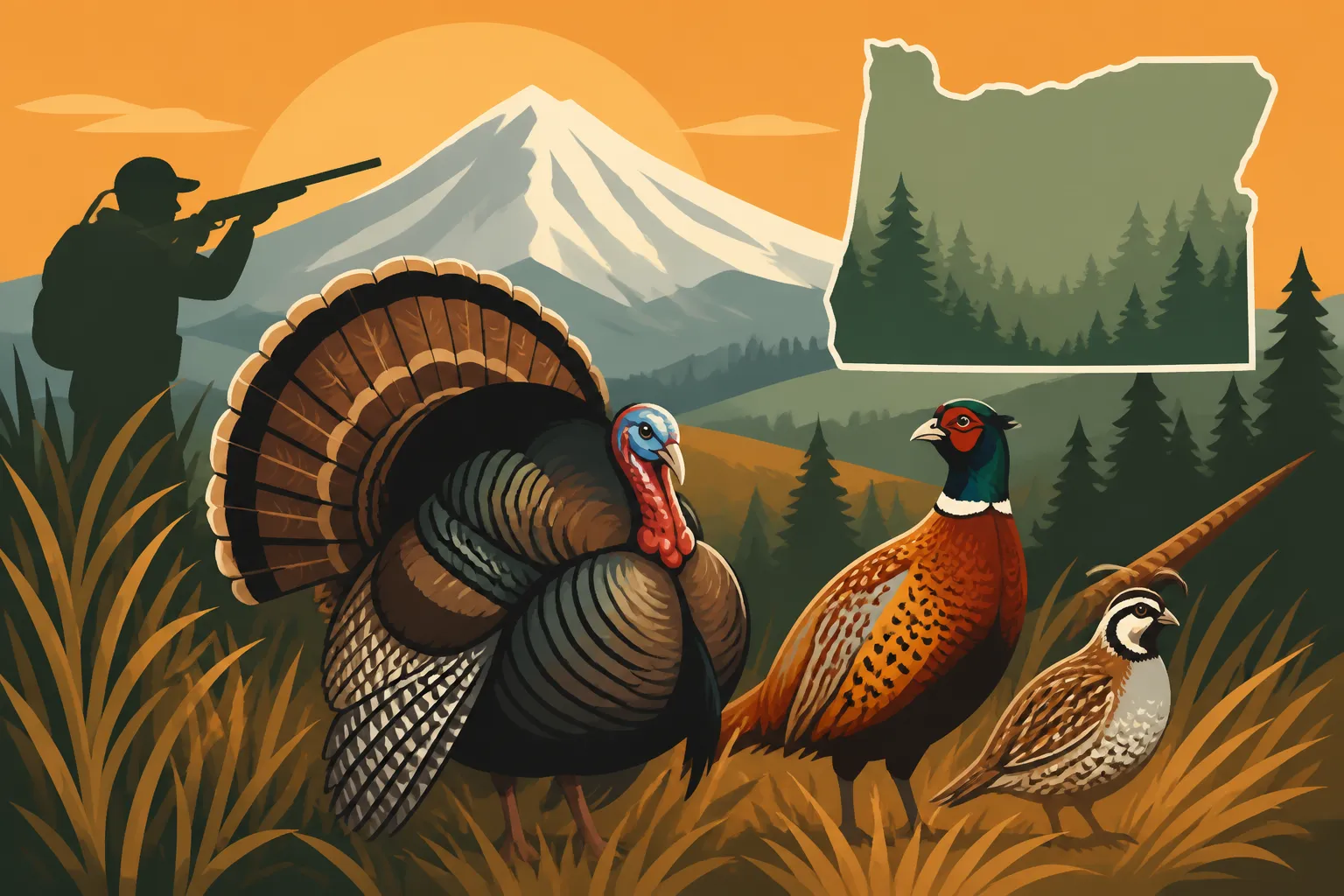
For many hunters in Oregon, the thought of pursuing wild turkeys and upland birds conjures images of challenging terrain, elusive game, and rewarding days in the field. It’s a pursuit that often gets overshadowed by the attention given to deer and elk, but ignoring these incredible opportunities means missing out on some of the state's most engaging hunting experiences. This comprehensive guide will walk you through everything you need to know about targeting wild turkeys and the various upland bird species across Oregon, from their habitats and behaviors to the essential gear and tactics that will help you succeed.
Understanding Oregon's Wild Turkey Populations and Seasons
Wild turkeys were reintroduced to Oregon in the mid-20th century, and their populations have flourished, offering fantastic hunting opportunities across various parts of the state. Knowing where to find them and when to hunt them is key to a successful outing.
Oregon's Turkey Subspecies and Their Distribution
Oregon is primarily home to two main subspecies of wild turkey: the Rio Grande and the Merriam's, with some isolated populations of Eastern wild turkeys resulting from early, less controlled introductions.
The Rio Grande wild turkey is the most widespread and abundant subspecies in Oregon. You'll primarily find them in the drier, oak-savanna and mixed-hardwood habitats of southern and eastern Oregon. Areas like the Umpqua and Rogue valleys, as well as the foothills of the Blue Mountains and Ochoco National Forest, are strongholds for Rio Grandes. They thrive in landscapes with scattered oak woodlands, agricultural fields, and riparian corridors, offering food, cover, and reliable roosting trees. Their adaptability to various conditions has allowed them to colonize many parts of the state since their initial releases.
Merriam's wild turkeys are typically found in the higher elevations and ponderosa pine forests of eastern Oregon. Think of areas around the Wallowa Mountains, much of the Malheur National Forest, and parts of the Fremont-Winema National Forest. These birds prefer more mountainous terrain, often utilizing open pine forests, meadows, and areas with good thermal cover. They are a truly majestic bird, and encountering a Merriam's gobbler strutting through a high-country pine stand is an unforgettable experience. While less numerous than their Rio Grande cousins, Merriam's offer a unique challenge in their rugged environments.
Occasionally, hunters might encounter birds with characteristics of Eastern wild turkeys, particularly in the western valleys, though these populations are generally smaller and less defined due to historical stocking efforts that sometimes mixed subspecies. For a deeper dive into their presence across the state, consider reading our post on Oregon Turkey Subspecies and Range. Understanding the specific subspecies in your chosen hunting unit can slightly influence your calling and scouting strategies, as their preferred habitats and vocalizations can vary subtly.
Key Turkey Hunting Seasons and Regulations
Oregon offers both spring and fall wild turkey hunting seasons, each with distinct regulations, challenges, and rewards. It's crucial to consult the current Oregon Department of Fish and Wildlife (ODFW) game bird regulations pamphlet annually, as dates and rules can change.
The spring turkey season is by far the most popular. It typically runs from mid-April through the end of May, spanning roughly six weeks. This is when gobblers are actively breeding, making them more responsive to calls and generally more visible as they strut to attract hens. A valid Oregon hunting license and a turkey tag are required. Hunters are generally allowed to harvest one bearded turkey per tag, and often, two tags can be purchased, allowing for the harvest of two bearded turkeys in the spring season. Youth hunters often have an earlier, special weekend season, providing a fantastic opportunity for them to get into the field before the general season opens. The intensity and excitement of calling a gobbler into range during the spring rut is what keeps many hunters coming back year after year.
The fall turkey season is a much different affair. It usually runs from early October through January in some units, but specific dates and units vary significantly. During the fall, turkeys are generally less vocal and more focused on feeding to prepare for winter. The regulations for fall hunting often allow for either-sex birds (any turkey), and bag limits might be higher, but success rates can be lower due to the reduced vocalization. Fall hunting typically involves more scouting to locate flocks and then employing methods like "flushing and scattering" to break up a flock, followed by soft hen yelps to call individuals back together. This method can be incredibly effective, but it requires patience and a good understanding of turkey behavior. Remember, failing to report your harvest can lead to penalties, so always stay on top of your Oregon Mandatory Harvest Reporting and the $25 Penalty.
Preferred Turkey Habitats and Scouting Tips
Finding turkeys consistently relies on understanding their preferred habitats and knowing how to effectively scout those areas. Turkeys are creatures of habit, especially when it comes to feeding, roosting, and strutting.
In Oregon, look for areas where mature timber (especially oak and ponderosa pine) interfaces with open fields, meadows, or agricultural land. These transition zones provide everything a turkey needs:
- Roosting Trees: Large, sturdy trees with strong horizontal limbs, often near water or on ridge tops, where turkeys can safely spend the night. Oak, ponderosa pine, and cottonwood are common choices.
- Feeding Areas: Fields of clover, grasses, acorns (in oak country), ponderosa pine seeds, berries, and insects. Turkeys constantly forage, so understanding their seasonal food sources is critical. In spring, they'll be in green-up fields. In fall, they'll be under oak trees or in harvested grain fields.
- Water Sources: While turkeys can go without open water for some time, they'll often frequent areas near streams, ponds, or even cattle troughs.
- Strutting Zones: Open areas where gobblers can display for hens, often on ridge tops, logging roads, or open fields adjacent to timber.
Scouting:
Pre-season scouting is invaluable. Head out a few weeks before the season opens, ideally at dawn or dusk, to listen for gobblers sounding off from their roosts. This "locating" can give you a starting point. Look for signs on the ground:
- Tracks: Distinctive three-toed tracks are easy to spot in mud or soft dirt. Gobbler tracks are generally larger than hens'.
- Droppings: J-shaped droppings indicate a gobbler; spiral-shaped droppings are from a hen.
- Feathers: Found near roosts, dusting bowls, or strutting zones.
- Dusting Bowls: Shallow depressions in dry soil where turkeys dust themselves to remove parasites.
Using tools like GoHunt, you can overlay public land boundaries with satellite imagery to identify promising habitat features like oak stands, clearcuts, and riparian zones. Focus your efforts on these public lands and areas where you've secured permission on private land. Early morning listening from a vehicle on public roads can reveal roost locations without disturbing birds. Remember, if you locate turkeys on private land, always secure permission from the landowner before attempting to hunt.
Chasing Oregon's Resilient Chukar and Quail
Oregon's diverse landscapes offer incredible opportunities for upland bird hunters beyond turkeys, particularly for those willing to put in the miles for chukar and quail. These birds provide fast-paced action and a serious physical challenge.
Chukar Partridge: The High Desert Challenge
Chukar hunting in Oregon is often described as a masochist's delight, but for those who embrace the grind, the rewards are immense. These handsome, brick-red and gray partridges with distinctive black bands across their eyes are native to Asia and thrive in the arid, steep, rocky canyon country of eastern Oregon.
Habitat and Behavior: Chukar are synonymous with rimrock, basalt cliffs, and steep, cheatgrass-covered slopes. They prefer elevations generally below 5,000 feet, where the terrain is rugged, sparse, and often bisected by drainages. They are highly dependent on water sources, especially in the early season, so locating springs, seeps, or stock tanks can be key. Chukar are notorious for running uphill rather than flying when pressured, making them incredibly difficult to pin down. A covey of chukar can explode from underfoot with a startling flush, often sailing far down into a canyon only to land and immediately begin running up the opposite slope. This behavior is precisely why they're such a challenge and why good dog work is almost essential.
Hunting Strategies: Hunting chukar is a test of physical endurance and mental fortitude. You'll be climbing steep, often unstable terrain for miles.
- Water Sources: In early season (September/October), focus your efforts around water. Chukar will typically feed in the mornings and evenings and then head to water in the mid-morning or late afternoon.
- Glassing: Use binoculars or a spotting scope from a high vantage point to locate birds feeding or moving along contours. This saves precious energy.
- Contour Hunting: Instead of going straight up and down, try to walk contours. When you flush birds, note where they land and try to get above them, as they prefer to run uphill.
- Dogs: A well-conditioned pointing dog is a massive asset, saving you countless steps and helping to locate downed birds in dense cover. Breeds like German Shorthaired Pointers, Brittanys, and English Pointers excel in this demanding environment.
The sheer difficulty of chukar hunting means that when you do finally connect, it feels like a true accomplishment. The effort required also means you'll often have vast stretches of beautiful, wild country all to yourself. For more insights into these formidable birds, check out our piece on Chukar and Quail Country in Oregon.
California Quail: Valley and Foothill Favorites
The California quail, with its distinctive curving topknot, is arguably the most recognizable upland bird in Oregon and a favorite among many hunters. These social birds are found throughout the state, particularly in the western valleys and foothills, but also in many suitable habitats east of the Cascades.
Habitat and Behavior: California quail prefer brushy, edge habitats. Think oak woodlands, riparian zones along streams, blackberry thickets, fence rows, and the borders of agricultural fields. They love areas with dense cover for escape and roosting, adjacent to more open areas for feeding on seeds, berries, and insects. They form coveys that can range from a handful of birds to dozens, especially as fall progresses. When disturbed, a covey will often flush explosively, scattering in all directions, often flying short distances into dense cover before regrouping. This habit is what makes them so much fun to hunt, as a good flush offers multiple shooting opportunities, but retrieving downed birds in heavy brush can be tricky.
Hunting Strategies:
- Edge Habitat: Focus on transition zones where dense cover meets open feeding areas. Walk fence lines, creek bottoms, and the edges of clearcuts or fields.
- Listen for Calls: California quail are very vocal. Learn their "chi-ca-go" or "cut-cut-cut" calls. Listening for these calls, especially in the mornings and evenings, can help you locate coveys.
- Dogs: Flushing dogs like Springer Spaniels or Brittany Spaniels can be incredibly effective at busting coveys out of thick cover and retrieving downed birds. Pointers can also be used, but quail often hold tight, making a flush more likely.
- Re-coaxing: If you flush a covey and they scatter, wait 10-15 minutes, then try to re-call them with a quail whistle or soft clucking sounds. Isolated birds are often more willing to respond.
California quail offer a more accessible hunting experience than chukar for many, with ample opportunities on public lands and often on the fringes of private agricultural properties where permission might be granted.
Mountain Quail: Elusive High-Elevation Birds
Oregon's mountain quail are the largest quail species in North America, sporting a striking gray-blue plumage and a long, straight head plume. They are also, without a doubt, the most challenging and elusive of Oregon's quail species to hunt.
Habitat and Behavior: True to their name, mountain quail inhabit higher elevations and dense mountain brush. You'll find them in the brushy slopes and canyon bottoms of the Coast Range, Cascades, and Siskiyou Mountains, typically in areas of chaparral, manzanita, ceanothus, and other thick undergrowth. They often prefer areas that have been disturbed by fire or logging, leading to a mosaic of dense cover and new growth. Unlike California quail, mountain quail often form smaller coveys and are much less vocal. When flushed, they tend to fly downhill, often surprisingly fast, before disappearing into the next patch of impenetrable brush.
Hunting Strategies:
- Location, Location, Location: Finding mountain quail is the hardest part. They are not as widespread or abundant as California quail. Focus on specific drainages or slopes known to hold them. E-scouting Oregon units with satellite imagery can help identify suitable habitat.
- Thick Cover: Be prepared to bust through dense, often thorny, brush. Durable brush pants and a tough dog are essential.
- Slow and Steady: Still-hunting very slowly through promising cover, stopping frequently to listen, can sometimes lead to a flush.
- Dogs: A close-working flushing dog or a very disciplined pointer is crucial. Without a dog, recovering downed birds in the type of cover mountain quail inhabit is nearly impossible. Their scent cone often dissipates quickly in the dense brush, making a dog's nose invaluable.
Hunting mountain quail is a quest for solitude and a testament to a hunter's dedication. Success is measured not just in birds in the bag, but in the sheer joy of finding these magnificent, secretive birds in their rugged mountain domain.
Forest Grouse: Ruffed and Blue (Dusky) Grouse Hunting
Oregon's forests hide two more fantastic upland bird opportunities: the ruffed grouse and the blue (also known as dusky) grouse. Both offer unique challenges and a chance to experience the quieter side of forest hunting.
Ruffed Grouse: The Drumming Ghost of the Timber
The ruffed grouse is a classic forest game bird, renowned for its explosive flush and the distinctive drumming sound the male makes with his wings during the breeding season. They are found predominantly in the mixed conifer and deciduous forests of western Oregon, including the Coast Range and the Cascades, as well as parts of northeastern Oregon.
Habitat and Behavior: Ruffed grouse prefer young, regenerating forests with a mix of conifers and hardwoods, especially areas with dense undergrowth, alder thickets, and riparian zones. They often frequent clearcuts that are 5-15 years old, where thick vegetation provides excellent cover and food sources like berries, buds, and catkins. During the day, they forage on the forest floor, relying heavily on their camouflage to avoid detection. When flushed, they explode from the cover with a thunderous beat of wings, often flying in a zig-zag pattern through the trees, making for a challenging shot.
Hunting Strategies:
- Still-Hunting: Slowly still-hunt through promising habitat, paying close attention to thickets, downed logs, and stream bottoms. Stop frequently and listen. Grouse will often hold tight, allowing you to walk right past them if you're moving too quickly. For tips on quiet movement, you might find our article on Still-Hunting Speed in Wet Brush useful.
- Flush Points: Focus on areas where different types of cover meet, such as the edge of a dense conifer stand bordering an alder bottom, or around old logging roads that have grown in.
- Dogs: A flushing dog can be a great asset for ruffed grouse, helping to locate birds and flush them into the open. The dog's nose can also help locate birds that have "treed" (flown up into a tree to hide), giving you a more static target.
- Listen for Drumming: In the spring, listen for the males drumming. While you can't hunt them in spring, it's a great way to locate territories for the fall season.
Hunting ruffed grouse is a wonderful excuse to wander through the beautiful, quiet forests of Oregon, often encountering deer and elk sign along the way. The anticipation of that sudden, heart-stopping flush is what makes this pursuit so addictive. You can learn more about finding these birds in Ruffed Grouse in Oregon Forests.
Blue (Dusky) Grouse: High Country Roamers
The blue grouse, also officially known as the dusky grouse in Oregon, is a larger, darker forest grouse found in the higher elevations of the state's mountain ranges. They are often less elusive than ruffed grouse, sometimes allowing a closer approach, earning them the nickname "fool hens" in some areas.
Habitat and Behavior: Blue grouse are typically found in mature conifer forests, particularly ponderosa pine, Douglas fir, and true firs, at elevations above 3,000 feet, especially east of the Cascades. They prefer more open timber stands with a sparse understory, often near rocky outcrops or clearings. As the season progresses into fall, they tend to move higher up the mountain slopes, feeding on conifer needles, buds, and berries. Their behavior can vary; sometimes they'll hold tight until you almost step on them, and other times they'll flush noisily. They are also known to "tree" frequently, flying up into the branches of a conifer, where their dark plumage makes them surprisingly hard to spot against the dark bark.
Hunting Strategies:
- Elevation Matters: Focus your efforts on higher elevation conifer forests. Early in the season (September), they might still be lower, but by October, they'll typically be higher up.
- Still-Hunting Open Timber: Walk slowly and deliberately through open pine and fir forests, scanning the ground and the trees. Look for their distinctive droppings or dust bowls.
- Treeing: After a flush, always scan the surrounding trees carefully. Often, a grouse will fly straight up into a tree, thinking it's hidden. A good pair of binoculars can help pick them out.
- Dogs: While not as critical as for chukar or mountain quail, a dog can still be helpful for flushing birds from dense patches or locating treed grouse.
Blue grouse hunting is a more leisurely, often solitary experience compared to the intensity of chukar hunting. It's a great way to explore the beautiful high country of Oregon, with the added bonus of putting some delicious wild game in your vest. To learn more about where to find them, consult our article on Blue Grouse at High Elevation.
Spruce Grouse: The Rare Find in Northeast Oregon
The spruce grouse, sometimes called the "Franklin's grouse" in Oregon, is the rarest and most localized of Oregon's forest grouse species. These birds are found almost exclusively in the dense, mature spruce and true fir forests of extreme northeastern Oregon, particularly in the Wallowa and Blue Mountains.
Habitat and Behavior: Spruce grouse are highly specialized, preferring old-growth conifer forests with a dense canopy and specific understory vegetation. They feed primarily on conifer needles, especially spruce and fir, year-round. They are famously unafraid of humans, often holding tight even when approached closely, making them very susceptible to harvest if found. Their small population and restricted habitat mean they are not a common target for most hunters, and many never encounter one.
Hunting Opportunity: While technically huntable, spruce grouse are not actively managed for harvest due to their rarity and specialized habitat. Hunters who encounter them usually do so incidentally while pursuing other game. If you are fortunate enough to stumble upon a spruce grouse, remember to confirm regulations and ensure you have the correct tag for general forest grouse. Because of their limited numbers and very specific habitat, they are truly a rare and special find for the dedicated Oregon hunter.
The Unique Opportunity of Band-Tailed Pigeons
Often overlooked, band-tailed pigeons offer a unique and exciting upland hunting experience in Oregon. These fascinating migratory birds provide fast-flying action and are found in specific habitats during their season.
Band-Tailed Pigeon Seasons and Regulations
Band-tailed pigeons are migratory birds, so their seasons and regulations are set in cooperation with federal guidelines, often administered by the U.S. Fish and Wildlife Service, in addition to ODFW. The season typically occurs in September, often split into two distinct periods (e.g., early to mid-September, then a break, then late September), but exact dates can vary annually.
Hunters need a valid Oregon hunting license and a free migratory bird validation. Additionally, you must possess a Harvest Information Program (HIP) validation, which is also free and ensures your participation in surveys that help monitor migratory bird populations. Bag limits are usually quite generous, often set at 5-8 birds per day, with a possession limit of two or three times the daily bag. However, this can change, so always check the current ODFW game bird regulations pamphlet specific to band-tailed pigeons. The fast, erratic flight of these pigeons makes for challenging wing shooting, often requiring quick reflexes and a full choke. For the most up-to-date information, refer to Band-Tailed Pigeon Season Status in the regulations.
Locating Pigeon Roosts and Feeding Areas
Finding band-tailed pigeons requires understanding their migratory patterns and their strong preference for specific food sources and roosting sites. They are most commonly found in western Oregon, particularly in the Coast Range and western Cascades.
Key Food Sources:
- Berries: Elderberries and cascara berries are absolute magnets for band-tailed pigeons. These fruits ripen in late summer and early fall, coinciding perfectly with the hunting season. Scouting for large patches of these berry bushes is crucial.
- Acorns: In oak woodlands, especially during later parts of the season, pigeons will heavily feed on acorns.
- Mineral Sites: Pigeons require mineral supplements for digestion and often visit specific mineral springs or bare dirt patches with high mineral content. These sites can be phenomenal ambush points, but hunting too close or over-pressuring them can quickly make birds abandon the area.
Roosting Areas: Pigeons will often roost communally in large conifer trees, especially in mature Douglas fir or cedar stands, often near their feeding areas. Observing their flight patterns at dawn and dusk can help pinpoint these roosts. Birds will fly in from feeding areas in the morning to roost or gather for their evening feeding.
Hunting Strategies:
- Scout for Food: The most effective way to find pigeons is to scout for ripening elderberries and cascara berries. Look for heavily laden bushes and signs of pigeon activity like droppings beneath them.
- Ambush Points: Set up concealed blinds or find good cover near active feeding trees or mineral sites. Pigeons are fast, so you'll need good visibility and quick swings.
- Decoys: Using pigeon decoys, especially on a spinning-wing machine, can be incredibly effective in luring pigeons into range.
- Flight Paths: Observe how pigeons fly into feeding areas. They often follow specific corridors or fly over saddlebacks, offering predictable pass-shooting opportunities.
Hunting band-tailed pigeons is a fast-paced, high-volume shooting experience that contrasts sharply with the slower, more deliberate pace of turkey or grouse hunting. It's a fantastic way to enjoy a beautiful fall day in Oregon's diverse forests.
Essential Gear and Tactics for Oregon Upland Bird Hunting
Success in Oregon's upland bird country depends heavily on having the right gear and employing effective tactics. From shotguns to boots, and especially if you're working with a canine companion, preparation is paramount.
Shotguns, Ammunition, and Choke Choices
Choosing the right firearm and ammunition is critical for these fast-moving targets.
Shotgun Choice:
- Gauge: The 12-gauge is by far the most versatile and popular choice, offering a wide range of loads suitable for everything from quail to turkeys. The 20-gauge is an excellent lighter alternative, particularly for long days chasing chukar or mountain quail in steep terrain, and is often preferred by those who find the 12-gauge too heavy. For smaller birds like quail and grouse in close cover, some hunters even prefer a 28-gauge or .410 for a lighter carry, though these require more precise shooting.
- Action: Over/under and side-by-side shotguns are classic choices, offering two quick shots. Semi-automatics provide a third shot and reduce recoil, which can be advantageous. Pump actions are reliable and affordable. The choice often comes down to personal preference, handling characteristics, and reliability in varied conditions.
- Barrel Length: Shorter barrels (24-26 inches) are often favored for upland hunting as they are quicker to point in dense cover and lighter to carry all day.
Ammunition:
- Shot Size:
- Turkeys: For turkeys, larger shot sizes like #4, #5, or #6 lead shot are standard, with specialized turkey loads using buffered shot or heavier-than-lead pellets for increased knockdown power at range.
- Chukar/Quail/Pigeons: For these smaller, faster birds, #7.5 or #6 lead shot is typically used. #7.5 is excellent for closer shots, while #6 offers a little more range and hitting power for birds flushing further out.
- Grouse: #7.5 or #6 lead shot works well for ruffed and blue grouse.
- Lead vs. Steel: While lead shot is generally preferred for upland birds due to its density and effectiveness, be aware of any specific regulations that might require non-toxic shot in certain areas, particularly on state wildlife areas or near water. Always check the regulations for your specific hunting area.
Choke Selection:
- Improved Cylinder (IC) or Modified (MOD): These are the most common choke choices for most upland bird hunting. IC provides a wider pattern for close flushing birds like quail and grouse in thick cover, increasing your chances of a hit. MOD offers a slightly tighter pattern, extending your effective range for birds like chukar or pigeons that might flush further out or fly faster.
- Full: A full choke is generally too tight for most upland birds at typical flushing distances, often resulting in missed shots or heavily damaged birds. However, for turkeys, a full or extra-full choke is often used to ensure a dense pattern in the head/neck area.
Consider carrying a variety of choke tubes if your shotgun allows for interchangeable chokes, so you can adapt to different species or habitat conditions.
Footwear, Apparel, and Navigation for Rugged Terrain
Oregon's varied hunting environments, from wet coastal forests to arid high desert, demand appropriate gear.
Footwear:
This is arguably the most critical piece of gear.
- Chukar/Mountain Quail: You need sturdy, high-ankle hiking boots with excellent traction and ankle support. Look for waterproof, breathable options like those from Kenetrek or Crispi, designed for mountaineering or backpacking. The miles of steep, rocky, often loose terrain will punish lesser boots. Consider our advice on Boots for Wet Coastal Hunting even if you're not in the coastal range, as robust, waterproof boots are often beneficial.
- Turkeys/Forest Grouse: While sturdy, waterproof boots are still essential, you might not need the extreme rigidity of a chukar boot. Comfortable, mid-height hunting boots that offer good support for miles of walking through varied forest terrain will suffice.
- Socks: Invest in high-quality wool or synthetic socks to prevent blisters and manage moisture.
Apparel:
Layering is key to adapting to Oregon's unpredictable weather, which can change dramatically from morning to afternoon or as you gain/lose elevation.
- Base Layer: Moisture-wicking synthetic or merino wool.
- Mid-Layer: Fleece or puffy jacket for insulation.
- Outer Layer: A durable, waterproof and windproof jacket and pants are essential, especially in western Oregon or during late fall hunts. Look for quiet fabrics.
- Brush Pants/Chaps: For busting through blackberry, manzanita, or thick clearcuts, brush pants or separate chaps will save your legs from thorns and abrasion.
- Hunter Orange: Check regulations for specific hunter orange requirements, especially during general rifle seasons. Even if not required, wearing some orange is a good safety practice, especially when hunting with others.
Navigation:
- GPS/Smartphone App: A reliable GPS unit or a smartphone with a dedicated hunting app like GoHunt or onX Hunt is non-negotiable. These tools provide topo maps, satellite imagery, public/private land boundaries, and the ability to mark waypoints. They are invaluable for navigating vast public lands, locating water sources for chukar, finding old clearcuts for grouse, or simply getting back to your vehicle. Always download offline maps before you leave cell service.
- Compass and Paper Map: Always carry a physical compass and a waterproof paper map as a backup. Batteries die, and electronics fail. Knowing how to use them can literally be a lifesaver. Our guide on Reading a Travel Management Area Map Before You Drive can help you get started.
- Two-Way Radios: If hunting with a partner, two-way radios can be incredibly useful for communication in areas without cell service, especially when splitting up to cover more ground.
Working with Hunting Dogs: A Game Changer
For most upland bird hunting, a well-trained hunting dog can dramatically increase your success and enjoyment. Different breeds excel at different tasks and for different birds.
Types of Dogs:
- Pointers (e.g., German Shorthaired Pointer, Brittany, English Setter): Ideal for chukar, quail, and grouse. These dogs cover ground, scent birds, and "point" (freeze in a specific posture) when they locate birds, allowing the hunter to move in for the flush. Their ability to locate scent cones and hold birds is invaluable for challenging species.
- Flushers (e.g., Springer Spaniel, Cocker Spaniel, Labrador Retriever): Excellent for California quail, ruffed grouse, and any bird that holds tight in dense cover. Flushers work within gun range, pushing birds out for the shot, and are excellent at retrieving downed game.
- Retrievers (e.g., Labrador Retriever, Golden Retriever): While often used as flushers in upland scenarios, their primary strength is retrieving downed birds, especially important in dense cover or where birds might fall into water.
Dog Training Considerations:
- Obedience: A well-behaved dog is a safe and effective hunting partner. Basic obedience (heel, sit, stay, come) is paramount.
- Conditioning: Upland hunting in Oregon, especially for chukar, is incredibly demanding. Your dog needs to be in peak physical condition to avoid injury and perform all day.
- Scent Work: Training your dog to consistently locate and retrieve birds, even in heavy cover, is essential.
- Gun Shyness: Proper introduction to gunfire is critical to ensure your dog is not gun-shy.
- Water: Many areas have creeks or ponds, so a dog comfortable with water is a bonus.
Hunting with a dog adds another layer of joy to the experience, allowing you to witness their incredible instincts and work ethic. They turn a solo hunt into a true partnership. Plus, they significantly reduce the number of lost birds, which is a conservation win in itself.
Conservation and Access for Oregon Upland Hunters
Responsible hunting isn't just about bagging birds; it's about stewardship, understanding the land, and ensuring these opportunities exist for future generations.
ODFW Initiatives and Habitat Management
The Oregon Department of Fish and Wildlife (ODFW) plays a crucial role in managing wild turkey and upland bird populations and their habitats across the state. This work is largely funded through hunting license and tag sales, reinforcing the "hunter-conservationist" model.
ODFW conducts surveys to monitor population trends, track harvest rates, and assess habitat conditions for all game birds. Based on this data, they set seasons and bag limits to ensure sustainable populations. For example, they monitor the success of turkey reintroduction efforts and adapt regulations as populations expand or contract in certain areas.
Habitat management is another cornerstone of their efforts. This includes:
- Prescribed Burns: Controlled burns help manage vegetation, promote new growth, and create mosaic habitats beneficial to grouse, quail, and turkeys.
- Forest Thinning: Reducing stand density can improve forage conditions and open up canopy for birds like blue grouse.
- Restoration Projects: Working to restore riparian areas, oak woodlands, and other critical habitats that have been degraded.
- Water Development: For species like chukar and arid-land quail, developing and maintaining guzzlers (artificial water catchments) in dry areas can be vital for survival during drought years.
Hunters contribute directly to these conservation efforts through their purchases of licenses and tags, and indirectly through their participation in programs like the HIP validation. Understanding these efforts can help you appreciate the broader conservation picture that supports your hunting pursuits.
Accessing Public and Private Lands for Upland Birds
Oregon offers a wealth of hunting opportunities on both public and private lands, but knowing how to access them legally and ethically is paramount.
Public Lands:
- National Forests (USFS) and Bureau of Land Management (BLM) Lands: These federal lands comprise vast tracts across Oregon, especially in the eastern and southern parts of the state. They are generally open to hunting unless specifically closed or restricted. Most upland bird hunting, particularly for chukar, grouse, and turkeys, occurs on these lands. Always check for any fire season closures or specific rules for your chosen unit.
- Oregon Department of State Lands (DSL) and State Forests: Oregon's state forests, like the Tillamook and Clatsop, offer excellent opportunities for blacktail deer, elk, and forest grouse. State lands are also typically open to hunting, but always confirm any specific regulations or use restrictions.
- Oregon Wildlife Areas: ODFW manages several wildlife areas throughout the state, some of which offer upland bird hunting. These areas often have specific rules, permit requirements, or seasonal closures to manage wildlife or reduce disturbance. For example, some areas in the Willamette Valley might offer opportunities for pheasants or quail.
Using mapping tools like GoHunt is incredibly helpful for identifying public land boundaries and navigating these vast areas. It allows you to E-Scout Oregon units with satellite imagery to pinpoint promising habitats before you ever leave home.
Private Lands:
Hunting private land can offer exceptional opportunities, especially for turkeys and California quail, which often thrive on agricultural fringes and mixed-use properties.
- Permission is Key: Always, always, always obtain explicit permission from the landowner before stepping foot on private property. Trespassing is illegal and gives all hunters a bad name. Be respectful, be polite, and be prepared to be denied. A written permission slip can prevent misunderstandings.
- Access & Habitat Program: ODFW's Access & Habitat Program works with private landowners to open up access for public hunting, often for a fee or in exchange for habitat improvements. These "Welcome to Hunt" or "By-Permission" areas are marked on ODFW maps and can be excellent resources. Our article on Oregon's Access and Habitat Program Lands explains this in detail.
- Timber Company Lands: Large timber companies like Weyerhaeuser or Hancock Timber sometimes offer public access, sometimes for a fee or permit, to their vast timber holdings. These areas can be excellent for forest grouse, blacktail deer, and even turkeys. Always check their specific access rules, as they can change due to logging operations, fire danger, or seasonal closures.
Being a responsible hunter means respecting all landownership, leaving gates as you found them, packing out all trash, and being an ambassador for the sport.
Ethical Hunting Practices and Regulations
Ethical hunting and adherence to regulations are non-negotiable. Not only do they ensure the sustainability of game populations, but they also uphold the integrity of the hunting tradition.
Core Ethical Practices:
- Positive Identification: Always be 100% certain of your target before you shoot. Know the difference between legal game birds and protected species.
- Clean Kills: Strive for clean, humane kills. Know your effective range and practice your shooting.
- Retrieve All Game: Make every effort to find and retrieve any downed bird. Losing game is a disservice to the animal and a waste of a resource.
- Respect Property: Whether on public or private land, treat the environment and property with respect. Do not litter, damage property, or cut fences.
- Fair Chase: Hunt within the spirit of fair chase, relying on your skills and knowledge rather than unfair advantages.
Key Regulations to Remember:
- Licenses and Tags: Always carry your valid Oregon hunting license, appropriate tags (turkey, migratory bird validation, HIP), and any required permits.
- Bag and Possession Limits: Know the daily bag limit and the total possession limit for each species you are hunting. Do not exceed them.
- Shooting Hours: Be aware of legal shooting hours, which are typically from one-half hour before sunrise to one-half hour after sunset.
- Safety Zones: Be mindful of safety zones around dwellings, roads, and recreation areas. Know Oregon's 300-foot rule beside an open road.
- Firearm Safety: Always follow the four fundamental rules of firearm safety.
- Harvest Reporting: Do not forget to report your harvest by the specified deadlines, even if you don't fill your tag. This data is vital for ODFW management.
Hunting is a privilege, not a right. By being knowledgeable, ethical, and responsible, you contribute to a positive future for Oregon's hunting heritage.
Oregon Upland Bird Species Comparison
To help you plan your adventures, here's a quick comparison of Oregon's primary upland bird species.
| Species | Primary Habitat | Difficulty Level (Physical) | Typical Hunting Method | Key Challenge | Average Size (Weight) |
|---|---|---|---|---|---|
| Wild Turkey | Oak woodlands, ponderosa pine, agricultural edges | Moderate | Calling, ambush, still-hunting | Roosting/patterning, keen eyesight | 15-25 lbs (Gobblers) |
| Chukar Partridge | Arid rimrock, steep cheatgrass canyons | Very High | Spot-and-stalk, dog work | Extreme terrain, running uphill | 1-1.5 lbs |
| California Quail | Brushy edges, riparian zones, agricultural | Low to Moderate | Flushing, dog work, listening | Fast flush, dense cover retrieval | 6-8 oz |
| Mountain Quail | Dense mountain brush, high elevation | High | Slow still-hunting, dog work | Extreme elusiveness, thick cover | 8-12 oz |
| Ruffed Grouse | Young mixed forests, dense undergrowth | Moderate | Still-hunting, dog work | Explosive flush, zig-zag flight | 1-1.5 lbs |
| Blue (Dusky) Grouse | Mature conifer forests, high elevation | Low to Moderate | Still-hunting, treeing | Locating in vast forests | 2-3 lbs |
| Band-Tailed Pigeon | Elderberry/cascara thickets, conifer roosts | Moderate | Ambush, pass-shooting, decoys | Extremely fast flight, migratory patterns | 10-14 oz |
Disclaimer
Please note: Hunting regulations, season dates, and access rules can change frequently. Always consult the most current Oregon Department of Fish and Wildlife (ODFW) regulations pamphlet and relevant land management agency rules before planning any hunting trip. This guide is for informational purposes only and should not be considered a substitute for official regulations.