Warner Unit Combined Into One Oregon Hunt
It’s a familiar story for many Oregon hunters: you get used to a particular unit, learn its nuances, and then, boom, the rules change. It can be incredibly frustrating to see a hunt area you’ve invested time and effort into scouting suddenly morph into something new, especially when it impacts species like our beloved mule deer. This guide is all about demystifying one such significant change: the consolidation of the Warner hunting unit, formerly known as Warner North and Warner South, into a single, unified Warner Unit. We’ll delve into what this means for you, your cherished preference points, and how you can adapt your strategies to continue hunting this unique high desert country successfully.
Understanding the Warner Unit Consolidation: What Changed?
For years, hunters in southeastern Oregon knew the Warner Valley as two distinct units: Warner North and Warner South. These separate designations guided tag allocations, hunt boundaries, and, of course, how we talked about hunting this beautiful, rugged landscape. But like many things in wildlife management, change is constant, and ODFW decided it was time for a refresh.
The Shift from North and South to One Unit
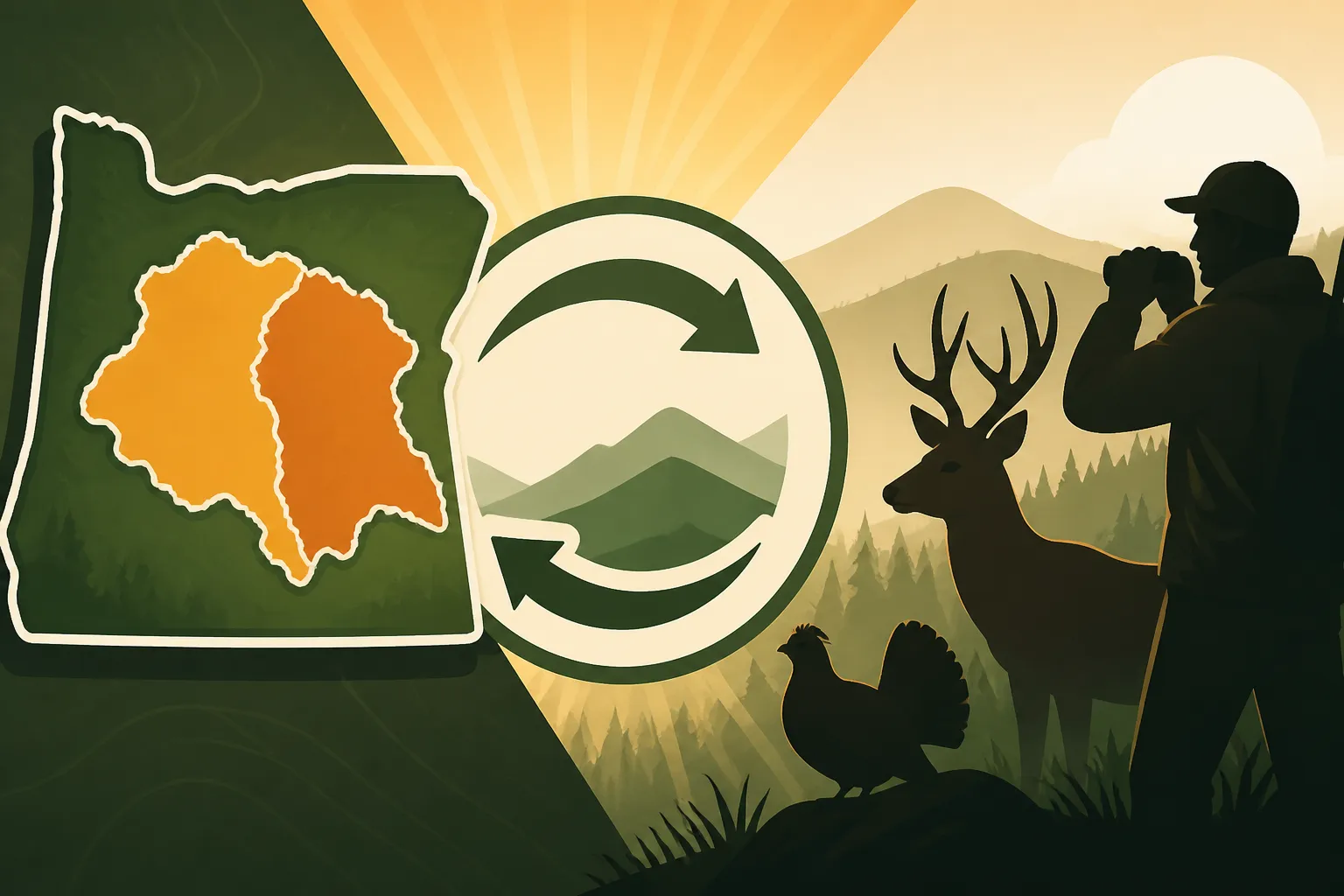
Effective with the 2026-2027 big game hunting regulations, the areas previously known as Warner North and Warner South (often referred to by their unit numbers, like Unit 74 for the broader region) have been formally merged into one cohesive Warner Unit. This isn't just a simple renaming; it represents a significant alteration in how ODFW manages hunting within this entire geographic region. Instead of two distinct management zones, hunters will now apply for and hunt a single, larger unit.
Imagine you've always focused on the timbered slopes and rimrock of "Warner North," or perhaps the expansive sagebrush flats and seasonal water sources in "Warner South." Now, those lines are gone. The new Warner Unit encompasses the entirety of the area, creating a larger, more diverse hunting ground under a single umbrella. This means the terrain, habitat types, and deer concentrations you're accustomed to might now be part of a broader management strategy, potentially leading to different hunting pressures and deer distribution compared to what you experienced in the past. It’s a big mental shift, especially for those of us who had our favorite spots honed in for one specific side of the old divide.
ODFW's Rationale Behind the Merger
So, why the change? It’s rarely just about making things complicated for hunters. ODFW's primary motivation behind this consolidation, and indeed many of the other unit changes, is to enhance mule deer management. Frankly, our mule deer herds across Eastern Oregon have faced significant challenges over the last few decades, with populations seeing declines in many areas. This new approach aims to streamline data collection, simplify management boundaries, and allow for more flexible and responsive strategies to support herd health and recovery across the entire Warner range.
By treating the Warner region as a single entity, wildlife biologists can implement management decisions that consider the holistic movement and habitat use of mule deer throughout the entire area, rather than being constrained by arbitrary lines on a map. This might include better alignment of winter range protection, habitat improvement projects, and harvest strategies designed to impact the overall health of the herd more effectively. It’s part of a larger effort to address the struggles of our mule deer, which you can read more about in our detailed guide on Oregon's 2026 Mule Deer Hunt Area Changes. The hope is that by simplifying and centralizing management, ODFW can gain a clearer picture and implement more impactful measures to reverse declining trends and provide sustainable hunting opportunities for future generations.
Immediate Impacts on Mule Deer Hunters and Tags
Changes to hunting units always bring a ripple effect for hunters, touching everything from application strategies to the actual experience in the field. The Warner Unit consolidation is no different, and understanding these impacts early is key to navigating the new landscape successfully.
Preference Points and Draw Odds in the New Unit
Perhaps one of the most immediate concerns for many hunters holding hard-earned points is how this consolidation affects their standing in the draw. If you've been diligently building points for Warner North or Warner South specifically, you're probably wondering what happens to those. The good news is, your preference points aren't just vanishing into thin air. ODFW has mechanisms in place to merge or convert points to the new unit structure. Typically, if you had points for either of the former Warner units, those points will now apply to the newly consolidated Warner Unit.
However, the dynamics of the draw will undoubtedly shift. Combining two units means a larger pool of applicants vying for tags in what might be a similar or only slightly adjusted number of total tags. This could lead to an immediate bump in the number of points required to draw a tag in the new Warner Unit, at least initially. Units that were traditionally harder to draw might see a slight decrease in required points if they merge with an easier-to-draw unit, and vice versa. It’s a complex recalculation that will take a few draw cycles to truly stabilize. Tools offered by resources like GoHunt become invaluable here, as they often track these changes and provide statistical projections to help you understand your odds. Understanding how this system works in general is crucial, and you can dive deeper into the mechanics in our guide on Oregon Preference Points and How They Work.
To visualize the potential changes, consider this simplified comparison:
| Feature | Old Warner North/South Structure | New Consolidated Warner Unit |
|---|---|---|
| Boundaries | Two distinct hunt units | Single, larger hunt unit |
| Management | Separate, potentially divergent strategies | Unified, holistic approach |
| Point Usage | Points specific to North or South | Points apply to the combined unit |
| Draw Complexity | Two separate draw pools | One larger, more competitive draw pool (initially) |
| Tag Allocation | Allocated per sub-unit | Allocated for the entire unified area |
| Scouting | Focused on sub-unit boundaries | Requires broader, integrated knowledge of entire unit |
Tag Allocations and Season Structure
With a new, unified Warner Unit comes the inevitable question of tag allocations. ODFW will now issue tags for the single Warner Unit, rather than splitting them between North and South. The total number of tags issued will be a direct reflection of ODFW's management goals for the entire herd within this expanded area. If the primary goal is mule deer recovery, it's possible we might see conservative tag numbers in the initial years, even if the unit itself is larger. Conversely, if specific population benchmarks are met, the flexibility of a single unit might allow for more dynamic adjustments.
Season structures, including dates and legal weapon types, may also see adjustments. While the core framework of archery, muzzleloader, and rifle seasons will likely remain, the specific timing or length of these seasons could be tweaked to align with the new management plan. For instance, an early archery season might be adjusted to reduce pressure during a critical period, or late-season rifle opportunities might be re-evaluated based on winter range conditions across the entire unit. It's imperative to pore over the new ODFW Big Game Regulations pamphlet as soon as it's released each year to catch any of these subtle but important shifts. These pamphlets are your bible, and ignoring them can lead to costly mistakes. GoHunt also provides excellent summaries and analysis of these changes, often highlighting what hunters need to know quickly.
Strategies for Hunting the Unified Warner Unit
Successfully hunting the new, consolidated Warner Unit requires a proactive approach and a willingness to adapt. The familiar maps and mental boundaries of the past are gone, and a fresh perspective will be your best asset.
Adapting Your Scouting and Hunt Plans
When a unit changes this significantly, the way you scout needs to evolve. What worked for "Warner North" might not be the optimal strategy for the entire consolidated unit, which now includes diverse landscapes you might have previously ignored. It's time to hit the maps hard – both paper and digital. Start by getting a clear understanding of the new, unified boundary. Look for areas where the old North and South units met, as these transitional zones might offer new insights into deer movement and habitat use that you hadn't considered before.
Embrace modern scouting tools. Satellite imagery, topographical maps, and public/private land ownership overlays are more critical than ever. Services like GoHunt, onX Hunt, or even Google Earth can help you visualize the entire unit and identify potential bottlenecks, water sources, bedding areas, and travel corridors that span the former boundaries. Pay particular attention to how these features connect across the entire landscape. For a deep dive into using these tools, check out our guide on E-Scouting Oregon Units With Satellite Imagery. Don't forget that physically getting boots on the ground, even outside of hunting season, remains invaluable. Explore new roads, hike into areas you've only seen on a map, and observe the habitat firsthand. This expanded knowledge base will be crucial when planning your hunt. Remember, your hunt plan should now account for the greater area and potential for deer to move more freely across it.
Focusing on Mule Deer Behavior in a Larger Area
Mule deer behavior itself hasn't changed, but your understanding of how they utilize the entire Warner landscape needs to. The former separation into North and South might have led you to focus on specific migratory patterns or seasonal habitats unique to those smaller zones. Now, with a unified unit, you need to think about mule deer movements on a grander scale. Consider how deer might move between historical summer ranges in the high country to crucial wintering grounds, some of which might have been in the "other" unit before.
Look for key resources that attract and hold deer. Water sources, especially in this arid high desert environment, are absolute magnets for mule deer. If you're hunting during dry periods, focusing your efforts around reliable springs, creeks, or even man-made guzzlers can be highly effective. Our article on Water Sources That Hold Deer in Dry Country offers some excellent tips. Also, pay attention to different forage types and cover. Areas with healthy bitterbrush, sagebrush, and mountain mahogany will provide both food and security. The greater diversity within the combined unit means you’ll need to be more adaptable in locating where deer are currently concentrating based on seasonal conditions, forage availability, and hunting pressure. Deer in the northern reaches of the unit might behave differently or utilize different habitats than those in the south, and now you have the opportunity to follow their preferences across a wider range.
The Broader Context of Oregon's Mule Deer Management
The consolidation of the Warner Unit isn't just an isolated incident; it's part of a larger, ongoing conversation and effort by ODFW to address the complex challenges facing Oregon's mule deer populations. Understanding this broader context can help hunters appreciate the motivations behind such changes and recognize their role in the species' future.
Why Mule Deer Numbers Are a Concern
It's no secret that mule deer numbers in Oregon, particularly in the eastern part of the state, have been a source of significant concern for years. Hunters across the high desert have witnessed firsthand the struggles these iconic animals face. Factors contributing to this decline are multifaceted, ranging from habitat degradation and fragmentation due to development and wildfires, to increased predation pressure from cougars, bears, and wolves. Climate change, leading to more intense droughts and changes in forage quality, also plays a substantial role. We've dedicated an entire piece to exploring Why Oregon Mule Deer Numbers Are Falling, and it's worth a read to grasp the depth of the issue.
Critically, fawn recruitment rates—the number of fawns that survive to adulthood—have been consistently low in many units. If enough fawns aren't surviving to replenish the herd, populations will naturally decline, regardless of how many tags are issued. These low recruitment numbers are a red flag for ODFW, prompting management changes like the Warner Unit consolidation, aimed at creating a more resilient and manageable population. Understanding Mule Deer Fawn Recruitment Rates helps paint a clearer picture of the challenges facing these herds.
How This Change Fits into the Bigger Picture
The unification of the Warner Unit is a direct response to these concerns and a tactical move within ODFW's broader mule deer management plan. By simplifying unit boundaries and allowing for more comprehensive management across a larger, ecologically connected area, ODFW hopes to implement strategies that have a more meaningful impact. This could involve more targeted habitat improvement projects, better coordination of predator control efforts, and more flexible tag allocation based on real-time population data across the entire region.
For hunters, this means our role in supporting these efforts becomes even more important. Adhering to regulations, engaging in ethical hunting practices, and, perhaps most crucially, completing your mandatory harvest reporting are vital. That annual reporting deadline, which can result in a Oregon Mandatory Harvest Reporting and the $25 Penalty if missed, provides ODFW with crucial data points that feed directly into these management decisions. Every piece of information, from where you hunted to whether you harvested an animal, helps biologists paint a clearer picture of herd health and distribution. Platforms like GoHunt often integrate ODFW data, giving hunters insights into population trends and hunt success, which in turn helps us make more informed decisions about where and how we hunt. These changes are designed to secure the future of mule deer hunting in Oregon, and our collective participation is key to their success.
Disclaimer
Please note: Hunting regulations and unit boundaries can change frequently. Always consult the official Oregon Department of Fish and Wildlife (ODFW) Big Game Hunting Regulations for the most current and accurate information before planning any hunt. The information provided here is for general guidance and discussion purposes only.