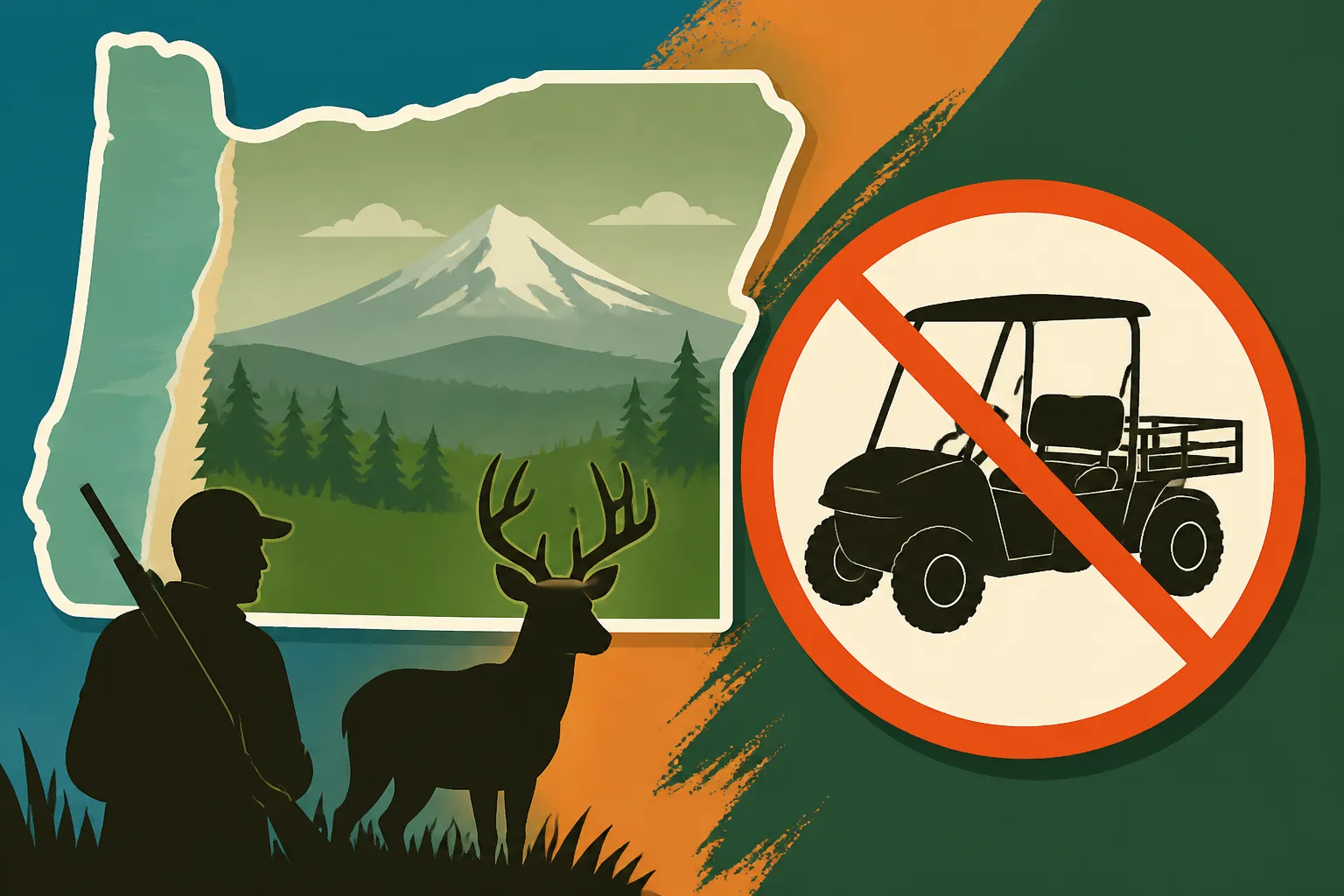
Where Oregon Bans Motorized Game Carts
The lure of hunting in Oregon is often tied to wild, rugged places, but getting your trophy out can be a real backbreaker. For many of us, the idea of using a motorized game cart to make that heavy lift a little easier is incredibly appealing, especially after a successful hunt deep in the timber. However, the rules around these devices can be incredibly confusing, leading to a lot of frustration and questions about where you can and cannot use them. This guide aims to clear up that confusion, helping you understand the regulations so you can plan your next retrieve legally and efficiently.
The Basics of Motorized Game Carts in Oregon
The endless debate about what constitutes a "motorized" device and where it's allowed often leaves hunters scratching their heads. It’s not just about gas engines anymore; battery-powered devices are often lumped into the same category when it comes to land use regulations. Understanding the intent behind these rules helps clarify why certain areas have strict prohibitions.
What Constitutes a Motorized Game Cart?
When we talk about motorized game carts, we're generally referring to any wheeled device designed to transport game that has its own power source. This can range from a simple electric-assist hand truck with larger wheels to more robust, purpose-built electric buggies or even electric bicycles modified to pull trailers. The key here is the "motorized" aspect. If it has a battery, a motor, and can propel itself, even with pedal assistance, it's typically considered motorized by land management agencies.
This distinction is crucial because it immediately places these devices under a different set of rules than traditional, purely human-powered game carts or pack frames. Even if the motor is small or only used for assistance, the presence of a mechanical power source is often the deciding factor in its classification. This isn't about horsepower; it's about the fundamental characteristic of being self-propelled.
The Spirit of the Regulations
The rules against motorized vehicles in certain areas, including game carts, are primarily designed to preserve the wild character of specific landscapes and to ensure fair chase. Places designated as Wilderness Areas, for example, are managed with the explicit goal of keeping them free from mechanized intrusion. The idea is to offer a primitive, unconfined outdoor experience where human power and natural elements dictate the journey. Allowing motorized devices, even small game carts, would fundamentally alter that experience and the ecological impact on fragile ecosystems.
These regulations also address concerns about noise pollution, trail damage, and the potential for unfair advantages in hunting. While a hunter might see a motorized cart as a tool to avoid meat spoilage on a long pack out, land managers view it through the lens of wilderness preservation and sustained natural resource management. Understanding this underlying philosophy is key to accepting and adhering to the various restrictions you'll encounter across Oregon's diverse landscapes. For more on this, you might find Oregon Wilderness Rules That Ban Motorized Carts to be an informative read.
Specific Areas Where Motorized Carts Are Prohibited
Oregon has vast tracts of public land, but not all of it is open to every type of access. Certain designations come with strict limitations on motorized equipment, including game carts. Knowing these areas beforehand can save you a lot of headache, potential fines, and a ruined hunting trip.
Designated Wilderness Areas
This is perhaps the clearest and most consistently enforced prohibition. In federally designated Wilderness Areas across Oregon, all motorized and mechanized equipment is strictly forbidden. This isn't just about gas-powered vehicles; it includes electric bikes, motorized game carts, and even non-motorized wheeled vehicles like standard game carts and bicycles, as they are considered "mechanized transport." The intent is to preserve the pristine nature of these areas, ensuring a true backcountry experience.
Think about the remote beauty of the Eagle Cap Wilderness in Northeast Oregon or parts of the Three Sisters Wilderness in the Cascades. These are places where you rely solely on your own two feet, or perhaps pack stock, to get around and pack out your game. Bringing a motorized game cart into one of these areas is a direct violation of federal law and can result in significant penalties. It's crucial to consult detailed maps and agency regulations for specific boundaries before you venture into such areas. If you're planning a trip, familiarizing yourself with Oregon Wilderness Areas Open to Hunting can provide important context.
Roadless Areas and Inventoried Roadless Areas
Beyond designated wilderness, there are also "roadless areas" and "inventoried roadless areas" (IRAs) on National Forest lands. While these don't carry the same legal weight as designated wilderness, they are often managed with similar principles regarding mechanized travel. Many of these areas are proposed for future wilderness designation or are managed to maintain their wild characteristics. The rules here can be a bit more nuanced than designated wilderness, but generally, cross-country motorized travel, including with game carts, is prohibited.
It's vital to remember that these areas are often accessed via trail systems that may or may not allow motorized use. The key is that once you leave an approved motorized route, even with a cart, you're likely entering restricted territory. Always check with the local Forest Service or BLM office for the specific regulations pertaining to the particular roadless area you plan to hunt. Maps and local knowledge are your best friends here, as these areas often form critical habitat and sensitive landscapes.
Certain Travel Management Areas and Special Closures
Oregon's Travel Management Areas (TMAs) are designed to regulate motorized use on public lands, often to protect wildlife habitat, minimize resource damage, or reduce conflicts between different user groups. While some TMAs might allow street-legal vehicles on designated routes, they often have extensive closures on side roads, two-tracks, and cross-country travel. A motorized game cart, depending on its classification, might be treated like an Off-Highway Vehicle (OHV) or simply prohibited on restricted routes.
Furthermore, state and federal agencies can implement special, often temporary, closures due to fire danger, wildlife winter range protection, or other resource concerns. These closures can specifically restrict all motorized access beyond a certain point. It's imperative to always check the most current local regulations from the Oregon Department of Fish and Wildlife (ODFW), U.S. Forest Service, or Bureau of Land Management (BLM) for the unit you plan to hunt. These can change with little notice, especially during peak seasons or environmental events. Checking Oregon's Travel Management Areas Explained and Checking Oregon Road Closures Before You Go should be part of your pre-hunt routine.
Areas Where Motorized Carts Might Be Permitted (With Caveats)
While many prime hunting grounds restrict motorized game carts, there are situations and types of land where these devices might be permissible. However, it's never a simple "yes," and always comes with important conditions and the need for thorough verification. The responsibility lies squarely with the hunter to know and abide by the specific rules.
Established Open Roads and Trails
On public lands outside of wilderness or explicit roadless designations, if a road or trail is clearly marked and designated as open for motorized vehicle use, a motorized game cart could potentially be allowed. This is where the classification of your specific cart becomes critical. Is it considered an e-bike, an OHV, or a utility device? Each classification comes with its own set of rules regarding registration, equipment requirements, and where it can be operated.
For example, if your motorized cart is essentially a Class 1 or Class 2 e-bike with a trailer attachment, it might be allowed on certain trails where e-bikes are permitted. However, if it's more akin to a small ATV or a powered wheelbarrow, it falls under OHV regulations, which are generally much stricter about where you can operate. The critical takeaway is that "open road" doesn't automatically mean "open to all motorized devices." You must confirm your device's legal classification and the specific rules for the road or trail you intend to use. Using mapping tools like onX Hunt can help you visualize these open and closed routes, but always double-check with the managing agency.
Private Timber Lands
Hunting on private timber lands in Oregon often offers unique opportunities, and the rules regarding motorized game carts can be different from public land. Companies like Weyerhaeuser or Hancock, which manage vast timber holdings, might have their own specific access policies. In many cases, if you have a permit to access their lands, and you're operating your cart on designated private roads, it could be allowed.
However, this is absolutely not a blanket permission. You must obtain explicit permission from the landowner or timber company and understand their specific rules. Some timber companies may restrict all motorized use off main haul roads, while others might be more lenient within certain areas. It's also possible they have rules about the type of motorized device, noise levels, or impacts on timber operations. Never assume; always call ahead, check their websites, and clarify the exact regulations for the property you plan to hunt. Your permit is your agreement, and violating it can lead to immediate revocation and potentially trespass charges. For more on navigating these properties, check out Hunting Private Timber Land With a Permit.
The Grey Areas and Personal Interpretation
This is where things get really murky for hunters. The rapid evolution of electric-powered outdoor gear means regulations often lag behind technology. What if your "game cart" is a sturdy, off-road electric skateboard or a tricked-out e-mountain bike pulling a trailer? Agencies might not have specific rules for every permutation, leading to situations where interpretation is left to individual enforcement officers.
To navigate these grey areas, extreme caution and proactive research are paramount. If you're unsure, it's always best to err on the side of caution and assume a restriction exists. Contacting the local ODFW, Forest Service, or BLM office before your hunt is the smartest move. They can provide clarification, even if it's simply to say, "that device falls under our OHV policy, and OHVs are restricted to these specific roads." Tools like GoHunt and onX Hunt can give you an excellent visual overlay of land ownership and basic road status, helping you avoid accidental trespass or violations. But for specific device use, human consultation is still king.
Alternatives and Best Practices for Game Retrieval
Given the complexities and restrictions around motorized game carts in Oregon, many hunters opt for traditional methods of game retrieval. Not only do these methods avoid regulatory headaches, but they also often enhance the overall hunting experience, forcing you to engage more deeply with the landscape and your physical capabilities.
Non-Motorized Game Carts and Sleds
For areas where motorized vehicles are prohibited but terrain allows, traditional, non-motorized game carts can be a lifesaver. These are typically two-wheeled or single-wheeled devices that you push or pull by hand, sometimes with the help of a partner. They work best on relatively flat, open ground, old logging roads, or established trails. They significantly reduce friction compared to dragging an animal directly, making the task much more manageable.
In snowy conditions or dense brush, a game sled can be an even better option. These durable plastic sleds allow you to slide an animal over snow, mud, or through thick undergrowth with less resistance. While still requiring significant effort, they are infinitely easier than dragging a whole deer or elk without one. The key is to match the retrieval tool to the terrain and local regulations. A quality cart or sled is a worthy investment, keeping your meat cleaner and reducing the physical toll of packing out.
Quartering and Packing Out
For true wilderness, roadless areas, or extremely rugged terrain, quartering an animal and packing it out on your back is often the only legal and practical option. This method involves breaking down the animal into manageable pieces (the four quarters, backstraps, tenderloins, neck meat, etc.) at the kill site. The "gutless method" is a popular technique that allows you to efficiently process an animal without removing the gut pile, reducing mess and time.
Packing out on your back requires proper equipment, most notably a sturdy pack frame designed to carry heavy, awkward loads. It's also a physically demanding endeavor that requires preparation and stamina. Learning the proper techniques for boning out an animal and efficiently loading a pack frame can make a multi-trip pack out feasible even for a single hunter. Consider these skills essential for any serious backcountry hunter in Oregon. Resources like Quartering and Packing an Elk Alone and Gutless Method on a Bull Elk offer excellent guidance. Remember that a strong pack frame is crucial, and understanding Pack Frame Load Weight for One Hunter is key to safety and success.
Thorough Planning and E-Scouting
Ultimately, avoiding issues with motorized game carts comes down to diligent pre-hunt planning. Before you even set foot in the field, use digital mapping tools like onX Hunt or GoHunt to thoroughly scout your potential hunting area. These applications allow you to layer information such as land ownership, public vs. private boundaries, and importantly, road and trail classifications.
Identify designated wilderness boundaries, look for signs of Travel Management Areas, and study the road networks. Are there gates? Are roads marked as closed to motorized vehicles? Understanding these details before the hunt allows you to formulate a retrieval plan that complies with all regulations. You can mark potential pack-out routes, identify legal access points for vehicles, and determine if traditional packing or a non-motorized cart is your best bet. Investing time in E-Scouting Oregon Units With Satellite Imagery will save you immense frustration and potential legal trouble once you're on the ground.
Navigating Oregon's Access Rules for Game Retrieval
Retrieving an animal after a successful hunt is often as challenging as the hunt itself, and Oregon's diverse landscapes and varied land management rules only add to that complexity. Understanding where you can and cannot use a motorized game cart, or any motorized vehicle for that matter, is crucial for a legal and ethical hunt.
Public Land Versus Private Land Rules
One of the biggest distinctions you'll encounter is between public lands (National Forests, BLM lands, State Forests, etc.) and private lands (industrial timber lands, private ranches). On public lands, particularly federal wilderness or roadless designations, the rules are generally quite strict against motorized game carts. The intent is often to preserve natural quiet, minimize human impact, and maintain a primitive experience. These regulations are typically uniform across specific designations, though local offices may have nuances.
Private lands, however, operate under the landowner's discretion. A timber company or a private rancher might allow motorized game carts on their property, especially on established logging roads or private trails, provided you have explicit permission and adhere to their specific rules. This means that access that might be illegal on adjacent public land could be permissible on private ground. Always clarify with the landowner, as their rules supersede general public land guidelines when you're on their property. This flexibility on private land can be a real boon, but it requires proactive communication from the hunter.
The Role of Mapping Software and ODFW Regulations
Modern mapping applications, such as onX Hunt and GoHunt, have revolutionized how hunters navigate complex land ownership and access rules. These tools provide layers that clearly delineate public land boundaries, private property lines, and often indicate road closures, Travel Management Areas, and even wilderness boundaries. They are indispensable for planning your hunt and understanding potential restrictions on motorized equipment.
However, these apps are powerful tools, not rulebooks. They can show you where a road is closed, but they won't always tell you if your specific type of motorized game cart is allowed on an open road. For definitive answers on motorized game cart legality, especially regarding specific types of devices and their classification, you must consult the official Oregon Department of Fish and Wildlife (ODFW) regulations, as well as the local managing agency (Forest Service, BLM, State Parks). ODFW publishes annual regulations, and local offices can provide updated information on specific unit closures or vehicle restrictions. It’s about using both technology and official channels to ensure you're fully informed.
| Area Type | Motorized Game Cart Status | Why / Notes |
|---|---|---|
| Designated Wilderness | Prohibited | Federal law bans ALL motorized and mechanized transport. Preserves primitive experience. Examples: Eagle Cap, Three Sisters. |
| Roadless Areas/IRAs | Generally Prohibited | Managed to maintain wild character; often similar restrictions to wilderness for off-road/cross-country use. Check local Forest Service. |
| Travel Management Areas | Often Restricted | Rules vary; many roads/areas closed to motorized travel. Check TMA maps for specific unit. Can apply to OHVs, which a cart might be classified as. |
| Established Open Roads | Potentially Allowed (with caveats) | If classified as a legal OHV or e-bike, and road is open to that class of vehicle. Always verify specific local rules for your device. |
| Private Timber Land | Potentially Allowed (with permission) | Landowner's discretion. Requires explicit permission and adherence to their specific policies. Access permits often have detailed rules. |
| State Wildlife Areas | Varies by Location | Some areas may have specific rules regarding motorized equipment. Always check individual wildlife area regulations with ODFW. |
The bottom line is that while motorized game carts offer a tempting solution to the heavy burden of packing out an animal, Oregon's regulations prioritize wilderness preservation and fair chase. This often means relying on your own strength, a non-motorized cart, or the help of a good pack frame. Planning your retrieval method as carefully as you plan your hunt will ensure you're prepared for success, regardless of where your tag takes you.
Disclaimer
This article is for general informational purposes only and does not constitute professional advice. Laws, prices and regulations vary by location and change over time. Consult a qualified professional for guidance on your specific situation.