Yellow Flag By-Permission Properties in Oregon
Finding hunting access in Oregon can feel like trying to solve a cryptic puzzle, especially when you're staring at maps dotted with private land. It's a common frustration for many hunters, feeling squeezed between public land crowds and locked gates. This guide is all about demystifying "Yellow Flag By-Permission properties"—those often overlooked private parcels that, with the right approach, can open up incredible hunting opportunities for deer, elk, and upland birds.
Understanding Oregon's "Yellow Flag" By-Permission Properties
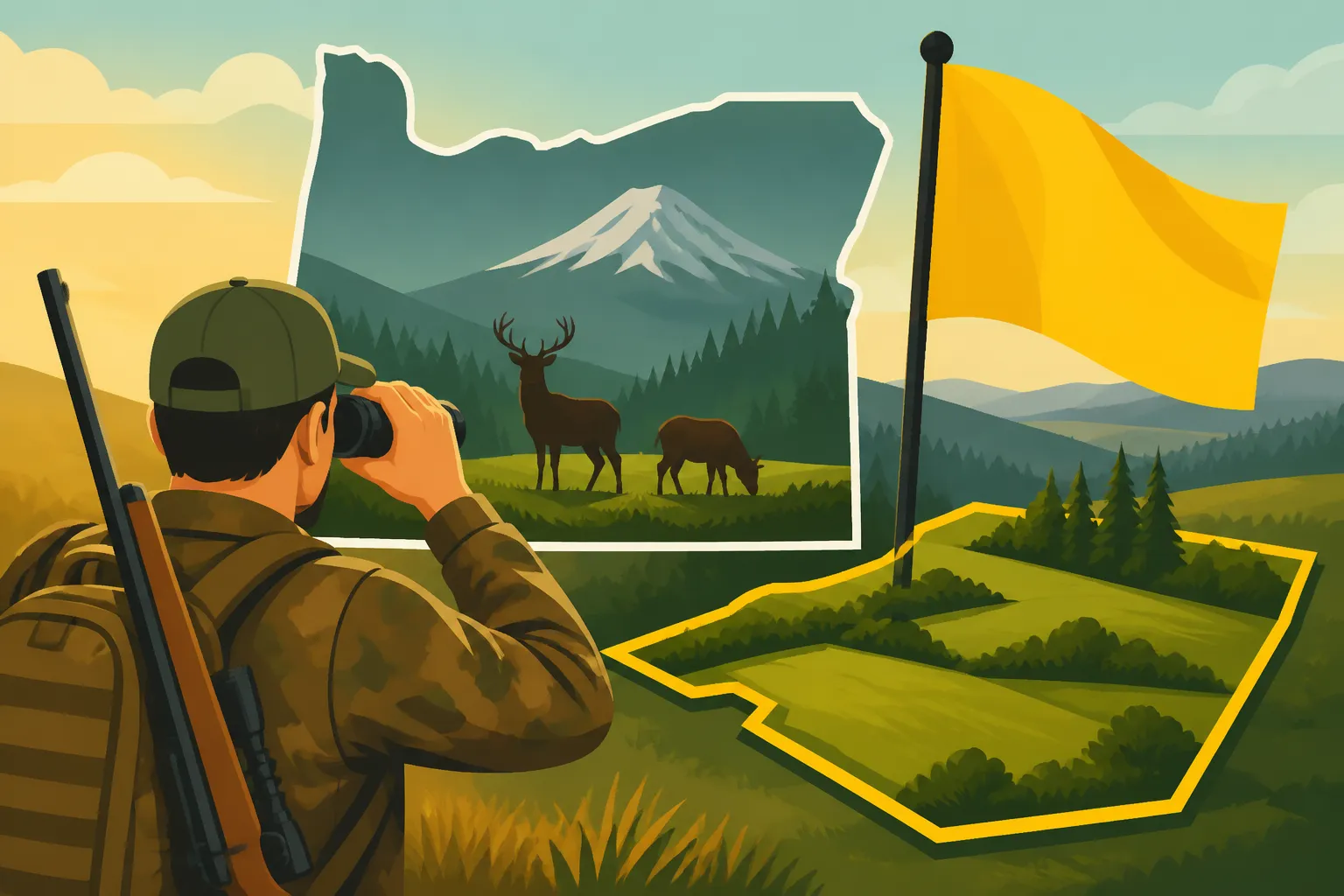
In Oregon, the Oregon Department of Fish and Wildlife (ODFW) uses a system to help hunters identify various types of hunting access. While "Green Flag" properties typically denote areas with generally open access, often through programs like Access & Habitat (A&H) where permission is effectively granted by following specific rules, "Yellow Flag" properties are a different beast entirely. They represent private lands where hunting may be allowed, but only with direct permission from the landowner. It's a critical distinction, as simply showing up without prior arrangement is considered trespassing.
These yellow flag properties are often agricultural lands, smaller private timber holdings, or even large ranching operations that haven't formally enrolled in an explicit "open access" program. The "yellow flag" essentially serves as a notice: "Hey, this is private, but don't give up hope entirely! A conversation might be all it takes." This nuance is often missed by hunters who either stick to crowded public lands or assume all private ground is off-limits. However, with a respectful approach and a bit of legwork, these properties can become some of the most rewarding places to hunt, offering less pressure and often excellent game concentrations.
Why Landowners Offer "By-Permission" Access
Many landowners, especially those managing agricultural fields or smaller timber tracts, face ongoing issues with wildlife. Deer and elk can cause significant crop damage, browse young trees, or impact pastures. Turkeys might be eating expensive feed intended for livestock. For some, allowing responsible hunters on their land is a practical solution to manage these wildlife populations and mitigate damage, without the administrative burden of joining a formal program.
Beyond wildlife management, some landowners simply appreciate the extra set of eyes on their property. Hunters can inadvertently act as extra security, deterring trespassers or reporting suspicious activity. There's also the goodwill aspect; many rural landowners understand the hunting tradition and are willing to share their resources with respectful individuals. The key here is "respectful." They are granting a privilege, not fulfilling an obligation. For a landowner, saying "yes" to a hunter is a personal decision based on trust, and a positive experience for them can lead to recurring access for years to come.
Finding and Researching Potential Yellow Flag Properties
Identifying yellow flag properties usually starts with diligent e-scouting and map work, often combined with boots-on-the-ground reconnaissance. You're looking for private parcels that border public lands, create pinch points, or offer unique habitat types that might attract game. These areas might be missed by hunters who only focus on large tracts of national forest or BLM land.
Tools like onX Hunt have revolutionized this process. With satellite imagery overlaid with property ownership data, you can zoom in and immediately see who owns a parcel, identify their boundaries, and often even get contact information. This is invaluable for pinpointing specific "yellow flag" opportunities. Similarly, platforms like GoHunt provide robust mapping tools and scouting information that can help you cross-reference potential areas with historical game sightings or habitat analyses. It’s about leveraging technology to do your homework before you ever pick up the phone or knock on a door. E-Scouting Oregon Units With Satellite Imagery is an excellent resource to dive deeper into this methodology.
Using Digital Mapping Tools Effectively
When you’re looking at your digital maps, don't just scan for green patches. Actively seek out the private parcels (often colored white or yellow on apps like onX Hunt) that might hold game. Look for:
- Crop fields adjacent to timber: These are prime feeding areas for deer and elk, especially at dawn and dusk.
- Small timber blocks surrounded by agriculture: These can act as bedding cover, especially for blacktails in western Oregon.
- Water sources: Even small ponds or creeks on private land can be magnets for game in dry country.
- Travel corridors: Look for narrow strips of private land connecting larger blocks of public forest, which animals might use to move between feeding and bedding areas.
- Areas that act as refuges: Sometimes private land parcels are surrounded by heavy hunting pressure on public land, causing animals to "hole up" on the private side.
Once you’ve identified a promising parcel, use the app to pull up the landowner's information. This usually includes a name and sometimes an address. While a phone number isn't always available directly, the address allows you to craft a letter or even make a personal visit. Remember, the more specific and prepared you are, the better your chances.
On-the-Ground Reconnaissance and Observation
While digital tools are incredibly powerful, there's no substitute for getting out and actually seeing the land, even if it's from a public road. Drive or walk the perimeter of potential yellow flag properties, always respecting private property boundaries. Look for signs of game: tracks, scat, rub lines, and trails leading from public land onto private. Observe where animals might be crossing fences or moving through natural funnels.
This reconnaissance helps you confirm what your maps are telling you and also allows you to gauge the level of activity on the property. Is it actively farmed? Are there livestock? Are there signs of other hunters (which might mean the landowner already has established relationships)? This physical observation helps you tailor your approach when you eventually make contact. You might also spot "No Trespassing" signs or indications that a landowner is not interested in visitors, saving you a wasted trip. For public access, you might also want to consult Reading a Travel Management Area Map Before You Drive to ensure you're aware of any restrictions.
The Art of Asking for Permission
This is where the rubber meets the road. Asking for permission is an art form, not a science, and it relies heavily on respect, clear communication, and presentation. Remember, you're asking for a favor, not asserting a right. Your goal is to build a relationship, not just secure a one-time hunt. Many successful by-permission hunters have a network of landowners they've built trust with over years.
Crafting Your Approach: In-Person, Phone, or Letter
The best way to ask for permission depends on the situation and your comfort level.
- In-Person (Best, but requires confidence): This is often the most effective method, as it allows for direct communication and helps build rapport. Try to catch the landowner at a convenient time—not during dinner, not when they're busy with chores, and definitely not on a weekend when they might have family visiting. Dress neatly, don't wear your hunting gear, and be polite. A simple, "Hello, my name is [Your Name], and I was hoping to speak with you about hunting access on your land" is a good start. Be prepared for a "no," but also ready to explain why you'd be a responsible hunter.
- Phone Call (Good, but less personal): If an address is all you have, you might find a phone number online through local directories or by asking politely around town (though always be mindful of privacy). Keep the call brief, polite, and to the point. Again, be ready to explain your intentions and assure them of your responsible conduct.
- Written Letter (Least effective, but an option): If you can't find a phone number and an in-person visit isn't practical, a well-written letter can work. Be concise, introduce yourself, explain which property you're interested in, what you'd like to hunt, and assure them of your respect for their land. Include your contact information and suggest a time they can reach you. This method is often a long shot, as it lacks the immediate personal connection.
Regardless of the method, always start by introducing yourself clearly, stating why you're contacting them, and then explicitly asking for permission. Don't beat around the bush. For more specific advice on asking, see Asking Permission on Oregon By-Permission Land.
What to Discuss with the Landowner
Once you've made contact, be prepared to discuss specifics. This shows you're serious and thoughtful.
- What you want to hunt: Be clear about the species (deer, elk, turkey, etc.).
- When you want to hunt: Be specific about dates or seasons. Don't just say "during deer season."
- Your hunting style: Are you still-hunting, setting up a ground blind, or just passing through a corner of their property?
- Your commitment to safety: Mention you'll follow all game laws, wear blaze orange, and be mindful of any buildings, livestock, or roads.
- Your vehicle access: Where will you park? Will you need to drive on their property?
- Your respect for their property: Emphasize that you will leave gates as you found them, pack out all trash, and treat their land as your own. Mentioning topics like Leaving Gates and Fences as You Found Them shows you understand rural property etiquette.
- Your contact information: Give them your phone number and offer to check in before and after each hunt.
- Offer a gesture of goodwill: Some hunters offer to help with chores, share some of the harvested meat, or simply offer a small gift as a thank you.
It's also crucial to ask them about their expectations and any specific rules they have. Do they have areas that are off-limits? Are there certain times they prefer you not to hunt? The conversation is a two-way street.
Maximizing Your Success and Being a Responsible Hunter
Getting permission is just the first step. Keeping it, and potentially expanding it to other landowners, relies entirely on your conduct. Remember, you are an ambassador for all hunters. One bad experience with a hunter can sour a landowner on allowing anyone else access for years.
Tips for Earning and Maintaining Trust
- Follow ALL Rules: This is non-negotiable. Not just game laws, but all rules the landowner sets. If they say no driving on wet fields, don't drive on wet fields. If they ask you to only hunt a specific corner, stick to that corner.
- Communicate Regularly: Let them know when you plan to be on their property and when you've left. A quick text or call can go a long way.
- Share Your Success (if appropriate): If you harvest an animal, offer to share some of the meat. Many landowners appreciate this gesture.
- Report Issues: If you see damaged fences, downed trees, or suspicious activity, report it to the landowner immediately. This reinforces your value as an extra set of eyes.
- Leave No Trace: Pack out everything you pack in. Pick up any litter you find, even if it isn't yours.
- Offer Help: Periodically, offer to help with a small chore—mending a fence, clearing brush, or moving wood. Even if they decline, the offer shows you value the relationship.
- Be a Good Neighbor: Be friendly and respectful to their actual neighbors too. Don't block driveways or access points.
What to Do if Permission is Denied
A "no" is not a personal rejection; it's simply a "no" for that particular property, at that particular time. Don't argue, don't push, and don't take it personally. Politely thank them for their time and move on. Sometimes, timing is everything. They might have had a bad experience recently, or they already have hunters lined up. Occasionally, a polite follow-up in a future season (after a significant amount of time has passed, like a year or more) might yield a different answer, but don't badger them.
Keep a log of properties you've contacted, who you spoke with, and the outcome. This will help you keep track of your efforts and avoid repeating mistakes or bothering the same person too often. The more landowners you approach respectfully, the better your odds of finding a "yes." Hunting Oregon By-Permission Properties often requires patience and persistence.
| Feature | Green Flag (Welcome to Hunt) | Yellow Flag (By-Permission) |
|---|---|---|
| Primary Access Type | Generally open public access via ODFW A&H program | Private land, requires direct landowner permission |
| Permission Process | Follow ODFW rules, may require sign-in at kiosks | Direct contact with landowner (in-person, phone, letter) |
| Landowner Contact | Typically not required or discouraged | Absolutely essential and primary point of contact |
| Rules & Restrictions | Set by ODFW/A&H program, often posted at entry | Set by landowner (may be specific to you), discussed directly |
| Relationship Focus | Program-managed access | Personal relationship with landowner |
| Likelihood of Crowds | Can still experience pressure, especially popular areas | Generally lower pressure, more exclusive access |
| Game Management Impact | Broader regional management, less direct landowner control | Landowner often seeking direct game damage control/population reduction |
| Effort Required | Less effort to secure access, more effort scouting within | High effort to secure access, then potentially less crowded hunt |
Ultimately, hunting yellow flag by-permission properties in Oregon is a fantastic way to broaden your hunting horizons beyond crowded public lands. It fosters relationships, promotes ethical hunting, and can lead to some truly memorable experiences. It requires an investment of time and good manners, but the rewards are often well worth it.
Disclaimer
This article is for general informational purposes only and does not constitute professional advice. Laws, prices and regulations vary by location and change over time. Consult a qualified professional for guidance on your specific situation.