Rogue Unit Blacktail Hunting
Hunting blacktail deer in Oregon's Rogue Unit can feel like trying to find a ghost in a dense, green maze. The thick coastal timber, rugged topography, and notoriously shy nature of these deer make it a truly challenging pursuit, often leaving hunters scratching their heads and burning boot leather with little to show for it. This guide is here to shed some light on the dark timber, providing actionable strategies and insights to help you navigate the unique landscape and increase your chances of finding success in the Rogue Unit.
The Unique Challenges of Rogue Unit Blacktail Hunting
Let's be real, chasing blacktails in the Rogue Unit isn't for the faint of heart or those looking for an easy hunt. This isn't Eastern Oregon's open sagebrush where you can glass for miles. Here, you're deep in timber, brush, and canyons, often with visibility measured in yards, not acres. The frustrations are real: endless miles of thick logging roads that dead-end, dense clearcuts grown up so high you can't see over them, and deer that vanish into the shadows the moment they sense you. Many hunters find themselves simply walking around hoping to stumble into a deer, which isn't a strategy for consistent success. The terrain itself is a challenge, with steep slopes, deep draws, and a patchwork of public and private timberlands that can be confusing to navigate. Understanding these inherent difficulties is the first step toward developing a plan that actually works.
Moreover, blacktail deer are notoriously cagey. Unlike their mule deer cousins who might stand and stare, a blacktail buck often melts away before you even know he was there. They thrive in thick cover, using it to their advantage to evade predators – including hunters. This means your approach has to be different, more deliberate, and incredibly patient. The weather can also play a significant role. The Rogue Unit, being in Western Oregon, is subject to frequent rain and fog, especially during the fall seasons, which can dampen spirits and equipment if you're not prepared. But don't let these challenges deter you; with the right mindset and tactics, they become part of the adventure.
Prime Habitats and Strategic Scouting Within the Rogue Unit
To effectively hunt blacktails in the Rogue Unit, you need to understand where they live and why. Blacktails are masters of edge cover and transition zones. They thrive in areas where dense timber meets younger clearcuts, where brushy draws offer bedding cover, and where water sources provide refreshment. Within the Rogue Unit, you'll find a mix of Bureau of Land Management (BLM) land, U.S. Forest Service (USFS) property, and vast tracts of industrial timberland. Each type of land offers slightly different characteristics, but the common thread is often the thick, regenerative growth.
When scouting, look for varied topography. Blacktails frequently use steep, north-facing slopes for bedding, especially if there's good thermal cover. The south-facing slopes, catching more sun, often produce better browse. Pay close attention to the age of clearcuts. A clearcut that's 2-5 years old might be too dense to walk through, but the edges can be phenomenal feeding areas. Older clearcuts, say 5-15 years, often have thicker saplings and brush, creating perfect bedding and security cover. You'll find blacktails often skirt these thickets rather than traversing through the deepest parts. Using tools like E-Scouting Oregon Units With Satellite Imagery can help you identify these transition areas from home, marking potential hotspots on your map before you ever set foot in the woods. Pay close attention to recent logging activity too; fresh clearcuts can provide a feast of disturbed vegetation that deer love, and the new road access can sometimes simplify entry.
Focusing on Water Sources and Natural Funnels
Water is a critical, often overlooked, element in blacktail habitat, especially during drier periods of the early fall seasons. While the Rogue Unit generally receives ample rainfall, pockets can dry out. Small springs, seeps, and creeks that hold water consistently can be magnets for deer. Look for these on your maps, particularly where they intersect with dense cover or travel corridors. Deer will often follow drainages and natural funnels to access water, creating predictable travel routes. These funnels, whether they are saddles between ridges, narrow timber strips connecting two clearcuts, or creek bottoms, are prime ambush points.
Beyond water, consider natural pinch points in the landscape. A steep canyon with a single accessible bench, or a narrow ridge connecting two larger blocks of timber, will naturally concentrate deer movement. These are the places where still-hunting slowly and patiently, or setting up a ground blind, can yield results. Even in the thickest country, deer prefer the path of least resistance when moving between bedding and feeding areas. Understanding Reading Clearcut Edges for Blacktail Bucks is also crucial, as deer often travel just inside the cover, using the edge for security while still benefiting from the forage of the clearcut.
Effective Hunting Strategies for Rogue Unit Blacktails
Given the dense cover and the deer's elusive nature, specific hunting strategies are far more effective than simply walking around. Still-hunting is arguably the most productive method for blacktails in the Rogue Unit. This involves moving incredibly slowly, taking a few steps, then pausing and scanning for several minutes. Use your binoculars to pick apart every shadow, every stump, every patch of brush. Many deer are spotted because of a horizontal line (their back), an ear flick, or the dark patch of an eye. You're not looking for a whole deer, but rather a piece of a deer. This slow approach mimics a predator and gives you time to spot deer before they spot you. Still-Hunting Speed in Wet Brush is especially critical here; the wet forest floor can make silent movement possible, but only if you take your time.
Another effective tactic is to target the rut. The Blacktail Rut Timing in Western Oregon typically falls in mid-November, which can sometimes overlap with rifle seasons. During this period, bucks become less cautious as they search for does, making them more vulnerable. Focus on areas known to hold does and be prepared for increased deer movement. Calling, specifically using doe bleats or grunts, can sometimes entice a curious buck closer, especially during the rut. Patience is paramount, whether you're still-hunting or sitting an ambush. These deer aren't going to present themselves easily; you have to earn them.
Leveraging Topography and Weather Conditions
The rugged topography of the Rogue Unit can be your friend if you learn to use it. When still-hunting, try to move along contours or just below ridgelines, allowing you to peek over into draws and basins without skylining yourself. Always be mindful of the wind; blacktails have an incredible sense of smell, and a shifting breeze can instantly give away your position. Hunting into the wind, or with a crosswind, is essential. During wet weather, the forest floor becomes quieter, allowing for stealthier movement. The rain also often keeps other hunters home, giving you more solitude, and it can make deer more active, feeding during daylight hours. Hunting Blacktails in Fog and Drizzle can be incredibly productive, as the reduced visibility can also work in your favor, allowing you to get closer to deer undetected.
Consider hunting from elevated positions if the terrain allows. A large rock outcropping or a natural rise can give you a better vantage point over dense brush or clearcuts, where you might spot deer moving. Early mornings and late evenings are prime times, as deer move between bedding and feeding areas. However, blacktails in thick cover are known to move throughout the day, especially if undisturbed or during the rut. Don't limit yourself to just dawn and dusk. Plan your day to cover good habitat during all hours.
Accessing and Navigating Rogue Unit Hunting Lands
Understanding land ownership is absolutely critical in the Rogue Unit, as public and private lands are often intermingled in a checkerboard pattern. Trespassing is not only illegal but can jeopardize future hunting opportunities for everyone. Before you even head out, spend significant time researching land ownership. This is where modern mapping applications become indispensable. Tools like onX Hunt are invaluable, clearly displaying public land (Forest Service, BLM, State) and private land boundaries, often with landowner names. They can literally save your hunt, or at least your reputation.
Many industrial timber companies operate in the Rogue Unit area, such as Weyerhaeuser and Hancock. These companies often have complex access rules, which can range from open access to paid permits, or even complete closures due to fire danger or active logging. It's imperative to check their specific websites or contact them directly for current access information. Relying on outdated information can lead to frustration and potential legal issues. Always know if you're on public land or if you have permission to be on private ground. Look for clearly marked gates, signs, or open roads. Sometimes, what looks like a public road might quickly turn into private property. Hunting Clearcuts on Private Timber Land requires diligent research and adherence to company rules.
| Land Type | Typical Characteristics | Access Considerations | Best Hunting Tactics |
|---|---|---|---|
| National Forest (USFS) | Mature timber, deeper canyons, designated roads | Generally open, check for road closures | Still-hunting, find hidden benches and draws |
| BLM Land | Mix of timber, brush, more accessible roads | Generally open, watch for adjacent private land | Focus on clearcut edges, transition zones |
| Industrial Timber | Extensive clearcuts (various ages), active logging | Often restricted, permits needed, check company rules | Hunt edges of young clearcuts, transition to timber |
| State Lands | Smaller parcels, sometimes managed for timber | Check specific ODFW or State Lands rules | Focus on edges, often near public access points |
Utilizing Mapping Tools and Road Systems
A GPS device or a smartphone with a reliable hunting app is not a luxury; it's a necessity in the Rogue Unit. You'll not only see land boundaries but also track your movement, mark waypoints for promising sign, and find your way back to your vehicle in dense fog or darkness. Downloading offline maps is crucial, as cell service is often nonexistent in the backcountry. Brands like onX Hunt and GoHunt offer robust mapping solutions that show topography, private/public land boundaries, and even historical satellite imagery which can reveal older clearcuts or changes in vegetation. This is vital for navigating the maze of roads and trails.
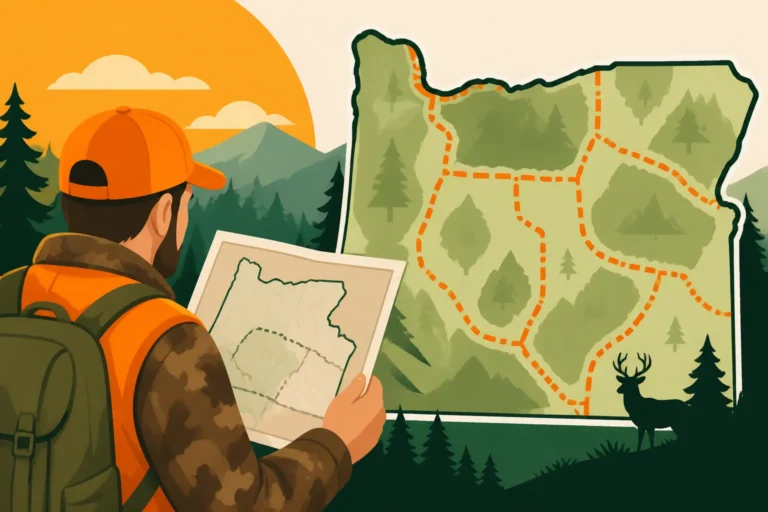
The road systems in the Rogue Unit, especially on timber company lands and older USFS sections, can be confusing. Many roads aren't accurately depicted on older paper maps, or they might be seasonally closed or gated. Learning Reading a Travel Management Area Map Before You Drive is a good start, but dynamic digital maps are usually more up-to-date. Sometimes, the only way to find good hunting is to park and walk far beyond the gates. Many of the best blacktail spots are miles from any paved road, accessed only by foot. Be prepared for long hikes, often uphill, and always tell someone your plan. Safety is always paramount when heading into remote areas.
Disclaimer
This article is for general informational purposes only and does not constitute professional advice. Laws, prices and regulations vary by location and change over time. Consult a qualified professional for guidance on your specific situation.