Metolius Unit Elk Country
Hunting for elk in Oregon's Metolius Unit often feels like trying to solve a puzzle with a lot of missing pieces and a persistent, nagging feeling that everyone else knows something you don't. The dense timber, varied terrain, and sometimes heavy hunting pressure can leave even experienced hunters scratching their heads. This guide is here to untangle that frustration, offering practical, in-depth advice on understanding, scouting, and effectively hunting elk in this unique Central Oregon landscape.
The Unique Challenges and Allure of the Metolius Unit for Elk
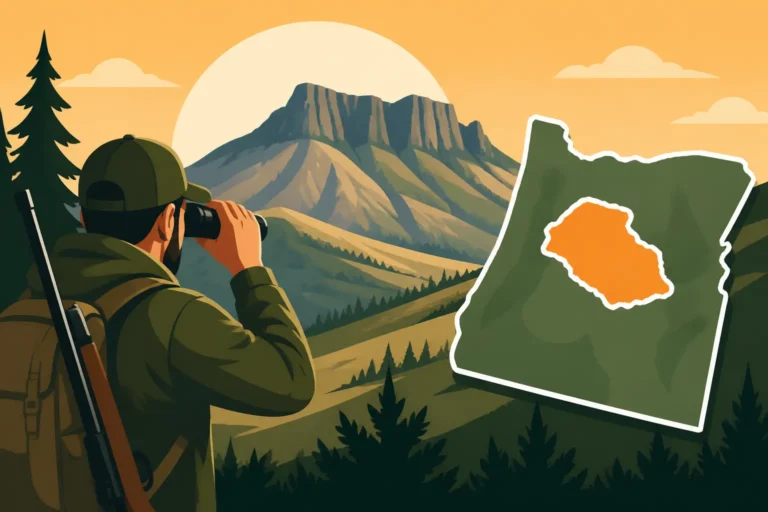
The Metolius Unit, nestled in the heart of Central Oregon, offers a distinctive elk hunting experience. It's not the vast, open sagebrush of extreme Eastern Oregon, nor is it the dripping rainforest of the Coast Range. Instead, you'll find a blend of towering Ponderosa pine, dense Lodgepole stands, bitterbrush flats, and volcanic rock formations. This mix creates both opportunities and significant challenges for the elk hunter.
Decoding the Metolius Landscape: More Than Just Timber
When many hunters think of Central Oregon, they picture endless stretches of timber. While that's certainly a dominant feature of the Metolius Unit, it’s a mistake to generalize it. The unit features diverse elevations, from the relatively flat plateaus near Sisters and Camp Sherman to the steeper, more broken country along the Metolius River canyon and further into the surrounding national forest lands. This varied terrain means elk aren't uniformly distributed. They utilize different areas for different purposes throughout the day and the season.
During warmer periods, especially early in the archery or rifle seasons, elk will often gravitate towards cooler, north-facing slopes with denser timber cover, or seek out shaded draws and stringers that offer refuge from the sun. As temperatures drop, or during periods of heavy snow, their movements might shift to more open, south-facing slopes to catch the warmth, or down to lower elevations where forage is more accessible. The presence of dense undergrowth like bitterbrush, manzanita, and various grasses provides crucial forage, especially when it's interspersed with older growth timber that offers protection. Understanding these micro-habitats and how elk use them is far more important than just seeing a "forest" on a map.
The Pressure Cooker: Dealing with Other Hunters
Let's be honest, hunting in many accessible Oregon units, including parts of the Metolius, means you're going to encounter other hunters. This isn't necessarily a bad thing, but it's a reality you need to plan for. The Metolius, being relatively close to population centers and offering decent access, can see significant pressure, particularly on opening weekends of general seasons. Elk, being smart creatures, quickly adapt to this human activity. They'll move into thicker cover, become more nocturnal, and utilize areas that most hunters are unwilling or unable to reach.
This is where your strategy needs to evolve. Instead of focusing solely on popular roadsides or easily accessible clearings, think about where the elk go when pushed. Often, this means deep into timber, across steep ravines, or into small pockets of unpressured habitat. It also means considering hunting during weekdays if possible, or focusing on the latter half of a season when initial pressure subsides. Learning to work with, or even capitalize on, other hunters' movements can be a valuable skill. Sometimes, other hunters inadvertently push elk towards you, or into areas you've already scouted as escape routes. Public Land Scouting in Oregon Before the Draw Results is a great resource to help you plan ahead for these scenarios.
Water, Weather, and Elk Movement
The weather in Central Oregon, particularly the Metolius Unit, can be unpredictable and dramatically influence elk behavior. Early season can be quite warm and dry, making water sources absolute magnets for elk. As the season progresses into fall, cooler temperatures and eventual rain or snow will change their patterns significantly. In dry conditions, elk need to drink regularly, so focusing your efforts around springs, seeps, and reliable creeks can be highly effective. These aren't always obvious on a map, often requiring dedicated scouting.
Conversely, a sudden cold snap or early snow can push elk to lower elevations or change their feeding patterns. They might move from high-elevation summer ranges down to wintering grounds earlier than expected, or seek out different forage. Wind, too, plays a huge role. Elk will often bed on lee slopes, out of the direct wind, where they can still smell danger approaching from below. Paying close attention to forecasts and adapting your plan daily is crucial for success in the Metolius. Hunting Camp Fire Restrictions in Dry Years is also a critical consideration, as dry conditions can lead to closures that impact access.
Essential Scouting and E-Scouting for the Metolius
Effective hunting in the Metolius Unit, like most places, starts long before you ever step foot in the woods with a tag in hand. It begins with meticulous scouting, both from your computer screen and with boots on the ground.
Deep Dive into Digital Maps: Leveraging onX Hunt
Before you even leave your house, mapping applications like onX Hunt are invaluable tools for the Metolius. Start by identifying public land boundaries, as well as adjacent private timberlands that might offer access or act as barriers. The ability to distinguish between different landowners is critical in this mixed-ownership landscape. Look for areas with a mosaic of timber types – old growth for bedding, younger clearcuts or burns for feeding. Pay close attention to elevation changes, saddle points, and natural funnels that elk might use to travel between feeding and bedding areas.
Using the satellite imagery on onX Hunt, zoom in on potential water sources like small ponds, seeps, or stream bottoms, especially in areas distant from main roads. Mark these as waypoints. Also, identify potential bedding areas on north-facing slopes or in dense, dark timber patches. Remember, elk often prefer thermal cover – areas that offer protection from both the elements and prying eyes. Overlaying layers for slope, aspect, and even recent timber harvests can provide a wealth of information about how elk might use the terrain. This initial digital reconnaissance allows you to narrow down your focus and make your on-the-ground scouting much more efficient. For a detailed guide on this, check out E-Scouting Oregon Units With Satellite Imagery.
Boots-on-the-Ground Reconnaissance
E-scouting is powerful, but nothing replaces putting boots on the ground. When you're physically in the Metolius, look for fresh sign: tracks, droppings, rubs, and wallows. Pay attention to the age of the sign. Fresh sign means elk are in the area now or very recently. Old sign tells you they were there, but might have moved on. Follow trails, even faint ones, to see where they lead. Are they leading to water? To a dense bedding area? To an open feeding clearcut?
Spend time simply observing. What are the dominant tree species? What kind of undergrowth is present? Is there evidence of browsing? The Metolius, with its thick timber, can make glassing challenging, but don't discount it entirely. Look for small openings, clearings, or power lines that might offer a vantage point. Set up a few trail cameras in strategic locations, like pinch points, water sources, or along established game trails, to monitor elk movement patterns. Just be sure to adhere to Trail Camera Rules on Oregon Public Land. This ground-level intel will confirm or adjust your digital map hypotheses.
Identifying Key Habitat Features
Elk in the Metolius Unit are constantly seeking a balance between food, water, and cover. Your scouting should focus on identifying areas that provide all three.
- Bedding Areas: Often on north-facing slopes with dense timber, offering thermal cover and good visibility/scent detection downslope. These areas will have lots of sign – beds, droppings, even hair caught on brush.
- Feeding Areas: Clearcuts (especially older ones with good regrowth), natural openings, and areas with abundant bitterbrush or other palatable forage. Elk will often feed in more open areas during low-light hours and retreat to cover during the day.
- Water Sources: Springs, seeps, and small creeks are critical, especially in early season. Look for muddy tracks and disturbed earth around these spots.
- Travel Corridors: Ridge lines, saddles, drainage bottoms, and benches are natural travel routes for elk moving between bedding and feeding areas. Look for heavily used trails.
The specific combination of these features will dictate where elk are holding. Utilize resources like GoHunt to cross-reference data on herd movements and habitat preferences for Rocky Mountain Elk, further refining your understanding of the Metolius.
Strategies for Hunting Elk in the Metolius Unit
Once you've done your homework, it's time to apply that knowledge in the field. Hunting elk in the Metolius requires patience, persistence, and often a willingness to get away from the roads.
Still-Hunting the Timber: Slow and Deliberate
Still-hunting is perhaps the most effective tactic in the dense timber of the Metolius. This means moving incredibly slowly, often taking several minutes to cover just a few yards. Your goal is to spot the elk before it spots you. Focus on looking for horizontal lines (an elk's back or belly) in a vertical world of trees. Look for patches of solid color that don't quite blend in, or the flick of an ear. Use your binoculars to pick apart every shadow and thicket. Move into the wind, or crosswind, to keep your scent from reaching the elk.
Pay attention to the sounds of the forest – a distant twig snap, a branch rubbing, the subtle movement of leaves. Stop frequently, listen, and scan. This slow pace allows you to absorb your surroundings, hear distant bugles or cow calls, and react to sudden movements. It’s also physically demanding, as you'll be navigating blowdown, uneven ground, and thick brush. Wearing quiet clothing is paramount. Still-Hunting Speed in Wet Brush offers great insights, even if it's primarily about blacktails, the principles of quiet movement apply directly to elk in timber.
Calling Strategies for Metolius Bulls
Elk calling can be highly effective in the Metolius, especially during the archery season when bulls are more vocal, but can also work during rifle seasons. Cow calls are often the most versatile. A soft, pleading cow call can pique the curiosity of a bull or a whole herd. If you get a response, be patient. Often, the elk will come in silently, trying to circle downwind of you. Set up with a clear shooting lane and good visibility, ideally with your back to something that breaks up your outline.
Bugling can also work, especially if you're trying to locate elk or challenge a bull. Be mindful of the hunting pressure; aggressive bugling can sometimes attract other hunters as much as it attracts elk. Consider using satellite setups where the caller is positioned behind the shooter, drawing the bull past the gun. If you're encountering quiet bulls, don't be afraid to mix it up. Sometimes a subtle chuckle or grunt can get a response when a full bugle won't. Cow Calling Versus Bugling in Heavy Timber provides an excellent deep dive into these techniques.
Finding Water and Feed: Elk Magnets in Dry Country
As mentioned earlier, water and feed are fundamental to elk survival, and in the Metolius, these can be key to finding success. During dry periods, water sources are crucial. These could be small springs, seeps, or even puddles after a rain. Elk will often hit water in the mornings or evenings, but can visit throughout the day, especially if they're feeding on dry forage. Identifying these on your topo maps and confirming them during scouting will give you high-probability ambush points.
Feeding areas are equally important. Look for natural clearings, areas impacted by past fires that are now regenerating, or older clearcuts with palatable browse. Elk will spend significant time in these areas, particularly in low light. Setting up on the edge of a feeding area, or along a travel corridor leading to one, can provide shot opportunities. Remember that elk often browse heavily in bitterbrush fields, which are common in the Metolius. Hunting these areas at dawn and dusk can be very productive.
Here's a quick comparison of habitat features in the Metolius:
| Habitat Feature | Typical Use by Elk | Hunting Strategy | Considerations |
|---|---|---|---|
| Dense Lodgepole/Ponderosa | Bedding, security cover, thermal protection | Still-hunt slowly, listen for subtle sounds, move upwind | Difficult visibility, easy to get turned around |
| Bitterbrush Flats | Feeding, especially in mornings/evenings | Ambush along travel routes, glass edges at dawn/dusk | Can be open, requiring long shots, watch for other hunters |
| Aspen Groves/Riparian | Water, feeding, escape cover | Check for fresh sign, set up near water sources | Limited in unit, often near roads/trails |
| High Ridges/Saddles | Travel corridors between drainages, vantage points | Sit and glass at transition times, ambush choke points | Exposed to wind, may be heavily used by hunters |
| Steep Draws/Canyons | Escape routes, security, bedding (north slopes) | Follow game trails carefully, use thermals to your advantage | Physically demanding, difficult for pack-out, scent swirls often |
Navigating Access and Regulations in Central Oregon's Elk Country
Successfully hunting the Metolius Unit isn't just about finding elk; it's also about understanding the rules of the road and the land. Oregon has specific regulations for travel, access, and hunt types that are crucial to follow.
Understanding Road Systems and Closures
The Metolius Unit, largely composed of National Forest land, has an extensive network of roads. However, many of these are subject to seasonal or permanent closures. These closures are often implemented to protect elk winter range, reduce disturbance, or simply due to maintenance issues. It's imperative to check current road status before you head out. Websites like GoHunt or the U.S. Forest Service often provide updated maps and closure information.
Travel Management Areas (TMAs) are common in Oregon, and the Metolius may have sections designated as such. In a TMA, certain roads might be closed to motorized vehicles entirely, or open only during specific periods. Respecting these closures is not only legal but also vital for ethical hunting, as they are designed to give animals a break from human disturbance. Knowing where motorized travel is banned in a TMA can also tell you where elk might be feeling less pressure. Reading a Travel Management Area Map Before You Drive is an absolute must-read for any Oregon hunter. Park your vehicle legally and be prepared to walk in.
Public vs. Private Boundaries and Permits
While much of the Metolius is public land, you will encounter private timberland holdings interspersed throughout the unit. These private lands might be open to public hunting through specific access programs, or they might be strictly private with no public access. Major timber companies like Weyerhaeuser or Hancock sometimes offer permits for hunting on their lands. It's crucial to know the boundaries using a mapping app like onX Hunt, which clearly delineates land ownership.
Never assume private land is open. Always verify access rules or seek explicit permission from the landowner. Trespassing is a serious offense and can jeopardize future public access programs. Oregon also has its Access and Habitat Program, which partners with private landowners to open land for public hunting. Check the ODFW website for any "Welcome to Hunt" or "By-Permission" properties that might fall within or near the Metolius Unit.
Gear Considerations for Metolius Hunts
The Metolius Unit can throw a variety of conditions at you, so your gear needs to be versatile and reliable.
- Footwear: Sturdy, waterproof hiking boots with good ankle support are essential for navigating uneven, often steep, and potentially wet terrain.
- Rain Gear: Even if the forecast is sunny, Central Oregon weather can change quickly. A reliable set of waterproof and breathable rain gear is non-negotiable.
- Optics: Good quality binoculars (10×42 or 10×50 are popular) are vital for spotting elk in dense timber and at long ranges in more open areas. A rangefinder is also a must-have for ethical shot placement.
- Navigation: While GPS and phone apps like onX Hunt are excellent, always carry a physical map and compass as a backup. Know how to use them.
- Pack: A comfortable daypack is sufficient for most day hunts, but if you're planning a multi-day trip or anticipate an elk harvest, a capable pack frame for hauling meat is a smart choice. Packing Out an Elk in Oregon's Wilderness Units emphasizes the importance of good packing gear.
- First Aid: A comprehensive First Aid Kit Items for a Remote Hunt is crucial, as help can be hours away in remote areas.
Hunting the Metolius Unit offers a rewarding challenge for those willing to put in the effort. By understanding its unique landscape, thoroughly scouting, employing smart hunting strategies, and adhering to all regulations, you can increase your odds of punching an Oregon elk tag.
Disclaimer
This article is for general informational purposes only and does not constitute professional advice. Laws, prices and regulations vary by location and change over time. Consult a qualified professional for guidance on your specific situation.