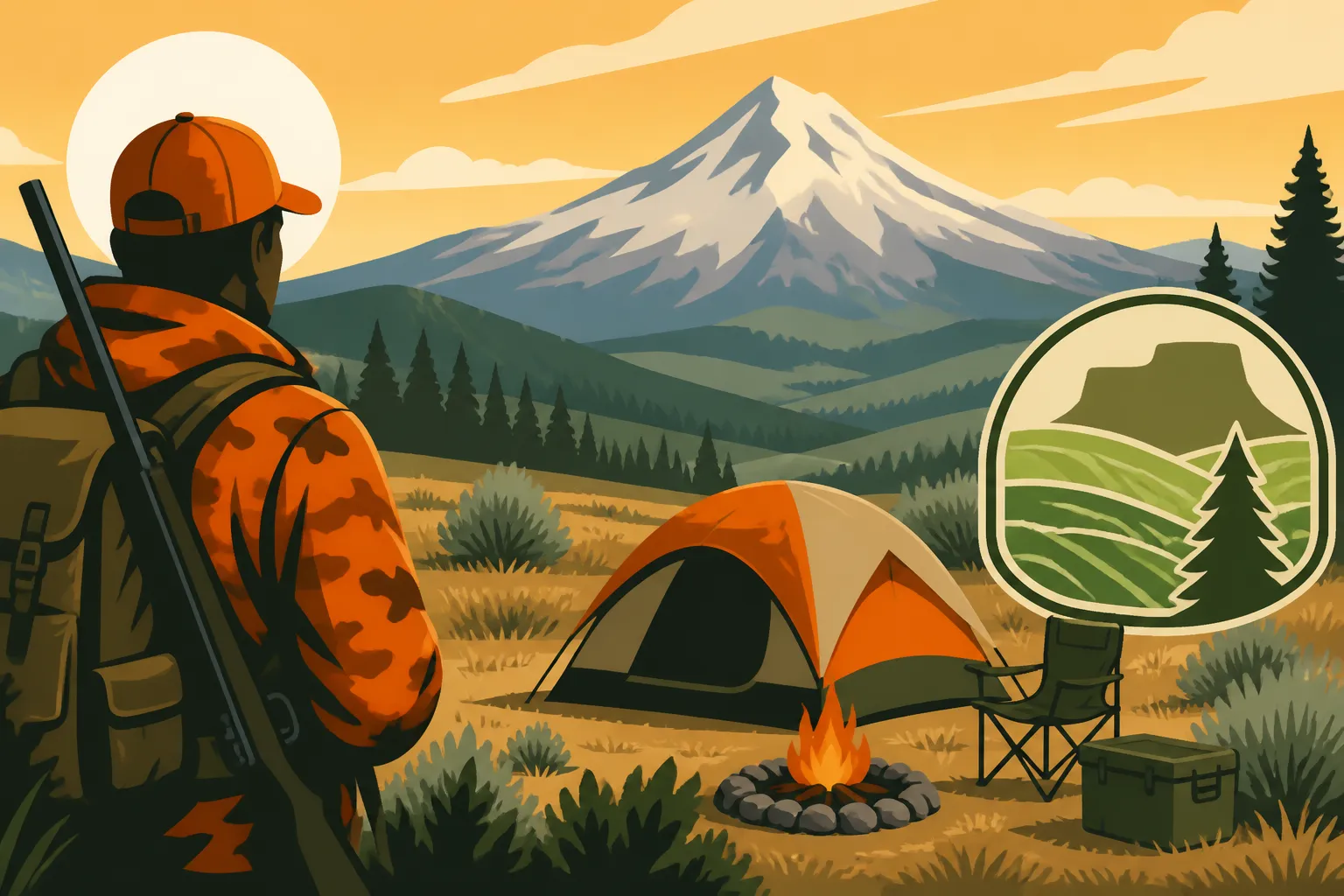
Oregon BLM Camping Limits During Hunting Season
One of the biggest headaches for any hunter heading into Oregon's vast public lands is figuring out where you can set up camp and how long you can actually stay. It’s frustrating to scout a perfect spot, only to wonder if you’ll be forced to move your entire setup mid-hunt, or worse, face a fine for overstaying your welcome. This guide will cut through the confusion surrounding Oregon BLM camping limits during hunting season, helping you plan a worry-free and effective base camp for your next adventure.
Understanding BLM's General Camping Regulations in Oregon
The Bureau of Land Management (BLM) manages millions of acres in Oregon, offering incredible opportunities for dispersed camping, which is often a hunter's preferred choice for its remoteness and direct access to hunting grounds. However, "dispersed" doesn't mean "unregulated." There are fundamental rules designed to protect the land and ensure fair use for everyone. Ignoring these can quickly turn a peaceful hunt into a stressful encounter with a ranger.
The 14-Day Stay Limit and Its Nuances
The most crucial rule for most hunters to understand is the 14-day stay limit. Generally speaking, on BLM lands across Oregon, you are permitted to camp in one location for a maximum of 14 days within any 28-day period. This isn't a calendar month rule, which often trips people up; it's a rolling 28-day window. So, if you set up camp on October 1st and stay for 14 days, you wouldn't be able to return to that general area for camping until October 29th, as the previous 14 days would still be within the 28-day period.
This rule is in place for a good reason: to prevent long-term residency and to minimize environmental impact on specific sites. If one group were allowed to squat indefinitely, popular hunting spots would quickly become overused, trashed, or even claimed. After your 14 days are up, the regulations typically state you must move a significant distance – often cited as 25 miles away – to another location outside the original 28-day zone before you can establish a new camp. This movement requirement can throw a wrench into extended hunting plans if you're not prepared, especially when you're trying to leverage Oregon Controlled Hunt Draw Explained success into a multi-week expedition.
Imagine you've drawn a coveted elk tag for a unit that starts in early October, followed by a late-season deer tag in the same general vicinity in November. If you spend your full 14 days scouting and hunting elk from a single camp in October, that "28-day clock" starts ticking. When it comes time for your deer hunt, even if it's weeks later, you might find yourself still within that 28-day window for your original camping zone, forcing you to find a new area significantly far away. This can be a real logistical challenge when you’ve invested time scouting specific drainages or clearcuts.
Dispersed Camping vs. Developed Campgrounds
When we talk about hunting camps on BLM land, we're almost always referring to dispersed camping. This means you’re setting up your tent, trailer, or wall tent outside of a designated, fee-based campground. Dispersed camping offers freedom – you can usually drive or hike directly into your chosen spot, far from crowds, and often right on the edge of your hunting area. However, with that freedom comes responsibility. There are no picnic tables, fire rings, vault toilets, or potable water sources. It's truly primitive camping, and the "pack it in, pack it out" philosophy is paramount.
Developed campgrounds, conversely, offer amenities like those mentioned above, often with designated sites, paved access, and a fee system. While some hunters might opt for a developed campground for comfort or convenience, they are generally not ideal for serious hunting camps. They often lack the direct access to remote areas that hunters need, and their rules on noise, generator use, and even open fires can be much stricter. Plus, the social atmosphere of a developed campground often clashes with the solitude many hunters seek. For most, the extra effort of dispersed camping is well worth the reward of being immersed in the hunting environment.
The key distinction lies in the infrastructure and intent. Dispersed camping is about low-impact, self-sufficient outdoor living, perfect for a hunting base where you might be leaving camp early and returning late. Developed campgrounds are more for recreational touring or family vacations. When planning your hunting trip, assume you’ll be dispersed camping and prepare accordingly, understanding that the general 14-day limit is the baseline you need to work with.
| Feature | Dispersed Camping (Typical Hunter Use) | Developed Campground (Less Common for Hunters) |
|---|---|---|
| Location | Remote, undesignated areas on public land | Specific, marked sites with amenities |
| Amenities | None (no water, toilets, trash, tables) | Varies (water, toilets, fire rings, picnic tables) |
| Cost | Free | Fee required |
| Stay Limit | Typically 14 days in a 28-day period | Varies; often shorter or by reservation |
| Impact | Low-impact, Leave No Trace principles vital | Managed impact, but can be crowded |
| Vehicle Access | Often requires high-clearance roads or hiking | Paved or well-maintained gravel roads |
| Privacy | High | Low (close to other campers) |
Specifics for Hunting Season Camps on Oregon BLM
Hunting season often brings a surge of activity to BLM lands, making it even more important to be clear on camping regulations. While the general 14-day rule applies, the sheer number of users can sometimes lead to increased enforcement or the implementation of special rules in specific high-use areas. It’s not just about staying legal; it’s about being a considerate user of public resources.
How the 14-Day Limit Impacts Your Hunt Plans
The 14-day stay limit can feel like a real handcuff when you’re planning a multi-week hunt or have several tags to fill across a season. Let’s say you’ve spent a week on a general archery elk hunt in September. You love your camp, it’s productive, and you’re feeling confident. But if you stayed the full seven days, you’ve used half of your allotted time in that 28-day window. If you then wanted to return to that exact spot for a blacktail deer hunt in October, you’d only have seven more days before you’d be legally required to pack up and move at least 25 miles away. This can be a significant setback if that specific area is where you've concentrated your scouting efforts.
Hunters often try to navigate this by planning carefully. Some might break up their hunts, spending five days, pulling out for a weekend, and then returning, but the 28-day clock still governs. The only true "reset" for returning to the exact spot within that 28-day period is to move the mandated distance. This means if you have multiple tags for the same general unit over an extended period, you might need to identify two or even three distinct camping zones, each at least 25 miles apart, to avoid violating the rule. This requires diligent scouting and potentially using mapping tools like onX Hunt to visualize these distances and property boundaries, ensuring you're compliant. Leaving a camp unattended while moving to a new 28-day zone is also a grey area; generally, property should not be left abandoned for extended periods.
Identifying Designated Long-Term Visitor Areas (LTVAs) or Special Restrictions
While less common for hunting camps, it's worth noting that some BLM areas have designated Long-Term Visitor Areas (LTVAs) which might have different rules, usually catering to winter visitors in warmer climates. More pertinent to hunters, however, is the possibility of special restrictions in particular units or regions of Oregon. These are usually implemented due to high recreational use, specific environmental concerns, or during sensitive periods like fire season. For instance, some popular spots might have shorter stay limits, a complete ban on dispersed camping, or strict rules on where you can park vehicles or set up camp to protect critical wildlife habitat or riparian zones.
It's crucial to understand that these special restrictions can change and are often posted locally. You might not find every nuanced rule in the statewide BLM pamphlet. Before heading out, make it a habit to check the website for the specific BLM field office managing the area you intend to hunt. For example, if you’re hunting in the Steens Mountain area, checking the Burns District BLM office page is a must. These local pages will often have specific management plans or notices about temporary closures or restrictions. Ignoring them isn't an excuse, and rangers do patrol. Relying on tools like E-Scouting Oregon Units With Satellite Imagery is great for finding potential camp spots, but always verify local ground rules before you commit.
Sometimes these rules are posted on physical signs at trailheads, forest boundaries, or popular access points. A sign saying "No Camping Beyond This Point" or "3-Day Max Stay" overrides the general 14-day rule. Paying attention to these on-the-ground indicators is vital. Similarly, areas like the Hart Mountain National Antelope Refuge, while often contiguous with BLM, will have their own distinct and often more restrictive camping rules you must abide by.
Temporary Structures and Camp Management
What exactly constitutes a "camp" on BLM land? For most hunters, it’s obvious: a tent, a truck camper, an RV, or a wall tent with a wood stove. All of these fall under the camping regulations. Leaving a wall tent set up for weeks on end, even if you’re only there for part of the 14 days, can raise eyebrows if it looks like you’re trying to establish a permanent residence. The intent of the rule is to prevent "squatting."
Managing your camp properly during hunting season also involves more than just the duration of your stay. Consider rules around leaving unattended property. Generally, you shouldn't leave your camp set up and completely abandoned for extended periods, especially outside of your 14-day window. If it appears abandoned, BLM staff might remove it. Keeping your camp tidy and leaving no trace is not just good etiquette; it’s a form of compliance. This means packing out all your trash, including food scraps, spent cartridges, and even toilet paper. Hunting Camp Fire Restrictions in Dry Years are also a major consideration, especially during the dry early fall hunts. Always check current fire danger levels and adhere to any restrictions on open flames, even in established fire rings.
Responsible camp management during hunting season also extends to food storage to prevent attracting wildlife like bears or cougars. Using bear-resistant containers or hanging food can save you a headache and protect the animals. Remember, your camp is a temporary home, and you are a guest on public land. The goal is to leave it looking like you were never there.
Practical Tips for Managing Your BLM Camp During Hunting Season
Navigating the rules and making the most of your hunting time on Oregon BLM lands requires a bit of foresight and strategic planning. You want to focus on the hunt, not constantly worrying about moving your camp or attracting unwanted attention from land managers.
Planning Your Stay to Maximize Hunt Time
To fully leverage your time on the ground and avoid the headache of the 14-day limit, consider a staggered approach to your hunting season. Instead of trying to camp in one spot for an entire month, especially if you have tags for different species or seasons, plan shorter segments. For example, you might spend five days chasing elk in an area, pack up, go home for a few days to resupply and rest, and then return to a different area, at least 25 miles away, for another five-day stint, or even focus on a different unit entirely. This allows you to reset your 28-day clock in different locations.
Alternatively, some hunters will set up a primary camp, use it for their 14 days, then move to a completely different part of the unit or an adjacent unit for the remainder of their hunting period. This requires more pre-scouting for alternative camp spots. Mapping applications like onX Hunt are incredibly valuable here. They allow you to drop pins for potential camp locations, measure distances, and visualize the 25-mile buffer required when relocating. You can quickly see the land ownership, identify other public land parcels, and plan your moves accordingly. This strategic planning ensures you can keep hunting without running afoul of camping regulations. Finding Public Access in Oregon for your second location becomes much easier with these tools.
Another strategy, particularly if you have a short, intense hunt, is to utilize public access points for day trips. Instead of establishing a full camp, you might stay in a nearby small town motel or even a friend's cabin and simply drive to your hunting area each day. This completely sidesteps the camping limits but sacrifices the immersive experience and convenience of an on-site camp. For some, especially those with limited time, it's a viable compromise.
Respecting the Land and Other Users
The ethos of public land use, especially during hunting season, revolves around respect – respect for the land, for wildlife, and for fellow users. The "Leave No Trace" principles are your guiding star for BLM dispersed camping. This means:
- Pack it in, Pack it out: Absolutely everything you bring in, including food wrappers, empty cans, spent shell casings, and even human waste (or burying it properly away from water sources and trails), must leave with you. This isn't just a suggestion; it’s a requirement.
- Minimize Campfire Impacts: Use existing fire rings if available, keep fires small, and ensure they are completely extinguished before you leave, or even step away for a hunt. In dry years, sometimes campfires are banned entirely, and you must respect those rules.
- Dispose of Waste Properly: Don't dump greywater or blackwater directly onto the ground. If you have an RV, use designated dump stations.
- Respect Wildlife: Don't feed animals, and store food properly to prevent attracting critters into your camp.
- Be Considerate of Others: Hunting season can get busy. Be mindful of noise, especially generators, in the early morning or late evening. Keep your camp site clean and contained, not sprawling into adjacent areas. Parking responsibly and not blocking access roads is also critical, as outlined in Motorized Travel Rules on Oregon BLM Land. Remember, hunters often share BLM land with hikers, mountain bikers, off-road vehicle users, and others enjoying the outdoors.
Adhering to these principles ensures that the incredible resource of Oregon’s BLM land remains available and pristine for future generations of hunters and outdoor enthusiasts. It’s also just plain good sportsmanship. When you leave a clean camp, it sets a positive example for everyone else.
Resources for Checking Current Regulations
The best defense against unknowingly violating BLM camping limits or other rules is proactive research. Don't rely solely on word-of-mouth or assumptions from past trips; regulations can and do change.
Your first stop should always be the official Bureau of Land Management (BLM) website. Look for the specific field office that manages the unit you plan to hunt. For example, if you’re heading to central Oregon, you’d check the Prineville District BLM office. These sites often have dedicated sections for recreation, including camping guidelines, fire restrictions, and any special orders or closures. Make a phone call to the local office if you have specific questions or can't find clear answers online. A quick 5-minute call can save you a lot of trouble on your trip.
The Oregon Department of Fish and Wildlife (ODFW) regulations pamphlets and website are also critical, though they focus more on hunting rules than camping. However, ODFW might occasionally note specific camping restrictions in certain wildlife management areas or during particularly sensitive periods. Tools like GoHunt and other online hunting resources can offer great unit-specific insights, but it's always wise to cross-reference with the official BLM sites, as they are the ultimate authority on camping on their lands.
Finally, keep an eye out for physical signage when you arrive at your destination. Sometimes, local rangers will post temporary rules, fire restrictions, or camping limit changes at access points, trailheads, or popular camping areas. These signs are legally binding, even if they aren't on the website yet. Always take a moment to read any posted information when you enter a new area. Using the Oregon Hunting Map Online or even the built-in map layers on onX Hunt can help you identify land ownership, but the details of how you can use that land are often best found directly from the managing agency. It’s also wise to check for Checking Oregon Road Closures Before You Go as these can impact both access to your hunting spot and potential camp sites.
Disclaimer
This article is for general informational purposes only and does not constitute professional advice. Laws, prices and regulations vary by location and change over time. Consult a qualified professional for guidance on your specific situation.